


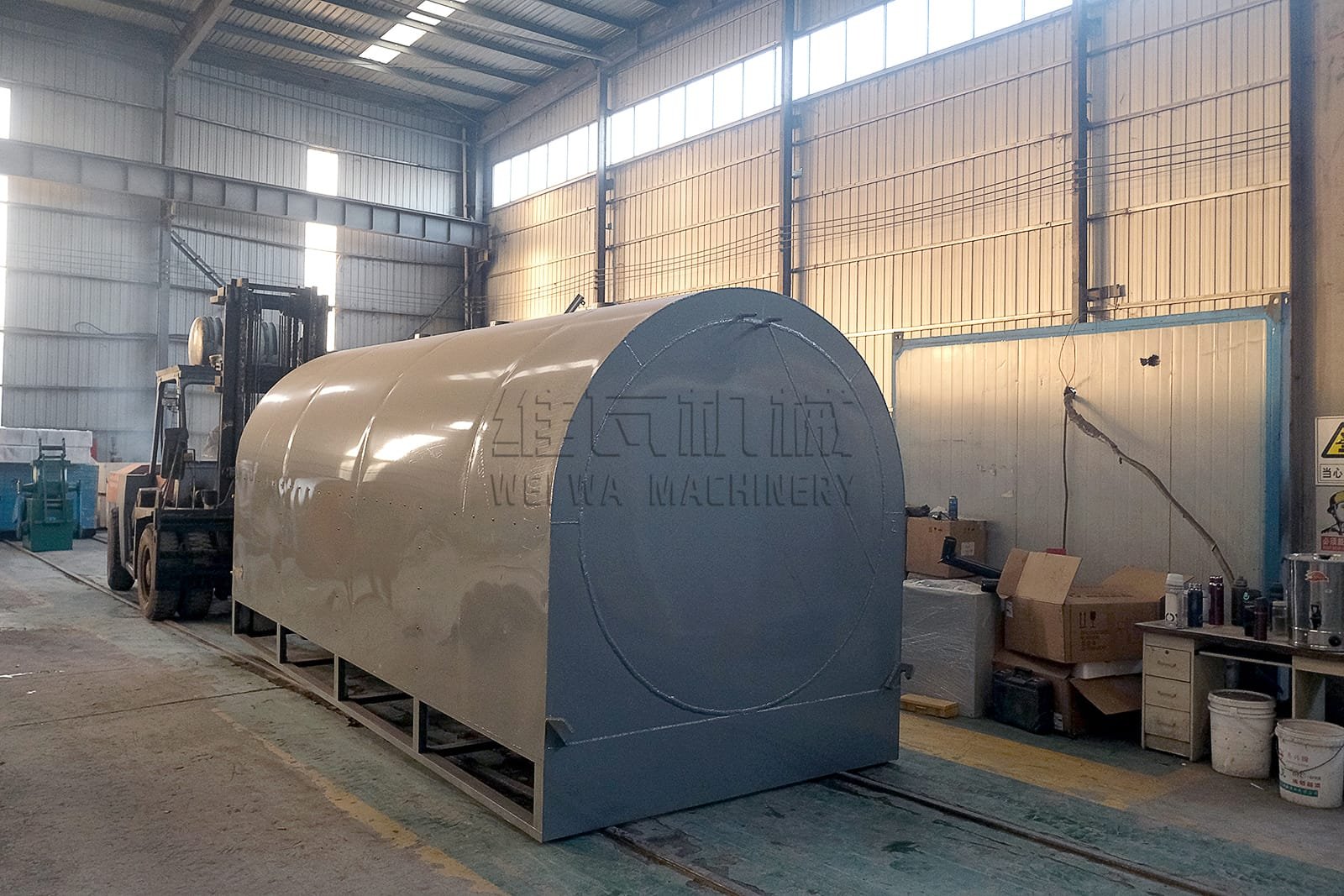
In early May 2026, a Weiwa Machinery 2.0-meter-by-4.5-meter horizontal carbonization furnace completed its sea voyage from Shanghai to the Port of Lae, Papua New Guinea’s largest cargo gateway and the industrial heart of Morobe Province. The making charcoal machine, disassembled into its major subassemblies — carbonization chamber shell, refractory lining modules, combustion chamber, rail trolley system, gas recovery ductwork, and control panel — and packed into three fumigated wooden crates, cleared PNG customs at Lae’s port within four working days. A flatbed truck carried the crates 20 kilometers inland to the buyer’s production compound in the Lae industrial zone, where a Weiwa technical engineer had arrived two days earlier to oversee foundation preparation and utility hookups.
The buyer, a Papua New Guinean entrepreneur who had spent five years operating a medium-scale sawmilling operation in the Markham Valley, had identified a business opportunity that was hiding in plain sight. His sawmill produced approximately 12 to 15 tonnes of wood offcuts daily — slab wood, edging strips, rejected logs, and branch material that could not be sold as sawn timber. Most of this material was burned in open piles on the mill property, generating thick smoke that drew complaints from neighboring communities and occasional visits from provincial environmental officers. A smaller fraction was sold at negligible prices to local brick kilns that burned it as process fuel. The vast majority of this perfectly usable biomass was going up in smoke, contributing nothing to the mill’s bottom line and creating an ongoing environmental liability.
The buyer’s proposition was straightforward: convert this sawmill waste into charcoal using a Weiwa making charcoal machine, sell the charcoal into PNG’s growing urban cooking fuel market, and transform a disposal cost center into a revenue stream. The trial program that Weiwa and the buyer designed was specifically structured to validate this proposition — not in theory, but with the buyer’s actual feedstock, in the buyer’s actual operating environment, with charcoal quality verified against the expectations of actual PNG consumers.
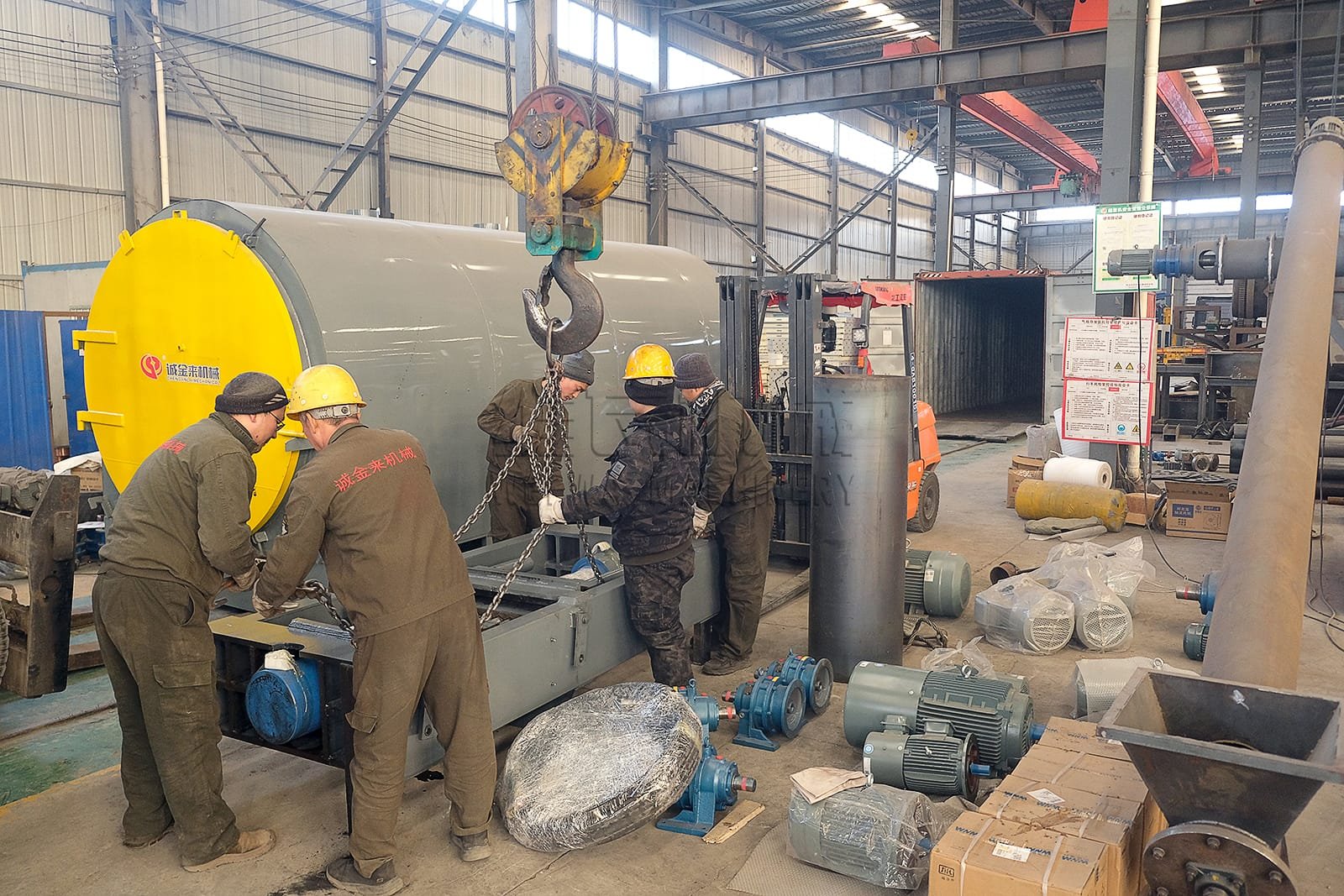
Installation proceeded over four days. The furnace shell was positioned on a reinforced concrete pad with anchor bolts cast into the foundation, the refractory lining was inspected for transit integrity, the rail trolley was aligned and tested for smooth travel through the full length of the carbonization chamber, and the gas recovery circuit — pipework, tar condenser, and combustion chamber feed line — was assembled and pressure-tested. By the seventh day on site, the furnace had passed a cold-run functional test, and the buyer’s production team of five workers — all drawn from the existing sawmill workforce — had completed the first module of Weiwa’s operator training curriculum, covering safety protocols, furnace startup procedures, and the temperature monitoring system that would guide their decisions throughout each carbonization cycle.
Why Charcoal Briquette Production Is Taking Root in Papua New Guinea?
Papua New Guinea occupies a unique position in the global biomass energy conversation. The country harbors approximately 7% of the world’s biodiversity within its borders, and its rainforests — part of the third-largest contiguous tropical forest on Earth — cover roughly 84% of the nation’s landmass. At the same time, PNG is one of the world’s largest exporters of tropical roundwood, shipping an estimated 2.5 million cubic meters of logs annually to markets in China, India, and Southeast Asia. This tension between forest conservation and timber extraction has defined PNG’s environmental politics for decades, and it has now entered a new phase: Prime Minister James Marape’s government has committed to ending round log exports and redirecting the timber industry toward downstream processing within PNG. The policy, if implemented as announced, will fundamentally reshape the economics of wood waste in a country where sawmills already generate enormous volumes of processing residue.
For briquette manufacturers in Papua New Guinea, this policy shift creates a feedstock environment that is uniquely favorable. As domestic sawmilling expands to absorb the logs that would previously have been exported as raw roundwood, the volume of sawdust, offcuts, and processing residue will increase in parallel. A making charcoal machine that can make charcoal from wood waste offers sawmill operators a pathway to monetize this residue stream — a departure from the current practice of burning or landfilling it — while simultaneously producing a cooking fuel that reduces the pressure on standing forests. It is a circular proposition: the timber industry’s waste becomes the raw material for a domestic charcoal briquette production industry, and the charcoal industry’s product displaces the firewood and traditional charcoal that currently drive household-level forest degradation across PNG’s rural and peri-urban areas.
The cooking fuel context in Papua New Guinea makes this proposition especially relevant. Approximately 85% of PNG’s population — representing well over 8 million people out of an estimated population of 10 to 12 million — relies on firewood or charcoal as their primary cooking fuel. In rural villages throughout the Highlands, Momase, and Islands regions, firewood gathered from surrounding forest remains the dominant fuel, and while this gathering is generally sustainable at low population densities, it becomes increasingly destructive as rural populations grow and forest margins recede. In urban centers — Port Moresby, Lae, Mt Hagen, Goroka, and Madang — the cooking fuel mix shifts toward purchased charcoal and kerosene, with charcoal prices in Port Moresby markets varying seasonally and spiking during wet-season months when transport from rural production areas becomes difficult.
The environmental stakes are heightened by PNG’s global significance as a carbon sink. The country’s forests store an estimated 5 to 7 billion tonnes of carbon, and deforestation — driven by logging, agricultural expansion, and infrastructure development — has emerged as PNG’s single largest source of greenhouse gas emissions. International climate finance mechanisms, including the UN-REDD program and the Forest Carbon Partnership Facility, are channeling funds into PNG for forest conservation and sustainable land-use programs, creating an institutional environment in which enterprises that reduce pressure on forests — including those that produce alternative cooking fuels from waste biomass — can access technical assistance, concessional finance, and carbon credit revenues that improve the investment case for a making charcoal machine beyond what the charcoal market alone would support.
What Is a Horizontal Carbonization Furnace and How Does It Make Charcoal from Wood?
A horizontal carbonization furnace is a batch-type thermal processing unit that converts wood and biomass into charcoal through controlled pyrolysis — the decomposition of organic material at elevated temperatures in an oxygen-limited environment. The Weiwa design deployed at the Lae facility separates the heating function from the carbonization function through an indirect heating architecture that delivers significantly higher charcoal yields, more consistent product quality, and dramatically lower smoke emissions compared to the traditional earth-mound kilns that have been used for charcoal production across the Pacific region for generations.
The Indirect Heating Principle
The horizontal carbonization furnace’s cylindrical steel shell, lined with refractory insulation and mounted on a structural frame approximately 2.4 meters above ground, houses the carbonization chamber into which wood is loaded. Beneath this chamber, an external combustion chamber — essentially a firebox — burns a start-up fuel to generate hot combustion gases. These gases circulate through a jacket that surrounds but does not enter the carbonization chamber, heating the chamber walls which radiate thermal energy inward to the wood charge. At no point in the process do combustion gases mix with the material being carbonized. This physical separation is the defining feature of the indirect heating design and the reason the furnace achieves charcoal yields that are nearly double those of traditional kilns.
In a traditional earth-mound kiln — the method most commonly used for charcoal making across rural Papua New Guinea — a portion of the wood charge must be burned to generate the heat that carbonizes the remainder. Because combustion and carbonization occur in the same space, the operator exercises limited control over the ratio of wood consumed versus wood converted to charcoal, and yields rarely exceed 18% and frequently fall below 15% on a dry weight basis. A horizontal carbonization furnace, by isolating the carbonization chamber from the combustion source, achieves charcoal yields of 28% to 35% on the same dry weight basis, effectively doubling the charcoal output per tonne of wood input. For briquette manufacturers in Papua New Guinea paying transport costs to move sawmill offcuts from mill to furnace site, this yield improvement is not a marginal efficiency gain — it determines whether the operation is profitable or not.
Flue Gas Recovery and Self-Fueling Operation
The making charcoal machine’s second core technology is its flue gas recovery and purification system. As wood heats inside the carbonization chamber past approximately 270 degrees Celsius, it begins to release volatile organic compounds — methane, carbon monoxide, hydrogen, and heavier hydrocarbons — along with water vapor and wood tar. In a traditional kiln, these gases are vented directly to the atmosphere, producing the dense, acrid smoke plumes that have made charcoal production a visible public health concern in communities near traditional kiln sites.
In the Weiwa furnace, these gases are routed through a duct into a purification train — a series of baffle condensers that separate the wood tar and water vapor from the combustible gas fraction. The cleaned combustible gas is then piped directly into the combustion chamber, where it burns and supplies the heat needed to sustain the carbonization process. Once the volatile release becomes self-sustaining — typically within two to three hours of the start of a carbonization cycle — no additional external fuel is required. The furnace runs on its own by-products for the remainder of the cycle, a feature that eliminates the ongoing fuel cost that would otherwise represent a significant operating expense for a PNG-based charcoal producer who would otherwise need to purchase firewood or diesel to sustain a traditional carbonization operation.
The tar separation step serves a dual purpose that is particularly relevant in Papua New Guinea’s operating environment. First, it prevents tar from condensing in the burner nozzles and duct walls — a fouling problem that, in lower-cost furnaces without purification capability, forces operators to shut down and clean the system every three to five cycles, consuming production hours and exposing workers to the respiratory hazards of tar dust. Second, it yields a cleaner exhaust gas stream, which matters both for workplace air quality — protecting the health of the production team — and for compliance with environmental standards that are evolving as PNG’s provincial governments introduce emissions monitoring requirements for industrial sites in urban and peri-urban areas.
The Timber Waste Opportunity for Briquette Manufacturers in Papua New Guinea
Papua New Guinea’s timber industry generates processing waste on a scale that most countries cannot match. The country’s 29 active forest concessions, covering approximately 3.5 million hectares primarily in the Momase and Islands regions, feed an export-oriented log trade that shipped 2.5 million cubic meters of roundwood in 2024 alone. With the Marape government’s round log export ban now taking effect — no new round log export licenses are being issued — the volume of logs flowing into domestic sawmills is increasing, and with it, the volume of sawmill residue.
For a sawmill processing tropical hardwoods such as kwila, taun, malas, PNG rosewood, and PNG walnut, the conversion efficiency from round log to sawn timber is typically between 45% and 55%. The remaining 45% to 55% of the log — the slab wood, edgings, trimmings, sawdust, and rejected pieces — becomes processing residue. At a medium-sized sawmill processing 10 cubic meters of logs per day, this translates to approximately 4.5 to 5.5 cubic meters of wood waste generated daily, or roughly 3,500 to 5,000 tonnes per year on a wet-weight basis. Multiplied across the dozens of sawmills operating in PNG’s timber-producing provinces — Morobe, Madang, West New Britain, East New Britain, and Oro — the national sawmill residue stream runs into hundreds of thousands of tonnes annually.
This material is not without value, but its value is deeply suppressed by the absence of established utilization pathways. Some sawmills sell offcuts to brick kilns or lime burners at prices that barely cover loading costs. Some distribute sawdust to nearby villages for use as garden mulch. The majority, however, is burned — in open piles that generate high volumes of particulate emissions, in inefficient incinerators, or simply left to decompose in mountainous stockpiles that occupy increasingly valuable mill yard space. A making charcoal machine integrated into the sawmill’s waste stream converts this material from a disposal liability into a product — charcoal — that retails in urban PNG markets at prices ranging from 2.50 to 4.00 Papua New Guinean kina per kilogram, depending on quality and packaging.
The wood species available in PNG are well-suited to carbonization. Kwila, one of PNG’s most commercially important timber species, is a dense hardwood with high lignin content that produces charcoal with excellent mechanical strength and burn duration. Taun, a lighter hardwood widely used in construction and furniture manufacturing, carbonizes reliably and yields charcoal with good ignition characteristics — an important attribute for household consumers who value fuel that lights quickly in the morning. PNG rosewood, prized in international timber markets for its deep coloration, produces charcoal with a distinctive aromatic quality that some buyers have identified as a potential differentiator in premium BBQ charcoal markets. The species diversity that makes PNG’s timber industry commercially valuable also makes its sawmill residue stream technically versatile as a charcoal feedstock — a horizontal carbonization furnace can process mixed-species charges without requiring feedstock segregation, provided the moisture content and piece size are within the furnace’s operating envelope.
The Lae Trial — Testing the Making Charcoal Machine with PNG Hardwood
The trial program that Weiwa Machinery conducted at the Lae buyer’s facility was designed around a specific question that matters to every briquette manufacturer in Papua New Guinea evaluating a making charcoal machine: what charcoal yield and what charcoal quality can be achieved with the mixed-species hardwood waste that is actually available at a typical PNG sawmill, processed under the ambient conditions — temperature, humidity, and operator skill level — that a PNG-based production operation will actually experience.
Feedstock Preparation and Trial Design
The trial ran three complete carbonization cycles over a nine-day period, each cycle using a different loading configuration to map the furnace’s performance across the feedstock scenarios that the buyer expected to encounter in routine commercial production. The wood for all three cycles was sourced from the buyer’s own sawmill — a deliberate choice intended to ensure that the trial results would be directly transferable to day-to-day operations rather than representing idealized conditions achievable only with carefully selected feedstock.
The first trial cycle used a mixed hardwood charge typical of a standard production day at the mill: approximately 60% kwila offcuts, 25% taun slab wood, and 15% mixed species including malas and PNG walnut. The wood had been stacked under a covered shed for approximately three weeks after cutting, during which time its moisture content had equilibrated to between 22% and 28% — wet enough that the furnace’s drying phase would consume meaningful time, but dry enough to carbonize successfully without the excessive energy demand that characterizes freshly cut tropical hardwood. The logs and offcuts were cut to lengths between 60 and 90 centimeters and, where diameters exceeded 20 centimeters, split to ensure uniform heat penetration during the carbonization cycle.
The second trial cycle replicated the first in terms of species composition but with a significantly lower moisture content — approximately 14% to 18% — achieved by extending the covered-air-drying period to six weeks. This cycle was designed to quantify the throughput benefit of drier feedstock, providing the buyer with data to inform the economic decision of whether to invest in a dedicated biomass dryer or to rely on natural air drying in Lae’s humid tropical climate.
The third trial cycle introduced a novel feedstock stream: coconut shells sourced from copra processors in the nearby Markham Valley. Coconut shell charcoal commands a premium price in both domestic and international markets due to its exceptionally high fixed carbon content — typically above 80% — and its low ash and volatile matter, making it the preferred feedstock for activated carbon production and a sought-after product in the premium BBQ charcoal segment. While the buyer’s primary feedstock would be sawmill wood waste, the ability to process coconut shells in the same horizontal carbonization furnace represented a diversification opportunity that could generate additional revenue during periods when sawmill offcut supply was seasonally low or when coconut shell prices were favorable.
The furnace was loaded for each cycle using the rail trolley system: the trolley was rolled out of the carbonization chamber on its rails, loaded with wood stacked in a deliberately engineered pattern that left air gaps between rows for gas circulation, and then rolled back into the chamber. The furnace door was sealed using the high-temperature gasket and mechanical toggle clamps that maintain an airtight seal throughout the thermal expansion and contraction of the carbonization cycle.
Trial Results — Yield, Cycle Time, and Charcoal Quality
The first trial cycle — mixed hardwood at 22% to 28% moisture — produced results that established an immediate baseline for the furnace’s performance with typical PNG sawmill feedstock. The internal chamber temperature reached 100 degrees Celsius approximately 55 minutes after ignition of the start-up fire, reflecting the thermal energy consumed in evaporating the wood’s residual moisture during the drying phase. The temperature then climbed steadily through the 200-degree to 300-degree Celsius range over the following two hours and fifteen minutes, at which point the volatile release became self-sustaining, and the recovered combustible gas began supplying the combustion chamber. The peak carbonization temperature of 510 degrees Celsius was reached at the five-hour-and-forty-minute mark and held for approximately one hour before the gas supply to the combustion chamber was cut and the furnace entered its natural cooling phase, which extended for approximately nine hours.
The total cycle time from ignition to a furnace shell temperature safe for door opening — approximately 17 hours for this first cycle — is a critical operational metric because it determines how many carbonization cycles the furnace can complete in a week of production. At 17 hours per cycle, the furnace can theoretically run one cycle per day with some scheduling flexibility, translating to approximately 6 to 7 cycles per week. The charcoal yield from this first cycle was measured at 29.8% on a dry-weight basis, meaning that from 10,000 kilograms of air-dried wood input, the furnace discharged 2,980 kilograms of finished charcoal. This yield figure falls within the 28% to 35% range that Weiwa’s making charcoal machine consistently achieves with tropical hardwood feedstocks and represents an approximately 80% to 100% improvement over the 15% to 18% yield typical of traditional earth-mound kilns operating in PNG’s rural areas.
The second trial cycle — the same species mix but dried to 14% to 18% moisture — demonstrated the throughput advantage of drier feedstock. The total cycle time decreased to approximately 14.5 hours, primarily because the drying phase was shortened by the reduced moisture load. The charcoal yield increased slightly to 31.4%, consistent with the expectation that less thermal energy consumed in moisture evaporation leaves more energy available for the carbonization reactions. The buyer’s conclusion from this comparison was clear: investing in a simple covered drying shed with improved airflow — a low-cost addition to the site — would pay for itself within months through increased furnace throughput and marginally higher charcoal yield.
The third trial cycle — coconut shells — produced the highest yield at 34.8% and the highest fixed carbon content, measured at 82.3% using a laboratory muffle furnace arranged through a materials testing contact at the Papua New Guinea University of Technology in Lae. The coconut shell charcoal exhibited a glossy black fracture surface with the characteristic metallic sheen of high-quality carbonized material, and the burn test — conducted using a standard PNG metal drum charcoal stove of the type used in Lae’s urban households — demonstrated an ignition time of five minutes, a cooking-temperature threshold reached at approximately ten minutes, and a sustained usable heat output of two hours and forty minutes from a 500-gram sample. For the buyer, this coconut shell result opened a second revenue channel: premium coconut shell charcoal packaged in smaller, higher-priced bags and marketed to Port Moresby’s expatriate and middle-class consumers who were willing to pay a quality premium for cooking fuel that ignited quickly and burned with minimal smoke.
Across all three trial cycles, the charcoal from Weiwa’s making charcoal machine exhibited consistent quality characteristics that differentiated it from the variable, often poorly carbonized charcoal sold in PNG’s informal markets. Fixed carbon content ranged from 74.6% for the kwila-dominant first cycle to 82.3% for the coconut shell cycle — all above the 70% threshold that PNG household consumers and commercial kitchen operators identify as the minimum for acceptable cooking charcoal. Ash content was uniformly below 4%, which is low for tropical hardwoods and indicates that the indirect heating process, by preventing ash from combustion gases from contaminating the charcoal, produces a cleaner-burning fuel than traditional kiln charcoal. And the charcoal pieces were uniformly carbonized throughout, with no evidence of the brown, partially carbonized cores that plague traditional kiln output and that generate smoke and low heat when burned.
How Charcoal Briquette Production Lines Work in Papua New Guinea?
A horizontal carbonization furnace is the core of a charcoal making operation, but it does not function in isolation. For briquette manufacturers in Papua New Guinea who want to operate a commercially viable charcoal briquette production business, the furnace must be integrated into a production line that manages feedstock flow upstream and charcoal handling downstream.
The feedstock handling zone at the Lae buyer’s facility begins at the sawmill itself, where offcuts are separated from sawdust at the point of generation — a simple but important workflow decision that prevents sawdust contamination of the offcut pile and ensures the material loaded into the carbonization furnace is free of the fine particles that would impede gas circulation through the charge. Offcuts are transported by tractor trailer to a covered storage area adjacent to the furnace, where they are stacked in species-segregated bays that allow the operator to blend charges to the desired species ratio. The covered storage serves a dual purpose in Lae’s climate — it prevents rain from rewetting the wood after it has air-dried, and it shades the wood from direct sunlight which, in the tropical afternoon heat, can cause uneven surface drying and cracking that slightly reduces charcoal quality.
Adjacent to the storage bays, a cutting station — equipped with a portable chainsaw and a simple measuring jig — reduces oversize offcuts to the 60-to-90-centimeter lengths that load efficiently into the furnace trolley. The cutting station is a transitional piece of infrastructure: the buyer’s medium-term plan, contingent on the charcoal business reaching targeted production volumes, is to install a hydraulic log splitter and a small wood chipper that would mechanize the size-reduction step and reduce the labor hours required for feedstock preparation.
The carbonization zone contains the furnace itself, positioned on its concrete pad with a canopy roof overhead — a simple corrugated iron structure on steel posts that provides rain protection without enclosing the furnace in walls that would trap heat and impede the natural convection cooling of the furnace shell after a carbonization cycle. The roof height and clearance around the furnace were calculated to provide safe working space for the trolley loading and unloading operations and to allow the flue gas recovery ductwork to run without tight bends that would increase gas flow resistance. A small control cabin — essentially a weatherproof enclosure for the temperature monitoring panel — sits adjacent to the furnace, providing the operator with real-time readouts from the three thermocouples embedded in the carbonization chamber at top, middle, and bottom positions.
The product handling zone occupies the space on the discharge side of the furnace. After a carbonization cycle completes and the furnace has cooled to a safe handling temperature, the trolley is rolled out on its rails, and the charcoal is manually unloaded onto a sorting table — a waist-height steel mesh platform that allows small fragments and dust to fall through into a collection bin while intact charcoal pieces remain on the table surface. Intact pieces are graded by size: large pieces suitable for commercial restaurant use are packed into 25-kilogram bags for wholesale distribution; medium pieces are packed into 5-kilogram retail bags for household consumers; small fragments and dust are either sold at a discount to industrial users or, in a downstream step the buyer is evaluating, mixed with a starch binder and pressed into formed charcoal briquettes using a charcoal briquette press — adding a further value-adding step to the charcoal briquette production process.
Starting a Charcoal Making Business in Papua New Guinea with Weiwa Machinery
For Papua New Guinean entrepreneurs evaluating an investment in a charcoal making machine for sale, the path from initial inquiry to operational production follows a structured process that begins not with equipment selection but with feedstock and market analysis. This sequencing is deliberate: a making charcoal machine that is technically competent but poorly matched to the available feedstock or the target market will underperform regardless of the furnace’s inherent quality.
The feedstock analysis maps the available raw material within economic transport distance of the proposed production site. In PNG, the most attractive feedstock sources are typically sawmills — both the large export-oriented mills in Morobe, Madang, and West New Britain provinces and the smaller domestic-market mills scattered across the Highlands and coastal regions. A sawmill producing 10 cubic meters of sawn timber per day generates sufficient offcut volume to keep a 2.0-by-4.5-meter horizontal carbonization furnace operating at close to full capacity. Coconut plantations — concentrated in the coastal provinces of Madang, East New Britain, and the Autonomous Region of Bougainville — represent a second feedstock stream, with coconut shell availability linked to the copra processing cycle. Agricultural processing residues — including coffee pulp from PNG’s Highland coffee industry and oil palm kernel shells from the expanding palm oil sector in West New Britain and Oro provinces — represent a third stream that, while logistically more complex to aggregate, offers the advantage of extremely low or zero raw material cost.
The market analysis maps the target customer base. PNG’s charcoal market is structurally different from those of West or East Africa: while household charcoal consumption in urban centers is growing, it remains less dominant than firewood in rural areas, and the commercial restaurant sector — particularly in Port Moresby, where an emerging middle class supports a growing number of grill restaurants, fast-food outlets, and hotel kitchens — represents a high-value market segment that values consistency, reliable supply, and packaging presentation. Export markets — primarily to neighboring Pacific Island countries including the Solomon Islands, Vanuatu, and Fiji, where charcoal prices per kilogram are significantly higher than PNG domestic prices — represent a longer-term opportunity for producers who can achieve the production volumes and quality consistency required for container-load export shipments.
With feedstock and market baselines established, Weiwa Machinery’s engineering team configures the production line to match. The Lae buyer’s configuration — a 2.0-by-4.5-meter furnace with rail trolley loading, flue gas recovery system, and manual charcoal grading and bagging station — is appropriate for a production scale of approximately 8 to 10 tonnes of wood input per day, yielding 2.5 to 3 tonnes of finished charcoal. A larger operation sourcing from multiple sawmills or targeting export volumes might configure a 2.0-by-6.0-meter furnace with mechanized loading and a higher-throughput charcoal handling system. A buyer focused on coconut shell charcoal for the premium market might configure the same furnace size but with a modified trolley design optimized for coconut shell loading density. Weiwa’s design approach is consultative rather than catalog-based — the furnace specification is derived from the buyer’s specific feedstock and market parameters rather than the buyer being asked to select from a fixed menu of standard configurations.
Installation and commissioning follow the protocol that Weiwa has standardized across more than 130 country markets. The buyer prepares the site — a level concrete pad with appropriate clearances, a covered feedstock storage area, and basic utilities including water for the tar condenser — to specifications provided by Weiwa’s engineering team during the pre-shipment phase. The furnace arrives in Papua New Guinea by sea freight to Lae or Port Moresby, clears customs, and is transported to the site. A Weiwa commissioning engineer travels to PNG, oversees installation and alignment over approximately four to five days, conducts trial production runs using the buyer’s actual feedstock, calibrates the temperature control parameters to the specific wood species being processed, and certifies that the furnace is producing charcoal meeting the agreed quality specifications. Operator training — delivered in English, PNG’s official language of business and instruction — covers all aspects of furnace operation, from startup and shutdown procedures to the interpretation of temperature curves, recognition of abnormal operating indicators, and routine maintenance tasks including refractory inspection, gasket replacement, and gas duct cleaning.
The training documentation includes a laminated quick-reference card — illustrated with diagrams rather than relying solely on text, a deliberate design choice that accommodates production team members with varying literacy levels — that covers the most common operational scenarios and the corresponding operator actions. This documentation, combined with the hands-on training delivered during the commissioning period, ensures that the buyer’s team can operate the charcoal making machine for sale independently after the Weiwa engineer departs, with remote support available by WhatsApp video call and email for troubleshooting guidance and production optimization advice.
About Weiwa Machinery
Henan Weiwa Machinery Manufacturing Co., Ltd. has dedicated more than three decades to the design, manufacture, and global deployment of biomass carbonization and briquetting equipment. Operating from a 112,000-square-meter production base in Gongyi City, Henan Province, equipped with over 200 machine tools and staffed by a research and development team exceeding 100 engineers, Weiwa Machinery supplies horizontal carbonization furnaces, continuous carbonization furnaces, lifting carbonization furnaces, sawdust extrude machines, charcoal extruders, ball charcoal briquette presses, hydraulic shisha press machines, crushers, dryers, and complete turnkey charcoal production lines to customers in more than 130 countries.
The company’s engagement with briquette manufacturers in Papua New Guinea and across the Pacific region reflects a core operating principle: a making charcoal machine is not a commodity transaction but a production partnership. Every horizontal carbonization furnace sale includes the technical support necessary to get production running and keep it running — feedstock analysis and production line configuration during the pre-sale phase, installation supervision and operator training during commissioning, and ongoing remote support for the operational life of the equipment. Five overseas branch offices provide regional points of contact, and a strategically managed spare parts inventory ensures that consumable components — furnace gaskets, thermocouples, and trolley wheel bearings — are available for prompt shipment to PNG and the wider Pacific region when operators need them.
From the sawmills of Lae to the coconut plantations of Madang, Weiwa Machinery’s charcoal making machines are helping Papua New Guinean entrepreneurs turn waste biomass into commercial cooking fuel — building businesses, creating employment, and contributing to a more sustainable energy future for one of the world’s most forest-rich nations.
Mob / WhatsApp: +8613838093177 Email: info@cjlmachinegroup.com


 Wechat

 +8615937143060
