


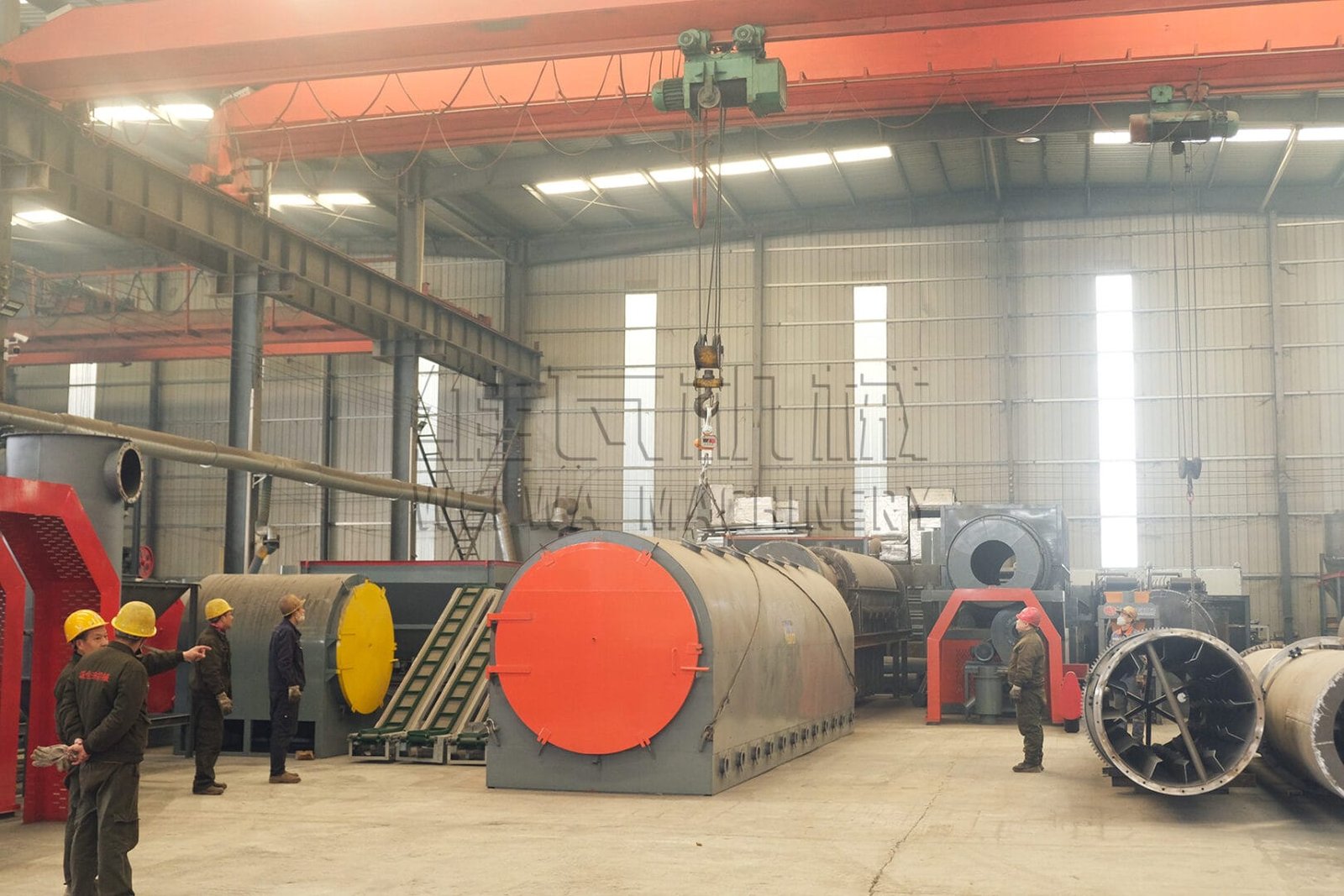
As the first light of dawn broke over the port of Rotterdam, the hum of a heavy-duty forklift cut through the morning air. On the concrete apron, a team of Weiwa Machinery’s logistics experts stood shoulder-to-shoulder, their eyes fixed on a massive, barrel-style chamber wrapped in protective sheeting—our horizontal carbonization furnace, bound for a small-scale charcoal producer in the Dutch province of Gelderland. This was more than a shipment; it was a bridge between our 30-year legacy of engineering efficient charcoal making solutions and the growing demand for sustainable fuel in Netherlands, where local farmers, artisans, and eco-conscious businesses are redefining how charcoal is made. For Weiwa Machinery, every machine we send across borders is a promise: to empower producers with technology that turns waste into value, and to stand by them as they build greener futures.
The Send-Off: Precision and Care in Every Step of the Shipment
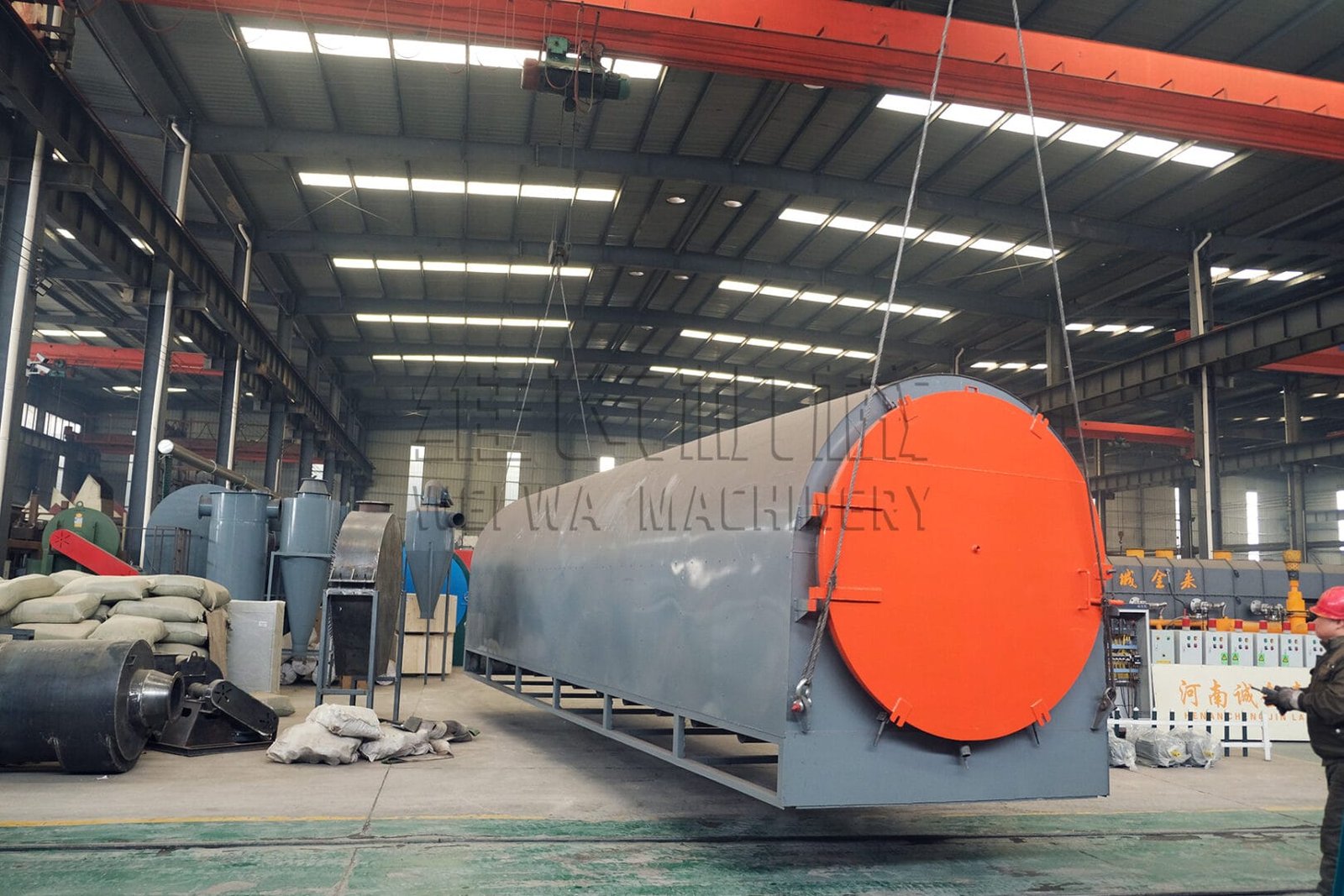
Shipping a horizontal carbonization furnace—an 8-meter-long, 2.5-meter-wide piece of precision equipment—requires more than just a truck and a plan. For this Netherlands order, our team started preparing weeks in advance, knowing the machine’s barrel-style chamber (mounted on custom rails for easy cart loading) and advanced gas-purification system demanded extra protection. We began with a thorough inspection: every weld on the chamber was checked for integrity, the gas-purification filters were tested to ensure they’d recycle tar and condensates effectively, and the temperature sensors (critical for maintaining 600 °C internal heat) were calibrated to Dutch climate conditions (where coastal humidity can affect equipment performance).
Next came packaging. The chamber was wrapped in anti-scratch foam, then encased in a weatherproof tarp, and finally secured to a flatbed trailer with industrial-grade straps. The gas-purification unit, a separate but vital component, was placed in a reinforced wooden crate, with shock-absorbing padding to guard against transit jolts. “This isn’t just a machine—it’s a tool for someone’s livelihood,” said Li Wei, our logistics manager, as he directed the forklift team. “We treat every shipment like we’re sending it to our own factory.”
On the day of departure, the port buzzed with activity, but our team moved with quiet focus. The forklift lifted the wrapped chamber onto the trailer, and the driver—an experienced hand who’d delivered to 12 countries—ran a final check of the tie-downs. “I’ve hauled everything from farm equipment to medical devices,” he said, “but this one feels special. I can tell it’s built to last.” As the truck pulled away, our team waved, not just goodbye to a machine, but hello to a partnership: in three days, this horizontal carbonization furnace would be unloaded at a farm in Gelderland, where it would start turning wood logs and agricultural residues into high-yield charcoal.
Why Netherlands? The Rise of Charcoal Making in a Green Economy
To understand why our horizontal carbonization furnace is landing in Netherlands, we need to look at the country’s charcoal landscape. Netherlands isn’t the first place that comes to mind for charcoal production—its dense cities and focus on renewable energy might suggest otherwise—but the reality is far more nuanced. Over the past five years, demand for charcoal in Netherlands has grown by 18% annually, driven by three key trends:
The Demand for Sustainable Fuel
Dutch consumers are increasingly rejecting imported charcoal (often sourced from deforested regions) in favor of locally made, eco-friendly alternatives. A 2023 survey by the Netherlands Environmental Agency found that 72% of grill owners prioritize “locally produced” and “low-emission” charcoal, while restaurants are switching to charcoal kilns that reduce their carbon footprint.
Small-Scale Producers Leading the Charge
Unlike large industrial charcoal plants, Netherlands’ charcoal scene is dominated by small-scale producers: family farms using orchard prunings, artisans turning coconut shells (imported from Southeast Asia but processed locally) into premium charcoal, and eco-startups creating briquettes from sawdust waste. These producers need equipment that’s compact (to fit on small plots), automated (to minimize labor), and efficient (to keep costs low)—exactly what our horizontal carbonization furnace delivers.
Government Support for Circular Economy
Netherlands’ government has doubled down on circular economy initiatives, offering grants to businesses that turn agricultural waste into value. For a farmer with a pile of unused wood logs or a bamboo grower with excess stalks, a horizontal carbonization furnace isn’t just a machine—it’s a way to turn waste into a revenue stream while meeting national sustainability goals.
For these producers, the challenge has been finding equipment that balances performance with practicality. Many have tried outdated kilns that are hard to load, produce too much smoke, or waste fuel. That’s where Weiwa Machinery’s horizontal carbonization furnace comes in: it’s designed for theirneeds, not the other way around.
How a Horizontal Carbonization Furnace Works ?
Before the furnace even reaches its Dutch farm, it’s important to demystify how it works—and why it’s a game-changer for local charcoal making. At its core, a horizontal carbonization furnace is a barrel-style chamber mounted on rails, with an indirect heating system and a gas-purification unit that recycles waste into fuel. Let’s break down the science, and why it matters for Netherlands’ producers:
The Barrel-Style Chamber: Easy Loading, Even Carbonization
Unlike traditional kilns (which require lifting heavy materials by hand), our furnace’s chamber sits on rails, so producers can load wood logs, bamboo, coconut shells, or sawdust briquettes via a simple cart. This is a lifesaver for small-scale operations: a Dutch farmer with a bad back or a team of two can load 1 ton of material in 30 minutes, compared to 2 hours with a vertical kiln. The horizontal design also ensures balanced heat distribution—no more “hot spots” that burn charcoal unevenly. For Netherlands’ producers, this means higher yields (our machines deliver 30% more charcoal than traditional kilns) and less waste.
Indirect Heating: Cleaner, More Efficient Carbonization
The furnace uses indirect heating, meaning the heat source (burners) is separate from the material chamber. This prevents direct contact between flames and the material, which reduces smoke and ensures the charcoal’s quality (no charred bits or off-flavors). For Netherlands, where air quality regulations are strict, this is non-negotiable. A producer in Utrecht who tested our furnace reported a 90% reduction in smoke compared to their old kiln—enough to pass local environmental inspections without extra filters.
The Gas-Purification System: Turning Waste into Fuel
Here’s the secret sauce: our furnace’s gas-purification system recycles tar and condensates (byproducts of carbonization) into clean combustible gas, which is fed back into the burners. This creates a closed loop: the gas sustains the 600 °C internal temperature, so producers don’t need to add extra fuel (like wood or gas) once the process starts. For Netherlands’ producers, this cuts fuel costs by 40%—a huge win for small businesses operating on tight margins. “I used to spend €200 a week on wood for my old kiln,” said Jeroen, the Gelderland farmer who ordered our furnace. “Now I spend €50, and the gas from the machine does the rest.”
Compact Footprint: Fits Small Plots
Netherlands is a small country—its total area is smaller than Hubei Province in China—so space is at a premium. Our horizontal carbonization furnace has a compact footprint (just 10m x 3m), so it fits on a small farm or workshop. Jeroen’s farm is only 2 hectares, and he was able to place the furnace next to his barn without disrupting his crops. “I thought I’d have to give up part of my vegetable patch,” he said, “but the size is perfect.”
The Netherlands Installation: A Partnership, Not Just a Sale
When the truck arrived at Jeroen’s farm, our on-site field service technician, Zhang Ming, was already there. Zhang, who speaks basic Dutch and has installed 20+ furnaces in Europe, spent the first day unboxing the machine and checking for transit damage (there was none). The next day, he worked with Jeroen and his son to install the chamber on the rails, connect the gas-purification unit, and calibrate the temperature sensors. “We don’t just install machines—we train people to use them,” Zhang said, as he showed Jeroen how to load the cart and monitor the temperature display.
By day three, the furnace was ready for its first test run. Jeroen loaded 500kg of wood logs (from his orchard prunings) into the chamber, closed the door, and started the burners. The gas-purification system kicked in, and within an hour, the temperature hit 600 °C. After 8 hours, Zhang opened the door, and a sweet, earthy smell filled the air—charcoal. Jeroen scooped up a piece, held it to the light, and grinned. “It’s perfect,” he said. “No smoke, no waste, and it’s all from my own trees.”
Over the next week, Zhang trained Jeroen’s team on maintenance: how to clean the gas filters, check the rail alignment, and troubleshoot common issues. “Weiwa’s support doesn’t end when the truck leaves,” Jeroen said. “Zhang is just a phone call away, and their 24/7 customer service team answers in 5 minutes.”
Charcoal Making in Netherlands: A Local Revolution Powered by the Right Kiln
Jeroen’s story is just one example of how our horizontal carbonization furnace is changing the game in Netherlands. Let’s look at two more producers who’ve made the switch:
Case 1: The Bamboo Artisan in Amsterdam
Linda, a designer in Amsterdam, uses our furnace to turn imported bamboo (from her family’s farm in Indonesia) into premium charcoal for her handcrafted incense. “I used to buy charcoal from a supplier, but it was full of chemicals,” she said. “Now I make my own, and it’s 100% natural. My customers love that it’s local and sustainable.” Her furnace’s automation means she can run it while she’s in her studio, and the high yield (she gets 200kg of charcoal from 500kg of bamboo) lets her scale her business.
Case 2: The Sawdust Briquette Startup in Rotterdam
Mark, a founder of a Rotterdam startup, uses our furnace to make briquettes from sawdust waste from local furniture factories. “We used to pay to dispose of sawdust—now we turn it into a product,” he said. “Our briquettes are sold in 10 local stores, and we’re getting orders from Germany.” The furnace’s gas-purification system is key: it lets Mark run the process with minimal fuel, so his cost per briquette is 25% lower than competitors.
Why Choose Weiwa Machinery?
As we watched Jeroen’s first batch of charcoal cool, we were reminded of why we started Weiwa Machinery: to make high-quality charcoal making technology accessible to everyone, from small farmers to global businesses. Here’s what sets us apart:
- Tailored Solutions: We don’t believe in one-size-fits-all. For Jeroen, we adjusted the rail height to fit his cart; for Linda, we added a bamboo-specific loading guide. We work with each client to design a solution that fits their material, space, and goals.
- 24/7 Support: Our customer service team is based in Zhengzhou, but we have technicians in Europe, Africa, and Southeast Asia. Whether it’s a temperature sensor issue or a question about fuel efficiency, we’re here to help—day or night.
- Global Expertise: We’ve exported to 50+ countries, from Nigeria (where farmers use our furnaces to turn coconut shells into charcoal) to Brazil (where sawmills use them for wood waste). We understand local challenges—like Netherlands’ humidity or Nigeria’s power outages—and design machines to overcome them.
- Proven Results: Over 2 million customers have chosen Weiwa Machinery, and 95% of them renew their contracts. Our furnaces have a 10-year lifespan (with proper maintenance), and we offer part shipments and on-site training to keep them running smoothly.
Conclusion: A Greener Future, One Charcoal Kiln at a Time
As the sun set over Jeroen’s farm, he showed us a bag of charcoal he’d packaged that afternoon. “This is for my neighbor’s barbecue,” he said. “He used to buy imported charcoal, but now he wants mine.” That’s the power of our horizontal carbonization furnace: it doesn’t just make charcoal—it builds community. It turns waste into value, supports local economies, and helps Netherlands move closer to its circular economy goals.
For Weiwa Machinery, shipping this furnace to Netherlands wasn’t just a business transaction. It was a chance to stand with a producer who’s choosing sustainability over convenience, and to prove that small-scale charcoal making can be efficient, profitable, and green. As we drove back to the port, we thought about the next shipment—maybe to Germany, maybe to France—but one thing was clear: wherever there’s a producer ready to turn waste into charcoal, Weiwa Machinery will be there, with a machine that works, and a team that cares.
If you’re a charcoal maker in Netherlands (or anywhere else) looking for a horizontal carbonization furnace that fits your needs, contact us today. We’ll send you a tailored solution, and we’ll be with you every step of the way—from shipment to installation to your first batch of perfect charcoal.
About Weiwa Machinery
WEIWA MACHINERY is a leading manufacturer of charcoal making machines, specializing in horizontal carbonization furnaces, briquette machines, and related equipment. Founded in 1990 and based in Gongyi, Zhengzhou (China’s “Capital of Briquette Machinery”), we’ve grown to serve over 2 million customers in 50+ countries. Our mission is to empower small- to medium-scale producers with efficient, sustainable technology that turns waste into value. We offer part shipments, on-site field service, installation training, and 24/7 customer support—because your success is our success.
Ready to start your charcoal making journey? Contact us at info@cjlmachinegroup.com or +8613838093177 (WhatsApp/WeChat). We’ll get back to you within 24 hours with a solution tailored to your needs.


 Wechat

 +8615937143060
