


Introduction: Bridging Innovation and Local Needs
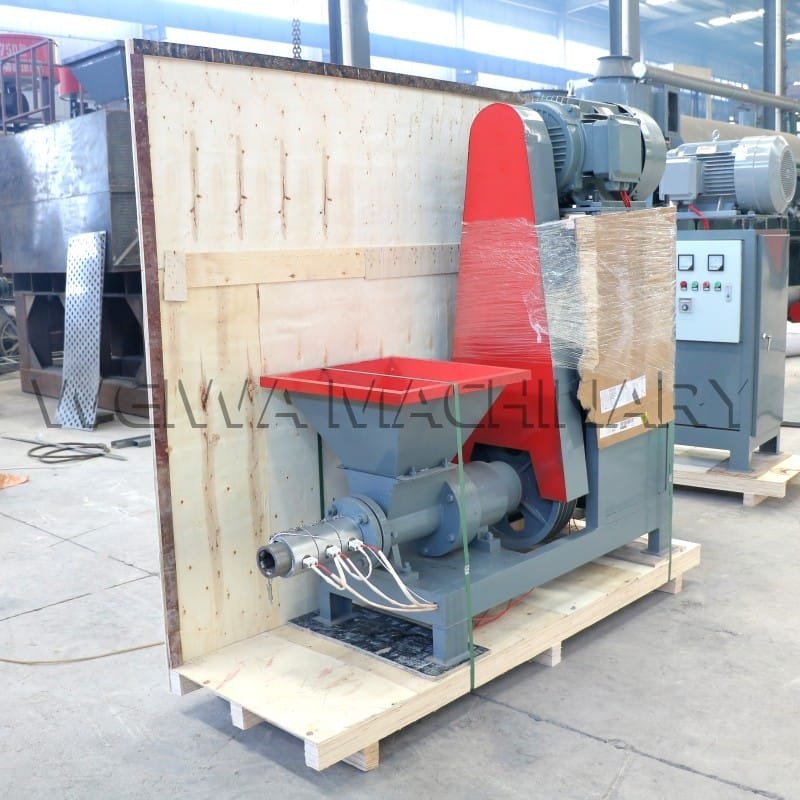
At Weiwa Machinery, we believe that sustainable energy solutions should be accessible across borders. Recently, we achieved a significant milestone by shipping a complete sawdust charcoal production line to Bangladesh. This shipment not only represents our commitment to expanding global operations but also demonstrates how advanced machinery can empower local industries to transform waste into valuable resources.
Understanding the Raw Material Advantage
Bangladesh, with its vast agricultural sector, generates substantial amounts of biomass waste annually. Among these materials, sawdust stands out as a readily available, low-cost raw material that holds immense potential when processed correctly. Traditional methods of charcoal production often rely on wood, which contributes to deforestation and environmental degradation. In contrast, using sawdust provides a renewable alternative that minimizes ecological impact while meeting energy demands.
The process begins with collecting sawdust from timber mills, furniture workshops, and other wood-processing facilities. Once gathered, the sawdust undergoes preparation steps such as drying and screening to ensure uniform quality. The prepared material then enters the core equipment—the sawdust extruder—which compresses the loose particles under high pressure and temperature, forming dense briquettes ready for carbonization.
How a Sawdust Briquette Machine Works?
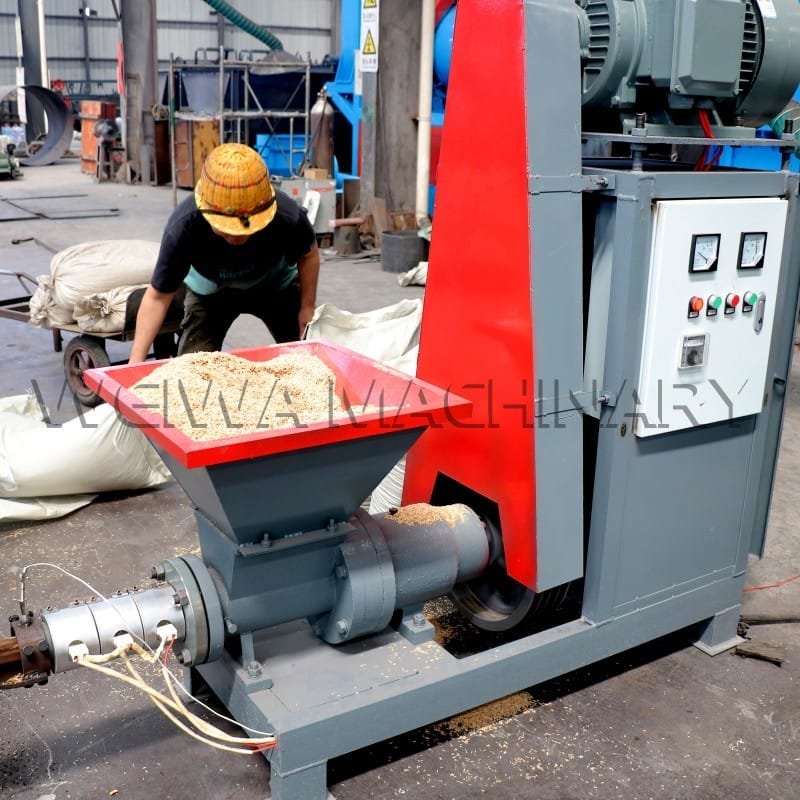
The heart of any efficient charcoal production line is the sawdust briquette machine. At Weiwa Machinery, our machines are engineered to handle diverse feedstock characteristics while maintaining consistent output quality. Here’s a closer look at the working principle:
Feeding System and Preparation
Before entering the extrusion chamber, the sawdust passes through a feeding system designed to regulate flow rate precisely. Uniform feeding ensures that each briquette has the same density and shape, critical factors for downstream processing and end-user satisfaction. Moisture content is carefully controlled; too much water reduces binding strength, while too little makes compression difficult.
Compression and Extrusion Process
Inside the sawdust extruder, rotating screws or hydraulic pistons apply immense force to compact the material. As pressure increases, natural lignin within the wood fibers acts as a binder, holding the particles together without additives. The result is a solid cylinder or pillow-shaped briquette with high calorific value and low ash content.
Cutting and Cooling
Once extruded, the continuous briquette strand is cut into standard lengths by an automated cutter. Immediate cooling stabilizes the structure, preventing deformation during handling and storage. Advanced models feature integrated conveyors and fans to streamline this stage.
Carbonization Stage: Turning Briquettes into High-Quality Charcoal
After briquetting, the next step is carbonization—a thermal decomposition process conducted in kilns or retorts. During carbonization, volatile gases are released, leaving behind fixed carbon. Proper control of temperature and airflow determines the final product’s properties, including burn time, heat output, and smoke emission.
In Bangladesh, where many households still depend on traditional fuels like firewood, introducing clean-burning charcoal made from sawdust offers multiple benefits: reduced indoor air pollution, lower fuel costs, and decreased reliance on forest resources. Our sawdust briquetting machine plays a pivotal role in making this transition feasible by producing standardized briquettes suitable for both domestic and industrial applications.
The Role of Sawdust Extrude Machines in Bangladesh’s Energy Transition
Bangladesh faces growing challenges related to energy access and environmental sustainability. Rural areas, in particular, struggle with limited electricity infrastructure and dependence on inefficient cooking methods. By deploying modern sawdust extrude machines, local entrepreneurs can establish small-scale charcoal plants capable of supplying affordable, eco-friendly fuel.
These machines are relatively easy to operate and maintain, requiring minimal training. Their modular design allows customization based on production capacity needs. For instance, a medium-sized unit might produce several tons of briquettes per day, sufficient to serve hundreds of households. Over time, increased adoption could significantly reduce pressure on natural forests while boosting rural economies.
Challenges and Solutions in Implementing Sawdust Charcoal Projects
Despite the clear advantages, implementing sawdust charcoal projects involves overcoming certain hurdles. One common issue is inconsistent supply of raw materials due to seasonal variations in sawmill activity. To address this, some operators partner with multiple suppliers or diversify feedstock sources to include rice husks and coconut shells.
Another challenge lies in market acceptance. Educating consumers about the benefits of briquette charcoal takes time, especially in regions accustomed to traditional fuels. Demonstration projects and pilot programs help build trust and encourage wider adoption. Government incentives, such as subsidies or tax breaks, further accelerate progress.
Weiwa Machinery supports clients throughout these phases by offering comprehensive after-sales service, operator training, and troubleshooting assistance. Our goal is not merely to sell equipment but to foster long-term success for every project.
Environmental Impact: Reducing Deforestation Through Innovation
One of the most compelling arguments for adopting sawdust briquette machines is their positive environmental impact. Forests play a vital role in regulating climate, preserving biodiversity, and protecting watersheds. Unsustainable logging for charcoal production accelerates deforestation, leading to soil erosion, habitat loss, and increased greenhouse gas emissions.
By utilizing agricultural residues instead of virgin timber, sawdust-based charcoal mitigates these risks. Moreover, the carbonization process captures carbon within the briquettes, temporarily storing it until combustion occurs. While burning releases CO₂, the net effect over the lifecycle remains favorable compared to fossil fuels. Lifecycle assessments consistently show that briquette charcoal has a smaller carbon footprint than coal or kerosene.
Economic Opportunities: Empowering Local Communities
Beyond environmental gains, sawdust charcoal production creates tangible economic opportunities. Small businesses can generate income by collecting, processing, and selling raw materials. Job creation extends to machine operation, maintenance, transportation, and sales. Women, who often bear the burden of household energy procurement, particularly benefit from cleaner, more efficient alternatives.
In Bangladesh, where agriculture employs a large portion of the workforce, integrating charcoal production into existing value chains enhances resilience. Farmers gain additional revenue streams, while processors enjoy stable demand for their products. As markets mature, exports may become viable, opening doors to international trade.
Quality Assurance: Ensuring Consistent Performance Across Climates
Operating conditions vary widely between countries, necessitating robust engineering solutions. Bangladesh’s tropical climate poses unique challenges, including high humidity and fluctuating temperatures. Our sawdust extruders are built with corrosion-resistant materials and sealed components to withstand harsh environments. Regular inspections and preventive maintenance schedules help avoid downtime.
Quality assurance doesn’t stop at manufacturing. Before shipment, every machine undergoes rigorous testing to verify functionality and safety standards. Detailed manuals accompany each unit, supplemented by video tutorials and remote support options. Clients receive ongoing guidance to optimize performance according to local conditions.
Customer Success Stories: Inspiring Change Through Real-World Examples
Over the years, Weiwa Machinery has partnered with numerous clients worldwide, helping them launch successful charcoal ventures. One notable example comes from Southeast Asia, where a cooperative of smallholder farmers invested in a sawdust briquetting machine to convert plantation waste into fuel. Within two years, they expanded operations threefold, supplying schools, restaurants, and households with affordable charcoal.
Stories like these underscore the transformative power of technology when paired with visionary leadership. They also highlight the importance of tailored solutions—what works in one region may require adjustments elsewhere. That’s why we emphasize collaboration, listening closely to client needs before designing customized systems.
Logistics and Delivery: From Factory Floor to Final Destination
Shipping complex machinery internationally requires meticulous planning. For the recent delivery to Bangladesh, our logistics team coordinated closely with freight forwarders, customs brokers, and local partners. Each component was securely packaged to prevent damage during transit, with clear labeling indicating assembly sequence and safety precautions.
Upon arrival, installation specialists assisted with site preparation, foundation laying, and equipment setup. Training sessions covered operational procedures, routine checks, and emergency protocols. By ensuring seamless handover, we minimize delays and enable clients to start production quickly.
Scaling Up for Greater Impact
Looking ahead, the potential for growth in Bangladesh’s sawdust charcoal sector remains vast. Population growth, urbanization, and rising awareness of environmental issues will drive demand for clean energy alternatives. Technological advancements promise even higher efficiency and lower costs, making projects increasingly attractive to investors.
Weiwa Machinery continues to invest in research and development, exploring innovations such as automation, IoT integration, and renewable energy-powered kilns. These improvements aim to enhance productivity, reduce labor requirements, and lower environmental footprints further.
Commitment to Sustainable Development
The shipment of our sawdust charcoal production line to Bangladesh marks another step forward in our mission to promote sustainable energy solutions globally. Through reliable equipment, expert support, and a focus on long-term partnerships, we strive to make a meaningful difference in communities worldwide.
As Bangladesh embraces cleaner fuels, we remain dedicated to providing cutting-edge technology and unwavering service. Together, we can turn waste into wealth, protect precious ecosystems, and improve lives for generations to come.
About Weiwa Machinery
Founded in 1990, Weiwa Machinery has grown into a trusted name in biomass processing equipment. Specializing in sawdust extrude machines, sawdust briquette machines, and complete production lines, we combine innovation with practicality to meet diverse customer needs. Our experienced engineers design robust, efficient systems tailored to local conditions, supported by comprehensive training and after-sales care. With installations spanning continents, Weiwa Machinery is proud to contribute to a greener, more prosperous future.
- Mob:+8613838093177
- Whatsapp:+8613838093177
- E-Mail:info@cjlmachinegroup.com


 Wechat

 +8615937143060
