


In the golden dawn of a brisk spring morning at our manufacturing base, the air was filled with the hum of machinery, the scent of fresh steel, and an electric sense of purpose. Today marked a defining moment for Weiwa Machinery—the shipment of our flagship horizontal carbonization furnace to Turkey, a country where demand for sustainable charcoal solutions is surging. For years, we have tailored our charcoal making machines to meet diverse global needs, and this delivery to Turkey underscores our commitment to empowering local industries while advancing eco-friendly practices. As the first batch of equipment rolled onto the freight trucks, we couldn’t help but reflect on the journey that brought us here: from designing a horizontal carbonization furnace optimized for wood, to testing its mettle in real-world scenarios, and now, bridging distances to support Turkey’s growing charcoal sector.
The Significance of This Shipment for Weiwa Machinery and Turkey
This shipment is more than just a transaction; it is a bridge between innovation and application. For Weiwa Machinery, Turkey represents a dynamic market where traditional charcoal production is evolving into a mechanized, efficient process. Local artisans and small-scale enterprises are increasingly seeking alternatives to outdated kilns that waste energy and emit harmful fumes. Our horizontal carbonization furnace, engineered to address these pain points, arrives as a game-changer. It aligns with Turkey’s push for green manufacturing and supports the government’s initiatives to promote renewable biomass resources.
For Turkish buyers, this delivery signals access to a technology that balances productivity with environmental responsibility. Unlike vertical kilns or open-pit methods, a horizontal carbonization furnace ensures uniform heating, reduces carbon loss, and minimizes smoke pollution. By choosing our equipment, Turkish businesses can enhance output quality, lower operational costs, and meet stringent sustainability standards—all critical factors in a market where eco-consciousness is no longer optional but imperative.
Unveiling the Horizontal Carbonization Furnace for Turkey
To understand why this horizontal carbonization furnace has captured Turkey’s attention, we must first demystify its design and functionality. At its core, a horizontal carbonization furnace is a specialized charcoal making machine that processes raw materials (primarily wood) through controlled pyrolysis in a horizontal chamber. Unlike vertical counterparts that rely on gravity-fed feeding, our horizontal model features a streamlined, elongated structure that allows for continuous or batch processing, depending on user needs.
How a Horizontal Carbonization Furnace Works for Wood Processing?
The magic of this furnace lies in its ability to transform wood into high-quality charcoal with precision. Here’s a glimpse into its workflow: First, prepped wood chunks—debarked and sized to fit the chamber—are loaded into the horizontal retort. Once sealed, the furnace initiates a multi-stage heating process. In the initial phase, external burners raise the temperature to drive off moisture, preventing steam from diluting the pyrolysis gases. Next, as heat penetrates deeper, volatile compounds (like tar and methane) are released and channeled into a combustion system, where they are burned to generate heat—creating a self-sustaining cycle that slashes fuel consumption. Finally, the remaining material undergoes carbonization, emerging as dense, low-moisture charcoal with high calorific value.
What sets our horizontal carbonization furnace apart is its adaptability. Adjustable temperature controls (ranging from 300°C to 600°C) let operators tailor the process for different wood types—whether hardwoods like oak, which yield premium charcoal, or softwoods like pine, which require gentler heating to avoid over-carbonization. This flexibility is particularly valuable in Turkey, where forests boast diverse timber species, from the resinous Anatolian pines to the durable Black Sea oaks.
Key Features Tailored for Turkey’s Market Needs
When designing the horizontal carbonization furnace for Turkey, we prioritized three pillars: efficiency, durability, and user-friendliness.
- Energy Efficiency: Turkey’s energy costs are a key concern for small and medium-sized producers. Our furnace recycles volatile gases for heating, cutting external fuel use by up to 40% compared to conventional kilns. This not only lowers expenses but also reduces reliance on fossil fuels, aligning with Turkey’s renewable energy targets.
- Robust Construction: Built with high-grade carbon steel and insulated with refractory materials, the furnace withstands Turkey’s varied climates—from the humid coastal regions to the arid central plains. Its horizontal design also simplifies maintenance, as components like seals and burners are easily accessible, minimizing downtime.
- Safety and Compliance: Turkish regulations emphasize emission control and worker safety. Our furnace includes automated pressure and temperature sensors, along with a closed-loop gas management system that captures harmful emissions, ensuring compliance with EU-aligned environmental standards.
Behind the Scenes of the Shipment Preparation
A successful delivery hinges on meticulous preparation, and our team left no detail overlooked. Weeks before the shipment, engineers conducted a final inspection of the horizontal carbonization furnace, checking welds, calibrating sensors, and running simulated cycles to verify performance. Packaging was another critical step: each component—from the main retort to auxiliary burners—was wrapped in anti-corrosion film, padded with foam, and secured on custom crates to withstand transit vibrations.
Logistics coordination was equally vital. Partnering with a freight forwarder experienced in heavy machinery transport, we mapped a route that minimized transit time while avoiding rough terrains. For oversized parts, such as the 6-meter-long retort, we obtained special permits and arranged flatbed trucks with reinforced beds. On the day of loading, our warehouse crew worked in sync, using cranes and forklifts to position each crate precisely, ensuring the load was balanced to prevent shifting during the 12,000-kilometer journey to Turkey.
As the last truck pulled out of the factory gate, our project manager, Mr. Li, noted, “Every bolt tightened, every sensor tested, and every crate secured is a promise to our Turkish partners—this horizontal carbonization furnace will arrive ready to perform.”
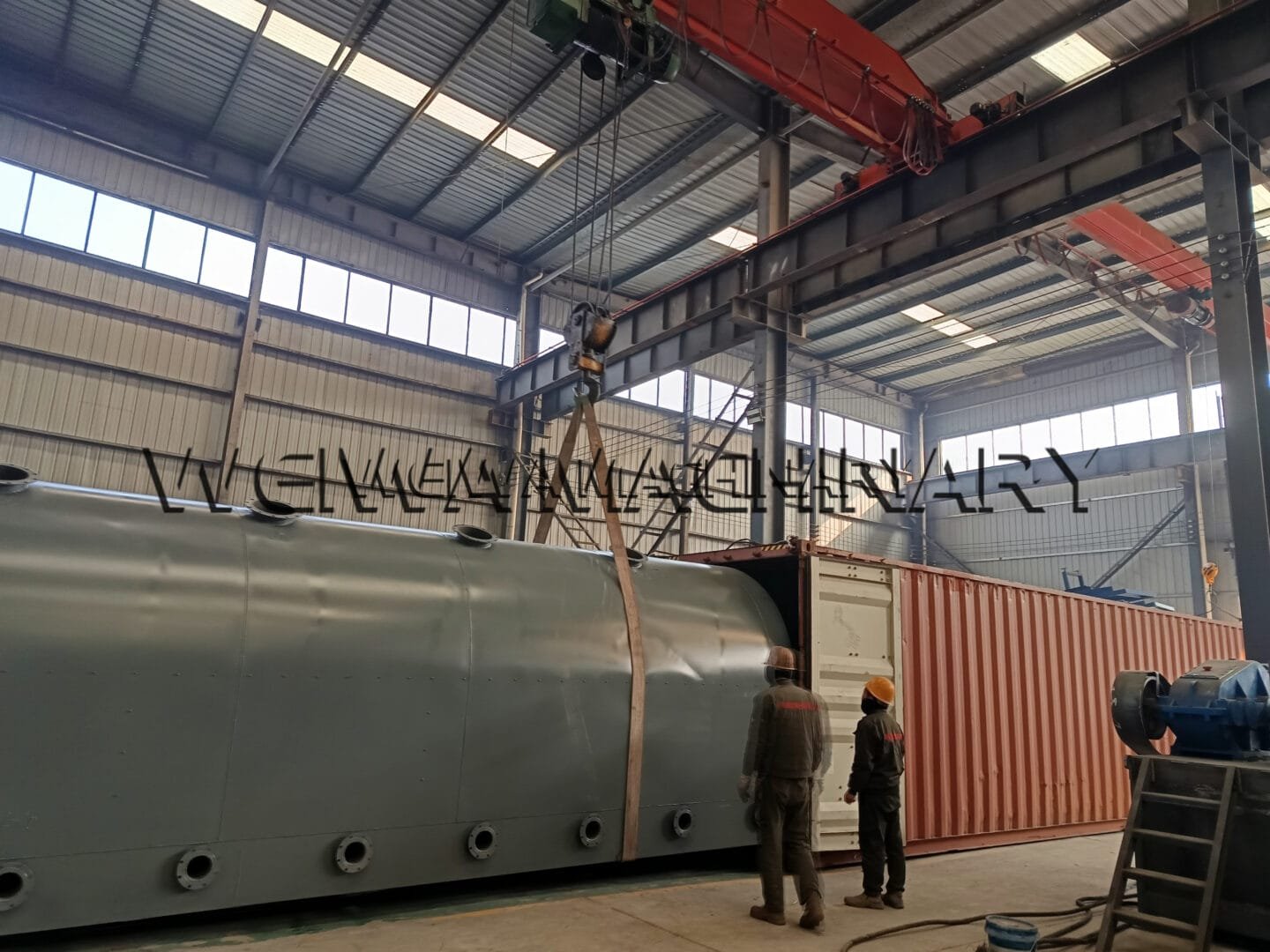
Horizontal Carbonization Furnace in Turkey
To grasp the impact of this shipment, it helps to contextualize Turkey’s charcoal landscape. With a rich tradition of charcoal use in cooking, metallurgy, and agriculture, Turkey’s annual charcoal demand exceeds 500,000 tons. However, 60% of this is still produced using primitive methods—earth mounds or brick kilns—that suffer from low yields (only 20–25% of wood converts to charcoal) and severe environmental drawbacks, including deforestation and air pollution.
The shift toward mechanized solutions like our horizontal carbonization furnace is gaining momentum. Turkish importers and manufacturers are drawn to its ability to boost conversion rates to 35–40%, thanks to controlled pyrolysis. Moreover, the consistent quality of charcoal—free from impurities and with uniform particle size—commands higher prices in both domestic and export markets, including Europe, where Turkey supplies charcoal to restaurants and retailers.
Industry analysts predict that by 2027, the market share of modern charcoal making machines in Turkey will triple, driven by rising consumer demand for clean-burning fuels and government incentives for sustainable production. Our horizontal carbonization furnace, with its proven track record in similar markets, is poised to play a pivotal role in this transition.
Testimonials and Trial Results: Proving Performance on Turkish Soil
Before finalizing the shipment, we invited a delegation of Turkish clients to our test facility to witness the horizontal carbonization furnace in action. Over five days, they observed multiple trials using locally sourced oak and pine—wood types common in Turkey’s Black Sea and Aegean regions.
The results were compelling. Using oak, the furnace produced 1.2 tons of charcoal from 3.5 tons of wood—a 34% conversion rate, surpassing industry averages. The charcoal exhibited a fixed carbon content of 85% and a calorific value of 7,200 kcal/kg, making it ideal for high-heat applications like grilling and metalworking. Even with pine, which is trickier to carbonize due to its resin content, the furnace delivered a 30% conversion rate, with minimal tar residue—a testament to its precise temperature control.
Mr. Erdem, a Turkish charcoal producer who participated in the trial, shared, “We’ve used traditional kilns for years, but the inconsistency and smoke were unbearable. Watching the horizontal carbonization furnace operate was eye-opening—it’s clean, fast, and the charcoal quality is unmatched. We’re eager to install one at our facility.”
These trials not only validated the furnace’s suitability for Turkey’s raw materials but also built trust with local stakeholders, paving the way for smoother adoption.
Looking Ahead: Supporting Turkey’s Charcoal Revolution
As the horizontal carbonization furnace begins its voyage to Turkey, our work doesn’t end with delivery. Weiwa Machinery provides comprehensive after-sales support, including on-site installation, operator training, and remote monitoring. Our Turkish partners will receive manuals in their native language, and our engineers will be available via video calls to troubleshoot any issues.
We also plan to collaborate with local agricultural cooperatives to source wood waste—such as sawdust and branch trimmings—reducing reliance on virgin timber and creating additional income streams for farmers. By integrating circular economy principles, we aim to make charcoal production not just profitable, but regenerative.
About Weiwa Machinery
Founded in 1990, Weiwa Machinery has grown into a leading manufacturer of charcoal making machines, specializing in horizontal carbonization furnaces, biomass dryers, and crushers. Guided by the mission to “turn waste into wealth sustainably,” we combine cutting-edge R&D with hands-on customer support to deliver solutions that empower global communities. Our products are certified to ISO 9001 and CE standards, and we serve clients in over 50 countries, from Southeast Asia to Europe.
At Weiwa Machinery, we believe technology should heal, not harm. Whether it’s helping a Turkish village adopt cleaner charcoal production or enabling a Brazilian farm to monetize crop residues, we are committed to building a future where resourcefulness and environmental stewardship go hand in hand.
As our horizontal carbonization furnace heads to Turkey, it carries more than steel and circuitry—it carries our vision of a greener, more prosperous world. And we’re just getting started.


 Wechat

 +8615937143060
