


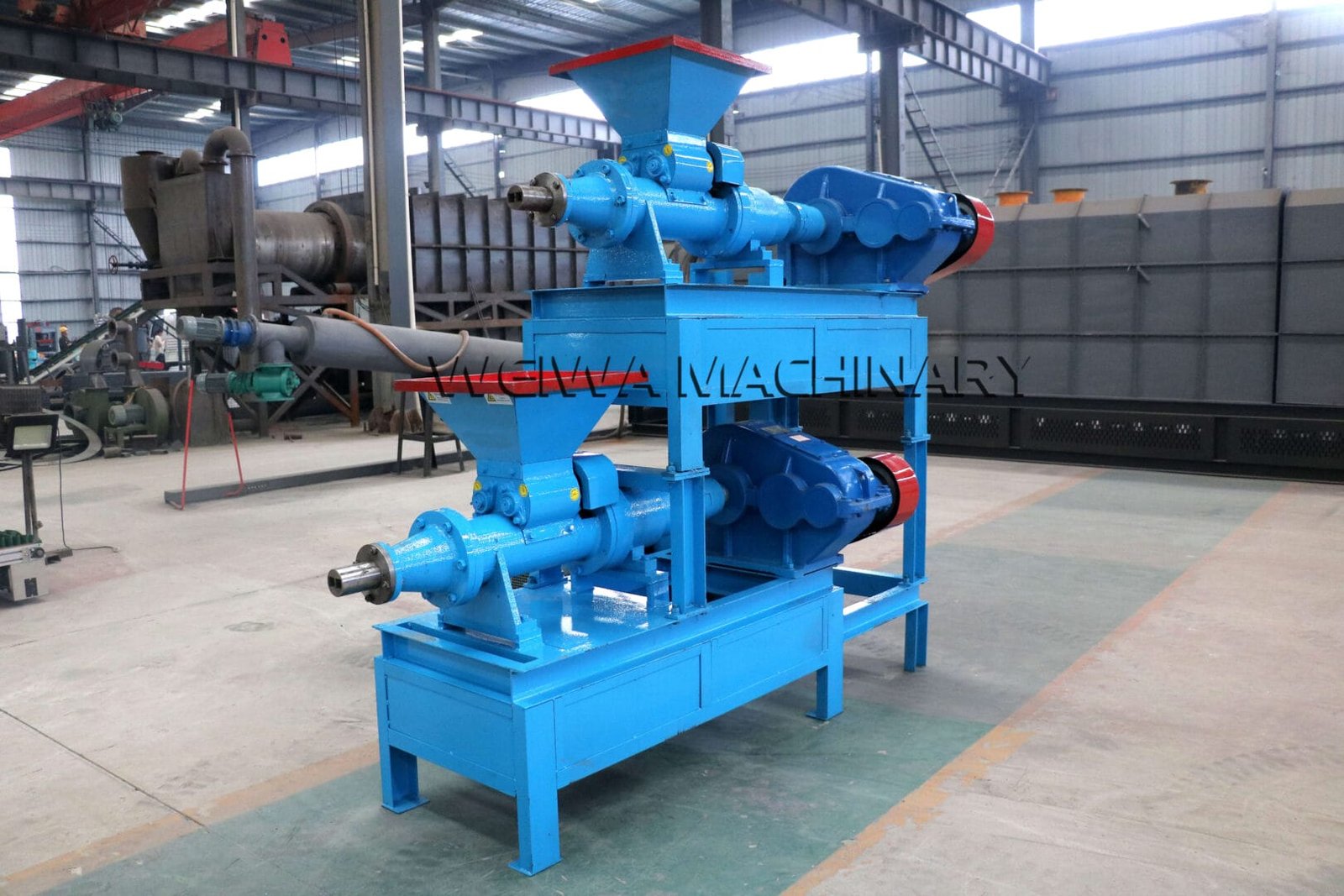
A charcoal extruder machine is only as good as the consistency of its output. Single-layer screw presses leave micro voids, uneven compaction, and moisture pockets that turn into end cracks during drying. The Weiwa upgraded double layer design fixes this by splitting the extrusion work into two sequential pressure zones. Raw charcoal powder or coal powder enters the first chamber for de-aeration and pre-compaction, then transfers into the second chamber where a resurfaced high manganese screw applies the main forming pressure through a replaceable die. The result is a BBQ charcoal rod press machine output that feels heavier per centimeter, breaks less in the belt dryer, and holds shape when stacked on pallets for the mountain road delivery inside Tajikistan.
Double Layer Coal Stick Machine Upgrade Behind the Tajikistan Order
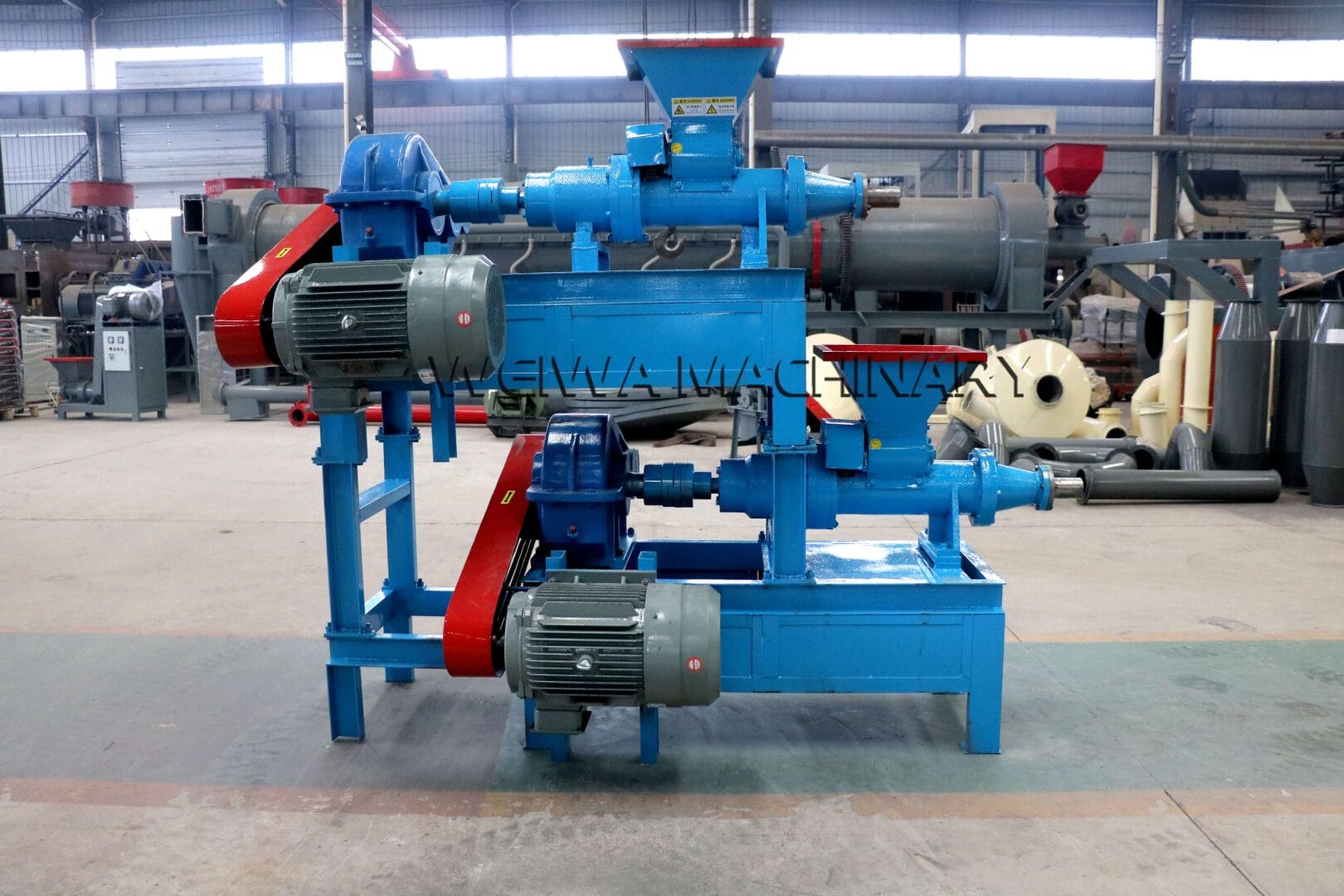
The Tajikistan buyer runs a 2 ton per hour charcoal workshop supplying winter heating bricks and summer café BBQ sticks. Their old single-layer unit from another Henan workshop produced acceptable rods in dry months but lost grade A yield when humidity rose above 55 percent. After a video call with our engineering team and a 5 kilogram raw material test on coconut shell charcoal powder mixed with local wood charcoal dust, we proposed the WB-180DL model, a charcoal briquette machine variant built on the same base as our MBJ180 screw extruder but with a widened gearbox mount, reinforced carbon steel frame, floating coupling upgrade, and parallel twin pressure sleeve inside the barrel.
Weiwa Machinery has more than thirty years of working experience in coal rod and charcoal molding equipment. The double layer coal stick machine is not a cosmetic update. The 2026 version shipped to Tajikistan carries five structural revisions compared with our 2021 single-layer export unit.
First, the base frame uses national certified carbon steel with gusset plates welded at the gearbox and motor feet. Vibration transfer to the electrical cabinet drops, which matters in Central Asia where winter workshop temperatures swing between minus ten and plus twenty Celsius.
Second, the floating coupling between transmission output shaft and propulsion shaft was widened. Many small factories in Tajikistan install machines on older concrete floors that are not perfectly level. The wider coupling absorbs misalignment and protects the screw from side load.
Third, the screw flight wear edge received a tungsten overlay. Coal powder and charcoal dust are abrasive. In the Indonesian coconut shell project, the same overlay extended screw service life from four months to over eleven months.
Fourth, the feeding hopper angle was lowered from 63 degrees to 58 degrees and paired with a variable speed agitator. This prevents bridge formation when binder moisture is slightly high, a common issue when operators switch from tapioca starch to local wheat flour binder.
Fifth, the control panel kept semi-automatic ammeter monitoring instead of full PLC. The Tajikistan team preferred this because local electricians already understand contactors and ammeters. They can upgrade to PLC later without replacing the machine.
Two Stage Compression Instead of Single Screw Extrusion
In a conventional charcoal extruder machine, one screw does everything: convey, compact, de-air, and shape. That overloads the screw tip and creates torque spikes. The double layer coal rod press machine separates the work. Chamber one runs at low pressure and acts like a de-aeration throat. Chamber two receives a cohesive plug instead of loose powder. Because there is no trapped air to fight, the second screw needs less peak torque, so the 22 kW motor stays inside rated load and power per ton drops.
The Indonesian client measured roughly 11 percent lower electricity per ton after switching to the double layer unit. The Tajikistan proposal used the same calculation. At 2 ton per hour and 300 working days, the energy saving alone covers a meaningful part of the upgrade cost before counting binder reduction and breakage loss.
How the Double Layer Structure Makes Charcoal Rods Finer and More Compact?
Fineness in charcoal rod language does not mean small diameter. It means the cross section has no coarse pores, no soft core, and no shell cracking. The Weiwa double layer coal stick machine reaches this by controlling three variables at once: pressure curve, residence time, and exit die temperature.
The first layer slows the material. Powders under 3 mm mix with binder in the grinding wheel mixer, then enter the hopper at 18 to 22 percent moisture depending on raw material. Inside chamber one, the auger pushes the mass forward while the upper vent slot releases air upward. By the time the plug crosses into chamber two, bulk density already rises from around 0.75 g/cm³ to 1.05 g/cm³.
Chamber two applies the main pressure. The high manganese propeller squeezes the plug against the die ring. Because the incoming material is already de-aired, the final rod exits at 1.35 to 1.45 g/cm³, compared with 1.05 to 1.15 g/cm³ from a single-layer press using the same powder. That extra 25 to 30 percent density is what users feel as a heavier stick and what combustion tests show as longer burn time.
Surface fineness also improves because the second die sees a homogeneous plug, not fluctuating powder feed. The Tajikistan buyer selected a 28 mm cylindrical die for BBQ export and a 40 mm hexagonal die for heating bricks. Both share the same double layer barrel. Die change takes one worker about 40 minutes including cooling and coupling check.
Mold Options for Tajikistan BBQ and Heating Rods
Tajikistan BBQ culture centers on summer courtyards and café grills. Stick diameter preference sits between 25 mm and 30 mm for household BBQ, while industrial and heating users accept 33 mm to 50 mm hexagonal or cylindrical rods. The Weiwa charcoal briquette machine platform supports all of these with quick swap dies. For the Dushanbe order we supplied three die sets: 28 mm round, 33 mm hex with center hole, and 45 mm round without hole. The client can switch market focus without buying a second machine.
Combustion Advantage of Weiwa BBQ Charcoal Rod Press Machine Output
Denser rods burn differently. They ignite slightly slower than porous charcoal, but once lit they hold temperature longer and emit less white smoke. In a 500 gram rod burn test using coconut shell and wood charcoal blend, the double layer coal stick machine output sustained measurable heat for 82 to 88 minutes, while the old single-layer rod from the same powder stopped at 58 to 64 minutes. Ash content after full burn dropped from 6.8 percent to 5.1 percent.
For Tajikistan, this matters twice. In winter, heating bricks must hold a stove warm through the night without constant refilling. In summer, café owners pay per kilogram of BBQ charcoal and care about customer complaints on flare-up smoke. A BBQ charcoal rod press machine that lowers smoke and extends burn time directly raises the client’s retail margin.
Less binder is another combustion benefit. Because the double layer compaction holds shape mechanically, the Tajikistan formula reduced tapioca starch from 6 percent to 4.5 percent. Lower binder means lower volatile release at ignition and less risk of soft black crust on the rod surface. For plants that later recarbonize the rods, binder reduction also lowers smoke in the charring furnace.
Binder Saving and Moisture Control in Cold Highland Climate
Tajikistan’s altitude changes moisture behavior. In Dushanbe the workshop sits near 800 meters, but the client’s raw material storage in Khatlon region sits above 1200 meters where nighttime humidity condenses on charcoal sacks. We advised a heated binder tank and a 0.5 percent moisture trim in the mixer. The grinding wheel mixer from Weiwa already supports this through adjustable scraper speed. The double layer coal rod press machine performs best when binder is fully gelatinized before entering the hopper, so the pre-mix stage matters as much as the press itself.
Why Tajikistan Republic Is a Growing Market for Charcoal Briquette Machine Lines?
The Republic of Tajikistan imports a large share of household energy products and is actively encouraging local processing of agricultural waste, coal tailings, and charcoal dust into uniform fuel. Three forces push demand for the double-layer coal rod press machine in Tajikistan upward through the next five years.
First, urban BBQ and café culture in Dushanbe, Khujand, and Bokhtar is expanding. Importers currently bring charcoal from Uzbekistan, Kazakhstan, and China. Local production with a Weiwa charcoal extruder machine cuts landed cost and shortens lead time.
Second, winter heating policy favors dense briquettes over loose coal because dense rods release less fine dust in residential areas. Municipal procurement in smaller cities is starting to specify calibrated briquette size and calorific value, which single-layer machines struggle to hit consistently.
Third, the raw material base exists. Tajikistan has coal powder from regional mines, walnut shell and apricot wood charcoal from food processors, and rice husk charcoal from mill clusters. A charcoal briquette machine line turns this dispersed waste into a packaged product with barcode level uniformity.
Weiwa already serves more than 130 countries. Central Asia is not new to us. Previous shipments went to Uzbekistan, Turkmenistan, and Kyrgyzstan. The Tajikistan order is the first double layer coal stick machine into that corridor with the 2026 screw geometry, which means field data from this client will shape the next batch of machines sent to the region.
Full Briquette Line Matching the Double Layer Coal Rod Press Machine
No charcoal extruder machine should run alone if the goal is grade A rods. The Tajikistan proposal included five machines in sequence.
A charcoal crusher reduces raw lump charcoal and coal cake to under 3 mm. A grinding wheel mixer blends powder with binder and returns a homogeneous mass. The double layer coal stick machine forms the rod. A mesh belt dryer removes surface and core moisture in four hours. A cooling conveyor brings rods to ambient temperature before bagging.
This line logic is why we discourage buyers from purchasing only a press. In Indonesia, the client who bought the double layer coal rod press machine later found the crusher was the bottleneck. In Tajikistan we sized the crusher at 1.5 ton per hour feeding a 2 ton per hour press, so the press never starves. The mixer uses a 0.5 cubic meter trough with adjustable wheel pressure because walnut shell charcoal behaves differently from coal powder and needs more kneading.
Dryer choice followed climate. Tajikistan winter workshops cannot use open solar drying reliably, so we specified a 18 meter mesh belt dryer with 22 kW fan and 60 kW burner capable of gas or diesel. The client can switch fuel source without changing the machine body.
Logistics Packing and Remote Commissioning for Central Asia
Export packing for the double layer coal stick machine followed Weiwa’s standard reinforced method. The main unit was wrapped in plastic film including motor and gearbox, mounted on a steel skid, then placed into a plywood box with desiccant bags. Dies and spare coupling went into a separate steel crate marked for customs ease. Because the route to Tajikistan passes rail and truck transshipment, we added corner protectors and bilingual Chinese-Russian label plates for emergency stop, lubrication point, and die change sequence.
Commissioning was remote. Our after-sales engineer joined a WhatsApp video call with the local electrician, checked ammeter baseline, ran the screw empty for ten minutes, then pushed a binder test batch. The first real batch showed stable ammeter at 38 A on 22 kW motor, no hopper bridging, and rod exit temperature around 62 Celsius. The client sent photos of 28 mm BBQ rods stacked in a plastic crate with fewer than 3 percent end cracks after four hour drying, matching our Indonesian field data.
Weiwa Machinery Customization After Sales and Factory Layout Service
Weiwa Machinery is based in Gongyi, Henan, with more than thirty years of working experience in charcoal and coal briquette equipment. We do not sell a fixed SKU and call it done. For the Tajikistan double layer coal stick machine, we adjusted screw pitch, barrel length, die diameter, and gearbox ratio according to the client’s raw material test report. Buyers who send 5 kilogram of charcoal powder receive a free bench-scale extrusion video and a proposed layout drawing showing foundation bolts, belt angles, and electrical panel position.
Our after-sales team assigns one engineer per container order. The Tajikistan shipment included a Chinese-English-Russian operation manual, a 38 minute installation video, and a WhatsApp group with the commissioning engineer. Spare parts list is priced separately, not hidden inside the machine cost. For Central Asia we recommend stocking one propeller, two liner sleeves, one belt set, and one coupling rubber block per year of operation.
Customization also covers voltage. The Tajikistan line runs on 380V 50Hz three phase, but we have built the same double layer coal rod press machine for 220V 60Hz, 415V 50Hz, and dual voltage panels. Control language, label language, and binder recipe all adapt to the destination country.
If you are planning a charcoal plant in Dushanbe, Khujand, Bokhtar, or any market where BBQ charcoal rod press machine quality decides retail price, the Weiwa double layer coal stick machine deserves a place in your line. We welcome factory visits in Henan and can join a live video walkthrough of your existing workshop.
Weiwa Machinery designs and builds charcoal extruder machine units, double-layer coal stick machines, charcoal crushers, grinding wheel mixers, mesh belt dryers, carbonization furnaces, and full briquette lines. Our engineering group upgrades screw geometry, compression chambers, and control interfaces based on field data from real plants, including the recent double-layer coal rod press machine project in Tajikistan. Products from Weiwa have been installed in over 130 countries, and our team continues to refine output density, combustion stability, and dryer integration for cold climate markets.
Contact Weiwa Machinery for a tailored proposal with machine model, capacity table, mold options, voltage configuration, and factory layout drawing.
Mob / WhatsApp: +8613838093177
E-Mail: info@cjlmachinegroup.com


 Wechat

 +8615937143060
