


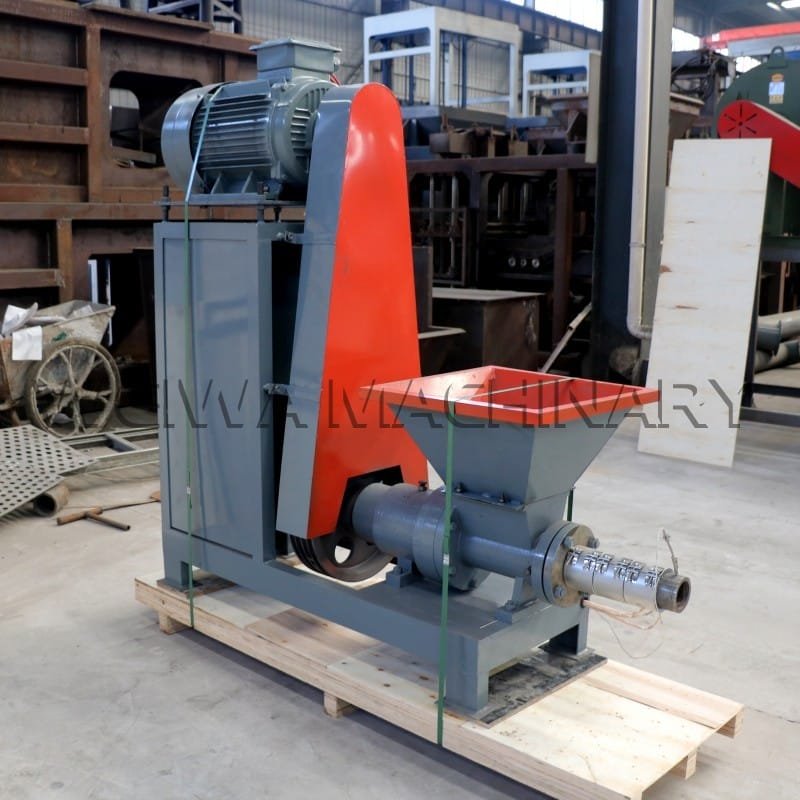
At Weiwa Machinery, we believe that innovation should travel beyond borders to support sustainable energy solutions globally. Recently, we proudly loaded and dispatched a complete biomass briquette machine production line to the enchanting Kingdom of Bhutan — a country known for its commitment to environmental preservation and renewable resources.
The Mission Behind Shipping a Biomass Briquette Machine to Bhutan
Bhutan stands as a beacon of ecological consciousness. With over 70% of its land under forest cover, it is uniquely positioned to harness biomass as an alternative fuel source. However, traditional methods of charcoal making are often inefficient and polluting. Recognizing this gap, local entrepreneurs partnered with us at Weiwa Machinery to upgrade their operations through modern biomass briquetting machines.
Our mission was clear: deliver a reliable, efficient sawdust briquetting machine capable of transforming abundant sawdust waste into high-density, clean-burning charcoal briquettes. By doing so, we aim to reduce deforestation caused by charcoal harvesting, cut indoor air pollution, and create economic opportunities in rural communities.
Loading Day – A Glimpse Into the Logistics of Our Shipment
The day of departure was both exciting and meticulous. At our manufacturing base, engineers carefully inspected every component of the biomass extruder and auxiliary systems. Each module of the charcoal machine line was securely packaged to withstand the journey across the Himalayas to Bhutan.
Our logistics team coordinated closely with freight partners to ensure smooth customs clearance and transport arrangements. Seeing the machinery leave our facility was more than just a business milestone; it represented a step toward global sustainability. For us at Weiwa Machinery, witnessing our biomass briquette machine in Bhutan ready for installation reinforced our belief in technology as a force for good.
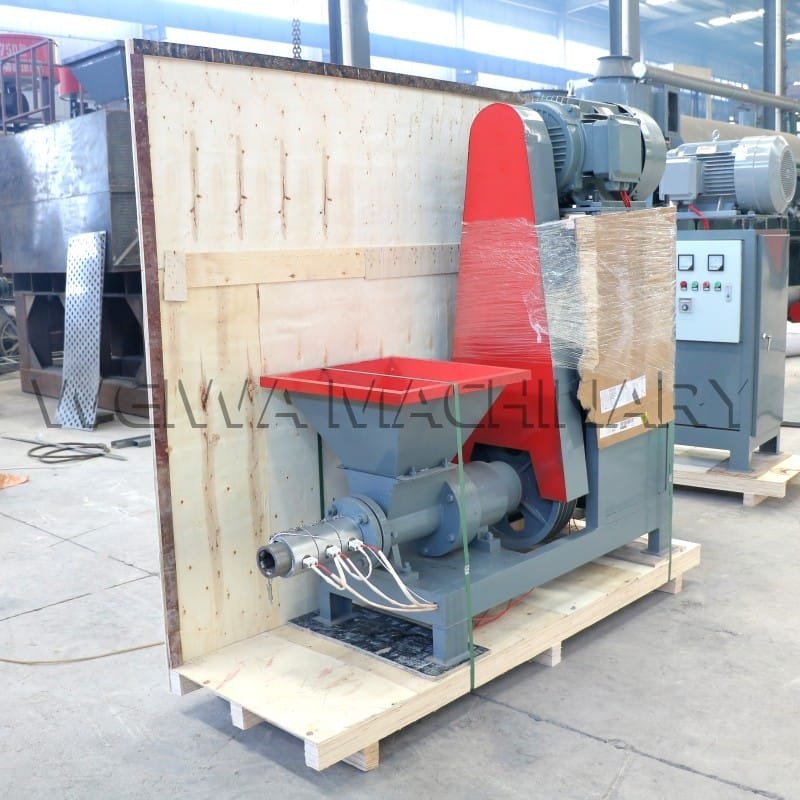
Understanding Biomass Charcoal Production – The Role of a Sawdust Extruder
To appreciate the impact of our delivery, it helps to understand the science of biomass charcoal production. In essence, biomass charcoal is produced by compressing organic material—primarily sawdust—under high temperature and pressure without oxygen. The result is a carbon-rich solid fuel with low emissions and high calorific value.
How a Sawdust Extruder Transforms Waste into Fuel?
A sawdust extruder lies at the heart of this transformation. It works by feeding raw sawdust into a chamber where heat and mechanical pressure bind the particles together into dense briquettes. Unlike loose sawdust, which burns inconsistently and wastes energy, extruded briquettes offer uniform combustion and minimal smoke.
The extrusion process also ensures that lignin—a natural polymer in wood—acts as a binder, eliminating the need for chemical additives. This makes the final product environmentally friendly and safe for household use. For regions like Bhutan, where forest resources must be conserved, deploying a biomass briquette machine that maximizes resource efficiency is critical.
Why Biomass Briquetting Machines Are Ideal for Bhutan’s Context?
Bhutan generates significant quantities of sawdust from timber processing and furniture workshops. Historically, much of this waste has been discarded or burned openly, contributing to air pollution. A biomass briquetting machine offers a circular economy solution: converting waste into wealth.
Moreover, Bhutan’s mountainous terrain poses logistical challenges for transporting conventional fuels. Locally produced briquettes reduce dependence on imported coal and firewood, enhancing energy security. The portability and high energy density of briquettes make them ideal for remote villages where grid electricity is scarce.
The Science Behind Charcoal Making – From Biomass to Clean Energy
Charcoal production via biomass extruders involves several stages, each optimized in our machine design for quality and efficiency. Let’s explore the core principles.
Carbonization and Densification Process
After extrusion, the briquettes undergo carbonization in kilns or furnaces. During this stage, volatile gases are driven off, leaving behind fixed carbon. The controlled heating process ensures maximum carbon retention while minimizing harmful emissions.
Densification not only increases the energy content per unit volume but also improves handling and storage characteristics. A well-designed sawdust briquetting machine regulates moisture content and pressure to achieve optimal density, ensuring consistent performance in cooking and heating applications.
Environmental Benefits Over Traditional Charcoal
Traditional charcoal production in Bhutan often relies on wood harvested from natural forests, leading to habitat loss and increased carbon dioxide emissions. In contrast, biomass briquette machines utilize agricultural and forestry residues, preserving ecosystems and reducing greenhouse gases.
Studies show that briquettes made from sawdust emit up to 70% less particulate matter compared to wood charcoal. They also burn longer and produce fewer toxic byproducts, improving indoor air quality—a vital consideration in Bhutan’s densely populated rural homes.
Installing the Biomass Briquette Machine in Bhutan
Upon arrival, our technical team will assist local operators in installing and commissioning the biomass extruder. Training sessions will cover machine operation, maintenance routines, and safety protocols. We emphasize hands-on learning to empower users to troubleshoot minor issues independently.
The installation site in Bhutan has been chosen for its proximity to sawdust sources and ease of distribution. Initial production targets aim to supply briquettes to nearby towns and eco-tourism lodges committed to sustainable practices. Feedback from early adopters will guide future upgrades and customization of the biomass briquetting machine to suit regional needs.
Economic and Social Impact of Biomass Technology in Bhutan
Beyond environmental gains, introducing a biomass briquette machine in Bhutan promises socio-economic benefits. Small-scale enterprises can enter the clean fuel market with relatively low capital investment. Women-led cooperatives, in particular, stand to benefit by accessing affordable cooking fuel and generating income through briquette sales.
Job creation extends to collection and preprocessing of feedstock, machine operation, and distribution networks. This decentralized model aligns with Bhutan’s Gross National Happiness philosophy, which prioritizes equitable development alongside environmental stewardship.
Furthermore, schools and healthcare centers can adopt briquettes for their energy needs, reducing reliance on costly and polluting alternatives. As demand grows, the ripple effect will stimulate innovation in biomass collection systems and machine servicing industries.
Overcoming Challenges in Deploying Sawdust Extruders Abroad
While the potential is immense, deploying a sawdust extruder in a geographically challenging region like Bhutan requires careful planning. Altitude affects combustion efficiency and machinery cooling, necessitating design adaptations. Our engineering team accounted for these factors during manufacturing, ensuring robust performance even at higher elevations.
Supply chain reliability for spare parts is another consideration. To address this, we provide comprehensive documentation and train local technicians in basic repairs. Establishing a service hub in Bhutan is under discussion to enhance after-sales support for the biomass briquette machine.
Language and cultural differences also influence training effectiveness. We tailor our instructional materials to local languages and incorporate visual demonstrations, recognizing diverse literacy levels among users.
The Future of Biomass Charcoal in Bhutan and Beyond
Looking ahead, we envision a network of biomass extruders across Bhutan turning waste into opportunity. Integrating solar drying systems could further reduce production costs and energy consumption. Research into blending other biomasses—such as rice husks and corn cobs—may expand feedstock options and improve briquette quality.
Collaboration with Bhutanese universities on applied research will help refine the technology to match climatic and economic conditions. Exporting surplus briquettes to neighboring regions could position Bhutan as a leader in sustainable biomass energy within South Asia.
At Weiwa Machinery, we remain committed to advancing green technology worldwide. Each biomass briquette machine we ship represents a partnership in building a cleaner, more resilient future.
Why Choose Weiwa Machinery for Your Biomass Needs?
Weiwa Machinery is a global leader in designing and manufacturing high-performance biomass briquette machines, sawdust extruders, and complete charcoal production lines. With decades of experience, our equipment is trusted in over 30 countries for its durability, efficiency, and eco-friendly design.
We prioritize customer success through customized solutions, comprehensive training, and responsive technical support. Our team of engineers continuously innovates to meet evolving market demands, ensuring our biomass briquetting machines deliver maximum return on investment while safeguarding the planet.
If you are exploring ways to convert biomass waste into valuable energy, Weiwa Machinery is your ideal partner. Contact us today to learn how our technology can transform your operations—just as it is beginning to do in Bhutan.


 Wechat

 +8615937143060
