


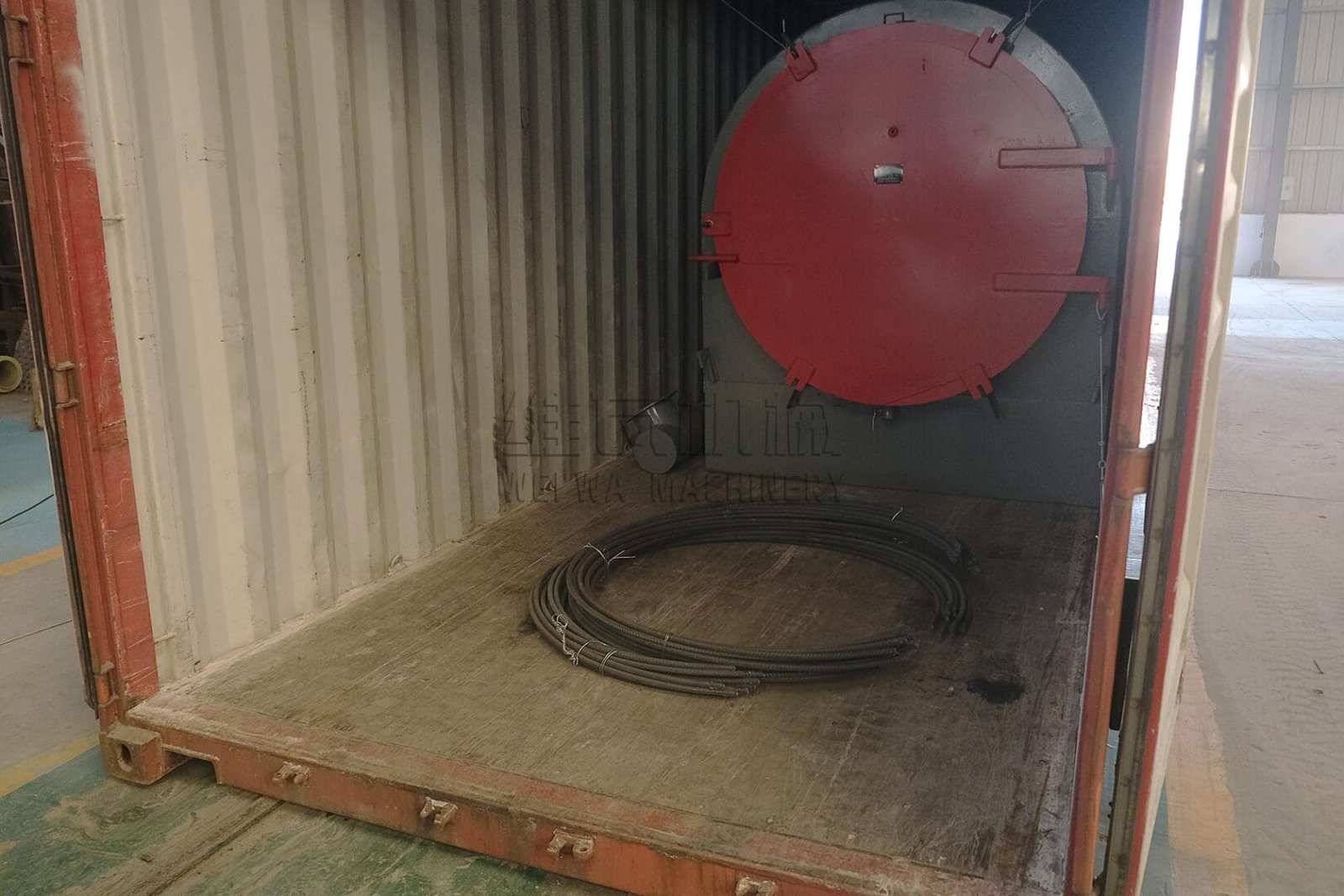
In recent years, the global demand for sustainable and efficient biomass conversion technologies has grown significantly. Among these innovations, the horizontal carbonization furnace has emerged as a game-changer, especially for small- to medium-scale producers seeking reliable, automated, and environmentally friendly solutions. Today, we’re excited to share the story of our latest shipment — a state-of-the-art horizontal carbonization furnace bound for Uganda, where it will play a pivotal role in transforming local biomass resources into high-quality charcoal.
As Weiwa Machinery, we’ve been serving over 2 million customers worldwide, and this recent delivery to Uganda marks another milestone in our mission to bring advanced carbonization technology to emerging markets.
Why Uganda Needs Advanced Charcoal Making Technology?
Uganda, like many countries in Africa, relies heavily on charcoal as a primary cooking fuel. The demand is immense, driven by both urban and rural populations. However, traditional charcoal production methods are often inefficient, environmentally damaging, and pose serious health risks due to the release of harmful smoke and pollutants.
The introduction of a modern charcoal making machine, such as our horizontal carbonization furnace, addresses these challenges head-on. By utilizing indirect heating technology and a compact footprint, this equipment enables producers to generate high yields of charcoal while significantly reducing fuel consumption and emissions. For Uganda, where biomass resources like wood logs, coconut shells, and agricultural residues are abundant, this technology offers a sustainable pathway to meet energy needs without depleting natural resources.
Introducing the Horizontal Carbonization Furnace
At the core of our shipment to Uganda is the horizontal carbonization furnace, a meticulously engineered piece of machinery designed for efficiency, ease of use, and environmental responsibility. Unlike traditional vertical furnaces, the horizontal design allows for gradual carbonization under controlled conditions, ensuring a more uniform and higher-quality end product.
Key Features and Benefits
One of the standout features of the horizontal carbonization furnace is its barrel-style chamber, which is mounted on rails for effortless loading and unloading. This design not only simplifies the operation but also enhances safety and efficiency. The furnace operates through indirect heating, which means that the biomass material is carbonized without direct exposure to flames. This method minimizes the formation of smoke and harmful by-products, making it a cleaner and more sustainable option.
Another critical component is the advanced gas-purification system. As the biomass undergoes carbonization, it releases volatile gases, tar, and condensates. Our system captures these by-products and recycles them, feeding clean combustible gas back into the burners. This closed-loop process not only sustains the internal temperature at around 600 °C but also reduces the need for external fuel sources, leading to significant fuel savings and lower carbon emissions.
The furnace is versatile and capable of processing a wide range of biomass materials, including wood logs, bamboo, coconut shells, sawdust briquettes, and agricultural residues. This flexibility makes it an ideal solution for Uganda’s diverse biomass landscape. Additionally, the balanced heat distribution and automated operation ensure consistent performance with minimal manual intervention, reducing labor costs and increasing productivity.
The Journey of the Horizontal Carbonization Furnace to Uganda
The journey of our horizontal carbonization furnace from our manufacturing facility to Uganda was a meticulously planned and executed process. Every step was designed to ensure that the equipment arrived safely, on time, and ready for immediate use.
Pre-Shipment Preparations
Before the furnace could be shipped, it underwent rigorous factory testing to verify its performance and reliability. Our team conducted a series of trials using various biomass materials to ensure that the furnace could achieve the desired carbonization results consistently. The test results were promising, with the furnace demonstrating high charcoal yields, efficient heat utilization, and minimal emissions.
The equipment was then carefully disassembled, packed, and loaded onto a shipping container. We took extra precautions to protect the delicate components and ensure that everything would arrive in perfect condition. The shipment also included comprehensive documentation, installation guides, and training materials to assist the Ugandan team in setting up and operating the furnace.
The Shipment Process
The furnace was transported to the port, where it was loaded onto a cargo ship bound for Uganda. Throughout the journey, we maintained close communication with our logistics partners to monitor the shipment’s progress and address any potential issues. Upon arrival in Uganda, the equipment was unloaded and transported to the customer’s site, where our team of technicians began the installation process.
Factory Testing Highlights: Proven Performance Before Shipment
Before the horizontal carbonization furnace made its way to Uganda, it underwent a series of comprehensive factory tests to ensure it met our high standards for quality and performance. These tests were not just routine checks; they were a demonstration of the furnace’s capability to deliver exceptional results under real-world conditions.
One of the primary objectives of the testing phase was to evaluate the carbonization efficiency of various biomass materials. We used a range of inputs, including wood logs, coconut shells, and agricultural residues, to simulate the diverse feedstock available in Uganda. The results were impressive: the furnace consistently produced high-quality charcoal with minimal impurities, showcasing its ability to handle different types of biomass effectively.
Another critical aspect of the testing was the evaluation of the gas-purification system. As the biomass underwent carbonization, it released a mixture of volatile gases, tar, and condensates. Our advanced purification system captured these by-products and recycled the clean combustible gas back into the burners. This not only sustained the internal temperature at around 600 °C but also significantly reduced the need for external fuel, demonstrating the furnace’s eco-friendly operation and fuel efficiency.
The automation features of the furnace were also put to the test. We monitored its performance under continuous operation, assessing its ability to maintain balanced heat distribution and consistent output quality. The results confirmed that the furnace could operate with minimal manual intervention, reducing labor costs and increasing productivity — a crucial advantage for small- to medium-scale producers in Uganda.
Impact on Uganda’s Charcoal Industry: A Sustainable Future
The arrival of the horizontal carbonization furnace in Uganda is more than just a delivery; it’s a step toward a more sustainable and efficient charcoal industry. For local producers, this technology offers a transformative solution that addresses the challenges of traditional charcoal production while unlocking new opportunities for growth and profitability.
Environmental Benefits
Traditional charcoal production methods in Uganda often involve open burning and inefficient techniques that lead to deforestation, soil degradation, and air pollution. The horizontal carbonization furnace, with its closed-loop system and reduced emissions, offers a cleaner alternative. By recycling tar and condensates and utilizing clean combustible gas, the furnace minimizes its environmental footprint, contributing to a healthier and more sustainable environment.
Economic Advantages
For Ugandan producers, the furnace’s high charcoal yields and low maintenance requirements translate into increased profitability. The ability to process a wide range of biomass materials, including locally available resources like coconut shells and agricultural residues, ensures a steady supply of raw materials and reduces dependency on costly imports. Additionally, the furnace’s compact footprint and automated operation make it accessible to small- and medium-scale producers, democratizing access to advanced technology.
Social Impact
Beyond the economic and environmental benefits, the introduction of the horizontal carbonization furnace has the potential to create new jobs and empower local communities. As more producers adopt this technology, there will be a growing demand for skilled technicians, operators, and support staff. This, in turn, will contribute to the development of a robust and sustainable charcoal industry in Uganda.
How the Horizontal Carbonization Furnace Works?
To fully appreciate the value of the horizontal carbonization furnace, it’s essential to understand how it works. The process begins with the loading of biomass material into the barrel-style chamber, which is mounted on rails for easy access. Once the chamber is sealed, the indirect heating system is activated, gradually raising the internal temperature to around 600 °C.
As the biomass heats up, it undergoes carbonization, a process that removes volatile compounds and leaves behind pure carbon in the form of charcoal. The advanced gas-purification system captures the volatile gases, tar, and condensates released during this process. These by-products are then recycled, with the clean combustible gas fed back into the burners to sustain the high temperature. This closed-loop system not only reduces fuel consumption but also minimizes emissions, making the process both efficient and environmentally friendly.
The balanced heat distribution ensures that the biomass is carbonized uniformly, resulting in high-quality charcoal with consistent properties. The automated operation of the furnace further enhances its appeal, allowing producers to focus on other aspects of their business while the machine handles the carbonization process.
Conclusion: A New Era of Charcoal Production in Uganda
The shipment of our horizontal carbonization furnace to Uganda represents a significant milestone in our journey to promote sustainable biomass conversion technologies. For Weiwa Machinery, this delivery is not just about exporting equipment; it’s about empowering local producers with the tools they need to thrive in a rapidly changing world.
As we look to the future, we remain committed to innovation, sustainability, and customer satisfaction. Our horizontal carbonization furnace is just one example of how we’re helping producers around the world achieve their goals while protecting the planet. We’re excited to see the impact this technology will have in Uganda and beyond, and we’re grateful for the opportunity to be part of this journey.
For more information about our products or to learn how the horizontal carbonization furnace can benefit your operations, please feel free to contact us. We’re here to help you take the next step toward a more sustainable and profitable future.
About Weiwa Machinery
Weiwa Machinery is a leading manufacturer of biomass carbonization and charcoal making machines, serving customers in over 100 countries. With over 2 million satisfied customers worldwide, we’re dedicated to providing innovative, reliable, and eco-friendly solutions for sustainable biomass conversion. Our products are designed to meet the needs of small- to medium-scale producers, offering high efficiency, low maintenance, and exceptional performance.
Contact Us:
- Mobile: +8613838093177
- WhatsApp: +8613838093177
- Email: info@cjlmachinegroup.com
Follow us on social media or visit our website to learn more about our products and how we’re shaping the future of biomass energy.


 Wechat

 +8615937143060
