


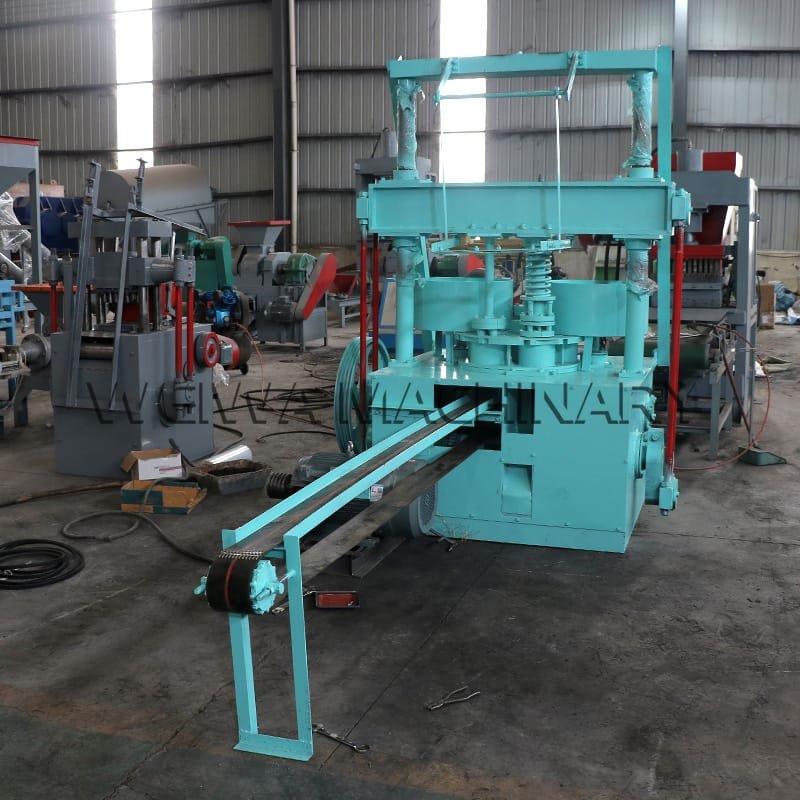
Recently at Weiwa Machinery factory in Henan, China, we hosted a delegation from a charcoal production company based in Colombia to witness a full live trial of our Honeycomb briquette charcoal machine. The purpose of this on site demonstration was to validate the performance of our Coal Briquettes Making Machine using locally representative charcoal powder, inspect the honeycomb briquette sample quality, and confirm that the Honeycomb Charcoal Coal Briquette Forming Machine meets the production requirements for the Colombian market. In the following sections we explain what a honeycomb briquette machine is, how the Honeycomb Punching Machine works, why it is popular in Latin America, the detailed trial procedure we performed for the Colombia client, the physical properties of the sample briquettes produced, model selection advice, and finally a brief introduction to Weiwa Machinery.
What Is a Honeycomb Briquette Charcoal Machine?
A Honeycomb briquette charcoal machine, sometimes referred to as a Honeycomb Charcoal Coal Briquette Forming Machine or Honeycomb Punching Machine, is a mechanical press designed to compress fine charcoal dust, coal powder, or a blend of biomass carbon powder and binder into uniformly shaped briquettes that feature multiple through holes resembling a honeycomb. These holes allow primary air to pass through the briquette during combustion, which promotes complete burning, reduces smoke, and increases thermal efficiency compared to irregular lumps of raw charcoal powder shaped by hand.
The Coal Briquettes Making Machine of punching type normally adopts a rotary table with several mold barrels. As the electric motor drives the main shaft through a reduction gearbox, the turntable indexes step by step. At the feeding station, pre mixed material drops into the mold barrel. At the punching station, a vertical stamping ram descends with calibrated pressure to form the honeycomb shape. A bottom ejector then pushes the finished briquette onto a discharge conveyor. This cyclic process repeats dozens of times per minute, delivering continuous output with consistent density.
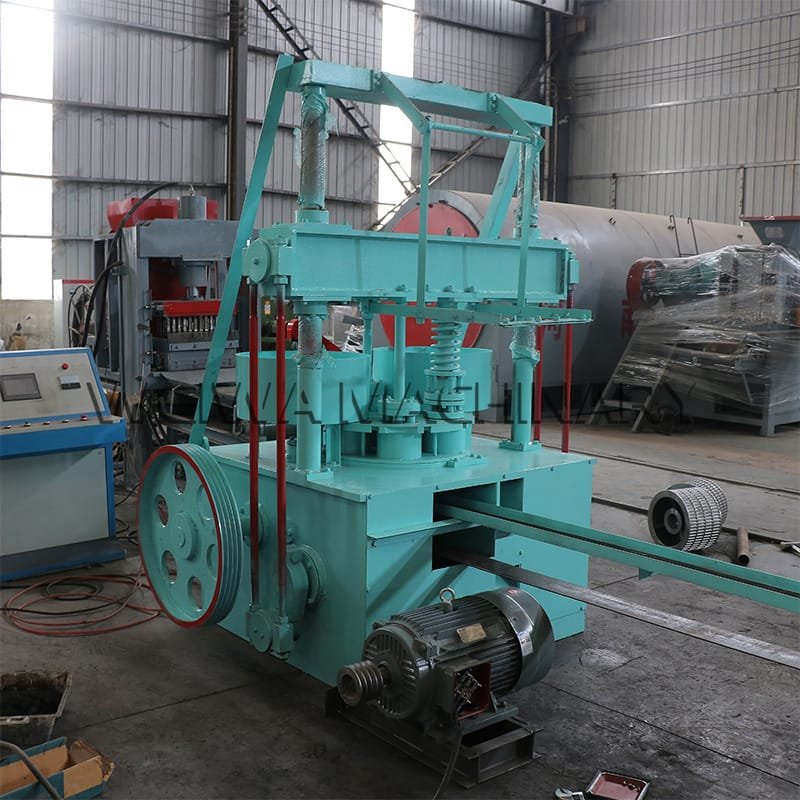
Main Components of the Honeycomb Punching Machine
The Honeycomb Punching Machine from Weiwa Machinery is composed of a reinforced steel base frame, a hardened surface gear reducer, an electric motor with CE certification, a rotary indexing table fitted with alloy steel mold barrels, a punching ram with adjustable stroke, a scraper return system for excess material, an ejection mechanism, and a control cabinet with overload protection and emergency stop. Larger models can be equipped with a variable frequency drive for soft start and a PLC touchscreen interface displaying real time production count and fault alerts.
Molds and punches are manufactured from quenched alloy tool steel, which typically withstands hundreds of thousands of stamping cycles before resurfacing is required. The quick change clamp system allows operators to swap molds within fifteen to twenty minutes, making it possible to produce different diameters or hole patterns from one Honeycomb briquette charcoal machine.
Why Honeycomb Briquettes Are in Growing Demand in Colombia?
Colombia has abundant forestry and agricultural residues that can be carbonized into charcoal fines. However, loose charcoal powder is difficult to transport, store, and ignite. By processing these fines through a Coal Briquettes Making Machine into standardized honeycomb briquettes, local producers create a value added fuel product with higher bulk density, longer burn time, and cleaner combustion characteristics. Urban households in Bogota, Medellin, and Cali increasingly prefer smokeless honeycomb briquettes for heating and cooking, while small restaurants and bakeries use them for steady heat output. This market trend is why our Colombia client approached Weiwa Machinery to evaluate our Honeycomb Charcoal Coal Briquette Forming Machine before placing an order.
Environmental and Economic Benefits of Honeycomb Briquettes
When compared with burning loose coal or raw lump charcoal in traditional open stoves, honeycomb briquettes produced by a Honeycomb briquette charcoal machine can reduce fuel consumption by approximately twenty to thirty percent due to improved air flow and more complete combustion. The centralized production of briquettes also helps utilize otherwise wasted charcoal dust, creating additional income streams for charcoal kiln operators. From an environmental standpoint, well made honeycomb briquettes emit less particulate matter and can be formulated with low sulfur binders to further cut SO2 emissions.
Pre Trial Preparation for the Colombia Customer
Before the formal trial began, our technical team discussed with the Colombia client the typical characteristics of the raw material they intended to process. Charcoal powder fineness, moisture content, and the type of natural or starch based binder all influence briquette green strength and final breakage rate. For the demonstration we prepared sieved hardwood charcoal powder with moisture below twelve percent and a cassava starch binder solution at a recommended ratio.
The model selected for the trial was our BLMQ 140 type Honeycomb briquette charcoal machine, which is one of the most popular models for small to medium scale producers in South America. It is equipped with a seven point five kilowatt electric motor compatible with four hundred fifteen volt fifty hertz power supply commonly found in Colombia, a rotary table with four mold positions, and a standard one hundred forty millimeter diameter mold featuring nineteen holes. The client was also shown the optional variable frequency drive and the larger BLMQ 160 and BLMQ 220 models for future capacity expansion.
Live Trial Procedure of the Honeycomb Charcoal Coal Briquette Forming Machine
The trial commenced with a dry run to confirm that all safety guards were in place and that the Honeycomb Punching Machine cycled smoothly without abnormal noise or vibration. After the dry run, we started the material feeding system. Pre mixed charcoal powder and binder were loaded into the hopper. The auger in the feeding section distributed the material evenly into each mold barrel as the turntable rotated.
Once the first mold passed under the punching ram, the ram descended and compressed the powder into a dense honeycomb disc. The bottom ejector then pushed the formed briquette onto the discharge belt. We ran the machine continuously for approximately thirty minutes, adjusting the punching pressure slightly to accommodate the specific bulk density of the demo material. Throughout the run the production rate remained stable at around forty five pieces per minute, which corresponds to roughly two thousand seven hundred finished briquettes per hour.
The Colombia client observed the entire process and was invited to manually check the ejection smoothness, the surface finish of the briquettes, and the integrity of the honeycomb holes. Our engineer also demonstrated how to change the mold should the client wish to produce one hundred millimeter or one hundred sixty millimeter diameter briquettes in the future.
Sample Quality Inspection After the Trial
Following the running trial, we collected a batch of freshly formed honeycomb briquettes for a closer sample inspection. The samples exhibited the following characteristics. The diameter measured one hundred forty millimeters with a height of approximately seventy millimeters. The average single piece weight was one point eight five kilograms. The honeycomb holes were evenly spaced and fully penetrated, which is essential for proper air intake during combustion. The surface was smooth without visible cracks, indicating adequate binding and correct punching pressure.
We also performed a simplified drop test by dropping a dried sample from a height of one meter onto a concrete floor. The briquette remained intact with only minor edge chipping, meeting the generally accepted standard for transportable commercial honeycomb charcoal. To further illustrate combustion performance, we ignited a fully dried sample in a small test stove. Thanks to the honeycomb holes, the briquette caught fire within three to four minutes and burned with a steady blue yellow flame zone, producing noticeably less visible smoke than loosely compacted raw charcoal powder shaped by hand.
The Colombia client expressed satisfaction with both the mechanical stability of the Coal Briquettes Making Machine and the visual and physical quality of the honeycomb briquette samples. They confirmed that the one hundred forty millimeter diameter with nineteen holes matched the preference of end users in their regional market.
Technical Parameters of the Demonstrated Honeycomb Briquette Charcoal Machine Model
For reference, the key specifications of the BLMQ 140 Honeycomb briquette charcoal machine used in the Colombia trial are as follows. Motor power is seven point five kilowatts, suitable for three phase four hundred fifteen volt fifty hertz supply. The applicable mold diameter range is one hundred to one hundred forty millimeters. Briquette height is adjustable between sixty and eighty millimeters. The nominal production capacity is forty to forty five pieces per minute depending on mold size and material characteristics. Overall machine dimensions are approximately one thousand three hundred twenty millimeters in length, one thousand two hundred sixty millimeters in width, and one thousand eight hundred fifty millimeters in height. Net weight is around one thousand four hundred kilograms. The machine is equipped with a safety guard over the punching area, a branded electric motor with CE mark, and an electrical cabinet pre wired with overload protection and emergency stop.
Other available models in the same series include the BLMQ 120 with a maximum diameter of one hundred twenty millimeters, the BLMQ 160 with up to one hundred sixty millimeters, and the BLMQ 220 for industrial scale blocks up to two hundred twenty millimeters in diameter. All models share the same working principle and can be retrofitted with custom engraved molds, embossed logos on the briquette face, or special hole patterns required by different regional standards.
Raw Material Preparation Recommendations for Optimal Results
To achieve honeycomb briquettes comparable to the samples shown during the Colombia trial, proper raw material preparation is critical. Charcoal or coal powder should be sieved to remove oversized particles, ideally with a particle size mostly passing through a two to three millimeter mesh. Excessive coarse particles may cause weak spots in the briquette, while overly fine powder without binder can also reduce green strength.
Moisture content of the mixture before feeding into the Honeycomb Charcoal Coal Briquette Forming Machine should be controlled between eight and twelve percent. Too much moisture makes ejection difficult and may cause the briquette to swell or crack during drying. Too little moisture reduces the effectiveness of starch based binders. A common formulation is ninety to ninety two percent charcoal powder and eight to ten percent binder containing water, though the exact ratio should be verified through small scale tests matching local material properties.
Even mixing of powder and binder is equally important. A wheel mill or paddle mixer is recommended to ensure the binder coats the charcoal particles uniformly. Inhomogeneous mixing leads to uneven briquette density and potential blowouts during combustion. Our team provides detailed mixing guidelines and can advise on binder types suitable for the raw materials available in Colombia or other export destinations.
Installation Commissioning and After Sales Support from Weiwa Machinery
After the Colombia client confirmed the order, we arranged a pre shipment inspection, applied anti rust coating, wrapped the Honeycomb Punching Machine in stretch film, and secured it on a steel pallet inside a standard twenty foot container. We also supplied an operation manual in Spanish, a foundation drawing, an electrical wiring diagram, and a set of common spare parts including an extra punch, ejector pins, springs, and V belts.
Upon arrival at the client’s facility in Colombia, our technical staff remain available for remote video guidance during installation and commissioning. We can also dispatch engineers for on site service when required. Routine maintenance of the Coal Briquettes Making Machine mainly involves periodic lubrication of the gear reducer, inspection of the punch and mold for wear, and checking the tension of drive belts. We provide a customized maintenance schedule based on expected daily operating hours.
Frequently Asked Questions About Honeycomb Briquette Charcoal Machine for Colombia Buyers
Can the Honeycomb briquette charcoal machine process pure coal powder instead of charcoal powder?
Yes. The same Honeycomb Charcoal Coal Briquette Forming Machine can press anthracite or bituminous coal powder, provided the particle size and binder ratio are adjusted appropriately. Many customers in regions where coal is more available than charcoal use the machine for coal honeycomb briquettes.
Is it possible to produce different hole patterns or embossed logos on the briquette?
Absolutely. The mold and punch are custom made. You may specify the number of holes, hole diameter, overall briquette diameter, and even have your company logo embossed on the face of the briquette. Changing molds on the Honeycomb Punching Machine is straightforward with the quick change clamp system.
What voltage configurations are available for export to Colombia?
Standard export models can be configured for two hundred twenty volt, three hundred eighty volt, four hundred fifteen volt, or four hundred forty volt three phase power at fifty or sixty hertz. For the Colombian market we typically equip the machine with a four hundred fifteen volt fifty hertz motor and provide a dual language control panel label in English and Spanish.
How long does it take to learn to operate the Coal Briquettes Making Machine?
With our operation manual and a short video training session, most operators can become proficient in basic startup, shutdown, mold change, and daily maintenance within one to two days. More advanced parameter tuning such as adjusting punching pressure for different raw material batches can be guided remotely by our after sales engineers.
About Weiwa Machinery
Weiwa Machinery is a professional manufacturer specializing in briquette machinery and complete biomass carbonization production lines. With decades of experience in designing and producing Honeycomb briquette charcoal machine, ball press machines, screw extrusion briquette machines, and continuous carbonization furnaces, we have exported equipment to more than one hundred thirty countries including Colombia, Peru, Ecuador, Tanzania, Kenya, Indonesia, Vietnam, and Turkey. All our Coal Briquettes Making Machine models are factory tested before shipment, and we provide comprehensive technical support in English and Spanish covering machine selection, layout design, installation guidance, operator training, and spare parts supply. Our mission is to help global customers turn charcoal and coal waste into profitable, clean burning fuel products with reliable machinery and long term partnership.
If you are planning to start or expand a honeycomb briquette production business in Colombia or elsewhere, feel free to contact us for a personalized proposal and factory visit appointment.
Contact Weiwa Machinery:
Mob: +86 13838093177
WhatsApp: +86 13838093177
E-Mail: info@cjlmachinegroup.com


 Wechat

 +8615937143060
