


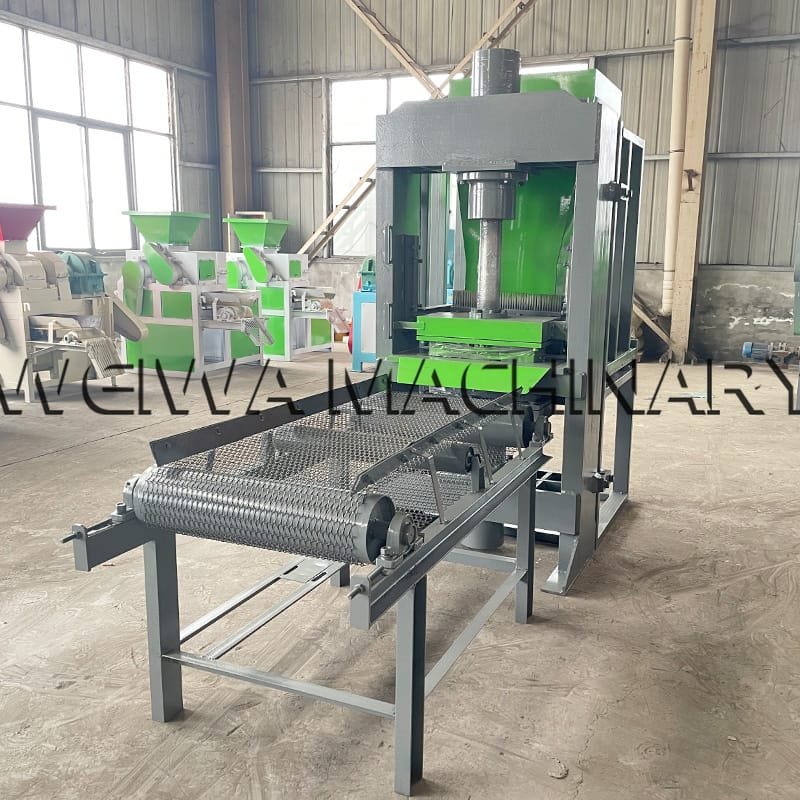
In the heart of Russia’s vast industrial landscape, where winter temperatures can plummet to -50°C and energy security is a top priority, a quiet revolution is underway. For decades, Russian businesses—from small sawmills in Karelia to large coal mines in Siberia—have relied on inefficient, labor-intensive methods to process waste materials. But today, a solution is changing the game: hydraulic press briquetting machines. As a leading manufacturer with over 30 years of experience, Weiwa Machinery has been at the forefront of this shift, helping Russian clients turn wood chips, coal dust, and agricultural residues into high-value fuel briquettes.
Why Russia Needs Hydraulic Press Briquetting Machines?
To understand the potential of hydraulic briquette machines in Russia, you first need to grasp the country’s “waste problem” and “energy opportunity.” Russia is one of the world’s largest producers of biomass waste: its forestry industry generates over 100 million cubic meters of sawdust, bark, and wood shavings annually, while agricultural regions produce millions of tons of straw, sunflower husks, and corn cobs. Most of this waste is either burned (contributing to air pollution) or left to rot (releasing methane, a potent greenhouse gas).
At the same time, Russia faces rising energy costs. Natural gas prices have fluctuated wildly in recent years, and remote areas often struggle to access reliable power. Briquettes—compressed blocks of waste material—offer a solution: they burn cleaner than raw biomass, have a higher calorific value than loose waste, and cost up to 40% less than fossil fuels. For Russian businesses, this means turning a liability (waste) into an asset (affordable, sustainable energy).
But not all briquetting machines are created equal. In Russia’s extreme climate, equipment must withstand sub-zero temperatures, heavy dust, and long hours of operation. This is where hydraulic press briquetting machines shine. Unlike mechanical or screw presses, hydraulic systems use pressure (up to 200 tons) to compress materials uniformly, producing dense, durable briquettes that don’t crumble in cold weather. For Russian clients, this reliability isn’t just a “nice-to-have”—it’s a necessity.
How We Proved Our Hydraulic Briquette Press Delivers Results in Russia?
Last month, we welcomed a delegation from a Russian timber processing company to our factory in China. Based in Arkhangelsk (a region known for its vast forests), the client had struggled for years with a mechanical briquette press: it jammed in cold weather, produced weak briquettes, and required constant maintenance. They needed a machine that could handle their 5 tons of daily sawdust output—even when the temperature dropped to -30°C.
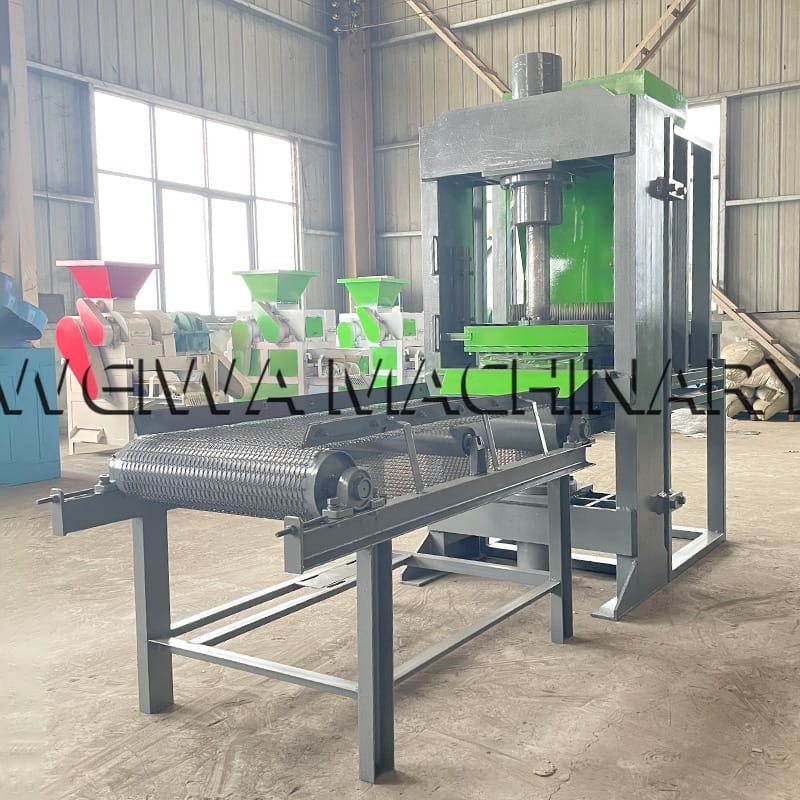
Step 1: Customizing the Machine for Russian Conditions
Before the test run, our engineering team worked closely with the client to adapt our standard hydraulic press briquetting machine to their needs. Key modifications included:
- Cold-Resistant Hydraulic Fluid: We replaced standard fluid with a low-temperature blend that remains viscous even at -40°C, ensuring smooth operation in Siberia’s winters.
- Reinforced Steel Frame: To withstand heavy snow loads and vibrations during transport, we thickened the machine’s frame by 20%.
- Dust-Proof Seals: Arkhangelsk’s sawmills are dusty environments, so we added double-layered seals to the hydraulic cylinders to prevent contamination.
The result? A hydraulic briquette machine for Russia that was built to last.
Step 2: Testing Performance with Local Materials
The client brought 500 kg of their sawdust—moist (12% water content) and mixed with small bark pieces—to our factory. Our team loaded the material into the hopper, adjusted the pressure settings (to 180 tons, optimal for sawdust), and started the machine.
Within minutes, the hydraulic press began compressing the sawdust into uniform briquettes (80mm x 60mm x 40mm). The client was impressed by two things:
- Speed: The machine processed 1 ton of sawdust per hour—matching their production target.
- Quality: The briquettes had a density of 1.2 g/cm³ (compared to 0.8 g/cm³ from their old machine) and a calorific value of 4,500 kcal/kg (enough to heat a 100m² home for 24 hours).
“I’ve never seen briquettes this strong,” said Ivan, the client’s operations manager. “Even if we leave them outside overnight in -25°C, they won’t break.”
Step 3: Training and After-Sales Support
A test run isn’t just about proving performance—it’s about empowering clients to succeed. During the visit, our technicians trained the client’s team on:
- How to adjust pressure settings for different materials (e.g., switching from sawdust to sunflower husks).
- Routine maintenance (changing filters, checking fluid levels) to avoid downtime.
- Troubleshooting common issues (e.g., slow feeding due to wet material).
We also provided a detailed design drawing for their factory layout, including space for raw material storage, the briquette press, and finished product packaging. For Russian clients, who often operate in remote areas, this level of support is critical—they can’t afford to wait weeks for a technician to arrive from another country.
Why Hydraulic Presses Outperform Other Briquetting Technologies in Russia?
When we talk to Russian clients, they often ask: Why choose a hydraulic press over a mechanical or screw press?The answer lies in three key advantages that align perfectly with Russia’s needs:
1. Unmatched Pressure for Dense, Durable Briquettes
Hydraulic systems generate consistent, high pressure (100–300 tons) that compresses materials at the molecular level. This produces briquettes that are 30–50% denser than those from mechanical presses, meaning they:
- Burn longer (reducing fuel costs).
- Resist moisture (critical in Russia’s humid summers and snowy winters).
- Transport better (less breakage during delivery to customers).
For example, a client in Kemerovo (a coal mining region) switched to our hydraulic press and found their coal dust briquettes lasted 2x longer than before—cutting their fuel expenses by 35%.
2. Low Maintenance for Remote Operations
Russia’s industrial sites are often hundreds of kilometers from major cities. A machine that breaks down frequently is a disaster. Hydraulic press briquetting machines have fewer moving parts than mechanical presses, which means:
- Less wear and tear (our machines have a lifespan of 10+ years with proper maintenance).
- Fewer replacement parts (we stock common components like seals and valves in our Russian warehouse).
- Simpler repairs (our technicians can train local staff to handle basic fixes).
One of our clients in Yakutia (Siberia) told us: “Our old screw press broke down 3 times last year. The hydraulic press? Zero downtime in 18 months.”
3. Versatility for Russia’s Diverse Waste Streams
Russia’s geography is as varied as its industries: from the birch forests of the Ural Mountains to the rice paddies of the Far East. Hydraulic presses can handle almost any waste material, including:
- Wood waste: Sawdust, bark, wood chips (for heating homes and factories).
- Agricultural residues: Straw, sunflower husks, rice hulls (for rural energy).
- Coal/coke dust: For industrial boilers (reducing reliance on imported natural gas).
This versatility makes hydraulic briquette machines a “one-size-fits-all” solution for Russia’s fragmented market.
The Future of Hydraulic Briquette Machines in Russia: Trends and Opportunities
As Russia pushes toward its 2060 carbon neutrality goal, demand for green energy solutions is growing exponentially. The government has introduced tax breaks for businesses that use renewable fuels, and private companies are investing in biomass plants. For hydraulic press briquetting machines, this means three big opportunities:
1. Small-Scale Rural Energy Systems
70% of Russia’s population lives in urban areas, but 30% (over 40 million people) live in rural villages that lack access to natural gas. Hydraulic presses allow these communities to make their own briquettes from local waste—turning “energy poverty” into “energy independence.” We’re already working with a cooperative in Tver Oblast to build a small-scale briquette plant that will supply 500 homes with affordable heat.
2. Industrial Waste Recycling
Russia’s manufacturing sector (steel, cement, paper) produces millions of tons of waste annually. Hydraulic presses can recycle this material into briquettes for on-site use, reducing both waste disposal costs and energy bills. A cement plant in Chelyabinsk recently installed our machine and now recycles 80% of its slag waste—saving $150,000 per year in fuel costs.
3. Export Potential for Russian Briquettes
High-quality briquettes from Russia are in demand in Europe and Asia. With our hydraulic presses, Russian clients can produce briquettes that meet international standards (e.g., ENplus for wood pellets), opening up new revenue streams. A sawmill in Leningrad Oblast started exporting briquettes to Finland last year—doubling their profits in 12 months.
Why Choose Weiwa Machinery for Your Hydraulic Briquette Machine in Russia?
At Weiwa Machinery, we don’t just sell machines—we solve problems. Here’s what sets us apart:
30+ Years of Expertise
Since 1990, we’ve designed and manufactured briquetting equipment for clients in over 50 countries. Our engineers understand the unique challenges of operating in extreme climates, remote locations, and diverse industries.
Professional After-Sales Team
We have a dedicated team of Russian-speaking technicians and a warehouse in Moscow stocked with spare parts. Whether your machine needs a routine service or a major repair, we can respond within 48 hours.
Customized Solutions and Design Support
No two clients are alike. We work with you to:
- Adapt machines to your material type, production volume, and climate.
- Create a custom factory layout (including space for raw materials, equipment, and packaging).
- Provide training for your staff to ensure smooth operation.
Proven Results in Russia
We’ve already helped dozens of Russian clients—from timber processors to farmers—transform their waste into profit. Our machines are running in 15+ regions, from Kaliningrad to Vladivostok, and we have a 98% customer satisfaction rate.
Conclusion: Let’s Build a Greener Russia Together
For Russian businesses, hydraulic press briquetting machines aren’t just a piece of equipment—they’re a way to cut costs, reduce waste, and contribute to a more sustainable future. At Weiwa Machinery, we’re proud to be part of this journey.
If you’re ready to turn your waste into wealth, we invite you to contact us. Whether you need a test run, a customized machine, or help planning your factory, our team is here to help. Let’s work together to unlock the full potential of hydraulic briquetting in Russia.
Contact Weiwa Machinery Today
- Mob:+8613838093177
- Whatsapp:+8613838093177
- E-Mail:info@cjlmachinegroup.com
We look forward to hearing from you—and to helping you build a greener, more profitable business.


 Wechat

 +8615937143060
