


Why Mali Is a Growing Market for Hydraulic Briquette Machines?
Mali has a large domestic energy need based on solid fuels. In many cities and towns, charcoal is still one of the most common fuels for daily cooking. At the same time, cross border trade inside West Africa creates opportunities for standardized charcoal products. A hydraulic briquette machine allows local producers to collect low cost charcoal dust, broken charcoal, sawdust, groundnut shell char, cotton stalk char and other agricultural residues, then compress them into uniform blocks that burn longer and break less during transport.
The hydraulic briquette machine for Mali is not only about replacing traditional hand pressing. It is about moving from informal production to a repeatable factory process. When the briquette size, density, hardness and moisture are controlled, the product becomes easier to pack, easier to export to neighbouring markets and easier to sell to wholesalers who care about consistency.
Many Malian importers initially ask for a simple machine. After visiting our workshop, they usually understand that a hydraulic press briquetting machine gives better pressure control, cleaner edges, fewer cracks and more stable output than low cost manual presses. That difference matters when the buyer wants to supply hotels, restaurants, shisha lounges or wholesale distributors.
How the Hydraulic Press Briquetting Machine Works?
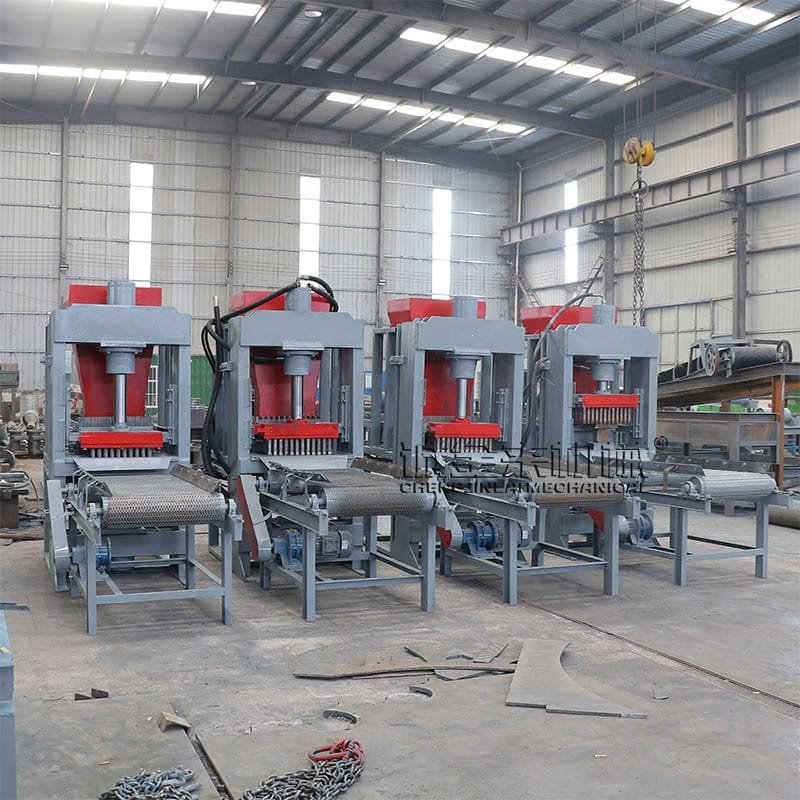
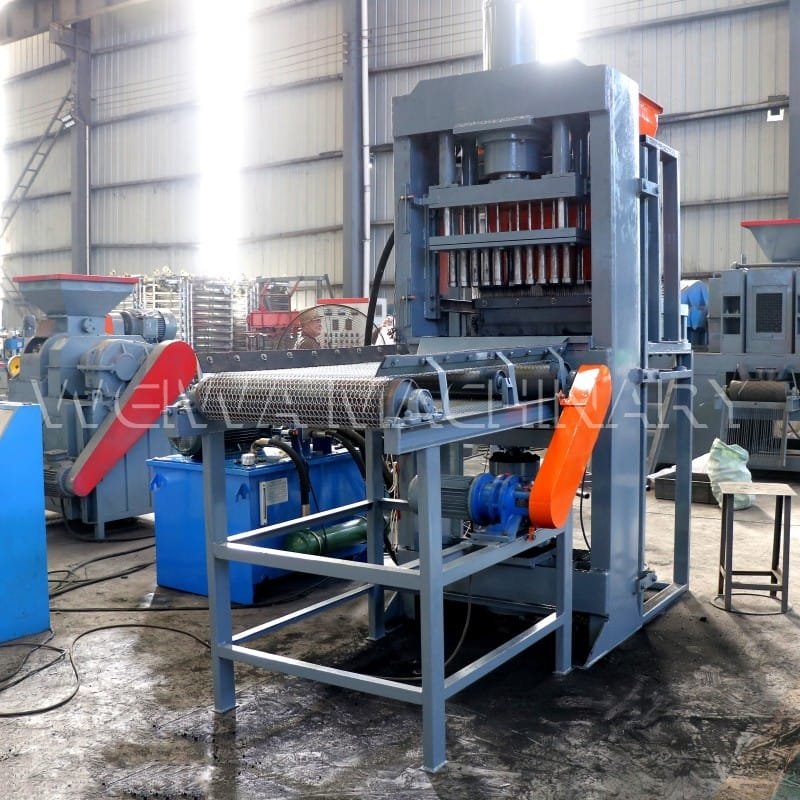
The hydraulic press briquetting machine uses a hydraulic pump station to generate high pressure. The powder material is fed into the hopper, pushed by the feeding system into the mold, and compressed by the upper and lower hydraulic cylinders. After forming, the finished briquette is ejected onto a conveyor or collection tray.
Pressure can normally be adjusted between 100 and 200 tons depending on the model. This makes the hydraulic briquette press suitable for different formulations. Some customers use pure charcoal powder. Others mix charcoal with a small percentage of binder. Some add cassava starch, guar gum or another natural binder. The machine does not decide the formula. The machine gives the pressure and accuracy needed to turn that formula into a market ready product.
Raw Material Preparation Before Pressing
Before the hydraulic briquette machine can produce good blocks, the raw material must be prepared correctly. Charcoal lumps are crushed below 3 mm. Moisture must be controlled. Binder is mixed evenly. If the powder is too dry, the briquette may crumble. If the mix is too wet, the surface may blister or the ejection may stick. During the Mali client trial, our engineer adjusted moisture and binder ratio until the sample had smooth surfaces, sharp edges and no powder leakage.
Hydraulic System and PLC Control
Our hydraulic briquette press uses a PLC control system. The operator can choose automatic or manual mode. Pressure, pressing time and cycle speed can be adjusted. For Mali buyers who are new to industrial equipment, this is important. They do not need to be hydraulic engineers. They need a machine that is safe, stable and easy to train workers on.
The hydraulic station includes a pressure gauge, cooling system and safety protection. Continuous running generates heat. The cooling system keeps the oil temperature stable. Stable oil temperature means stable pressure. Stable pressure means every briquette has nearly the same density.
Mold Change and Product Shapes
One reason Malian distributors like the hydraulic briquette machine is mold flexibility. Round shisha charcoal, cube charcoal, finger shape, hexagonal shape, square BBQ charcoal and custom shapes can all be produced by changing the mold. The main machine does not need to be replaced. This helps a small factory in Bamako, Sikasso, Ségou or Mopti start with one machine and later expand the product range.
Factory Trial With the Mali Client
During the Mali visit, the client arrived with several questions. Can the machine handle local charcoal fines? Can the briquette survive long distance road transport? Can the burning time compete with imported shisha charcoal? Can the investment be recovered within a reasonable period? We answered these questions not with a brochure but with a live run.
Our technician first prepared coconut shell charcoal powder and local style hardwood charcoal powder. Both materials are relevant to West Africa because coconut shell charcoal is common in coastal trade routes and hardwood charcoal is widely used inland. The mixture was homogenized in the binder mixer, transferred to the hopper and fed into the hydraulic briquette machine.
The first cycles were used for calibration. Pressure was set, mold alignment was checked and discharge was observed. After calibration, the machine produced round shisha briquettes with high surface smoothness. The Mali client picked up the sample, knocked two pieces together, dropped them from waist height and checked the edges. There were no cracks. The client then requested a cube BBQ sample. We changed the mold, adjusted pressing time and produced cube charcoal with clean corners and uniform size.
Burn Test and Hardness Check
A hydraulic briquette press is not judged only by appearance. The Mali client also wanted to know burn behaviour. We compared hydraulic pressed briquettes with ordinary hand pressed charcoal. The hydraulic briquette machine produced denser blocks. Denser blocks usually mean slower combustion, less ash and better heat retention. For shisha markets, that is a strong selling point. For BBQ markets, it means the grill stays hot longer with fewer refills.
Hardness was tested by dropping samples and applying hand pressure. The hydraulic pressed briquettes showed minimal chipping. For export oriented buyers, low breakage is critical because broken charcoal loses value and creates dust in the bag. A hydraulic press briquetting machine reduces this problem because the compaction is uniform.
Output and Labour Requirement
The client also asked about labour. With one operator and one helper, the hydraulic briquette machine can run continuously after the recipe is stabilized. Feeding can be manual at the beginning. Later the buyer can add a conveyor, crusher, mixer, dryer and automatic collector to build a full line. This step by step expansion model fits many Mali investors because it limits early risk.
Market Potential of Hydraulic Briquette Machine for Mali
The hydraulic briquette machine for Mali has potential in at least four directions. The first is local household charcoal. Many families still buy charcoal by the sack. A local factory can supply cleaner, denser and better packed bags under a private brand.
The second direction is shisha charcoal. West African cities have growing café culture, migrant communities and cross border trade with North African and Middle Eastern supply chains. Premium round hookah charcoal with low smoke and long burn time can be sold at higher margins.
The third direction is BBQ and restaurant supply. Grilled meat, fish and street food are central to Malian food culture. Hotels, caterers and large kitchens prefer uniform cube charcoal because it is easier to store and predict.
The fourth direction is regional export. Mali can supply neighbouring countries if the product is consistent. A hydraulic press briquetting machine makes consistency possible. Once packaging, weight and quality are standardized, the same product can enter multiple distribution channels.
Why Hydraulic Press Briquetting Machine Beats Low Cost Manual Press?
Manual presses are cheaper at the start. However, they depend heavily on worker strength and experience. Pressure changes from piece to piece. Shape quality varies. Output is limited. Dust loss is higher.
A hydraulic briquette press solves these problems with controlled tonnage. The pressure curve is stable. The mold cavity is precise. The PLC records settings. When the next batch uses the same recipe, the machine repeats the same result. For a buyer who wants to move from artisan production to branded charcoal supply, this is the key advantage.
In the Mali trial, the client admitted that manual production might be enough for a very small shop. But if the goal is wholesale supply, hotel contracts or export, the hydraulic briquette machine becomes the logical choice.
Raw Materials Available in Mali and West Africa
One concern buyers often have is raw material availability. Mali and the wider Sahel region have several usable inputs. Hardwood charcoal fines are common. Agricultural residues such as cotton stalk, millet stalk, groundnut shell and shea processing waste can be carbonized and reused. Imported coconut shell charcoal powder from coastal trade can also be blended with local charcoal.
The hydraulic press briquetting machine does not require perfect raw material. It requires properly prepared powder. If the material is too coarse, we recommend a crusher. If moisture is wrong, we adjust the process. If binding is weak, our team suggests a binder ratio. This is why factory testing before purchase is valuable. The trial tells the buyer the real recipe, not just the machine price.
Waste Charcoal Can Become Profit
Many charcoal warehouses in Africa throw away fines and broken pieces. That material still has value. The hydraulic briquette machine recovers it. Broken charcoal is crushed, mixed, pressed and reborn as premium blocks. For a Mali investor, this means lower raw material cost and higher margin. Instead of buying only first grade charcoal, the factory can buy cheap waste charcoal and upgrade it.
How to Start a Hydraulic Briquette Project in Mali?
A new investor should not buy the biggest line on the first day. The smarter path is to start with a hydraulic briquette machine, one crusher, one binder mixer and one dryer. After the local market accepts the product, add automation.
Weiwa Machinery helps buyers calculate capacity based on daily working hours, raw material moisture, binder type and target briquette weight. For example, a small workshop may target 500 kg per hour. A medium factory may target 1 ton per hour or more. The hydraulic press briquetting machine can be configured accordingly.
Factory Layout and Power Supply
Power supply is an important topic in Mali. Our team can design the layout for three phase electricity, generator backup or hybrid operation. The hydraulic unit, mixer and conveyor do not all need to start at the same time if the control system is planned properly. Good factory layout reduces cable cost, reduces worker movement and improves safety.
Packaging and Branding
Charcoal is a low ticket product with high logistics cost. Success comes from branding and repeat orders. After the hydraulic briquette press produces uniform blocks, the buyer can pack them in 1 kg, 2 kg, 5 kg or 10 kg bags. Private label design, QR codes, lot numbers and moisture control make the product look professional. Importers in Europe and the Middle East often ask for exactly this level of consistency.
Common Mistakes Mali Buyers Should Avoid
The first mistake is chasing the lowest price machine. A cheap press may look similar in photos but use weak cylinders, poor seals or unstable PLC components. The second mistake is ignoring raw material preparation. Even the best hydraulic briquette machine cannot fix wet, coarse or poorly mixed powder.
The third mistake is copying another country recipe exactly. Charcoal from Mali is not the same as charcoal from Malaysia or Indonesia. Density, volatile content and ash content are different. The hydraulic press briquetting machine must be tuned to local material.
The fourth mistake is forgetting after sales. Industrial machines need spare seals, hydraulic oil management, mold maintenance and operator training. Weiwa Machinery supports buyers with manuals, video guidance, spare parts lists and remote troubleshooting.
Why Mali Clients Choose Weiwa Hydraulic Briquette Press?
Weiwa Machinery is not a trading company that simply resells machines. We manufacture, assemble, test and export complete briquette solutions. Our hydraulic briquette machine range covers small workshop models, medium factory models and full automatic lines. Buyers from more than 90 countries have visited our factory, tested materials and placed orders.
For Mali clients, the value is practical. We speak in outputs, densities, breakage rates and payback periods. We do not oversell. If a buyer only needs manual equipment, we say so. If the buyer wants to supply wholesalers and export markets, we recommend a hydraulic press briquetting machine with proper upstream and downstream equipment.
Custom Mold and Capacity Planning
Every Mali project is different. One buyer may want 33 mm round shisha charcoal. Another may want 25 mm or 50 mm cube BBQ charcoal. Another may want finger shape for premium hookah lounges. Our engineering team prepares mold drawings, capacity calculations and factory layout drawings before production. This reduces installation problems later.
After Sales and Spare Parts
The hydraulic system includes cylinders, seals, pumps, valves, hoses and electrical components. These items need periodic service. Weiwa Machinery provides spare parts recommendations, maintenance schedules and training videos. For African buyers, we also help with container packing, waterproof wrapping, wooden case reinforcement and clear loading photos.
Hydraulic Briquette Machine Investment Logic for West Africa
The business case is simple. Cheap charcoal waste enters the factory. Value is added through crushing, mixing, pressing and packaging. Uniform briquettes leave the factory. The price per kilogram increases. Transport loss decreases. Customer complaints decrease. Repeat orders increase.
A hydraulic press briquetting machine is not magic. It is a mechanical way to standardize a product that has historically been informal. In markets like Mali, standardization is the real competitive advantage.
Importers want documents. Wholesalers want consistent weight. Retailers want clean bags. Hotels want predictable burn time. The hydraulic briquette machine helps the producer meet all of these requirements from one production line.
Future of Hydraulic Briquette Machine for Mali
Over the next few years, Mali’s charcoal sector will likely shift from open market sacks to branded products. Urban demand will grow. Regional trade will demand higher quality. Environmental pressure will push producers to reduce waste and use agricultural residues. In this environment, the hydraulic briquette press becomes more than a machine. It becomes the core of a modern charcoal factory.
Weiwa Machinery expects stronger demand from French speaking West Africa. Buyers want machines that are simple to operate, strong enough for continuous work and flexible enough to change product shape. The hydraulic press briquetting machine fits this profile better than most alternatives.
Conclusion
The Mali factory trial proved one important point. A hydraulic briquette machine is not only for large Asian or Middle Eastern factories. It is also practical for African entrepreneurs who want to upgrade local charcoal production. With the right raw material preparation, mold selection and after sales support, the hydraulic press briquetting machine can help Mali buyers reduce waste, improve product quality and capture higher margin markets.
Weiwa Machinery welcomes Mali investors to send samples, visit our Chinese factory, watch a live trial and discuss customized plant design. Whether you need one hydraulic briquette press or a complete shisha and BBQ charcoal production line, our team can plan the solution around your budget and target market.
About Weiwa Machinery
Weiwa Machinery has more than thirty years of working experience in industrial machinery manufacturing. We specialize in hydraulic briquette machines, shisha charcoal machines, BBQ charcoal presses, carbonization furnaces, crushers, binders mixers and drying systems. Our team provides professional after sales service, customized machine design, mold development and factory layout planning based on client drawings.
If you want to start or upgrade a charcoal briquette project in Mali or any other market, contact Weiwa Machinery for a customized quotation and factory trial.
Contact Weiwa Machinery
Mob: +8613838093177
Whatsapp: +8613838093177
E-Mail: info@cjlmachinegroup.com


 Wechat

 +8615937143060
