


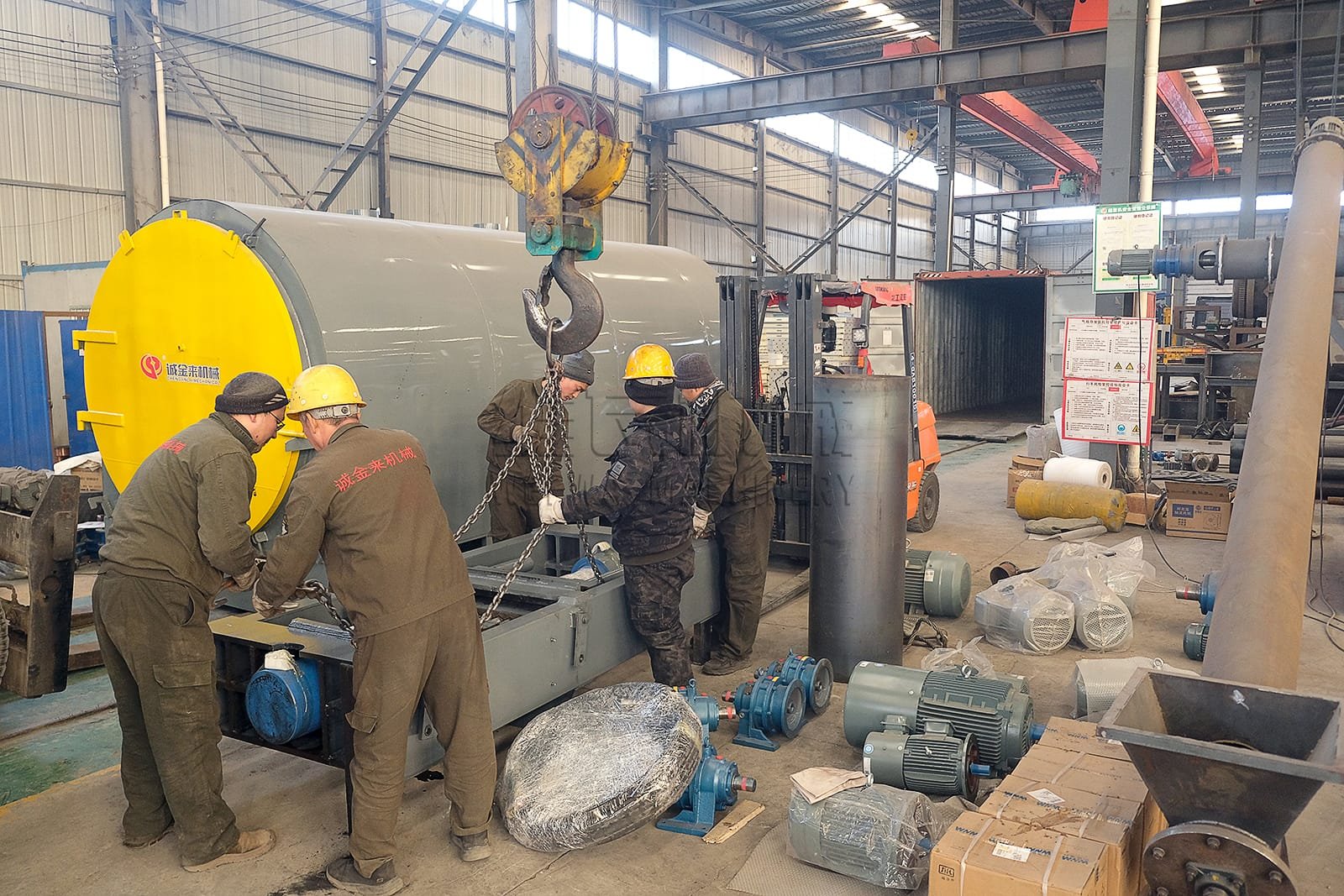
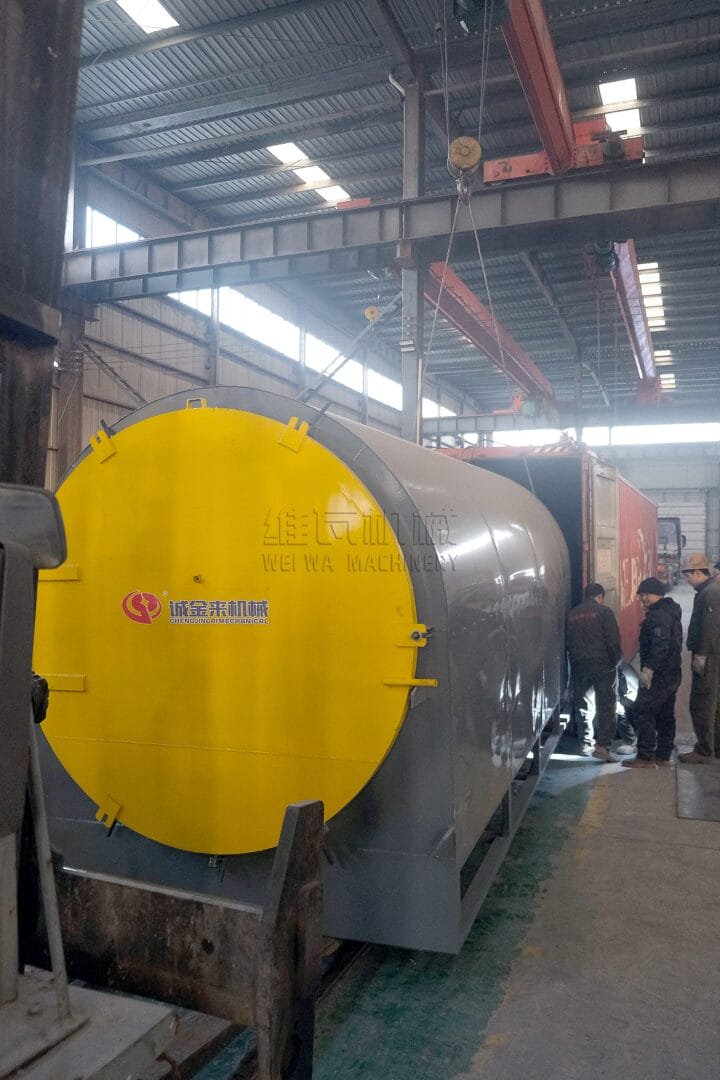
In the heart of industrial innovation and sustainable energy solutions, Weiwa Machinery continues to bridge gaps between advanced technology and global needs. Recently, we proudly loaded a horizontal carbonization furnace onto our shipping schedule, bound for Nigeria. This shipment is not just machinery on its way—it represents a pivotal step toward transforming biomass into valuable charcoal resources across Nigeria. As experts in manufacturing charcoal making machines and charcoal makers, we see this delivery as an opportunity to introduce efficient, eco conscious production methods that align with Nigeria’s growing demand for clean energy and economic empowerment.
The Rising Demand for Charcoal in Nigeria
Nigeria stands among the largest consumers of charcoal in Africa. With over 200 million people relying partly on biomass fuels for cooking and heating, traditional charcoal production has long been a cornerstone of rural economies. However, conventional methods often involve inefficient kilns and high deforestation rates, posing environmental and sustainability challenges. In response, modern equipment such as the horizontal carbonization furnace offers a pathway to produce charcoal with higher efficiency, lower emissions, and better control over quality.
The appeal of a horizontal carbonization furnace in Nigeria lies in its ability to process diverse raw materials—from coconut shells and hardwood to agricultural residues—into premium charcoal. Unlike outdated charcoal kilns that depend heavily on manual monitoring and suffer from uneven heat distribution, the horizontal design ensures consistent thermal processing. For Nigerian entrepreneurs and small scale industries aiming to upgrade operations, this technology unlocks profitability while reducing ecological footprints.
Understanding the Horizontal Carbonization Furnace
At Weiwa Machinery, our horizontal carbonization furnace embodies engineering precision tailored for varied climates and material inputs. The core principle involves pyrolysis—a thermochemical decomposition of organic material under limited oxygen. By feeding raw biomass into a sealed horizontal chamber and gradually increasing temperature, volatile gases are driven off and collected for reuse as fuel, leaving behind carbon rich charcoal.
This type of charcoal making machine operates with automated temperature controls and continuous or batch feeding options. The horizontal orientation allows easy loading and unloading, which is crucial in settings where labor and time efficiency matter. For Nigeria’s terrain and infrastructure realities, the simplicity of operation combined with robust construction makes the horizontal carbonization furnace a practical solution.
Heat recovery systems integrated into the furnace mean that excess gases generated during carbonization can be combusted internally, providing supplemental heat and minimizing external fuel requirements. This self sustaining cycle enhances energy efficiency and reduces operational costs—an essential factor in regions seeking affordable yet sustainable production technologies.
Why Nigeria Is Ready for Advanced Charcoal Makers?
Nigeria’s agricultural economy generates substantial biomass waste. From cocoa husks to corn cobs and rice straw, these materials often go unused or are burned openly, contributing to air pollution. Deploying a charcoal maker like our horizontal carbonization furnace converts this waste stream into marketable charcoal, simultaneously tackling waste management and energy supply issues.
Local entrepreneurs who adopt this technology can tap into both domestic and export markets. Premium charcoal produced through controlled carbonization fetches higher prices due to its low moisture content, uniform size, and enhanced calorific value. Furthermore, because the process captures bioenergy byproducts, operators may also generate electricity or process heat for adjacent activities, diversifying revenue streams.
Government initiatives aimed at curbing illegal logging and promoting renewable energy mesh well with the capabilities of a modern charcoal kiln. When communities embrace efficient carbonization methods, they contribute to reforestation goals while strengthening local economies.
On Site Impact of the Horizontal Carbonization Furnace in Nigeria
From our experience working in multiple developing regions, the installation of a horizontal carbonization furnace can shift entire production ecosystems. In Nigeria, where transportation of raw materials across distances can inflate costs, placing efficient furnaces closer to feedstock sources enables decentralized production hubs. This geographic flexibility empowers rural populations to participate directly in the charcoal value chain.
Training local technicians to manage the furnace ensures knowledge transfer and long term sustainability. Our team at Weiwa Machinery provides comprehensive manuals and remote support to guarantee smooth commissioning. Once operational, users typically observe reduced charcoal production cycles, fewer emissions, and improved workplace safety compared to open pit or rudimentary kilns.
The horizontal carbonization furnace in Nigeria also aligns with circular economy principles. Residues from the process, such as ash enriched with potassium and other minerals, can return to soil as natural fertilizer, further closing the loop in agricultural areas.
Technical Highlights of Our Charcoal Making Machine
Our horizontal carbonization furnace integrates several features that distinguish it in the field of charcoal makers. The stainless steel lining resists corrosion from acidic volatiles, extending service life even under harsh conditions. Insulation layers minimize heat loss, ensuring maximum retention within the chamber.
Automated venting regulates oxygen levels precisely, preventing incomplete carbonization or combustion. Sensors linked to digital displays allow operators to monitor internal temperatures in real time, reducing guesswork. For power constrained environments, models can run on single phase electricity or diesel generators, underscoring adaptability.
When considering a charcoal kiln for large scale use, throughput becomes vital. Our furnace sizes accommodate batches from 500 kilograms to several tons per cycle, adjustable based on customer needs. Modular designs enable scaling up as demand grows without requiring entirely new equipment purchases.
Environmental and Economic Benefits in Focus
Deploying a horizontal carbonization furnace supports Nigeria’s national objectives around climate resilience. Traditional charcoal production contributes significantly to deforestation; replacing it with efficient systems lessens pressure on forests. Moreover, because the process traps carbon in solid form, it acts as a carbon sink when charcoal substitutes fossil fuels in end use.
Economically, producers benefit from lower input costs thanks to energy self sufficiency and higher yields per unit of raw material. The ability to produce consistent quality charcoal elevates market competitiveness locally and internationally. Job creation along the supply chain—from feedstock collection to machine maintenance—multiplies positive socioeconomic effects.
For policymakers, incentivizing adoption of advanced charcoal making machines can accelerate progress toward sustainable development goals. Demonstration projects using our equipment have shown rapid returns on investment, especially when paired with training programs and access to financing.
Preparing for Shipment and Customer Collaboration
Loading the horizontal carbonization furnace onto our freight partner’s vessel was a moment of pride for Weiwa Machinery. Each component was secured following international transport standards to prevent damage. Our logistics team coordinated customs documentation and clearance procedures to ensure smooth entry into Nigeria.
Prior to shipment, we engaged with the Nigerian client to customize furnace dimensions and accessories matching their specific raw materials and production targets. This collaborative approach reflects our commitment to delivering not just equipment but tailored solutions. We view the relationship as a partnership—supporting installation, commissioning, and ongoing optimization.
During transit, our engineers prepared digital tutorials and live session schedules to train the client’s staff remotely upon arrival. This proactive stance minimizes downtime and accelerates the transition from installation to full scale production.
Practical Insights Into Using a Charcoal Kiln in Nigeria’s Climate
Nigeria’s tropical climate presents both opportunities and challenges for carbonization. High ambient humidity can affect drying stages before carbonization, so pre drying raw biomass under covered spaces improves efficiency. Our horizontal carbonization furnace mitigates weather related variability through enclosed processing, maintaining stable internal conditions regardless of outside temperature or rainfall.
Dust and particulate management are important in Nigerian contexts where air quality regulations are tightening. Our design incorporates filters and afterburners to capture fine particles and odors, ensuring compliance with environmental norms. Operators learn best practices for handling feedstock to reduce dust generation at source.
Energy security is another consideration. Since the furnace can utilize syngas produced during pyrolysis, dependence on external fuels diminishes. In regions facing intermittent electricity supply, this reliability proves invaluable for maintaining continuous production schedules.
Scaling Vision for Charcoal Making Across West Africa
While this particular shipment heads to Nigeria, Weiwa Machinery envisions broader impact across West Africa. Countries sharing similar biomass potential and energy needs stand to gain from adopting horizontal carbonization furnace technology. Networks of skilled technicians and shared maintenance hubs could emerge, fostering regional cooperation in clean energy manufacturing.
By establishing demonstration centers and forming alliances with agricultural cooperatives, governments and private entities can drive grassroots uptake. Our role is to provide robust, user friendly charcoal makers backed by responsive technical support, enabling scalable transformation in how communities produce and use charcoal.
We also advocate for integrating carbon offset schemes, where charcoal produced via our furnaces qualifies for credits due to emission reductions compared to traditional kilns. Such mechanisms enhance financial viability while promoting environmental stewardship.
Embracing Innovation With Weiwa Machinery
Innovation remains at the core of our mission. Research into improving heat exchange surfaces and refining automation algorithms continues in our R&D department. Future iterations of the horizontal carbonization furnace will feature enhanced connectivity for predictive maintenance and performance analytics accessible via mobile devices.
We believe empowering users with data driven insights will elevate industry standards and encourage evidence based decision making. Whether a small farm cooperative or a medium enterprise, access to real time process metrics fosters continuous improvement and resource conservation.
Our journey sending a charcoal making machine to Nigeria reinforces the idea that geography should not limit access to transformative technology. Through diligent engineering and customer collaboration, we turn possibilities into tangible outcomes—cleaner charcoal, stronger livelihoods, and greener landscapes.
Conclusion
The departure of our horizontal carbonization furnace for Nigeria marks more than a commercial transaction; it signifies a convergence of sustainable technology and local potential. As this charcoal maker reaches its destination, it carries with it the promise of efficient production, environmental protection, and economic upliftment.
Weiwa Machinery remains dedicated to advancing charcoal kiln solutions that meet the unique demands of each market. Our commitment extends beyond hardware to encompass training, service, and innovation partnerships that help communities thrive. In Nigeria and beyond, the path to sustainable charcoal production is illuminated by smart engineering—and we are proud to lead the way.
About Weiwa Machinery
Weiwa Machinery is a specialized manufacturer focused on designing and producing high performance charcoal making machines, including horizontal carbonization furnaces and charcoal makers. With decades of experience serving clients across Asia, Africa, and Latin America, we combine robust engineering with adaptable solutions tailored to local raw materials and operational conditions. Our product lineup emphasizes energy efficiency, ease of use, and environmental responsibility. Backed by a professional technical team and responsive customer support network, Weiwa Machinery helps businesses transform biomass waste into valuable charcoal products, driving economic growth and sustainability worldwide.


 Wechat

 +8615937143060
