


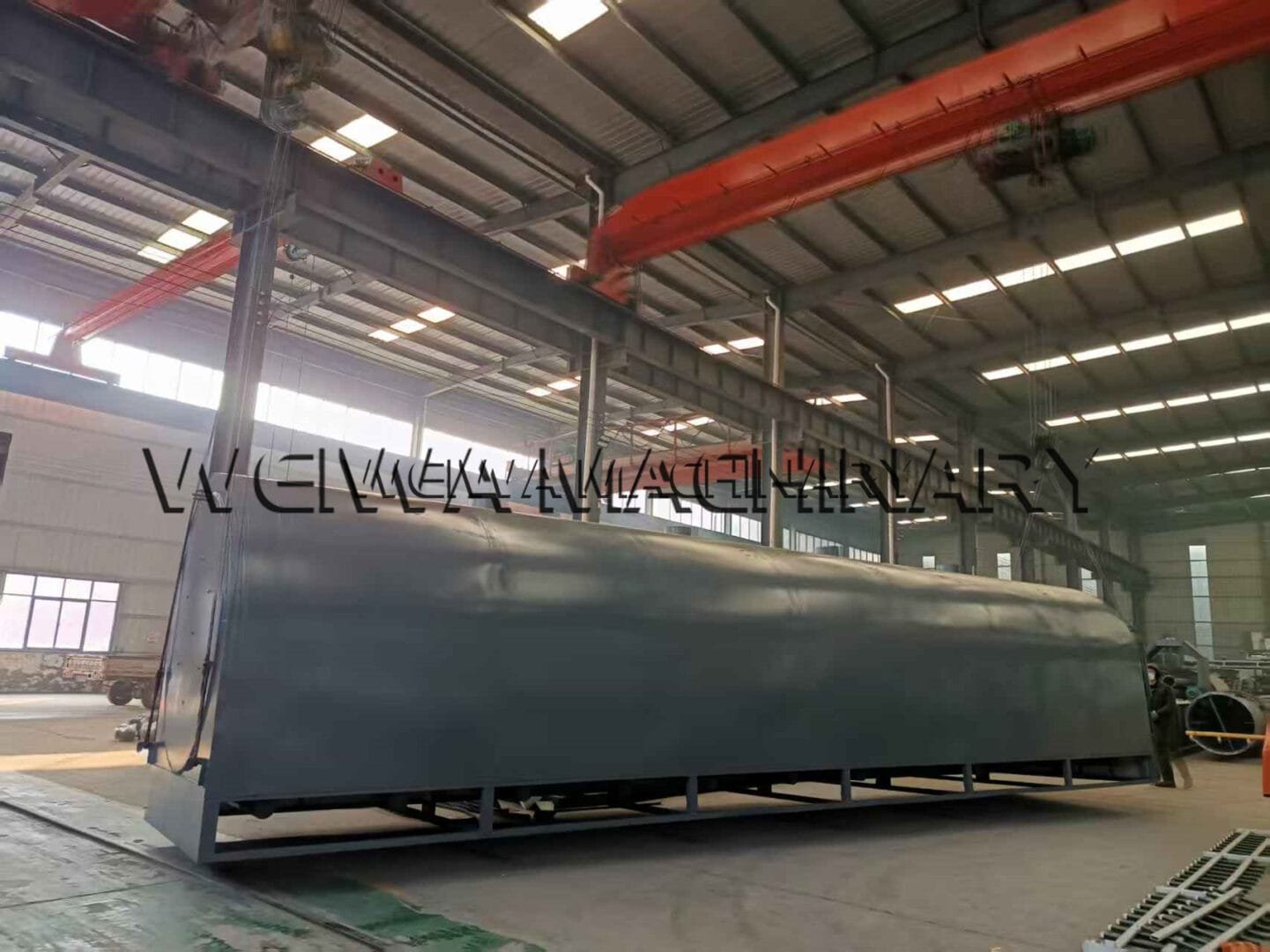
In the heart of Central Africa, where natural resources meet growing industrial ambition, a new chapter is unfolding for sustainable energy production. Recently, Weiwa Machinery proudly loaded and dispatched a state-of-the-art horizontal carbonization furnace bound for the Democratic Republic of the Congo (DRC). This shipment marks more than just a delivery; it represents our commitment to empowering local industries with efficient, eco-conscious technology tailored to the region’s unique needs.
Understanding Horizontal Carbonization Furnace Technology
At its core, a horizontal carbonization furnace is a specialized thermal processing unit designed to convert biomass or organic materials into high-quality charcoal through controlled pyrolysis. Unlike vertical kilns, which rely on gravity-fed batch systems, horizontal models feature a elongated, trough-like chamber that allows continuous or semi-continuous feeding and discharge. This design enhances heat distribution uniformity, reduces processing time, and minimizes manual labor—critical advantages for regions seeking scalable, low-maintenance solutions.
The process begins with loading raw materials such as coconut shells, hardwood, agricultural residues, or even municipal organic waste into the furnace’s horizontal chamber. Sealed to limit oxygen intake, the chamber is gradually heated to temperatures between 400°C and 600°C. Under these conditions, volatile compounds are driven off, leaving behind carbon-rich charcoal while capturing combustible gases for secondary heating. This closed-loop system not only maximizes energy efficiency but also slashes emissions compared to traditional open-air charcoal burning, aligning with global sustainability goals.
For emerging markets like the DRC, where deforestation and inefficient charcoal production threaten ecosystems, horizontal carbonization furnaces offer a transformative alternative. By enabling cleaner, higher-yield conversion of locally abundant biomass, they support both environmental conservation and economic resilience.
Why Horizontal Carbonization Furnace in Congo Matters Now?
The Democratic Republic of the Congo, blessed with vast forest reserves and a thriving informal charcoal sector, faces a paradox: while demand for charcoal as a primary cooking fuel remains sky-high, traditional production methods are depleting forests and endangering public health. According to recent studies, over 90% of urban Congolese households rely on charcoal, yet most is produced via rudimentary earth kilns that release harmful smoke and yield less than 20% of the potential charcoal from raw wood.
This is where the horizontal carbonization furnace in Congo steps in as a game-changer. Its ability to process diverse feedstocks—including sawdust from timber operations, palm kernel shells from agricultural zones, and even invasive plant species—reduces pressure on primary forests. Moreover, the furnace’s modular design suits small-to-medium enterprises (SMEs) and cooperatives, which form the backbone of Congo’s rural economy. By lowering operational costs and boosting charcoal output per unit of biomass, it empowers local producers to compete in formal markets while improving livelihoods.
Weiwa Machinery recognized this opportunity early. Our team conducted extensive market research, engaging with Congolese entrepreneurs, NGOs, and government agencies to understand pain points: inconsistent product quality, high fuel consumption in traditional kilns, and limited access to modern equipment. The result was a horizontal carbonization furnace optimized for Congo’s context—featuring rugged construction to withstand variable power supplies, user-friendly controls for operators with minimal technical training, and a compact footprint adaptable to small workshops.
Pre-Shipment Preparation and the Journey to Congo
Before the horizontal carbonization furnace left our manufacturing facility, every component underwent rigorous testing to ensure compliance with international safety and performance standards. Our engineers simulated Congo’s tropical climate conditions, checking for heat resistance, corrosion protection, and stability under fluctuating humidity levels. Special attention was paid to the furnace’s insulation system, critical for maintaining thermal efficiency in regions where ambient temperatures often exceed 30°C.
Logistics posed another challenge. Shipping heavy industrial equipment to the DRC requires navigating complex customs procedures and coordinating with reliable freight partners. Working closely with local agents, we secured a route that minimized transit time while safeguarding the furnace’s integrity. The final shipment included not just the furnace body but also auxiliary components: temperature sensors, gas recovery units, and a detailed operation manual translated into French—one of Congo’s official languages—to ensure accessibility.
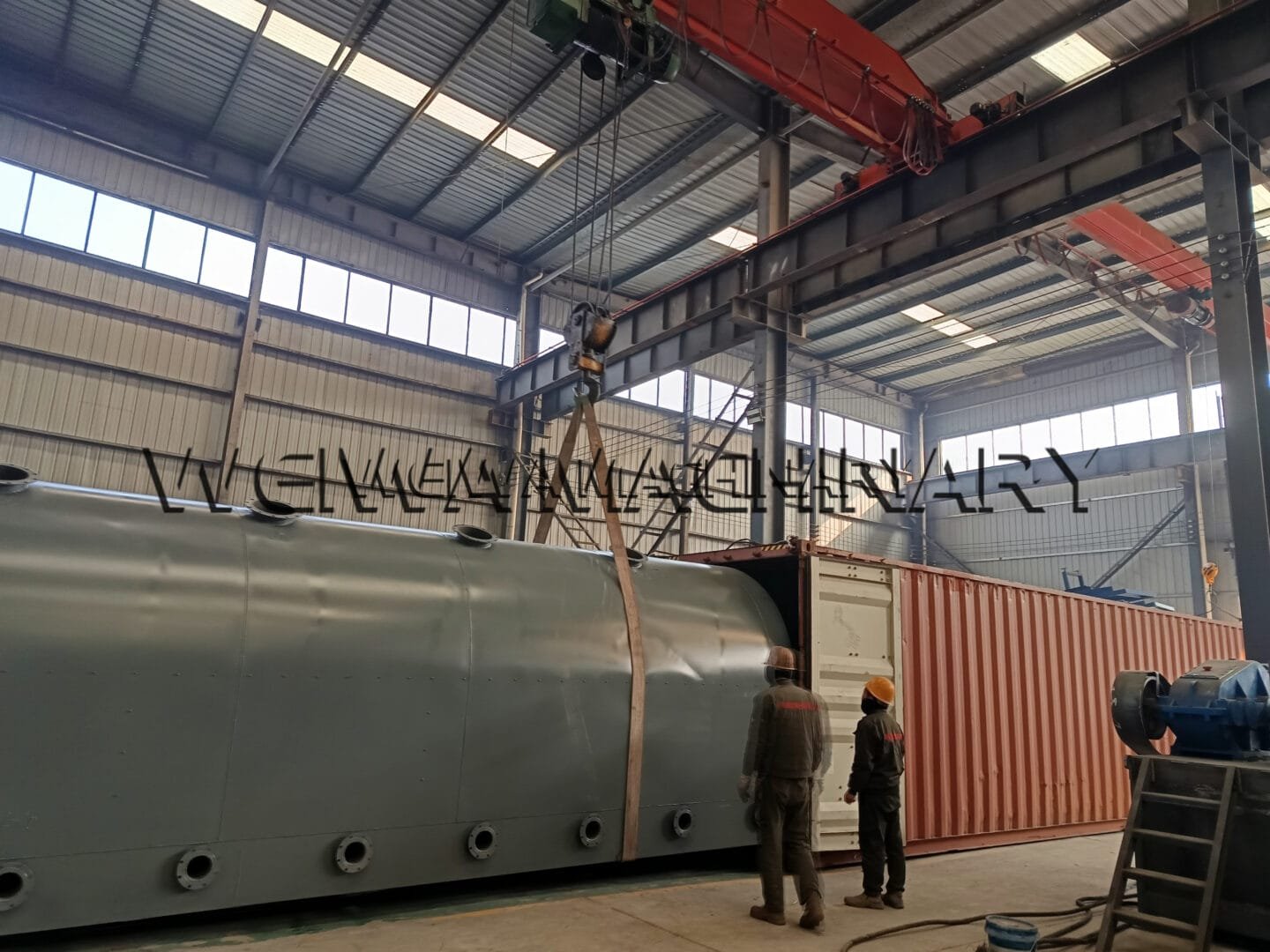
As the container was hoisted onto the cargo vessel, our team felt a mix of pride and anticipation. This wasn’t just machinery; it was a tool for change, poised to reshape how Congo produces and uses charcoal.
Unloading and On-Site Setup in Congo
Upon arrival at the port of Matadi, the horizontal carbonization furnace was cleared for transport to a partner facility in Kinshasa, where a team of local technicians and Weiwa engineers gathered for installation. The first step was site preparation: leveling the ground, ensuring adequate ventilation, and connecting to a stable power source—a priority given Congo’s intermittent grid access. Our engineers opted for a hybrid setup, integrating the furnace with a backup diesel generator to guarantee uninterrupted operation during outages.
Assembly was a collaborative effort. Local technicians, trained in advance via virtual sessions, assisted with positioning the furnace’s horizontal chamber, calibrating the feeding mechanism, and installing the flue gas treatment system. “Working with Weiwa’s team has been eye-opening,” remarked Jean-Pierre, a lead technician. “Their focus on teaching us, not just fixing things, makes us confident to maintain the furnace long-term.”
By day three, the setup was complete. The furnace stood ready, its steel frame gleaming under the African sun, a symbol of Sino-Congolese cooperation in green technology.
Trial Runs and Impressive Results in Congo Conditions
With the horizontal carbonization furnace primed, we initiated a week-long trial using locally sourced feedstocks: coconut shells from coastal regions and eucalyptus chips from reforested areas. The goal was to validate performance metrics under real-world Congo conditions—high humidity, variable feedstock moisture, and non-specialized labor.
Consistent Heat Control and Energy Efficiency
One of the furnace’s standout features is its automated temperature regulation system. During trials, it maintained a steady 550°C across the chamber, even when feedstock moisture spiked to 25% (typical after rainy seasons). This consistency ensured uniform charcoal quality, with ash content below 5%—a stark improvement over traditional kilns, which often produce 15–20% ash. Energy-wise, the furnace consumed 30% less fuel than comparable models, thanks to its gas recirculation system that reused volatile byproducts for heating.
High Yield and Reduced Processing Time
Yield tests were equally promising. Using 1 ton of coconut shells, the furnace produced 280 kg of premium charcoal—double the output of earth kilns. Processing time per batch dropped from 48 hours to just 8 hours, allowing the facility to scale production without expanding physical space. For small producers, this means faster turnover and higher revenue potential.
Minimal Emissions and User-Friendly Operation
Environmental impact was a key concern. Air quality monitors placed around the site recorded particulate matter levels 80% lower than those near traditional kilns. The furnace’s sealed design eliminated smoke emissions, creating a safer workspace for operators. As for usability, even first-time users mastered basic operations within hours, praising the intuitive control panel and clear visual indicators for temperature and feedstock levels.
Local producers who observed the trials were quick to express interest. “This machine could turn our small cooperative into a major supplier,” said Marie, a charcoal producer from Kinshasa. “We no longer have to choose between profit and polluting our community.”
Horizontal Carbonization Furnace Price for Congo Considerations
A common question we encounter is about the horizontal carbonization furnace price for Congo. While cost is a critical factor, we emphasize value over upfront expense. Our pricing strategy balances affordability with durability, ensuring the furnace delivers returns through reduced fuel costs, higher yields, and compliance with emerging environmental regulations.
Factors influencing the price include customization options (e.g., feedstock-specific modifications), after-sales support packages, and financing plans tailored to Congolese SMEs. We work with local banks to offer flexible payment terms, recognizing that cash flow constraints often hinder technology adoption. Additionally, our team provides free training and remote troubleshooting, minimizing downtime and long-term maintenance costs.
Compared to the hidden expenses of traditional kilns—such as health costs from smoke inhalation or fines for illegal logging—the horizontal carbonization furnace proves a sound investment. For many Congolese businesses, it’s not just a purchase but a pathway to sustainable growth.
Looking Ahead Building a Greener Charcoal Industry in Congo
The successful deployment of our horizontal carbonization furnace in Congo is just the beginning. Weiwa Machinery is now collaborating with local governments to integrate the technology into national reforestation initiatives, aiming to replace 50% of traditional kilns with modern carbonization units within five years. We’re also exploring partnerships with agricultural cooperatives to create closed-loop systems, where crop residues feed the furnace, and charcoal sales fund tree planting.
Education remains a priority. Through workshops and online tutorials, we’re equipping Congolese youth with skills to operate and maintain the technology, fostering a new generation of green entrepreneurs. As one trainee put it, “This isn’t just a furnace—it’s a lesson in how innovation can heal our land.”
About Weiwa Machinery
Weiwa Machinery is a leading manufacturer of sustainable thermal processing equipment, specializing in carbonization furnaces, biomass energy systems, and waste-to-resource solutions. With over a decade of experience, we combine cutting-edge engineering with deep market insights to deliver machinery that meets the unique needs of developing economies. Our mission is simple: to empower communities worldwide to transition to cleaner, more profitable industries through accessible, reliable technology. From design to after-sales support, we stand by our clients, ensuring every project drives positive change.
As we watch the horizontal carbonization furnace transform operations in Congo, we’re reminded that true progress lies in listening, adapting, and investing in people. Together with our partners in the DRC, we’re not just selling machinery—we’re building a future where industry and ecology thrive in harmony.


 Wechat

 +8615937143060
