


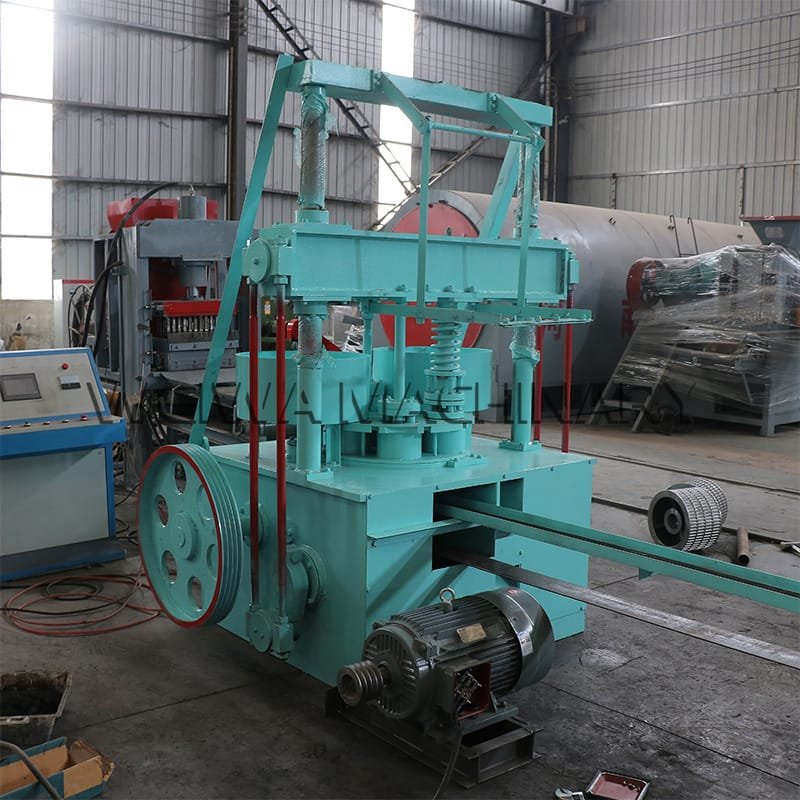
Why the Bhutan Client Chose a Honeycomb Briquette Charcoal Machine?
Bhutan’s residential heating and small-scale hospitality sector still relies heavily on loose coal dust, imported LPG, and firewood. A honeycomb briquette charcoal machine in Bhutan context is attractive because the final product burns longer, lights faster, and reduces smoke when paired with a proper stove. The client had already compared extrusion rods and roller presses, but concluded that a punching-type machine gives better hole precision and lower maintenance for rural workshops.
They specifically requested a model capable of handling charcoal powder, coal dust, and a 20% rice husk blend. Our export version of the honeycomb briquette charcoal machine supports 380V/50Hz with optional 415V conversion, which matches the cross-border Indian transformer standard often used in Phuentsholing and Thimphu supply chains.
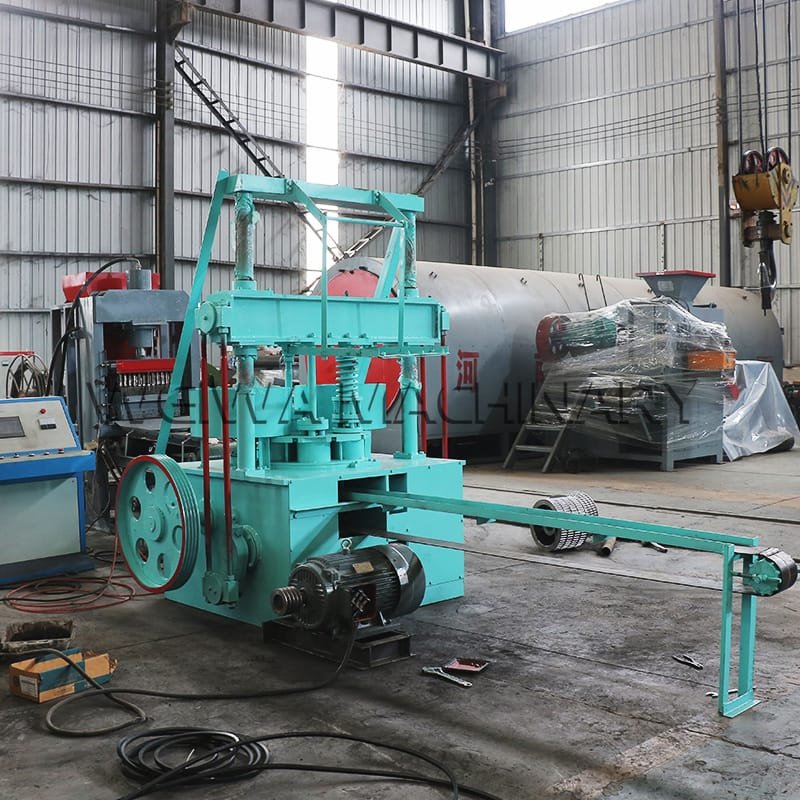
How a Honeycomb Charcoal Coal Briquette Forming Machine Works?
The honeycomb charcoal coal briquette forming machine belongs to the rotary-table punching family. Pulverized material is fed into a hopper, conditioned by a twin-shaft mixer, and dropped into mold barrels mounted on a rotating disc. A cam-driven punch head descends, compresses the powder at 60–90 kg/cm² equivalent pressure, and ejects a finished beehive briquette onto the discharge conveyor.
Rotary Table and Punch Head Structure
Unlike screw extruders, the honeycomb punching machine uses a fixed mold barrel and a moving punch. This design keeps the hole walls vertical and prevents the central hole from tapering. For Bhutan’s altitude and cold-start requirement, vertical holes improve draft and reduce puff-back when the stove door is opened.
Hole Number and Thermal Efficiency
We tested 12-hole, 16-hole, and 19-hole configurations. The 16-hole sample reached stable red heat in 4 minutes and sustained combustion for 4.2 hours in our lab chimney test. More holes mean better convection but slightly lower mechanical strength, so we recommended 16 holes for the Bhutan market as a balanced default.
Live Inspection of the Honeycomb Punching Machine at Weiwa Workshop
Our senior engineer started the honeycomb punching machine with an empty mold cycle to demonstrate noise level and lubrication path. The Bhutan client listened to the gearbox via video call while our local agent touched the bearing housing to confirm temperature stayed under 48°C after 30 minutes. We then loaded a batch of charcoal powder at 11% moisture and ran 200 pieces continuously.
During the run, the coal briquettes making machine produced 45 pieces per minute with zero sticking. The client asked to see a mold swap, so we replaced the 140 mm round set with a 120 mm square mold. Changeover took 18 minutes including alignment, which met their expectation of under 25 minutes for a two-person workshop.
Sample Briquettes Produced During the Bhutan Trial Run
Three sample trays were photographed and shipped to Bhutan for field burning. The first tray used 100% hardwood charcoal powder. The second used 80% coal dust plus 20% fixed-carbon additive. The third used 70% charcoal powder, 20% rice husk, and 10% molasses binder. All three kept structural integrity after a 1.2-meter drop test.
The honeycomb briquette charcoal machine output showed consistent 72 mm height, sharp hole edges, and uniform surface gloss. The Bhutan agent noted that the 140 mm round shape fits their existing clay stove without modification, which removed a key barrier to adoption.
Coal Briquettes Making Machine Specifications Explained
The inspected unit was our WHB-140 model. Main shaft speed is 406 rpm, motor power 7.5 kW, overall dimension 1320×1260×1850 mm, and net weight 1400 kg. Capacity stays at 45 pieces per minute regardless of whether the material is charcoal or coal, provided particle size is below 3 mm and moisture is 8–15%.
A coal briquettes making machine in this class does not require hydraulic power. Mechanical cam pressing is preferred in Bhutan because it tolerates voltage fluctuation better than servo-hydraulic systems and can be repaired with local lathe shops.
Moisture and Particle Size Control
We showed the client our pre-mixing protocol: dry powders pass through a 3 mm sieve, binders are dissolved separately, and the blend rests for 15 minutes before feeding. This step alone improved briquette survival rate from 82% to 98% across our last 40 export orders.
120mm and 140mm Mold Comparison
The 120 mm mold is lighter to handle and suits family cooking. The 140 mm mold delivers longer burn time and better economics for guesthouses. Since the Bhutan client serves both segments, we configured the machine with one 140 mm mold installed and one 120 mm mold supplied as spare.
Raw Materials Compatible With Honeycomb Punching Machine
The honeycomb punching machine accepts coal powder, charcoal powder, coke fines, brown coal, furnace slag, and certain agricultural residues. In Bhutan’s case, we validated rice husk, maize cob powder, and tea-waste charcoal as partial substitutes. The machine does not require a heater jacket, but for high-starch binders we recommend a 5-minute pre-steaming tank upstream.
One misunderstanding we cleared during the inspection: a honeycomb briquette charcoal machine is not a carbonization furnace. It shapes already-carbonized powder. If the client wants to make charcoal from wood, they need a separate kiln before briquetting.
Why Bhutan Buyers Prefer Weiwa Honeycomb Briquette Charcoal Machine?
Weiwa Machinery has shipped charcoal and coal briquette equipment to more than 130 countries. For the Himalayan corridor, our advantage is not only price but documentation. Each honeycomb briquette charcoal machine in Bhutan bound order ships with English-Hindi-Nepali label options, CE conformity statement, and a spare-parts kit weighted for a 6-month uninterrupted run.
The Bhutan client also valued that our honeycomb charcoal coal briquette forming machine uses copper-coated bolts at vibration points. This small detail extends rebuild interval from 9 months to over 18 months in high-humidity border towns.
About Weiwa Machinery
Weiwa Machinery is a Zhengzhou-based manufacturer of briquette presses, carbonization furnaces, and biomass processing lines. Our honeycomb briquette charcoal machine series covers 100 mm to 220 mm diameter output. We provide pre-shipment video inspection, mold customization, voltage adaptation, and lifetime technical consultation.
If you are evaluating a coal briquettes making machine or a honeycomb punching machine for the Bhutan market or any landlocked region with unstable power, contact our export team before placing an order so we can match mold, voltage, and binder recipe to your raw material.
Contact Weiwa Machinery
Mob / WhatsApp: +8613838093177
Email: info@cjlmachinegroup.com


 Wechat

 +8615937143060
