


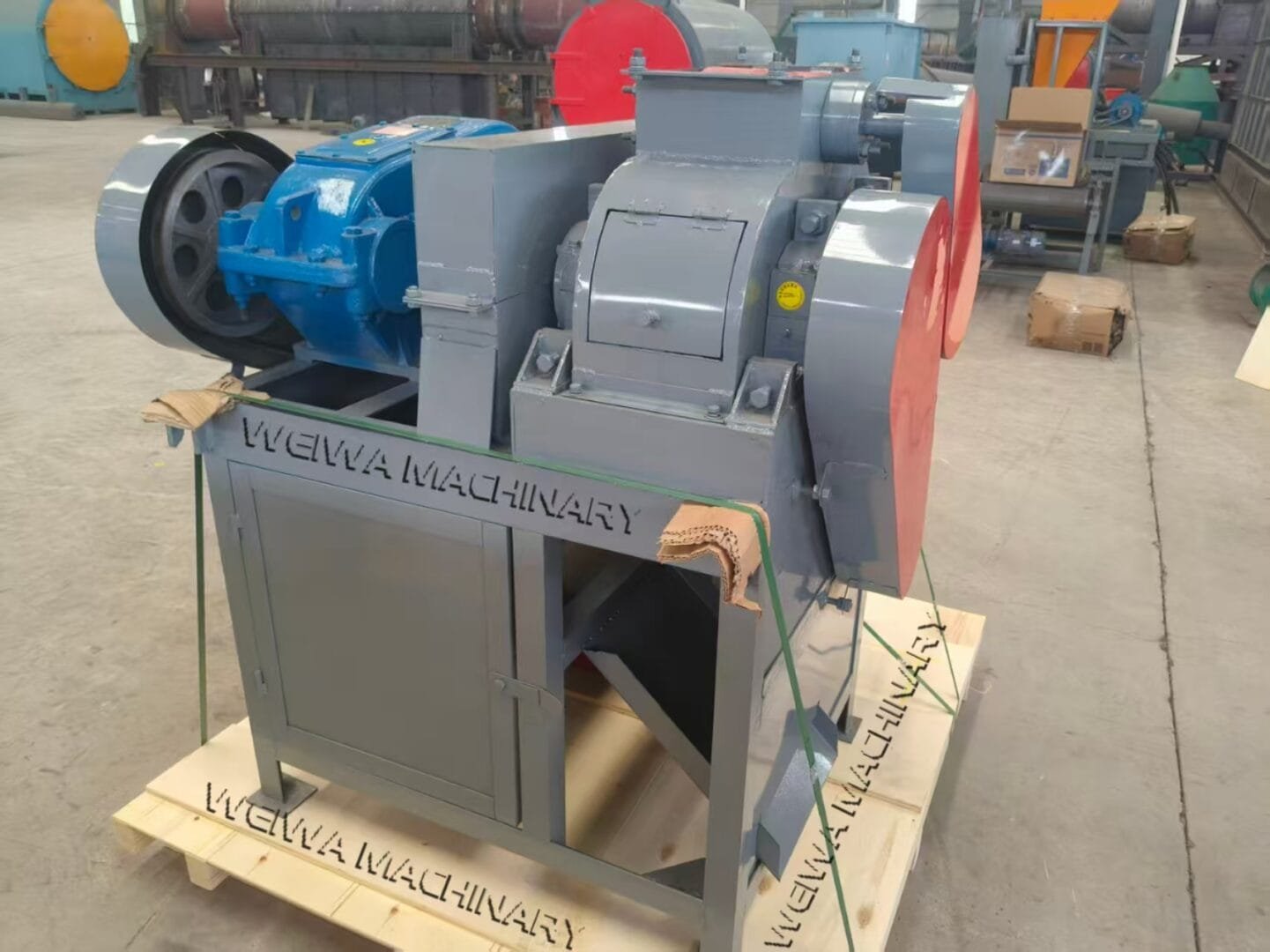
In recent weeks, Weiwa Machinery completed another important milestone by dispatching a full set of ball charcoal briquettes machine and supporting equipment to one of our long‑term partners in Tanzania. This shipment represents more than just loading machines into containers. It reflects the growing demand for making charcoal balls in Tanzania, the steady rise of clean fuel production in East Africa, and the trust placed in Weiwa Machinery as a professional manufacturer with more than thirty years of industry experience. In this blog, we will walk through the on‑site shipment process observed at our factory, analyze why the Tanzania market is becoming increasingly attractive for charcoal briquette machine investments, and provide a detailed yet accessible explanation of how a charcoal ball press machine works within a complete briquette production line.
Shipment Site Observations at Weiwa Machinery Factory
The day of shipment began early at our Henan production base. The ball charcoal briquettes machine destined for Tanzania underwent a final round of inspection led by our senior engineers. Each roller, hydraulic unit, frame weld, and mold cavity was checked against our internal quality control checklist. For export equipment, Weiwa Machinery applies strict standards because we understand that making charcoal balls in Tanzania requires machines capable of handling variable raw material moisture, different powder sizes, and continuous daily operation. The charcoal ball press machine selected by the Tanzania client was configured for medium‑scale output with customizable oval, pillow, and round molds, which are popular shapes in local BBQ and household fuel markets.
Packaging followed immediately after inspection. Small accessories such as binders feeders, spare rollers, and toolkits were packed in reinforced wooden cases suitable for LCL shipping. The main charcoal briquette machine body was securely fastened on steel skids and wrapped with anti‑rust film, vibration‑absorbing foam, and waterproof woven cloth to withstand long‑distance ocean transport. Our logistics team coordinated with the freight forwarder to ensure all export documents, including commercial invoice, packing list, certificate of origin, and bill of lading, matched the Tanzania import requirements. Watching the container close, our after‑sales manager reminded the client via video call that Weiwa Machinery would remain available for remote commissioning guidance, spare parts support, and formula adjustment after arrival. This is part of our promise as a manufacturer with decades of experience and a professional after‑sales team.
From a technical viewpoint, the shipped ball charcoal briquettes machine uses a rollers pressing type structure capable of applying high pressure to produce high‑density briquettes. The pressure system, roller material selection, and mold precision directly affect briquette strength, burning time, and appearance. During factory testing, we ran batches of charcoal powder, coal powder, and mixed biomass charcoal to simulate conditions similar to making charcoal balls in Tanzania. The results showed consistent molding rates above acceptable industrial thresholds, uniform ball size between 20–80 mm as requested, and minimal powder return. These parameters matter because Tanzanian entrepreneurs often face fierce competition in urban BBQ fuel supply and need reliable charcoal briquette machine performance to maintain steady weekly output.
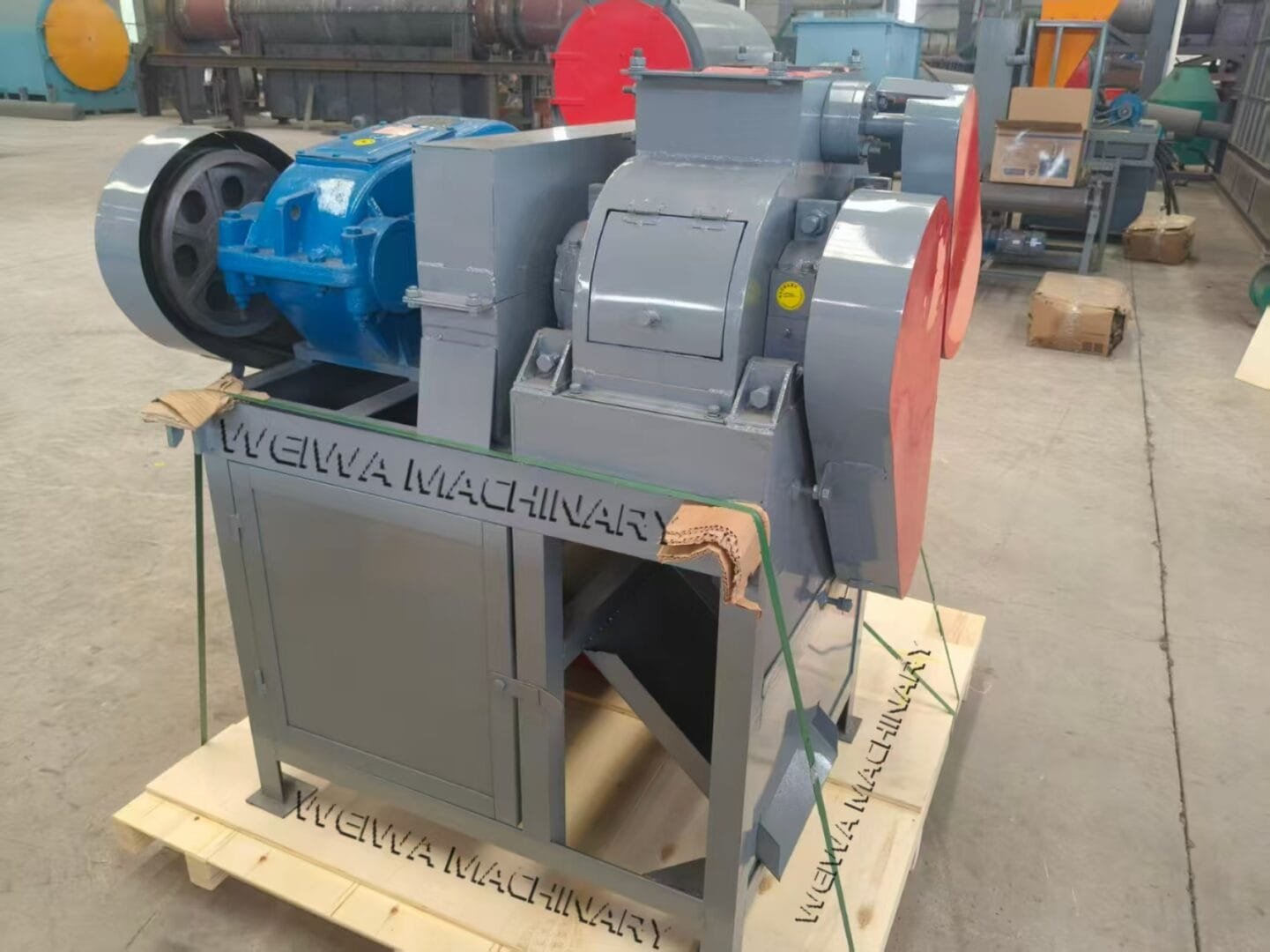
Tanzania Market Potential for Charcoal Briquette Machine Adoption
Tanzania, like many countries in East and Southern Africa, relies heavily on charcoal and firewood for household cooking, street food vending, and small‑scale industrial heating. Traditional charcoal production from whole wood logs leads to deforestation, low energy efficiency, and inconsistent product quality. In contrast, making charcoal balls in Tanzania using a charcoal ball press machine allows investors to convert charcoal powder, sawdust, rice husk charcoal, coconut shell charcoal, and other biomass residues into uniform, high‑density fuel balls. This transition is gaining attention from local entrepreneurs, agricultural cooperatives, and even municipal clean‑energy initiatives aiming to reduce environmental pressure while creating jobs.
One major driver behind the growing interest in ball charcoal briquettes machine imports is the abundance of raw materials. Tanzania produces significant volumes of agricultural waste such as rice husks, maize cobs, sugarcane bagasse, and sawmill residues. Instead of discarding or open‑burning these materials, local producers can carbonize them and feed the resulting powder into a Charcoal Briquette Machine. The ability to add natural binders like cassava starch or molasses further improves briquette quality and aligns with consumer preferences for low‑smoke, long‑burning BBQ charcoal. As urban populations expand in Dar es Salaam, Arusha, Mwanza, and Dodoma, the demand for clean, easy‑to‑ignite charcoal balls is expected to rise steadily over the next decade.
Another factor supporting market potential is the scalability of briquette production lines. A small investor can start with a single charcoal ball press machine, a simple crusher, a mixer, and sun drying space. As the business grows, they can add a mesh belt dryer, continuous carbonization furnace, and automated conveyors. Weiwa Machinery has observed that many Tanzania clients begin with trial orders of one machine to test local market response, then return within one or two years to upgrade to a full production line. This pattern highlights why having a trustworthy supplier with customization capability and technical drawing support matters. When making charcoal balls in Tanzania becomes a repeatable, profitable process, equipment reliability and supplier responsiveness become decisive competitive advantages.
It is also worth noting that regional trade within East Africa allows Tanzanian‑made briquettes to reach neighboring markets such as Kenya, Uganda, Rwanda, Malawi, and Zambia. A well‑operated charcoal briquette machine line in Tanzania can therefore serve not only domestic BBQ shops and households but also cross‑border wholesale channels. Investors who understand this broader market canvas are more likely to treat their ball charcoal briquettes machine as a long‑term asset rather than a short‑term experiment. From Weiwa Machinery’s perspective, every shipment to Tanzania carries the responsibility of representing Chinese manufacturing quality and building lasting partnerships through transparent communication and dependable after‑sales service.
Understanding the Ball Charcoal Briquettes Machine and How It Works
To appreciate why a ball charcoal briquettes machine is central to briquette production, it is necessary to understand its working principle. The machine belongs to the roller pressing family of briquetting equipment. Two counter‑rotating rollers are engraved with mold cavities matching the desired briquette shape, such as oval, egg, pillow, square, or round. When charcoal or coal powder is fed uniformly into the feeding hopper, it enters the gap between the rollers. As the rollers rotate, the material is compressed under gradually increasing pressure until it fills the mold cavities and forms dense briquettes. At the roller discharge position, the molded charcoal balls are released by natural spring‑back or scraper mechanisms and collected for drying or packaging.
The pressure applied by a charcoal ball press machine is typically higher than that of simple mechanical presses, which is why the resulting briquettes exhibit higher density, better hardness, and improved resistance to breaking during transport. For making charcoal balls in Tanzania, this durability is important because many distributors still rely on road transport over uneven rural routes. If briquettes crumble easily, customer complaints increase and repeat orders decline. Therefore, roller material, surface treatment, bearing capacity, and hydraulic assistance (if equipped) must be selected according to expected daily throughput and raw material characteristics.
Weiwa Machinery’s ball charcoal briquettes machine can handle multiple raw material types beyond charcoal powder. It is also suitable for coal powder, coke powder, metal powders such as iron, magnesium oxide, copper, chromium ore, lead, zinc scrap, bauxite, non‑ferrous metal powder, silicon manganese alloy powder, and mineral powders such as aluminum powder, toner, gypsum, sludge, and desulfurization gypsum powder. This versatility makes the charcoal briquette machine attractive to Tanzania buyers who may diversify into metallurgical briquettes or industrial byproduct recycling in the future. The same machine frame can often accommodate different roller sets, allowing shape changes without replacing the entire press. Such flexibility supports business evolution and protects initial investment.
During factory demonstrations, we often show clients how adjusting roller speed, feeding screw frequency, and binder ratio influences briquette compactness. Making charcoal balls in Tanzania may involve slightly different recipes depending on whether the end user prefers quick‑ignition BBQ balls or longer‑burning shisha‑type fuel. Although shisha charcoal often uses hydraulic press machines for extremely high density and precise cubic or round tablets, many Tanzanian BBQ vendors still favor pillow‑shaped or oval balls produced by roller presses due to lower cost per ton and sufficient burning performance. Understanding these market nuances helps Weiwa Machinery recommend the right charcoal ball press machine configuration instead of a one‑size‑fits‑all approach.
Key Components of a Ball Charcoal Briquettes Machine
The main frame provides structural stability and absorbs reaction forces during high‑pressure rolling. The rollers, usually made of high‑wear‑resistant alloy steel, determine mold accuracy and service life. The transmission system, comprising motor, reducer, and gearbox, ensures synchronized roller rotation and adjustable speed. The feeding system, often a screw feeder or vibrating hopper, controls material flow to prevent uneven filling. Some models include a hydraulic unit to boost pressure and compensate roller gap wear. Lubrication points, safety covers, and PLC control panels further enhance operational safety and ease of use. When exporting to Tanzania, we ensure electrical components match the requested voltage and frequency, such as 380V/50Hz or as specified by the client.
Charcoal Briquette Production Line Overview From Crushing to Drying
While a charcoal ball press machine is the core molding device, it operates best as part of a coordinated production line. A typical line for making charcoal balls in Tanzania includes crushing, mixing, briquetting, and drying stages. Each stage prepares the material to meet the next machine’s requirements. Skipping or underestimating any stage often leads to low briquette strength, high rejection rates, or excessive mold wear. Weiwa Machinery emphasizes complete line planning because our experience shows that Tanzanian clients achieve better ROI when the entire process is balanced rather than optimizing only the press itself.
The first stage is crushing. Raw charcoal chunks, carbonized biomass, or dried coal lumps are fed into a crusher to reduce size to a few millimeters or less. Uniform particle size improves binder distribution and roller filling. In Tanzania, some clients crush not only charcoal but also agricultural residues before carbonization, while others carbonize first and then crush. Both approaches work, but the latter often yields finer control over fixed carbon content. Twin shaft mixers or horizontal mixers then blend the powder with appropriate water and binder. Mixing quality directly affects briquette integrity. Poorly mixed material may cause cracking, layering, or rapid disintegration when burned.
After mixing, the material may be stored temporarily in a silo to buffer fluctuations in feeding rate. The ball press machine then molds the material into balls. The freshly pressed briquettes contain residual moisture from binder and initial raw material humidity. They are relatively soft and must be dried carefully. Mesh belt dryers offer controlled temperature drying and are suitable for medium‑to‑large operations. In smaller Tanzania setups, solar drying yards are still common, though weather dependency and longer drying cycles can limit scaling. Choosing between natural drying and mechanical drying depends on land availability, climate, and production targets. Weiwa Machinery provides both options and can design hybrid solutions where mesh belt dryers handle peak loads and sun drying handles overflow during dry seasons.
Throughout the line, conveyors connect machines to reduce manual handling. Dust collection units can be added to improve workshop cleanliness and protect workers’ health, an increasingly relevant consideration as Tanzanian environmental awareness grows. Electrical control cabinets centralize start‑stop, emergency stop, and overload protection functions. For clients new to making charcoal balls in Tanzania, Weiwa Machinery supplies plant layout drawings, equipment foundation references, and commissioning checklists. Our goal is not only to sell a charcoal briquette machine but to help the client run a stable, safe, and profitable plant that reflects positively on both the buyer and our brand.
Why Integrated Line Design Matters for Tanzania Buyers
An integrated design ensures capacity matching. If the crusher output is too low, the charcoal ball press machine runs below rated speed and molding pressure drops. If the mixer cannot homogenize binder evenly, briquettes may show soft spots. If drying lags behind pressing, inventory piles up and briquettes may deform under their own weight. Weiwa Machinery’s engineers review client expectations on daily output, available raw materials, site dimensions, and budget before proposing a line configuration. This consultative approach has supported successful installations not only in Tanzania but also in Kenya, Uganda, Ethiopia, Zambia, South Africa, Indonesia, Malaysia, India, Vietnam, Philippines, Pakistan, Turkey, Georgia, Poland, Czech Republic, Romania, Egypt, Sudan, Algeria, Tunisia, Mexico, and many other countries. Over time, these references reinforce trust in our ball charcoal briquettes machine and associated equipment.
Raw Material Flexibility and Product Customization
One reason the charcoal briquette machine market continues to expand is raw material flexibility. In Tanzania, charcoal powder is the most common input, but enterprising producers also experiment with coconut shell charcoal from coastal areas, sawdust charcoal from inland timber regions, rice husk charcoal from agricultural zones, and even municipal organic waste charcoal where permitted. A well‑adjusted charcoal ball press machine can handle these variations provided particle size distribution and moisture are within range. Weiwa Machinery often advises clients to start with local raw material samples, send them to our factory or a regional partner for testing, and observe molding behavior before finalizing machine specifications.
Product shape customization is equally important. While making charcoal balls in Tanzania, oval and pillow shapes dominate BBQ retail due to familiarity and stacking convenience. Square or bread‑shaped briquettes appeal to some institutional buyers such as schools or prisons with large kitchen operations. Round balls are sometimes used for decorative fire pits or boutique resorts. The ball charcoal briquettes machine accommodates these preferences through interchangeable rollers. Mold design also influences briquette size, typically between 20 mm and 80 mm in diameter or equivalent dimension. Smaller balls ignite faster but may burn shorter; larger balls last longer but require more draft. Understanding end‑user habits helps Tanzanian entrepreneurs select the optimal shape and size, and Weiwa Machinery supports this decision with market insights gathered from previous Africa shipments.
Beyond shape, surface texture and density can be tuned by adjusting roller engraving depth, pressing time, and binder formulation. Some Tanzania clients add a small percentage of fine coal or mineral powder to improve combustion characteristics. Others focus on 100 percent biomass charcoal to market an eco‑friendly product. The charcoal briquette machine itself does not dictate recipe, but it does impose limits on maximum particle size, moisture tolerance, and compressive strength requirements. Sharing these limits transparently is part of our pre‑sales technical service, ensuring that when the machine arrives in Tanzania, the client can start trials with realistic expectations and achieve acceptable results quickly.
After‑Sales Support and Long‑Term Partnership Perspective
Weiwa Machinery has accumulated more than thirty years of working experience in the machinery industry. Our professional after‑sales team handles installation guidance, remote troubleshooting, spare parts supply, operator training, and periodic maintenance reminders. For Tanzania clients, we recognize that time zone differences, shipping durations, and local technical resources vary. Therefore, we document each ball charcoal briquettes machine with unique serial numbers, maintain roller drawings, and keep critical components in stock to shorten lead times. When a client is making charcoal balls in Tanzania and encounters unexpected mold wear or motor issues, timely response can prevent days of downtime that erode monthly profitability.
Customization service extends beyond hardware. We provide plant layout planning, 3D design drawings, foundation sketches, and production flow suggestions tailored to the client’s land shape and raw material storage needs. Some Tanzania buyers purchase land specifically for briquette production and need to allocate space for raw material yard, crushing area, mixing area, ball press area, drying zone, finished goods warehouse, office, and dust control. Weiwa Machinery’s technical team can mark equipment footprints, clearance distances, utility connections, and safety aisles on drawings so that local contractors understand installation requirements. This level of support differentiates a pure equipment supplier from a long‑term partner committed to the client’s success.
We also share binder formulas and process tips refined through years of customer feedback. For example, the ratio of cassava starch to water, cooking method for the binder, cooling temperature before mixing, and ideal retention time in the mixer can significantly influence briquette quality. While every Tanzania context is different, having a proven starting point accelerates learning and reduces trial‑and‑error costs. Our after‑sales team remains available via phone, email, and messaging platforms to answer process questions, review photos or videos of on‑site issues, and suggest adjustments. This continuity of care is why many Tanzania clients return to Weiwa Machinery when expanding capacity or diversifying into related equipment such as carbonization furnaces or dryers.
Why Choose Weiwa Machinery for Charcoal Briquette Projects?
Weiwa Machinery is located in Gongyi City, Henan Province, China, an area with a long history of machinery manufacturing. Over the past three decades, we have focused on various briquette machines, carbonizing furnaces, and related equipment. Our product range covers ball charcoal briquettes machine, charcoal extrude machine, hydraulic shisha BBQ press machine, continuous carbonization furnace, horizontal carbonization furnace, sawdust extrude machine, and complete auxiliary systems. We combine manufacturing expertise with R&D investment to improve wear resistance, energy efficiency, and automation level. The charcoal ball press machine exported to Tanzania embodies these improvements through reinforced frames, optimized roller heat treatment, and user‑friendly control interfaces.
We have served customers in more than 130 countries. Each export case adds to our understanding of diverse operating environments, from humid coastal Tanzania to cold inland regions, from unstable power grids to advanced industrial parks. This global exposure informs how we protect electrical cabinets, recommend generator compatibility, suggest spare part kits, and package machines for ocean freight. When you engage Weiwa Machinery, you are not only purchasing a charcoal briquette machine but also accessing a knowledge base built from thousands of installations worldwide. Our sales engineers listen to your goals, ask relevant questions about raw materials and market orientation, and propose solutions aligned with your budget and timeline.
Transparency is part of our workflow. We explain machine capabilities and limitations honestly, provide test reports where available, share reference photos and videos from similar projects, and clarify lead times, payment terms, and shipping options. For Tanzania buyers, we can assist with common import considerations such as port of entry, container load planning, and documentation checks. Our intention is to reduce uncertainty so that your focus remains on making charcoal balls in Tanzania and growing your business rather than managing preventable supplier issues. Whether you are a first‑time entrepreneur or an established industrial player, Weiwa Machinery aims to be a reliable counterpart at every project stage.
Contact Weiwa Machinery for Inquiry and Quotation
If you are considering a ball charcoal briquettes machine or a complete charcoal briquette production line for Tanzania or other markets, we welcome you to contact us. Our team can discuss your raw materials, desired capacity, site conditions, and product shape preferences, then prepare a tailored proposal with technical parameters, layout drawing samples, and pricing. We believe that clear communication before purchase prevents misunderstandings after delivery and lays the foundation for a successful cooperation.
You can reach Weiwa Machinery through the following channels:
Mob: +86 13838093177
Whatsapp:+86 13838093177
E‑Mail: info@cjlmachinegroup.com
We invite you to visit our factory when convenient and see the charcoal ball press machine in operation. Until now, we have customers in more than 130 countries including Indonesia, India, Malaysia, Laos, Myanmar, Thailand, Vietnam, Philippines, Pakistan, Sri Lanka, Lebanon, Georgia, Turkey, Poland, Czech, Mongolia, South Korea, Romania, Egypt, Sudan, Tunis, Algeria, Ethiopia, Tanzania, Equatorial Guinea, Zambia, Mexico, South Africa, and others. Weiwa Machinery has become the first choice for more than 2 million customers worldwide. We look forward to supporting your journey in making charcoal balls in Tanzania with dependable equipment, professional service, and long‑term partnership.
Brief Introduction of Weiwa Machinery
Weiwa Machinery has more than thirty years of working experience in the machinery manufacturing industry. We specialize in various briquette machines and carbonizing equipment, integrating production, R&D, and sales as one entity manufacturer. Our professional after‑sales team provides installation guidance, technical training, and spare parts support. We offer customization services and design drawings for plant layout and equipment arrangement to help clients plan their sites efficiently. Whether you need a single charcoal briquette machine or a full production line, Weiwa Machinery welcomes your inquiry and strives to create value for customers through reliable machines and sincere service.


 Wechat

 +8615937143060
