


The global demand for efficient fuel solutions continues to rise, and nowhere is this more evident than in South Africa, where energy security and sustainable fuel alternatives are becoming increasingly critical. At Weiwa Machinery, we specialize in providing robust industrial equipment, and our ball charcoal briquettes machine has emerged as a cornerstone technology for businesses looking to capitalize on the growing market for solid fuel. This article explores the potential of the charcoal ball press machine in South Africa, details the science behind making charcoal balls, and outlines how our comprehensive production lines can help entrepreneurs and established enterprises succeed. With over thirty years of experience, Weiwa Machinery stands ready to support your venture from design to delivery.
Understanding The Charcoal Briquette Machine Technology
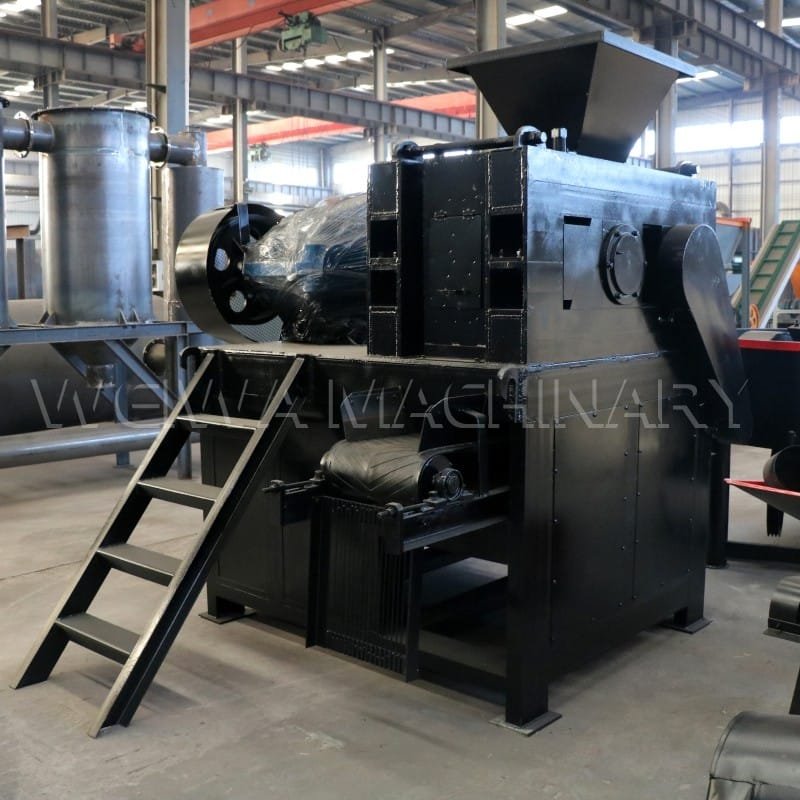
A charcoal briquette machine is not merely a piece of metal; it is a precision-engineered system designed to compress fine charcoal powder into dense, uniform shapes. The primary mechanism involves high-pressure rollers that squeeze the prepared mixture into molds, forming briquettes that are easy to transport, store, and burn. Unlike traditional manual brick-making methods, modern machinery ensures consistency in size and calorific value, which is essential for commercial distribution.
The process begins with the collection of raw materials. While charcoal dust is the most common input, other substances such as coal powder, coke, and even certain mineral powders can be utilized depending on local availability and regulatory standards. The key to success lies in the preparation phase, where binders and water are mixed homogeneously to create a pliable feedstock. Without proper mixing, the final product may crumble or fail to ignite efficiently.
High pressure is applied during the molding stage. Our ball charcoal briquettes machine utilizes advanced hydraulic systems to generate forces sufficient to compact the powder into solid masses. The resulting shapes—often oval, pillow-shaped, or customized according to client specifications—exhibit high mechanical strength. This durability is particularly important for export markets and long-distance transportation within South Africa, where rough handling is common.
Why South Africa Needs Charcoal Ball Press Machine Solutions?
South Africa faces unique energy challenges, including fluctuating electricity supply and rising costs associated with fossil fuels. Biomass energy, particularly charcoal briquettes, offers a viable alternative for both domestic heating and industrial processes. The country’s abundant forestry residues and agricultural waste provide a sustainable feedstock for making charcoal balls, reducing reliance on imported energy sources.
Urban centers like Johannesburg and Cape Town have seen a surge in demand for clean-burning, low-smoke fuels. Traditional lump charcoal often produces excessive ash and smoke, whereas briquettes manufactured using a charcoal ball press machine burn cleaner and longer. This makes them ideal for household use, restaurants, and even metallurgical applications where consistent heat output is required.
Moreover, South Africa’s entrepreneurial ecosystem is vibrant, with many small and medium-sized enterprises seeking profitable manufacturing opportunities. Establishing a briquette production line requires relatively low capital expenditure compared to other industrial ventures, yet offers rapid return on investment. By leveraging locally available biomass, business owners can mitigate currency risks and create jobs within their communities.
Components Of A Complete Briquette Production Line
Setting up a successful operation involves more than just purchasing a ball charcoal briquettes machine. A complete production line typically includes several auxiliary machines that work in synergy to transform raw dust into finished products.
First, a crusher breaks down larger chunks of charcoal or coal into fine powder. Particle size uniformity is crucial because uneven grains can cause blockages or weak spots in the final briquettes. Next, a twin-shaft mixer blends the powder with water and binders such as starch or clay. This step determines the plasticity of the mixture and ultimately affects the briquette’s structural integrity.
Once mixed, the material is conveyed into a silo, which acts as a buffer to ensure continuous feeding into the press. The charcoal ball press machine then shapes the mixture under high pressure. After molding, the wet briquettes proceed to a mesh belt dryer, where controlled hot air removes moisture. Proper drying prevents mold growth and ensures the briquettes achieve optimal hardness before packaging.
Packaging itself can be automated or manual, depending on the scale of operation. Many South African clients prefer customizable bag sizes to cater to different consumer segments, from individual households to bulk buyers.
Customization Options For South African Clients
At Weiwa Machinery, we understand that no two projects are identical. That is why we offer extensive customization services tailored to the specific needs of the South African market. Whether you require a compact semi-automatic line for a rural cooperative or a fully automated industrial plant for urban manufacturing, our engineering team can design a solution that fits your budget and spatial constraints.
Our design process begins with detailed site analysis. We review factory layouts, power supply capacities, and logistical considerations before drafting technical drawings. Clients receive 3D renderings and equipment lists, allowing them to visualize the entire workflow. For those new to the industry, we also provide training modules covering machine operation, maintenance, and safety protocols.
Customization extends to briquette shapes and sizes as well. While pillow-shaped briquettes are popular in South Africa due to their ease of stacking, some clients prefer oval or square designs for branding purposes. Our ball charcoal briquettes machine supports quick mold changes, enabling manufacturers to diversify their product offerings without investing in multiple machines.
The Economic Potential Of Making Charcoal Balls In South Africa
Investing in a charcoal briquette machine is not just an environmental decision; it is a sound financial strategy. South Africa’s retail sector shows strong appetite for affordable fuel alternatives, especially in townships and peri-urban areas where electricity tariffs are prohibitive. Briquettes sell at competitive prices while offering higher profit margins compared to raw charcoal.
Additionally, the export potential cannot be overlooked. Neighboring countries such as Botswana, Zimbabwe, and Namibia lack sufficient domestic production capacity and rely on imports. By establishing a high-capacity production line, South African manufacturers can tap into regional markets under the Southern African Development Community framework, enjoying tariff advantages and reduced logistics costs.
Job creation is another significant benefit. From sourcing raw materials to operating machinery and managing distribution networks, a single production line can employ dozens of workers. This aligns with national development goals aimed at reducing unemployment and fostering inclusive growth.
Technical Advantages Of Weiwa Machinery Equipment
With three decades of expertise, Weiwa Machinery has refined every aspect of the charcoal ball press machine to meet international standards. Our rollers are constructed from high-chromium alloy steel, ensuring exceptional wear resistance even under abrasive conditions. Precision machining guarantees tight tolerances, minimizing material leakage and maximizing output efficiency.
The hydraulic system features overload protection and automatic pressure adjustment, safeguarding against mechanical damage caused by foreign objects. Such reliability is crucial for uninterrupted production cycles, particularly in high-demand environments.
Energy efficiency is another hallmark of our design philosophy. Motors are selected based on optimized power curves, reducing electricity consumption without compromising performance. For off-grid locations in South Africa, we can integrate diesel generators or solar power systems into the production line configuration.
Installation And After Sales Support
Purchasing heavy machinery is a significant commitment, which is why Weiwa Machinery provides end-to-end support. Upon order confirmation, our logistics team coordinates sea freight or container loading according to your preference. Small equipment is packed in wooden cases, while larger units are secured with nude packing and protective coatings to withstand long voyages.
When the shipment arrives in South Africa, our technicians can travel onsite to supervise installation and commissioning. We do not leave until the ball charcoal briquettes machine operates at full capacity and your staff demonstrates proficiency in daily operations.
After sales service includes spare parts supply, remote troubleshooting via video call, and annual maintenance contracts. Our global network ensures that replacement components reach you promptly, minimizing downtime. Furthermore, we maintain open communication channels through multiple platforms, understanding that responsive support is vital for your peace of mind.
Environmental Impact And Sustainability Considerations
Environmental stewardship is increasingly important in South Africa, where regulations on emissions and deforestation are tightening. Using a charcoal briquette machine contributes positively to sustainability goals by recycling waste charcoal dust that would otherwise be discarded. This reduces pressure on natural forests and promotes circular economy principles.
The combustion characteristics of briquettes also favor cleaner air quality. Because they burn more completely, harmful particulate emissions are significantly lower compared to traditional firewood or substandard charcoal. Some municipalities in South Africa already offer incentives for businesses adopting green technologies, making the switch financially attractive beyond operational savings.
Weiwa Machinery continuously invests in research to improve binder formulations, exploring bio-based adhesives that eliminate chemical residues. Future upgrades to our charcoal ball press machine models aim to further reduce energy consumption and enhance automation, aligning with global trends toward Industry 4.0 manufacturing.
Case Studies From African Markets
Although this article focuses on South Africa, it is worth noting that Weiwa Machinery has successfully deployed similar production lines across the continent. In Tanzania, a client utilizing our ball charcoal briquettes machine scaled production from five tons per day to over fifty tons within two years. The key factors were consistent product quality and reliable aftersales support.
Another example comes from Ethiopia, where agricultural residues such as coffee husks were transformed into valuable fuel briquettes. By customizing the press configuration, we enabled the client to utilize locally abundant materials, drastically cutting raw material costs.
These experiences inform our approach to the South African market. We recognize the importance of adapting technology to local contexts, whether that means adjusting moisture levels for humid coastal regions or reinforcing frames for high-altitude installations.
How To Start Your Briquette Business In South Africa?
Embarking on a briquette manufacturing journey requires careful planning. Begin by conducting market research to identify target demographics and pricing strategies. Assess raw material availability—charcoal dust can often be sourced from existing charcoal producers at minimal cost.
Next, determine your desired production capacity. Small-scale startups might opt for a single charcoal ball press machine with manual feeding, while larger enterprises should consider automated lines with conveyor systems. Budget accordingly for land, construction, utilities, and labor.
Engage with experienced suppliers early in the process. Request detailed quotations, technical specifications, and references. At Weiwa Machinery, we encourage potential clients to visit our factory or join virtual tours to witness machine performance firsthand. Transparency builds trust, and we are confident in the quality of our craftsmanship.
Finally, develop a marketing plan. Highlight the benefits of briquettes—clean burning, long-lasting heat, and economic value—to attract wholesalers, retailers, and end users. Leverage social media platforms and local trade fairs to build brand awareness.
Frequently Asked Questions About Charcoal Ball Press Machines
Many clients inquire about the lifespan of our equipment. Under normal operating conditions, a well-maintained ball charcoal briquettes machine can function effectively for over ten years. Regular lubrication and timely replacement of wearing parts such as rollers and bearings are essential.
Another common question concerns raw material flexibility. While the machine excels with charcoal powder, it can also process coal, coke, and certain metallic powders provided the particle size and moisture content are controlled.
Regarding installation time, a standard production line typically requires two to four weeks for assembly and testing, depending on complexity. Our team strives to minimize disruption and expedite commissioning.
Global Reach And Customer Trust
Weiwa Machinery takes pride in serving customers across more than one hundred thirty countries. Our footprint spans Asia, Europe, Africa, and the Americas, reflecting the universal applicability of our technology. In Africa alone, nations such as Kenya, Nigeria, Ghana, and now South Africa have embraced our solutions for their reliability and cost-effectiveness.
Customer testimonials frequently highlight our responsiveness and technical competence. We view each project as a partnership rather than a transaction, committed to your long-term success. This philosophy has earned us repeat business and referrals, fueling our growth alongside yours.
About Weiwa Machinery
South Africa represents a fertile ground for investment in briquette production. The convergence of energy needs, environmental awareness, and entrepreneurial spirit creates a unique opportunity for businesses equipped with the right tools. A ball charcoal briquettes machine from Weiwa Machinery offers the precision, durability, and support necessary to thrive in this dynamic market.
If you are considering making charcoal balls in South Africa, let us help you turn your vision into reality. With over thirty years of experience, a dedicated aftersales team, and bespoke design capabilities, Weiwa Machinery is your trusted partner. Contact us today to discuss your project requirements, obtain technical drawings, or request a quotation.
Contact Information:
Mobile: +8613838093177
WhatsApp: +8613838093177
Email: info@cjlmachinegroup.com
We look forward to hearing from you and supporting your success in the South African market.
Let me know if you need a Chinese version or a shorter summary for social media promotion.


 Wechat

 +8615937143060
