


From the Henan Workshop to the Congo-Bound Container
The project started when a Congolese buyer contacted our export team on WhatsApp. He was not looking for a generic machine. He wanted a coal rod machine in Congo that could handle fine charcoal powder, switch between round BBQ sticks and hexagonal household briquettes, and keep working when grid power dropped.
Our engineers asked for two things: photos of the local raw material and a sample shipment of charcoal powder. The sample arrived as a mix of wood charcoal fines, palm kernel shell char and a small percentage of mineral coal dust. That information allowed us to adjust the screw design, binder ratio and dryer residence time before production began.
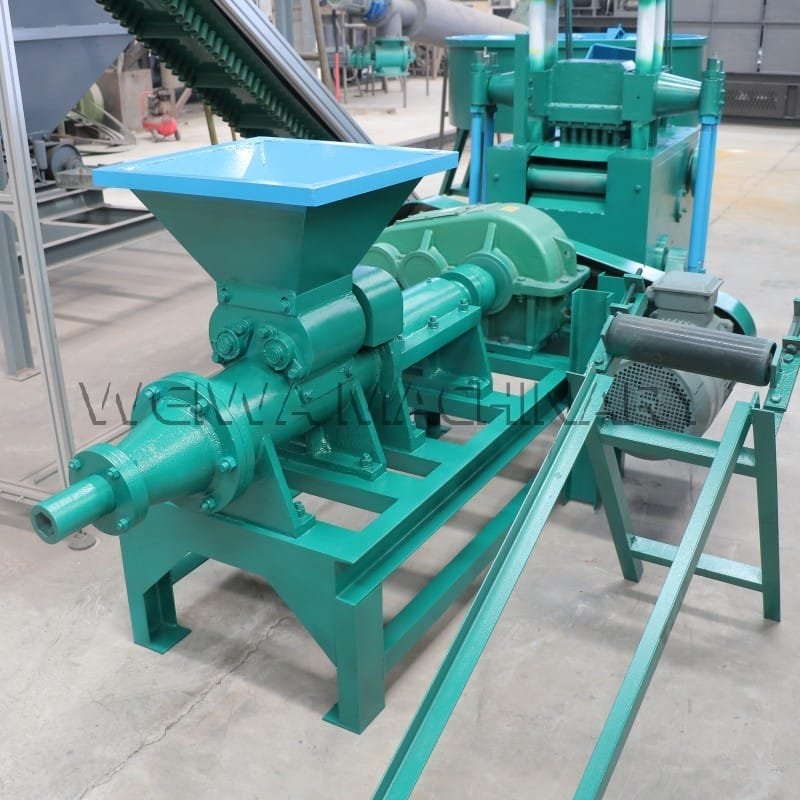
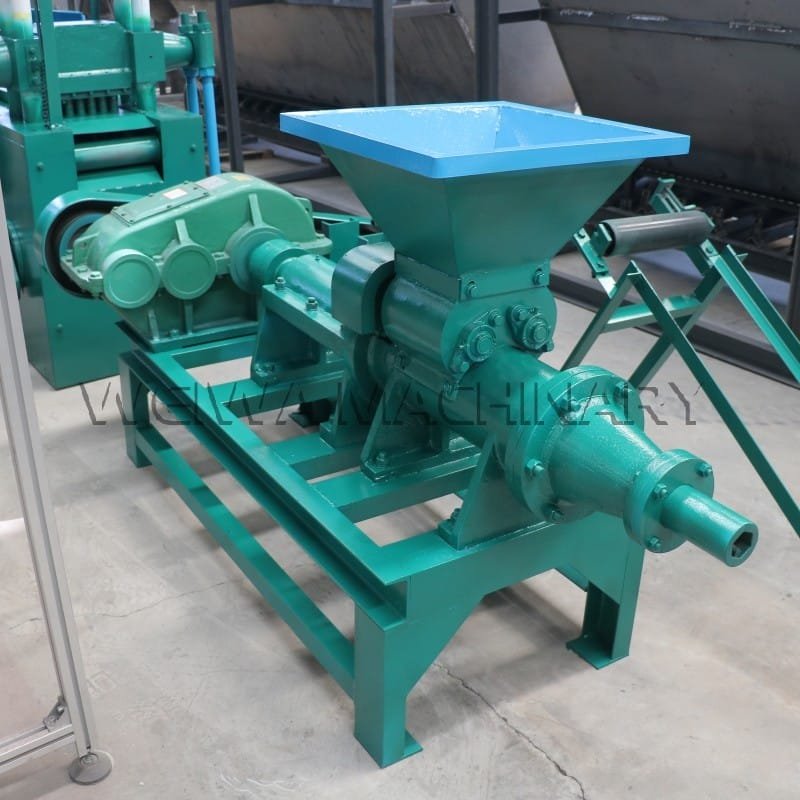
In the workshop, the charcoal extruder machine frame was built from national certified carbon steel. The motor was wound with 100 percent copper coil. The propulsion shaft carried a high manganese alloy propeller. The die head was machined to accept round, square, hexagonal and custom molds. Nothing in the line was selected for show. Every part was selected for repeat production in a tropical market.
What the Client in Congo Actually Needed?
Many first-time buyers search for a charcoal briquette machine and assume the machine alone will solve everything. In Congo, the real challenge is the full process. Charcoal powder must be crushed fine enough, mixed with the right binder, extruded under correct pressure, cut to uniform length and dried without cracking.
The client needed a line that could produce clean-burning rods for street food vendors, households and wholesale charcoal shops. He also needed spare propellers, French and English labels, a local-voltage motor configuration and a layout drawing that fit a modest concrete shed near the port.
That is why Weiwa did not simply sell a machine. We supplied a coal rod machine in Congo scenario: crusher, mixer, extruder, cutter, dryer, control items, spare parts and commissioning guidance bundled into one coordinated project.
Loading Day at the Weiwa Export Yard
On loading day, the atmosphere in the yard was calm but strict. The charcoal extruder machine was first wrapped in thick plastic film. The motor, coupling and electrical parts received extra protection against sea moisture. Rotating components were coated with anti-rust oil.
The extruder was placed into a reinforced iron box with wooden panels and shock-absorbing foam at the base. The crusher and mixer were crated separately. The dryer was partially disassembled so the parts would fit container height and survive the long road journey from the discharge port to the client’s site.
Our QC inspector checked bolt torque, crate sound, film sealing and packing-list details. The export salesman shared live video with the Congolese buyer. When the container doors closed, the client had already seen the machine tested, packed and loaded. Trust was built before the vessel left China.
The packing list described the goods as a charcoal briquette machine line, not hazardous, with no loose battery, suitable for standard machinery ocean freight. HS classification, gross weight, net weight and piece count were verified twice. For African shipments, this discipline matters as much as the steel quality.
Why Congo Is a Strong Market for Charcoal Briquette Machines?
Congo has a simple but powerful fuel reality. Urban households cook with charcoal. Roadside grills burn solid fuel every evening. Sawmills and charcoal traders generate fine dust that is difficult to bag and sell. A charcoal making machine closes the gap between waste material and marketable fuel.
In Brazzaville and Pointe-Noire, demand for uniform, low-smoke charcoal sticks is steady. Importers and small factories want products that look the same in every sack. Hexagonal and square rods pack better than irregular lumps. That improves transport efficiency and makes pricing easier for retailers.
The Congo Basin also creates an unusual advantage. Biomass residues, coconut shell charcoal, sawdust char and wood waste already exist in the supply chain. A coal rod machine in Congo does not need fresh trees. It needs material that is already being swept off the floor, stored behind charcoal yards or discarded near processing sites.
Power supply remains a challenge, but not a dead end. Weiwa configures the extruder with a variable frequency drive, soft starter and motor rating matched to local conditions. Many owners run the main line on grid power at night and a generator during daytime peaks. The mixer and crusher draw far less power than the extruder, so a well-sized generator set can support the whole plant.
Labour is another reason the market is attractive. Collecting charcoal dust is informal and low-cost. Bagging finished rods is light work. Operating the control panel is trainable within days. The main skill gap is binder tuning, moisture control and routine screw maintenance, which is exactly where Weiwa’s after-sales team adds value.
How a Charcoal Extruder Machine Turns Dust into Fuel?
A charcoal extruder machine works on a straightforward principle: prepare fine carbon powder, bind it, push it through a shaped die under pressure, cut it, then dry or cure it. The output is a dense rod with better handling, cleaner combustion and higher resale consistency than loose powder.
Inside the machine, the motor transmits power through a belt to the gearbox. The gearbox turns the propulsion shaft. The screw propeller pushes the material forward into a tapered chamber where space becomes smaller. Pressure rises. The material is forced through the die head and exits as a continuous stick.
A cutting device separates the stick into the required length. After cutting, the rods are dried so they gain strength and reduce moisture. The final product can be cylindrical, square, hexagonal or hollow, depending on the mold and local market preference.
This is why buyers often compare a charcoal extruder machine with a coal rod machine. In practice, the coal rod machine is the screw-extrusion unit used for coal powder, charcoal powder or blended carbon material. The charcoal briquette machine is the broader category that may include screw extruders, roller presses or punch presses.
Coal Rod Machine Production Line Step by Step
A complete coal rod machine production line usually includes several connected stages. Each stage protects the next stage from poor feed quality.
Crushing the Raw Material
Charcoal lumps, broken briquettes and coarse char must be reduced to powder. If the particle size is too large, the screw wears faster and the rod surface becomes rough. Weiwa normally recommends material finer than 3 mm for stable extrusion.
Mixing Powder with Binder
The ground charcoal is moved to the grinding wheel mixer. Water and a natural or starch-based binder are added. The goal is plasticity. The powder must hold together under pressure but not become sticky enough to block the die.
Extruding the Rod
The mixed material enters the charcoal extruder machine hopper. The screw compacts it and pushes it through the mold. Pressure, feed speed and moisture must stay balanced. Too dry and the rod cracks. Too wet and the rod collapses during cutting.
Cutting to Length
At the outlet, a mechanical or pneumatic cutter divides the continuous stick into BBQ-length pieces or longer household fuel rods. Length is adjustable. Many Congo buyers prefer 200 mm to 300 mm rods for household use and shorter pieces for grill markets.
Drying and Storage
The briquette dryer removes surface and internal moisture. In humid coastal areas, drying cannot be rushed. A mesh belt dryer with insulated panels performs better during the rainy season than open sun drying alone. Well-dried rods resist breakage, store longer and burn with less smoke.
Binder, Moisture and Mold Selection for Congo
Congo’s humidity changes how the binder behaves. A formula that works in a dry warehouse may fail near the Atlantic coast. Weiwa often recommends cassava starch slurry, modified starch or locally available binders tuned to the client’s powder type.
Moisture is usually managed in a range that keeps the mix moldable but not slippery. The exact figure depends on raw material carbonization level, fineness and binder type. Before shipment, our export desk shares a simple moisture and starch table so the operator can adjust the mix without guessing.
Mold selection depends on the sales channel. Round sticks suit BBQ vendors. Hexagonal rods stack tightly and look premium. Square rods are common in household fuel bags. Hollow rods burn faster and are popular where quick ignition matters. A good charcoal making machine project in Congo starts with the end market, not with the machine catalog.
After-Sales, Customization and Site Layout from Weiwa
Weiwa Machinery has more than thirty years of working experience in briquette equipment, carbonization systems, crushers, mixers and drying machines. We are not a trading company reselling unknown brands. We build frames, machine screws, wind motors, wire control panels and load containers in Henan.
For overseas buyers, our value is not only the steel. It is the engineering package. We provide custom site layout drawings, voltage adaptation, mold design, French and English labels, spare-part kits and commissioning guidance. For Congo-specific orders, we also consider port distance, generator size, roof height, raw-material storage and rainy-season humidity.
Our after-sales team communicates in English and French on WhatsApp. We help clients solve real problems: screw wear, die blockage, low rod density, excessive cracking, uneven drying and binder cost control. A machine is only useful if someone helps the owner keep it running.
Customization is not an upsell. It is how the equipment survives its first rainy season. A charcoal extruder machine tuned for Indonesian sawdust char is not automatically right for Congolese wood charcoal and palm kernel shell char. Local material testing prevents months of trial and error after the container arrives.
About Weiwa Machinery
Weiwa Machinery is a Chinese manufacturer with more than thirty years of experience in charcoal and coal briquette production equipment. Our machines run in more than 130 countries, including Indonesia, India, Malaysia, Vietnam, Turkey, Poland, South Africa and now Congo.
We specialize in charcoal extruder machines, coal rod machines, charcoal crushers, mixers, dryers, carbonization furnaces and complete briquette plants. Every machine leaving our workshop passes static inspection, no-load running and load testing with real charcoal or coal powder.
Our team provides professional after-sales support, customized machine design, factory layout drawings and site planning. If you want to start a charcoal briquette machine business in Congo, Gabon, Angola or another Central African market, we can test your raw material, recommend binder ratios, design the line and quote ocean freight to your nearest port.
Whether you need a single charcoal extruder machine in Congo, a full charcoal making machine plant, or a turnkey coal rod machine in Congo with crusher, mixer, dryer and generator set, our engineering desk will reply within one working day.
Contact Weiwa Machinery directly:
Mob / WhatsApp: +8613838093177
Email: info@cjlmachinegroup.com
Send us two kilograms of your local charcoal powder. We will run a bench trial, return pressed samples and propose a production line that fits your market, your budget and your workshop.


 Wechat

 +8615937143060
