


Why Indian Market Prefers Sawdust Briquette Machine Solutions?
India generates millions of tons of agricultural residues every year, including rice husk, sugarcane bagasse, cotton stalks, groundnut shells, and sawdust from small scale wood workshops. Traditionally, much of this biomass was either burned openly or left to decompose, contributing to air pollution and greenhouse gas emissions. A modern sawdust briquette machine transforms these low value residues into high density solid fuel with a calorific value more than twenty percent higher than conventional firewood. For Indian entrepreneurs, this shift represents both an ecological improvement and a profitable business model. The ability to source raw materials locally reduces dependence on external fuel supply chains while creating new income streams for farmers and aggregators.
Energy pricing volatility further accelerates the adoption of biomass briquette machine systems. In states where liquefied petroleum gas prices fluctuate significantly, briquetted charcoal offers a stable alternative for industrial heating, metal processing, and food production. Moreover, government policies promoting renewable energy and waste to wealth initiatives align perfectly with the deployment of efficient charcoal making machine lines. By converting loose biomass into uniform briquettes, businesses can meet emission norms more easily and qualify for green incentives offered under various state and central schemes.
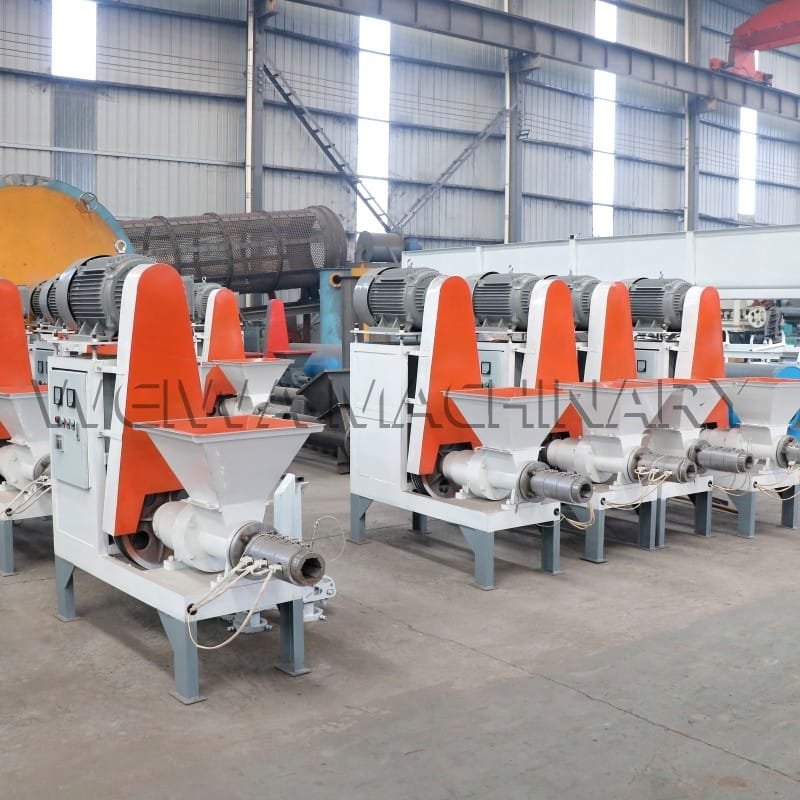
Technical Design of Weiwa Six Row Sawdust Extrude Machine
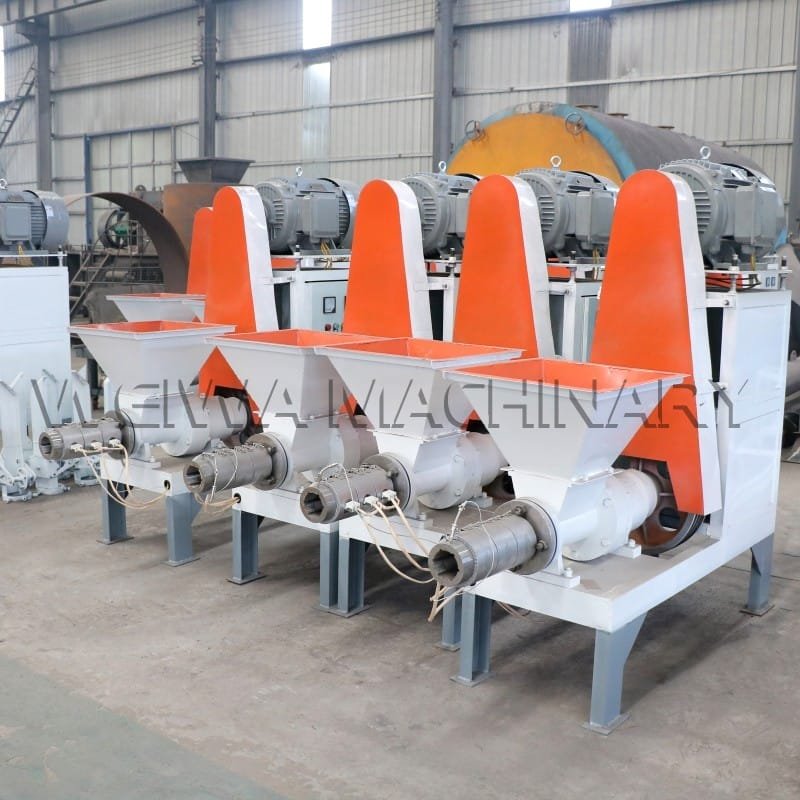
The six row sawdust extrude machine developed by Weiwa Machinery represents a significant advancement in continuous biomass densification. Unlike single row or double row extruders, the six row configuration multiplies throughput without proportionally increasing floor space. Each row operates with an independent screw propulsion system, allowing flexible production scheduling and easier maintenance. The core working principle relies on the natural lignin present in biomass. Under high pressure and elevated temperature inside the compression chamber, lignin softens and acts as a natural binder, eliminating the need for chemical additives.
Lignin Activation Under High Pressure
During extrusion, sawdust particles smaller than five millimeters pass through a heated barrel where friction and mechanical compression raise the internal temperature to levels sufficient for lignin activation. This thermoplastic behavior enables wood fibers to fuse tightly, forming dense briquettes with excellent structural integrity. The process is consistent across all six rows, ensuring uniform diameter and density whether the output shape is quadrangular, pentagonal, hexagonal, or customized with edges. Available diameters range from forty five millimeters to eighty millimeters, meeting diverse market requirements for domestic cooking, industrial boilers, or metallurgical applications.
Continuous Operation Stability
A key advantage of the six row sawdust extrude machine lies in its operational stability. The integrated temperature regulating indicators allow operators to maintain constant thermal conditions, minimizing variations in briquette quality. Heavy duty bearings and wear resistant screws extend service intervals, which is particularly important for Indian clients operating in dusty environments or with variable raw material moisture levels. Our engineering team calibrates each machine to tolerate moisture contents around twelve percent, balancing energy efficiency with practical feeding conditions.
From an investment perspective, the six row design spreads mechanical stress across multiple channels, reducing the likelihood of unplanned downtime. For Indian customers planning to run shifts beyond eight hours per day, this reliability translates directly into higher returns. Additionally, the modular structure simplifies spare parts replacement, a critical factor in regions where logistics can delay urgent repairs.
From Raw Material to Charcoal Making Machine Output
Producing high quality charcoal begins long before the extrusion stage. A complete production line typically includes crushing, drying, briquetting, and carbonization. In India, raw materials often arrive in uneven sizes, necessitating a grinder to reduce them to three to five millimeter particles. The dried material then enters the biomass briquette machine, where it is compacted into solid sticks. These semi finished briquettes are subsequently carbonized in kilns or continuous carbonization furnaces to obtain final charcoal products.
The charcoal making machine phase determines the ultimate combustion characteristics. Proper carbonization removes volatile components while preserving fixed carbon, resulting in smokeless, high heat fuel. For many Indian users, this step also influences product branding, as consistent color and hardness improve market acceptance. Weiwa Machinery provides guidance on optimizing carbonization parameters based on specific feedstocks, ensuring that the final output aligns with customer expectations and regulatory standards.
One notable benefit of using a six row sawdust extrude machine is the flexibility in shaping the pre carbonized briquettes. Hollow hexagonal designs with a central hole of fifteen to twenty millimeters enhance airflow during combustion, making them ideal for traditional clay stoves common in rural India. Conversely, solid rectangular briquettes suit industrial furnaces requiring prolonged burn times. By aligning product geometry with end use scenarios, producers can capture multiple segments within the same regional market.
Market Outlook for Biomass Briquette Machine in India
The future of biomass briquette machine adoption in India appears robust. Urbanization and industrial expansion continue to drive demand for cost effective thermal energy. At the same time, environmental regulations increasingly restrict open burning of agricultural waste, compelling farmers and processors to explore densification technologies. Several Indian states have already introduced subsidies for biomass based fuel projects, lowering capital barriers for new entrants.
Crop residue utilization across Indian states presents a vast untapped opportunity. In Punjab and Haryana, rice straw surplus remains a critical challenge, while sugarcane bagasse accumulates in Tamil Nadu and Maharashtra. A strategically located sawdust briquette machine facility can aggregate these residues, convert them into valuable fuel, and distribute them through existing charcoal supply chains. Export potential also exists, as neighboring countries in South Asia face similar energy shortages and environmental pressures.
Technological advancements will further accelerate market growth. Automation, remote monitoring, and improved heat recovery systems are gradually being integrated into modern charcoal making machine lines. For Indian buyers, these features reduce labor costs and improve consistency, addressing two major pain points in traditional operations. As financing options expand through microfinance institutions and green energy funds, even small scale entrepreneurs can invest in six row extrusion systems without excessive financial strain.
Consumer awareness is another catalyst. Households exposed to the convenience and cleanliness of briquetted charcoal often switch permanently from firewood or kerosene. Commercial kitchens appreciate the uniform burn rate and reduced ash content, which simplify cleaning and maintenance. Over time, these behavioral shifts reinforce demand, creating a positive feedback loop that sustains industry expansion.
Factory Visit and Video Inspection Support
Recognizing the importance of transparency in international equipment procurement, Weiwa Machinery actively supports video factory tours for prospective clients. The recent inquiry from our Indian customer exemplifies this approach. Through live video streaming, we demonstrated the assembly precision of the six row sawdust extrude machine, explained the welding standards applied to pressure chambers, and showcased the testing procedures conducted prior to shipment. Such interactions build confidence by allowing buyers to observe real time operations rather than relying solely on brochures or static images.
For customers unable to travel to China, video inspections bridge geographical gaps and shorten decision cycles. We encourage detailed discussions covering raw material characteristics, target output volumes, and local energy prices. Based on this information, our technical team prepares customized production plans, selecting appropriate dryer capacities, conveyor lengths, and carbonization methods. This consultative process ensures that every biomass briquette machine delivered to India performs optimally under site specific conditions.
Logistics and after sales support further reinforce trust. Machines destined for European markets undergo fumigation compliant packaging, and similar care is taken for Indian shipments. Depending on container dimensions, we adapt packaging to prevent transit damage, utilizing polyethylene film wrapping or reinforced wooden crates. Spare parts availability and remote troubleshooting guidance minimize disruptions once the equipment reaches its destination.
Conclusion and Company Introduction
The six row sawdust extrude machine represents more than an engineering achievement; it embodies a pathway toward cleaner energy and stronger local economies in India. By transforming abundant agricultural residues into high value charcoal, biomass briquette machine technology addresses environmental concerns while generating sustainable profits. As market awareness deepens and infrastructure improves, the role of advanced charcoal making machine systems will only expand.
Weiwa Machinery specializes in manufacturing biomass briquette machine, sawdust briquette machine, sawdust extrude machine, and related equipment for global markets. With customers in over one hundred thirty countries, including India, Indonesia, Vietnam, Turkey, and South Africa, we combine technical expertise with responsive service. Our product range covers grinding, drying, briquetting, and carbonization solutions, enabling turnkey project delivery. Whether you require a single unit or a complete production line, our team is ready to provide professional consultation, factory video tours, and long term support. To discuss your project or schedule a virtual factory visit, contact us today.
Contact Information
Mob / WhatsApp: +86 13838093177
E-Mail: info@cjlmachinegroup.com
Website: https://cjljx.com


 Wechat

 +8615937143060
