


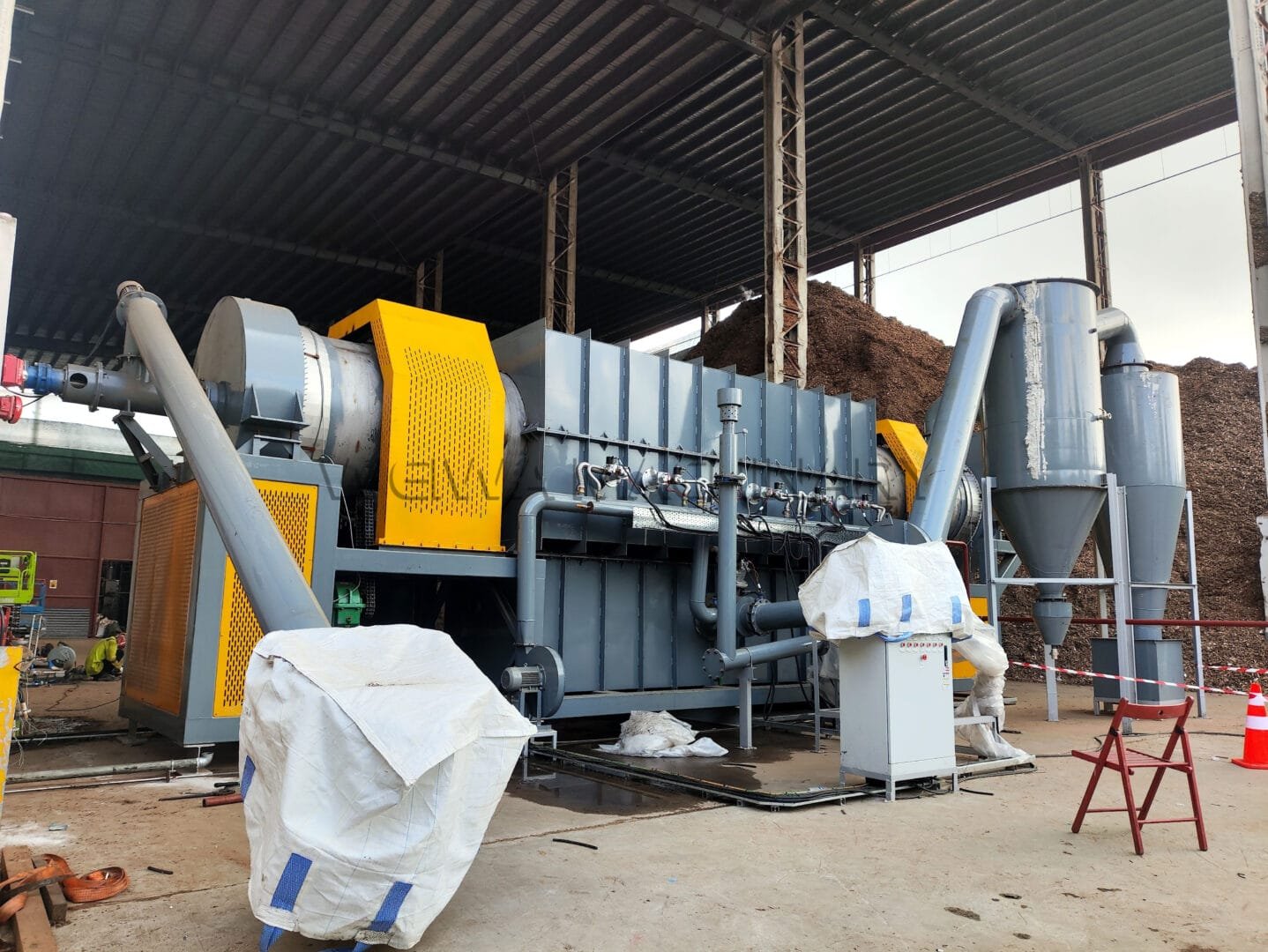
El clima tropical de Singapur., con su abundante cubierta verde y actividades agrícolas, genera cantidades significativas de residuos de biomasa cada año. Durante décadas, Gran parte de este material se dejó descomponer o se quemó de manera ineficiente.. Sin embargo, Un desarrollo reciente en nuestra fábrica de Weiwa Machinery marca un cambio fundamental en cómo se puede utilizar este valioso recurso.. We successfully conducted a trial run of our advanced Horno de carbonización continua for a distinguished client from Singapore, demonstrating not only the machine’s robust capabilities but also the immense potential for sustainable charcoal production in the region.
Understanding the Technology Behind the Horno de carbonización continua
To appreciate the significance of this trial, one must first understand what sets a Horno de carbonización continua apart from traditional methods. Conventional charcoal kilns operate in batches. You load the raw material, seal the kiln, wait for the process to complete, and then unload the finished charcoal. This method is time-consuming, labor-intensive, and thermally inefficient. En contraste, our factory-designed system creates a non-stop production line. The core of this technology lies in its sophisticated double-cylinder rotary structure. Imagine two cylinders working in perfect harmony: an inner drum and an outer drum. The biomass feedstock enters the inner drum where initial drying occurs before moving into the outer drum for the main carbonization phase. Because of this design, materials like sawdust, cáscara de coco, and wood chips move spirally through the furnace without ever requiring a shutdown for feeding or discharging.
This uninterrupted flow ensures that the temperature remains stable, typically hovering within the optimal range of 500 a 600 grados Celsius. Such precise thermal control guarantees that the final charcoal product possesses uniform quality, densidad, and calorific value. Además, the system incorporates a brilliant mechanism for gas recovery. During carbonization, volatile gases such as carbon monoxide, metano, and hydrogen are released. Instead of releasing these into the atmosphere as pollutants, el Horno de carbonización continua captures and reignites them. This process creates a self-sustaining heat cycle that drastically minimizes the need for external fuel sources. It is a closed-loop system that embodies the principles of modern clean energy technology. When we talk about a Máquina de fabricación de carbón today, we are no longer referring to simple pyrolysis; we are discussing an integrated solution for energy conservation and emission reduction.
The Singapore Trial: Witnessing Efficiency in Real-Time
The recent trial at our manufacturing facility brought these technical specifications to life. The Singaporean client, who had been researching options for a high-capacity Continuous Carbonization Furnace in Singapore, arrived with specific requirements driven by the local market demand for high-quality charcoal and biochar. They needed a machine capable of handling large volumes of coconut shell waste and wood residues generated from landscaping and construction activities. Our engineering team prepared the furnace, calibrating it specifically for the moisture content and particle size of the materials the client intended to use.
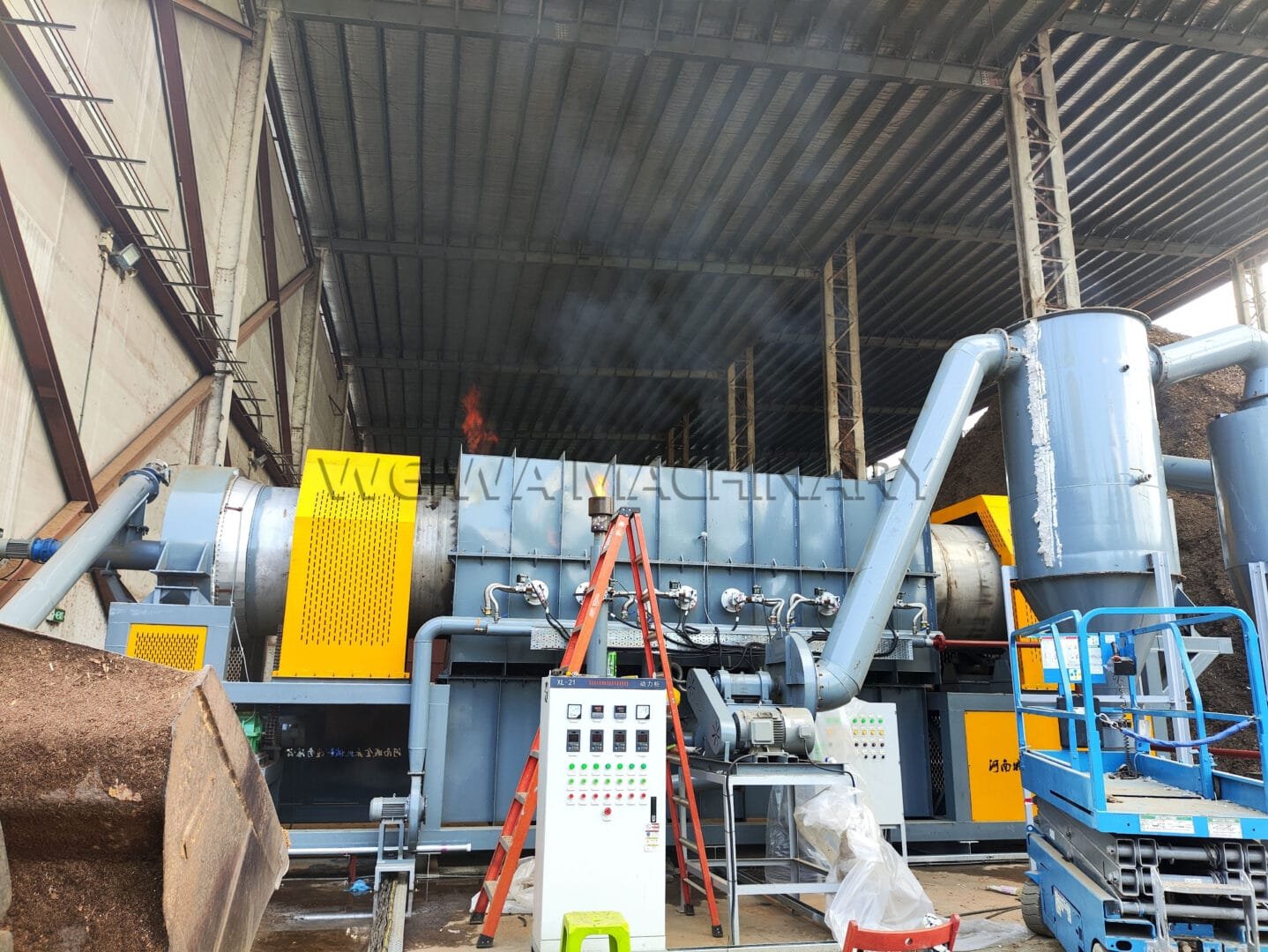
As the trial commenced, the raw biomass was fed into the hopper continuously. Observers watched as the material traveled through the rotating drums. There was no smoke, no foul odor, and no visible emissions—a common concern for clients transitioning from traditional earth kilns. The heat generated by the burning combustible gases was more than sufficient to maintain the carbonization temperature, proving the self-heating capability of the system. Within a matter of hours, the first batch of charcoal emerged from the discharge end. The results were immediate and impressive. The charcoal exhibited a metallic luster, low moisture content, and high fixed carbon levels. The client meticulously inspected the output, noting that the consistency was far superior to anything achievable with a batch-process Charcoal Kiln. The entire process, from raw material input to finished product output, appeared almost effortless. This demonstration solidified the client’s confidence that this Continuous Carbonization Furnace for sawdust and other biomass could seamlessly integrate into their planned 24/7 production schedule upon returning to Singapore.
Why Singapore Needs Continuous Carbonization Solutions?
Singapore’s unique economic and environmental landscape makes it an ideal market for this technology. As a nation committed to sustainability and the circular economy, there is a growing push to convert waste streams into valuable commodities. The demand for premium charcoal, used in everything from water filtration to high-end BBQ products, is consistently high. Sin embargo, land scarcity and strict environmental regulations mean that traditional, polluting production methods are not viable. A Horno de carbonización continua addresses both of these challenges head-on. Its compact footprint relative to its output capacity makes it suitable for industrial zones, while its near-zero emission profile ensures compliance with stringent air quality standards.
Además, the types of biomass available in Singapore are perfectly suited for this machinery. Coconut husks from the food industry, sawdust from carpentry workshops, and even horticultural waste like branches and leaves can all be processed. By investing in a Máquina de fabricación de carbón that operates continuously, businesses in Singapore can achieve economies of scale that are impossible with manual or semi-automatic kilns. The ability to produce consistently high-grade charcoal also opens up export opportunities to neighboring ASEAN countries, where there is a strong demand for reliable bioenergy products. The successful trial run suggests that localized production using our technology could significantly reduce reliance on imported charcoal, thereby strengthening Singapore’s resource resilience.
Technical Superiority Over Traditional Charcoal Kilns
It is crucial to distinguish between the old paradigm and the new. A traditional Charcoal Kiln relies heavily on manual labor and external energy inputs. Temperature fluctuations are common, leading to uneven charring—some parts of the wood may be over-carbonized while others remain under-processed. This results in lower yields and inconsistent product quality. Nuestro Horno de carbonización continua eliminates these variables. The automated feeding system ensures a constant material flow, and the PLC control panel allows operators to monitor temperature, rotation speed, and gas pressure in real-time. This level of automation reduces the workforce required per ton of output and minimizes human error.
During the Singapore client’s visit, our technicians highlighted the safety features integrated into the design. Unlike primitive kilns where accidental fires or gas leaks pose significant risks, our furnace is equipped with multiple safety valves and gas detectors. The combustion chamber is entirely sealed during operation, protecting workers from exposure to harmful fumes. This focus on operational safety, combined with high thermal efficiency, positions the continuous furnace not just as a piece of equipment, but as a comprehensive production solution. For any business evaluating a Continuous Carbonization Furnace in Singapore, these factors—safety, eficiencia, and automation—are often the deciding factors that tip the scale away from outdated technologies.
The Future of Biomass Carbonization with Weiwa Machinery
Mirando hacia adelante, the partnership between Weiwa Machinery and the Singapore market appears poised for growth. The trial run was merely the beginning. We understand that purchasing a Horno de carbonización continua is a significant investment, and our role extends beyond the point of sale. We provide comprehensive after-sales support, incluyendo guía de instalación, operational training, y suministro de repuestos. Our commitment is to ensure that every client, especially those adopting this technology for the first time, achieves maximum return on their investment.
The global trend towards decarbonization and waste-to-energy solutions aligns perfectly with the capabilities of our machinery. Whether processing sawdust, cáscara de arroz, o cáscaras de coco, the underlying principle remains the same: transform waste into wealth. For the Singapore client, the path forward is now clear. They leave our factory floor not just with data and samples, but with a proven blueprint for establishing a profitable and environmentally compliant charcoal production enterprise. The success of this trial sends a strong message across the industry: the era of batch processing is fading, and the future belongs to continuous, automated, and eco-friendly carbonization systems.
Acerca de Maquinaria de Weiwa
En Weiwa Machinery, we pride ourselves on being more than just manufacturers; we are innovators and partners in the biomass processing industry. With years of experience in designing and producing heavy industrial machinery, we have earned the trust of over 2 million customers worldwide. Our product portfolio extends beyond the Horno de carbonización continua to include a wide range of equipment tailored for various industrial needs. We are dedicated to providing high-efficiency, durable, and technologically advanced solutions that help our clients optimize their operations and achieve their sustainability goals. Our global reach ensures that no matter where you are, expert support and quality machinery are within your grasp.
Contact Us Today:
Multitud: +8613838093177
Whatsapp: +8613838093177
Correo electrónico: info@cjlmachinegroup.com


 Veloz
Veloz

 +8615937143060
