


Weiwa Machinery has shipped its newly upgraded double-layer coal stick machine to an Indonesian charcoal and coal briquette producer this quarter, marking another step in our thirty-year effort to refine solid fuel extrusion equipment for tropical, high-humidity markets. The double-layer coal rod press machine in Indonesia was configured after a full raw material review, site layout discussion, and mold planning session with the client. This article explains the design upgrade, why the double compression chamber produces finer and tighter rods, how that translates into better combustion for BBQ and industrial users, and why Indonesia has become one of the strongest export destinations for Weiwa charcoal extruder machine and charcoal briquette machine lines.
What Makes the Máquina de barra de carbón de doble capa Different?
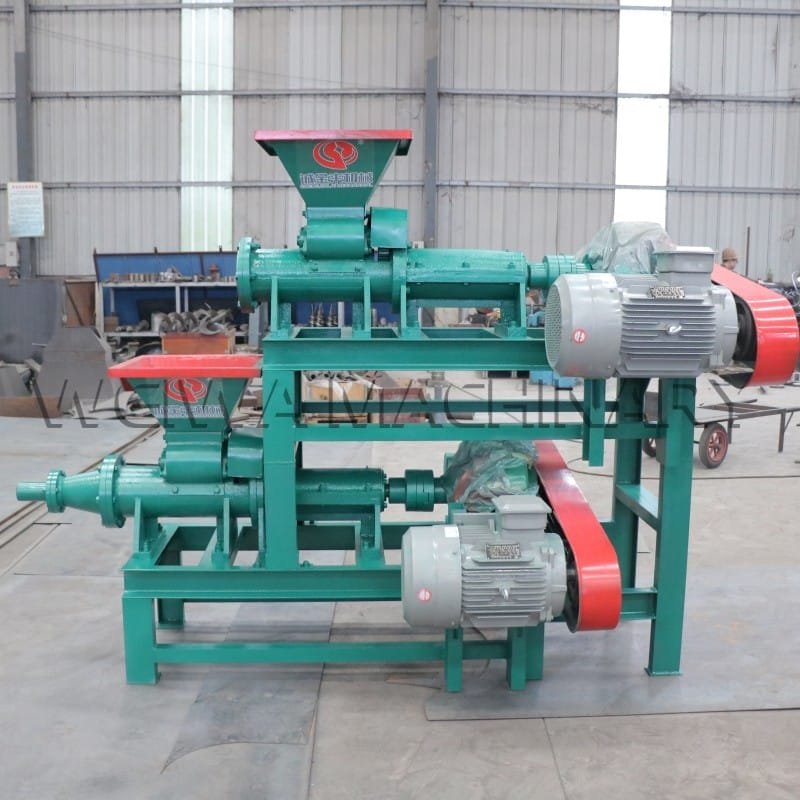
A conventional charcoal extruder machine uses a single screw propulsion stage to push mixed charcoal powder or coal dust through a forming die. The single-layer coal rod press machine is reliable, but when raw material moisture fluctuates or the binder ratio is not perfect, the rod can show soft cores, surface cracks, or uneven density along the length. The double-layer coal stick machine introduced by Weiwa Machinery adds a second controlled compression zone before the final die head. Material enters the first chamber where air pockets are pre-compressed, then moves into the second chamber where pressure is balanced radially and axially. The result is a rod with consistent diameter, fewer internal voids, and a smoother skin.
In the unit shipped to Indonesia, the double-layer coal rod press machine was paired with a 100% copper coil motor, a hardened gearbox, and a high manganese alloy propeller. The die heads were made from #45 steel and included quick-change molds for cylindrical, cuadrado, y formas hexagonales. The customer mainly planned to run coconut shell charcoal powder, polvo de carbón de madera, and a portion of coal powder, so the screw pitch and compression ratio were tuned for biomass-dominant feed rather than pure coal.
Two Stage Compression and Finer Output
The biggest change users notice is texture. Because the double layer coal stick machine compresses the same mass twice, the particle structure rearranges instead of simply being pushed forward. Finer powder under 3 mm blends better with binder inside the first chamber, and the second chamber removes residual spring-back. The Indonesian client reported that rods leaving the machine felt heavier per centimeter than rods from their previous single-layer press. Laboratory-style weighing on site showed higher apparent density, which matters because denser rods break less in jute bags, survive longer stacking, and burn with a steadier flame.
Tighter Rods Mean Better Combustion
Combustion quality depends on three things: densidad, uniformity, and moisture after curing. A loose rod contains micro channels that let air rush in, causing flare-up and fast burnout. A dense rod from the double-layer coal rod press machine burns from the surface inward, holding temperature longer. For BBQ charcoal rod press machine buyers in Indonesia, that means less frequent flipping, lower ash ratio, and a more stable grilling bed for seafood and satay vendors. For industrial users mixing charcoal briquette machine output with coal fines, it means predictable calorific release inside boilers or drying furnaces.
Why Indonesia Is a Strong Market for Weiwa Charcoal Extruder Machine?
Indonesia is one of the world’s largest sources of coconut shell charcoal, mangrove wood charcoal, and rice husk carbon. Domestic demand for clean household fuel keeps rising, while export demand for BBQ charcoal rods and shisha briquettes remains strong in the Middle East, Europa, and North America. Many small and medium plants still run older single-layer presses that waste 8 a 12 percent of output due to breakage. The double-layer coal stick machine fits exactly where Indonesian producers want to move next: higher grade product, less rejection at packing, and better price per ton in both local and export channels.
Beyond raw material supply, Indonesia’s climate shapes machine selection. Coastal humidity in Jakarta, Surabaya, and Medan forces plants to manage binder viscosity daily. The Weiwa double layer coal rod press machine in Indonesia was equipped with an enlarged hopper agitation section and an optional heater jacket recommendation for the binder line, so the operator can keep feed consistency without slowing the line. Our engineer also advised a two-stage drying layout using a vertical dryer followed by a mesh belt dryer, which is now common in Weiwa charcoal briquette machine installations across Southeast Asia.
Local Raw Materials and Mold Flexibility
Indonesian buyers rarely want only one shape. Coconut shell charcoal sells well as hexagonal rods for hookah and BBQ, while coal-mixed fuel often ships as round sticks for industrial kilns. The exported double-layer coal stick machine carried interchangeable die heads. Switching from a 33 mm cylinder to a 40 mm hexagon takes under twenty minutes. This flexibility lets one charcoal extruder machine serve multiple customer segments, which is critical for mid-size factories in Bandung or Makassar that supply both domestic warung distributors and container buyers from overseas.
Field Feedback from the Indonesian Client
After two weeks of trial runs on coconut shell charcoal powder with tapioca-based binder, the plant owner shared clear observations. Rods from the double-layer coal rod press machine showed fewer end-cracks after the 4-hour belt drying cycle. Bagging loss dropped because broken pieces under 10 cm fell from 9 percent to under 3 percent. Burn tests in a standard BBQ pit showed continuous heat for 85 minutes on a 500 gram rod, compared with 60 minutes on the old single-layer product. Power draw stayed within the rated 22 kW motor range because the balanced compression reduced screw load spikes.
The same client later asked about adding a second charcoal extruder machine and a matching charcoal crusher, because the upgraded press exposed a bottleneck in the pre-grinding stage. That is a typical Weiwa consultation outcome: we do not just sell one machine, we trace the whole line from crusher to mixer, extruder, secadora, and cooler.
Upgraded Design Details in the Latest Weiwa Model
The newest Weiwa double layer coal stick machine carries several revisions compared with our 2021 version. The base frame uses national certified carbon steel with reinforced gusset plates at the gearbox mount, reducing vibration transfer to the electrical cabinet. The floating coupling between gearbox and propulsion shaft was widened to absorb misalignment when the plant floor is not perfectly level. The screw flight was resurfaced with a tungsten overlay on the wear edge, extending service life in abrasive coconut shell applications. Control was kept semi-automatic with ammeter monitoring, so local staff do not need PLC training on day one but can upgrade later.
For export packing, the charcoal briquette machine and its auxiliaries were wrapped in plastic film, secured on steel skids, and placed into plywood boxes with desiccant bags for the sea journey to Tanjung Priok. We provided Indonesian-language labels for emergency stop, lubrication points, and die change sequence, which our after-sales team prepared together with the client’s maintenance lead during a video commissioning call.
Energy and Waste Advantage Over Single Layer Press
Two-stage compression sounds like it should use more power, but in practice the double-layer coal rod press machine often reduces specific energy per ton. The first chamber does low-pressure de-aeration, so the second chamber does not fight trapped air. The screw torque curve flattens. Across a 10-hour shift, the Indonesian plant measured roughly 11 percent lower electricity per ton versus their previous single-layer charcoal extruder machine, once binder dosage was also optimized from 6 percent to 4.5 percent. Less binder not only cuts cost but also lowers smoke potential during the charring phase if the rods are later carbonized again.
How the Double Layer Coal Stick Machine Fits a Full Briquette Line?
A charcoal briquette machine alone cannot guarantee quality if the front end is weak. Weiwa normally recommends the following flow for Indonesian coconut shell projects:
Raw chunk charcoal is fed to a charcoal crusher with a 3 mm screen. The powder drops into a grinding wheel mixer where binder and water are added in controlled ratio. The homogeneous mix is conveyed to the double-layer coal stick machine hopper. Extruded rods pass through a vertical dryer, then a mesh belt dryer, then a cooling conveyor. Final rods are inspected, counted, and bagged. If the buyer wants BBQ charcoal rod press machine output for export, we add a secondary polishing drum that rounds the edges and removes surface flour before weighing.
This line logic is why many inquiries starting with a single charcoal extruder machine request eventually expand into a full plant contract. The double layer design is the centerpiece, but the crusher mesh size, binder choice, and drying curve decide whether density gains survive until the bag.
Customization and Factory Layout Service
Weiwa Machinery treats every Indonesian inquiry as a layout project. We ask for raw material samples, available workshop dimensions, local voltage, and target monthly tonnage. Our design team returns a CAD sketch showing machine positions, belt angles, maintenance clearance, and dust collection points. For the recent double-layer coal rod press machine in Indonesia, the client sent us a 14 by 9 meter hall photo, and we proposed an L-shaped flow that left space for a future second press. Customization also covers mold shape, motor brand preference, and control language. These details sound small but decide whether the machine feels owned by the client or imposed by the supplier.
Charcoal Extruder Machine vs Charcoal Briquette Machine vs Coal Stick Machine
Buyers sometimes confuse the three terms. A charcoal extruder machine usually refers to the screw-type press that forms continuous rods from charcoal powder. A charcoal briquette machine is a broader term that can include roller press, hydraulic press, or screw extruder depending on the region. A double-layer coal stick machine is a screw extruder subtype with the dual compression upgrade, originally developed for coal dust but now widely used for charcoal because the density principle is the same. When Indonesian clients ask us which one to buy, we map the answer to their product: BBQ export rods point to the double-layer charcoal extruder machine; oval shisha tablets point to a hydraulic charcoal briquette machine; industrial coal-mixed sticks point to the double-layer coal rod press machine.
Choosing the Right Die and Binder for Indonesia
Coconut shell charcoal bonds well with tapioca starch, cassava flour, or guarbased binder. Wood charcoal prefers molasses diluted with water. Coal powder needs a different surfactant and sometimes a small lime addition. The double layer coal stick machine performs best when the binder is fully gelatinized before entering the hopper, which is why Weiwa grinding wheel mixer setups include a heated binder tank in tropical projects. Die selection follows market: 25 a 30 mm cylinders for household BBQ, 33 mm hex for hookah export, 40 a 50 mm cylinders for industrial fuel.
After Sales Support from Weiwa Machinery
Weiwa Machinery has more than thirty years of experience in manufacturing coal rod presses, máquinas extrusoras de carbón, hornos de carbonización, and full briquette lines. Our after-sales team handles remote troubleshooting through WhatsApp video, sends exploded-view drawings for every wear part, and keeps common screws, couplings, and die rings in stock for fast dispatch. For the Indonesian client, the first commissioning issue was a hopper bridge caused by overly wet binder. Our engineer solved it in a 40-minute call by adjusting agitator speed and recommending a 0.5 percent moisture reduction in the mixer. No spare part shipment was needed.
We also provide operator training checklists in English and Bahasa Indonesia, covering daily lubrication, screw removal sequence, die heating practice, and ammeter reading. A professional after-sales structure is not an extra service for us. It is part of why over two million end users have interacted with Weiwa equipment across 130 plus countries including Indonesia, India, Malasia, Vietnam, Pavo, Polonia, Sudáfrica, and Mexico.
Get a Custom Quote and Site Plan
If you are evaluating a double-layer coal stick machine for your Indonesian plant or any Southeast Asian market, Weiwa Machinery can send you a tailored proposal with machine model, capacity table, mold options, voltage configuration, and factory layout drawing. We welcome factory visits in Gongyi, Henan, and we can also join a live video walkthrough of your existing workshop.
Contacte a Maquinaria Weiwa
Móvil / WhatsApp: +8613838093177
Correo electrónico: info@cjlmachinegroup.com
Acerca de Maquinaria de Weiwa
Weiwa Machinery is a Henan-based manufacturer with more than thirty years of working experience in charcoal and coal briquette equipment. We design and build charcoal extruder machine units, double-layer coal stick machines, briquetas de carbón, hornos de carbonización, trituradores, mezcladores, y secadoras. Our team provides customized solutions, factory layout drawings, mold design, and long-term after-sales support. Products from Weiwa have been installed in over 130 países, and our engineering group continues to upgrade screw geometry, compression chambers, and control interfaces based on field data from real plants such as the recent double-layer coal rod press machine project in Indonesia. Whether you produce BBQ charcoal rods, industrial coal sticks, or shisha briquettes, we help you move from loose powder to a denser, cleaner, and more profitable finished rod.


 Veloz
Veloz

 +8615937143060
