


By Weiwa Machinery – A Leader in Biomass Charcoal Equipment
Introducción
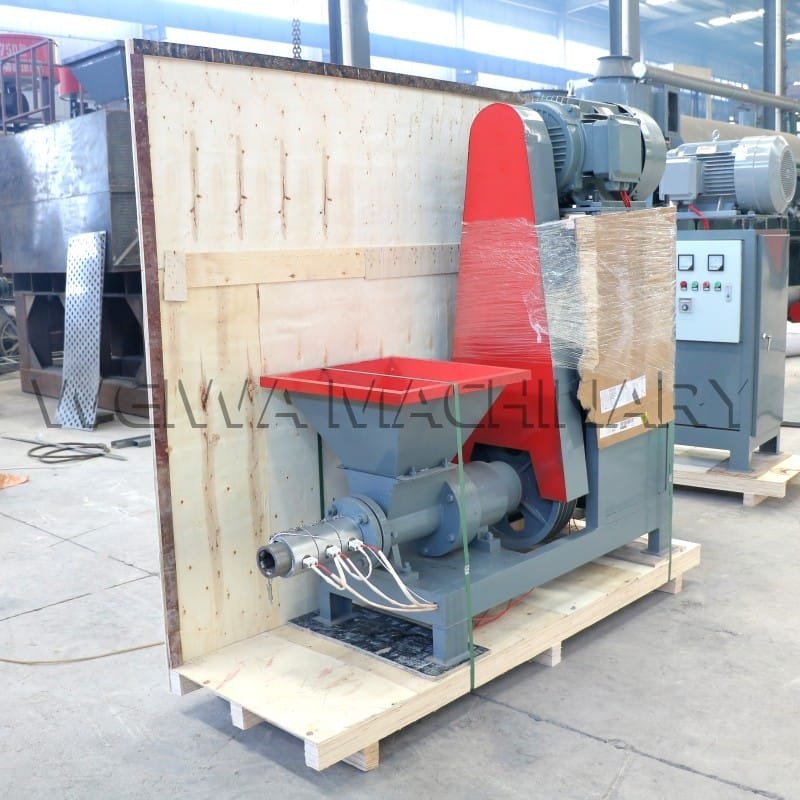
En Weiwa Machinery, innovation and sustainability drive everything we do. Recientemente, our team proudly witnessed a major milestone — the shipment of a full sawdust charcoal production line, including state-of-the-art máquinas extrusoras de aserrín, extrusoras de aserrín, briquetas de aserrín, y máquinas briquetadoras de aserrín, heading to Turkey. This wasn’t just another delivery; it was a bridge between advanced biomass technology and Turkey’s growing demand for eco-friendly energy solutions.
En esta publicación de blog, we invite you into the heart of this shipment, explore the science behind charcoal production using máquinas extrusoras de aserrín, and explain how our equipment is set to transform biomass utilization across Turkey.
The Growing Role of Biomass Charcoal in Turkey
Why Turkey Needs Efficient Sawdust Briquetting Solutions?
Over recent years, Turkey has seen an accelerated push toward renewable energy sources. With its rich forestry resources and substantial agricultural sector, the country generates significant volumes of sawdust and other lignocellulosic waste. Tradicionalmente, much of this material was either burned openly or left to decay, contribuyendo a la contaminación del aire y a las emisiones de gases de efecto invernadero.
The use of a máquina de briquetas de aserrín offers a cleaner, more productive alternative. By converting loose sawdust into dense, high-calorific briquettes, industries and small-scale producers can tap into a profitable and environmentally sound energy stream. The rising cost of fossil fuels and increasing environmental regulations have made this transition not only viable but necessary.
Nuestro extrusora de aserrín technology is particularly suited to Turkey’s landscape, where decentralized production units can benefit from compact, efficient machinery capable of processing locally sourced raw materials.
Economic and Environmental Incentives
Beyond ecological benefits, the economic case for adopting máquinas briquetadoras de aserrín is compelling. Briquettes offer higher combustion efficiency than raw biomass, making them ideal for heating, cocinando, and even industrial processes. For Turkish entrepreneurs, invertir en un máquina de extrudio de aserrín means tapping into domestic fuel markets while reducing reliance on imported coal and gas.
Además, government incentives for clean energy projects amplify the financial appeal. Projects that incorporate extrusoras de aserrín are increasingly eligible for subsidies aimed at promoting sustainable rural development and reducing carbon footprints.
Unpacking the Technology Behind Sawdust Charcoal Production
How a Máquina de extrudio de aserrín Works?
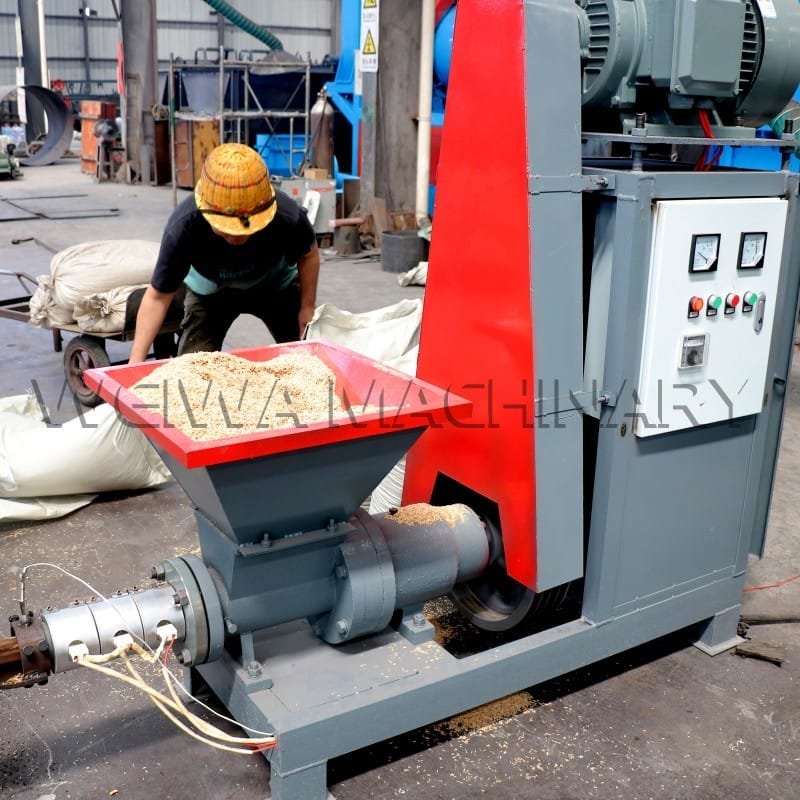
At the core of any modern charcoal production line is the máquina de extrudio de aserrín. Unlike conventional presses, these machines apply both heat and pressure to raw sawdust, forcing it through a die to form solid rods or briquettes. The mechanical action partially carbonizes the material, initiating the transformation into charcoal.
Our machines at Weiwa Machinery are engineered for durability and precision. Equipped with variable speed drives and automated temperature controls, they ensure consistent output regardless of fluctuations in feedstock moisture or particle size. This adaptability is crucial in Turkey, where raw material sources may vary seasonally.
When discussing extrusoras de aserrín, it’s important to note the distinction between single-mode and dual-mode systems. Single-mode machines are ideal for small workshops, while dual-mode briquetas de aserrín allow larger plants to switch between different product densities and shapes, catering to diverse market needs.
The Science of Carbonization and Briquette Formation
The journey from loose sawdust to usable charcoal involves several stages:
- Densification – The extrusora de aserrín compresses particles into a cohesive mass, expelling air and increasing density.
- Thermal Softening – Heat generated during compression breaks down lignin, acting as a natural binder.
- Carbonization Initiation – Partial carbonization occurs within the extruder, reducing ignition time and enhancing calorific value.
- Cooling and Stabilization – Freshly extruded briquettes are cooled to retain structural integrity.
This process ensures that the final product burns longer and cleaner than untreated biomass. In Turkey’s colder regions, where heating demands are significant, such performance characteristics translate into tangible savings and reduced emissions.
Inside the Shipment: Preparing Our Charcoal Line for Turkey
Customizing Equipment for Local Conditions
Before dispatch, our engineering team worked closely with Turkish partners to tailor the production line specifications. Factors such as local voltage standards, humidity levels, and typical feedstock types were considered. Por ejemplo, certain regions in Turkey produce finer sawdust from furniture manufacturing, requiring adjustments in the sawdust extrude machine’s feed mechanism to prevent clogging.
Safety and compliance were also paramount. All máquinas briquetadoras de aserrín shipped conform to international CE standards, with enhanced guarding and emergency stop systems adapted for operators who may be new to biomass processing.
Logistics and Installation Support
Transporting a complete charcoal production line is no small feat. Our logistics specialists coordinated flat-rack containers and custom crating to protect sensitive components like hydraulic cylinders and control panels. The shipment included not only the extrusoras de aserrín but also auxiliary equipment such as crushers, dryers, and conveyors.
Upon arrival in Turkey, Weiwa Machinery’s after-sales team will conduct on-site installation and operator training. We believe that technology transfer is as critical as the machinery itself. By empowering local teams to maintain and optimize their briquetas de aserrín, we ensure long-term success and minimal downtime.
Charcoal Production in Practice: What Turkish Operators Can Expect
Raw Material Preparation and Quality Control
Successful charcoal production begins with proper raw material handling. Sawdust should be relatively dry (typically below 12% humedad) and free from contaminants like soil or metal fragments. Nuestro máquinas extrusoras de aserrín are equipped with pre-crushers and screens to standardize input quality.
In Turkey, common sources include timber mills, furniture factories, and agricultural residues such as nut shells. Blending different feedstocks can enhance briquette properties, allowing producers to fine-tune burn characteristics for specific applications.
Maximizing Output and Minimizing Waste
Efficiency is a hallmark of well-designed máquinas briquetadoras de aserrín. At optimal settings, our extruders achieve throughput rates exceeding 300 kg per hour, depending on material density and machine model. Continuous operation is supported by automated lubrication systems and wear-resistant dies that extend service intervals.
Waste minimization is another focus area. Chips and fines generated during production can be recirculated into the system, ensuring near-zero discharge. This closed-loop approach aligns with Turkey’s circular economy goals and enhances profitability.
Market Opportunities for Charcoal Briquettes
The end products of a máquina de extrudio de aserrín—charcoal briquettes—are versatile commodities. In Turkey, demand comes from residential users seeking alternatives to LPG, restaurants using charcoal grills, and industrial boilers replacing coal. Export potential also exists, particularly to European markets with strict emission norms.
Branding and packaging play vital roles in capturing market share. Uniform briquette shape and low ash content, achievable with our extrusoras de aserrín, contribute to premium positioning.
Sustainability and the Future of Biomass Charcoal in Turkey
Reducing Deforestation and Energy Poverty
Traditional charcoal production in some parts of Turkey still relies on wood harvested from natural forests. By substituting briquetas de aserrín for wood-dependent methods, producers can alleviate pressure on ecosystems while providing affordable energy to underserved communities.
Our technology supports decentralized production models, enabling villages and small towns to generate their own fuel. This localized approach reduces transportation emissions and fosters energy independence.
Integrating Renewable Energy Policies
Turkey’s national strategy emphasizes expanding renewable energy capacity. Biomass, including charcoal from máquinas extrusoras de aserrín, is recognized as a key pillar. Government programs encourage the adoption of efficient extrusoras de aserrín through tax breaks and technical assistance schemes.
Weiwa Machinery remains committed to supporting these initiatives by offering scalable solutions that align with policy objectives. Nuestro máquinas briquetadoras de aserrín are designed to evolve with regulatory changes, ensuring customers remain compliant and competitive.
Conclusión: Empowering Turkey’s Green Transition
The shipment of our máquina de extrudio de aserrín and associated equipment to Turkey marks more than a business transaction—it represents a step toward a cleaner, more resilient energy future. Through advanced engineering and a deep understanding of local needs, Weiwa Machinery equips Turkish producers with tools to turn waste into wealth.
As these extrusoras de aserrín begin operation, they will demonstrate the viability of biomass charcoal as a mainstream fuel source. We are excited to witness the impact and stand ready to support every stage of this journey.
For those considering entry into or expansion within the biomass charcoal sector, the combination of Turkey’s resource base and our proven máquina de briquetas de aserrín technology offers a compelling opportunity. Let us partner with you to build sustainable solutions that endure.
Acerca de Maquinaria de Weiwa
Weiwa Machinery is a global manufacturer specializing in biomass processing equipment, incluido máquinas extrusoras de aserrín, extrusoras de aserrín, briquetas de aserrín, and complete charcoal production lines. With decades of experience and a presence in over 30 países, we deliver customized, energy-efficient solutions tailored to local conditions. Our commitment to quality, innovación, and customer success drives us to empower industries worldwide in their transition to sustainable practices. Whether you are a startup or an established producer, Weiwa Machinery is your trusted partner in shaping the future of green energy.


 Veloz
Veloz

 +8615937143060
