


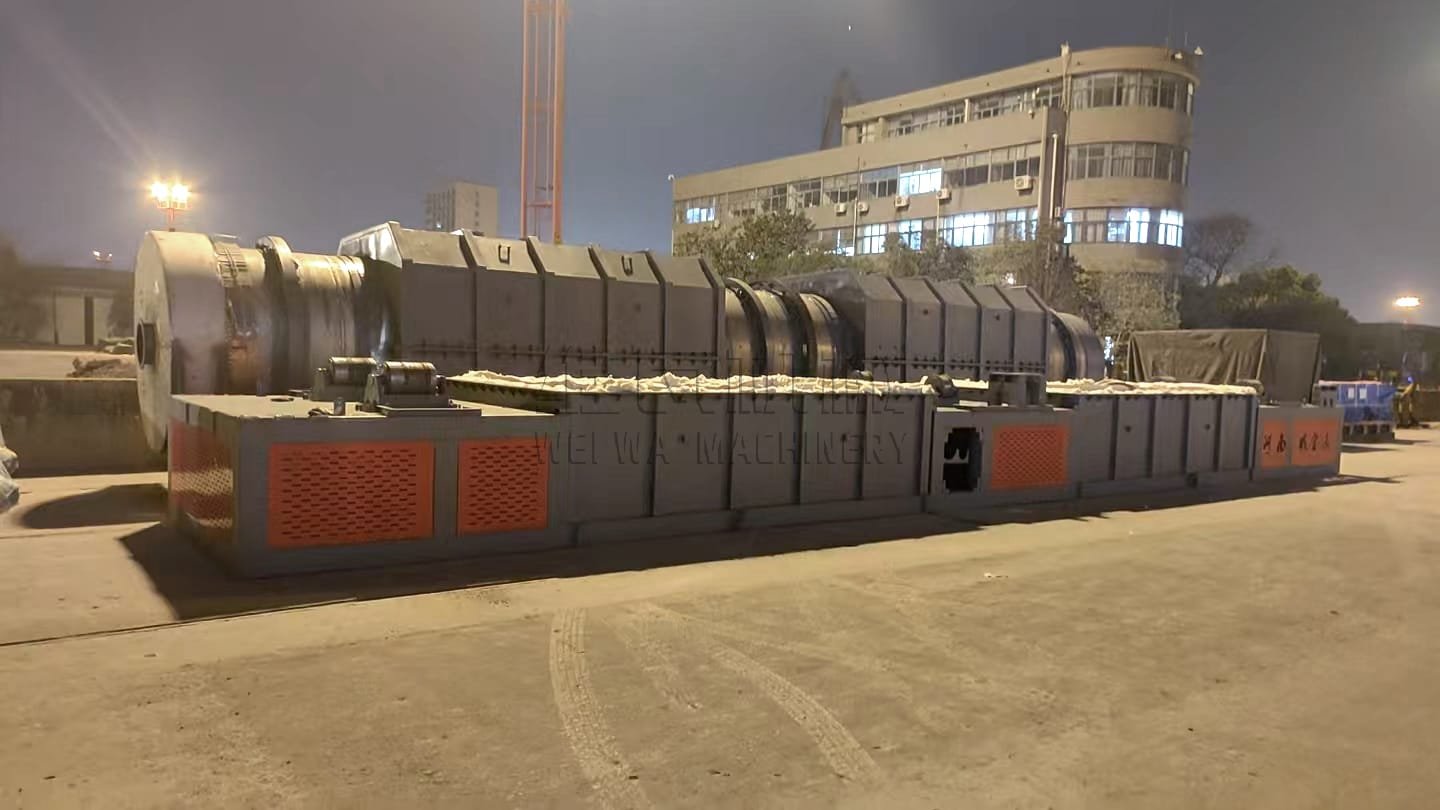
En los últimos años, the demand for sustainable energy solutions has been growing rapidly across Africa, and Uganda is no exception. Como fabricante líder de equipos de procesamiento de biomasa, Maquinaria de Weiwa has always been at the forefront of providing innovative machinery that meets the specific needs of our international clients. Hoy, we are excited to share the story of how we successfully prepared, tested, and shipped a state-of-the-art horno de carbonización continua to our valued customer in Uganda. This project not only marks another milestone in our export history but also highlights the immense potential of biochar production in East Africa.
Understanding the Horno de carbonización continua Technology
Before diving into the details of our shipment and test runs, it is essential to understand what makes the horno de carbonización continua such a revolutionary piece of equipment in the biomass industry. Unlike traditional batch-type kilns that require frequent stopping and starting, the continuous carbonization furnace operates as a non-stop production line. This technology is specifically designed for large-scale charcoal production where efficiency and consistency are paramount.
Our factory utilizes a sophisticated double-cylinder rotary design in the manufacturing of this horno de carbonización. The structure consists of an inner drum dedicated to pre-drying the biomass and an outer drum where the actual carbonization takes place. When biomass feedstock such as coconut shells, cáscaras de arroz, or wood chips enters the furnace, it spirals through the heating chambers seamlessly. There is no need to halt the feeding or discharging process, which means the machine can run 24 hours a day, 7 days a week. For clients looking for a reliable charcoal making machine in Uganda, this uninterrupted operation is a game-changer.
The working principle of the horno de carbonización continua is rooted in thermal engineering and environmental protection. During the carbonization process, volatile gases like carbon monoxide (CO), metano (CH₄), and hydrogen (H₂) are released. Instead of releasing these gases into the atmosphere, our system captures and burns them to generate heat. This creates a self-sustaining cycle that drastically reduces the need for external fuel sources. This feature not only cuts down operational costs but also aligns with global standards for emission reduction, making it an environmentally friendly solution for producing biochar.
Factory Test Run and Performance Analysis
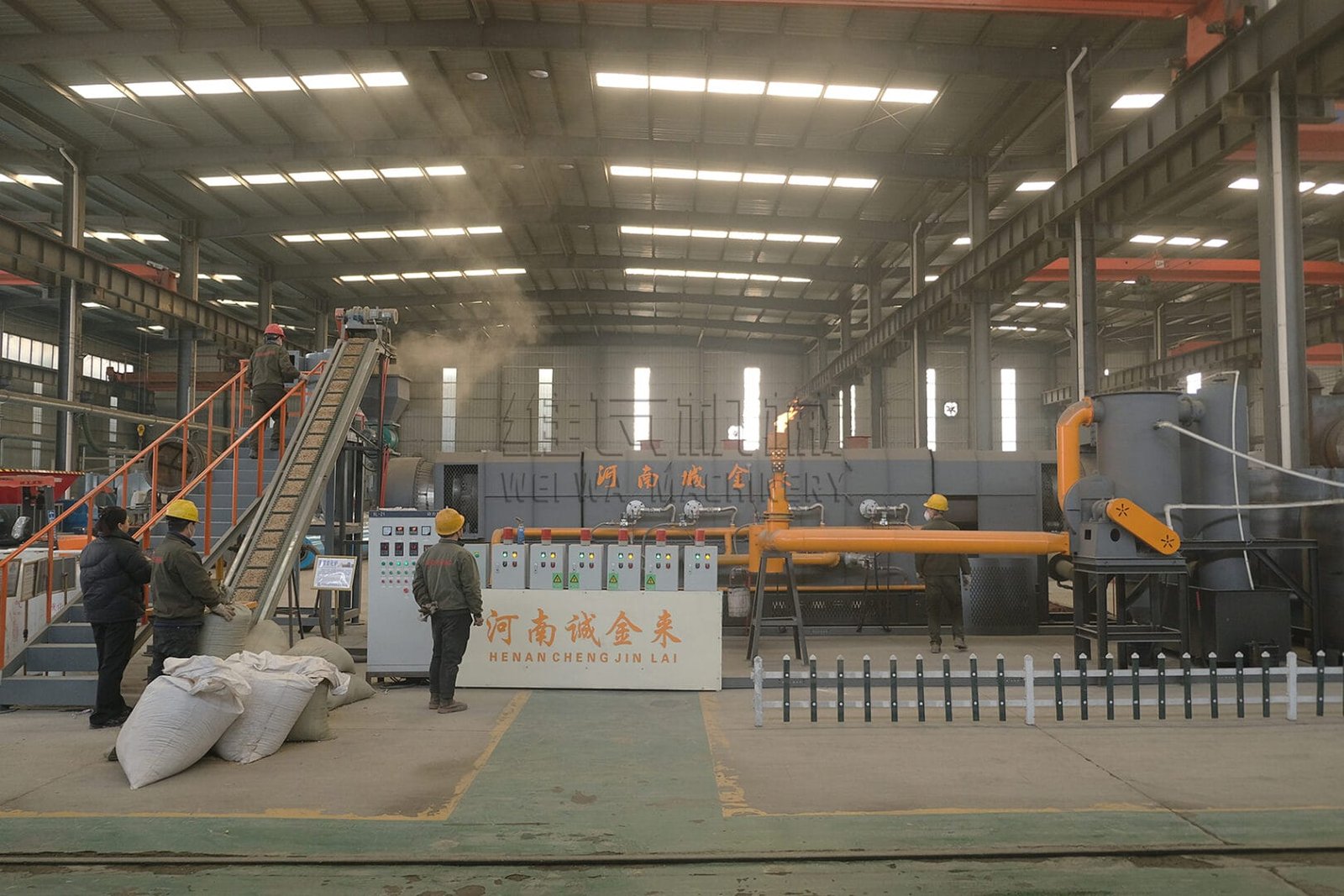
Quality assurance is the cornerstone of Weiwa Machinery’s reputation. Before shipping any horno de carbonización continua to Uganda or any other country, we conduct rigorous test runs in our factory. For this particular order, we invited the client to virtually witness the trial via video call, ensuring transparency and building trust before the machine left our workshop.
During the test, we used coconut shells and sawdust as raw materials, which are commonly available in Uganda. El horno de carbonización continua maintained a stable temperature range between 500 y 600 grados Celsius. Temperature uniformity is critical because fluctuations can lead to incomplete carbonization or excessive ash content. Throughout the trial, the temperature sensors indicated minimal deviation, proving that the furnace’s insulation and heating system were functioning perfectly.
The results were impressive. The charcoal output had a fixed carbon content exceeding 75%, and the moisture content was below 5%. The appearance was glossy black with metallic luster, indicating high density and calorific value. Más importante, the flue gas treatment system effectively captured smoke and converted it into reusable heat energy. The client was particularly satisfied with the low emissions and the automatic feeding mechanism, which minimizes labor requirements. Seeing the successful test run solidified the client’s confidence that this horno de carbonización continua was the right investment for their biochar business in Uganda.
Why Uganda Needs Continuous Carbonization Furnace for Biochar?
Uganda possesses abundant agricultural resources, including vast quantities of coconut shells, cascaras de cafe, paja de arroz, y bagazo de caña de azúcar. Tradicionalmente, much of this biomass is either burned in the open or left to decay, contribuyendo a la contaminación del aire y a las emisiones de gases de efecto invernadero. Sin embargo, with the introduction of the horno de carbonización continua, there is now a viable path to convert this waste into wealth.
Biochar produced by the horno de carbonización is not just ordinary charcoal; it is a stable, carbon-rich product that can be used as a soil amendment. In Uganda, where soil fertility depletion is a significant challenge for farmers, applying biochar can improve water retention, increase nutrient availability, and enhance microbial activity in the soil. This creates a circular economy where agricultural waste is transformed into a product that boosts agricultural productivity.
Además, the market for cooking fuel in Uganda is expanding. High-quality charcoal produced by a horno de carbonización continua commands a premium price compared to traditional lump charcoal due to its consistent size, low smoke emission, and longer burning time. For entrepreneurs seeking a profitable venture, invertir en un charcoal making machine in Uganda is becoming increasingly attractive. The ability to process materials continuously means higher daily output, faster return on investment, and the capacity to supply large distributors consistently.
Logistics and Shipping to Uganda
Shipping heavy industrial equipment like the horno de carbonización continua requires meticulous planning. Given the scale of the machine, we disassembled the components according to standard export packaging protocols. Each part was carefully wrapped with waterproof film and secured with steel frames to prevent movement during transit. Critical components, such as the control panel and motor, were packed in custom wooden crates lined with shock-proof materials.
We coordinated with logistics partners experienced in handling oversized cargo destined for East African ports. Since the destination was Uganda, which is a landlocked country, the shipment traveled by sea to the Port of Mombasa in Kenya before being transported overland to Kampala. We provided the client with all necessary documentation, including the bill of lading, commercial invoice, packing list, and certificate of origin, to ensure smooth customs clearance both in Kenya and Uganda.
Throughout the journey, we kept the client updated with tracking information and estimated arrival times. Our team also prepared detailed installation drawings and operation manuals in English, which is widely spoken in Uganda, to facilitate the setup process once the horno de carbonización continua arrived at the site.
Installation and Commissioning Support
A llegado, our technical team scheduled a virtual commissioning session with the client’s local engineers. Although we could not be physically present initially due to travel constraints, we utilized digital tools to guide the installation step-by-step. The modular design of the horno de carbonización continua made assembly straightforward. Within five days, the machine was fully installed, connected to the power supply, and ready for calibration.
We ran the first batch of raw materials through the system to fine-tune the speed of the rotary drum and the airflow settings. Adjusting these parameters is crucial for optimizing the carbonization time depending on the moisture content of the feedstock. After several hours of calibration, el horno de carbonización continua reached optimal performance levels, producing high-grade biochar consistently. The client expressed satisfaction with the ease of operation and the comprehensive support provided by Weiwa Machinery.
Market Prospects of Carbonization Furnace in Uganda
Mirando hacia adelante, the future of the horno de carbonización continua in Uganda appears exceptionally bright. The Ugandan government has been promoting renewable energy initiatives and encouraging private investments in agro-processing industries. Policies favoring clean cooking solutions and sustainable agriculture create a favorable environment for businesses utilizing horno de carbonización technology.
Además, neighboring countries such as Kenya, Tanzania, and South Sudan can serve as potential export markets for Ugandan-produced biochar. With a reliable horno de carbonización continua, producers in Uganda can scale up operations to meet regional demand. The concept of “waste to wealth” resonates strongly in areas where agricultural residues are plentiful but underutilized.
From a competitive standpoint, companies that adopt advanced machinery like the horno de carbonización continua will have a distinct advantage over those relying on outdated methods. The higher throughput, better product quality, and lower environmental impact position early adopters as market leaders in the biochar and charcoal industry. As awareness grows, we anticipate a surge in inquiries for charcoal making machine in Uganda from both small-scale entrepreneurs and large agricultural cooperatives.
Environmental Impact and Sustainability
One of the most compelling reasons to invest in a horno de carbonización continua is its positive environmental impact. Traditional earth kilns used for charcoal production are notorious for deforestation and high carbon emissions. En contraste, our furnace promotes the use of waste biomass, thereby reducing pressure on natural forests. By converting agricultural residues into stable carbon, the process sequesters carbon that would otherwise be released into the atmosphere.
Además, the energy recovery system within the horno de carbonización continua ensures that the process is nearly self-sufficient in terms of fuel. This reduces reliance on fossil fuels and lowers the overall carbon footprint of the production process. For environmentally conscious clients in Uganda looking to align with global sustainability goals, this technology offers a responsible and profitable solution.
Acerca de Maquinaria de Weiwa
Weiwa Machinery is a professional manufacturer specializing in biomass pyrolysis and carbonization equipment. With years of experience in research, desarrollo, and production, we have established ourselves as a trusted partner for clients worldwide. Nuestra gama de productos incluye horno de carbonización continua, activated carbon production lines, wood vinegar condensers, and other related machinery. We pride ourselves on delivering high-quality equipment backed by exceptional after-sales service.
Our commitment to innovation drives us to continuously improve our designs, ensuring that every horno de carbonización leaving our factory meets international standards. We have successfully exported our machines to numerous countries and regions, earning the trust of over 2 million customers globally. Whether you are looking for a charcoal making machine in Uganda or exploring opportunities in biochar production, Weiwa Machinery is here to provide tailored solutions that drive your business forward.
If you are interested in learning more about how a horno de carbonización continua can transform your biomass waste into valuable products, please feel free to contact us. We look forward to helping you achieve your production goals.
Contact Us Today:
Multitud: +8613838093177
Whatsapp: +8613838093177
Correo electrónico: info@cjlmachinegroup.com


 Veloz
Veloz

 +8615937143060
