


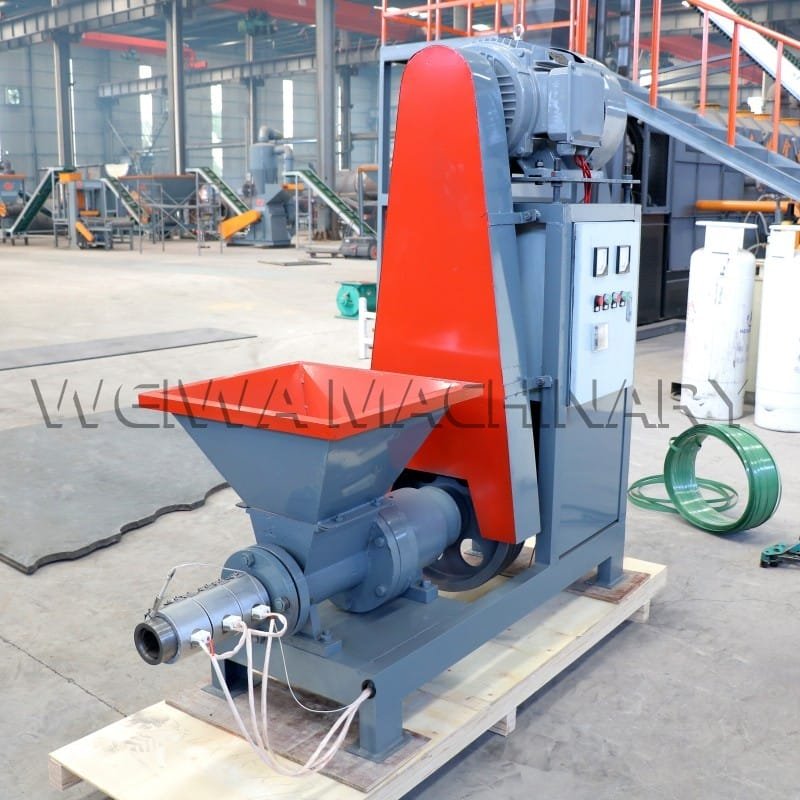
En Weiwa Machinery, we are proud to announce the successful loading and shipment of a complete charcoal production line to our client in Russia. This delivery marks another milestone in our mission to provide reliable biomass densification solutions across the globe. The core of this shipment is the advanced sawdust extruder, a machine designed to transform loose wood residues into high-density fuel briquettes. For businesses in Russia looking to optimize their wood waste management while generating profitable solid fuel, understanding the mechanics and benefits of a sawdust extruder is essential.
Understanding the Extrusor de aserrín in the Russian Context
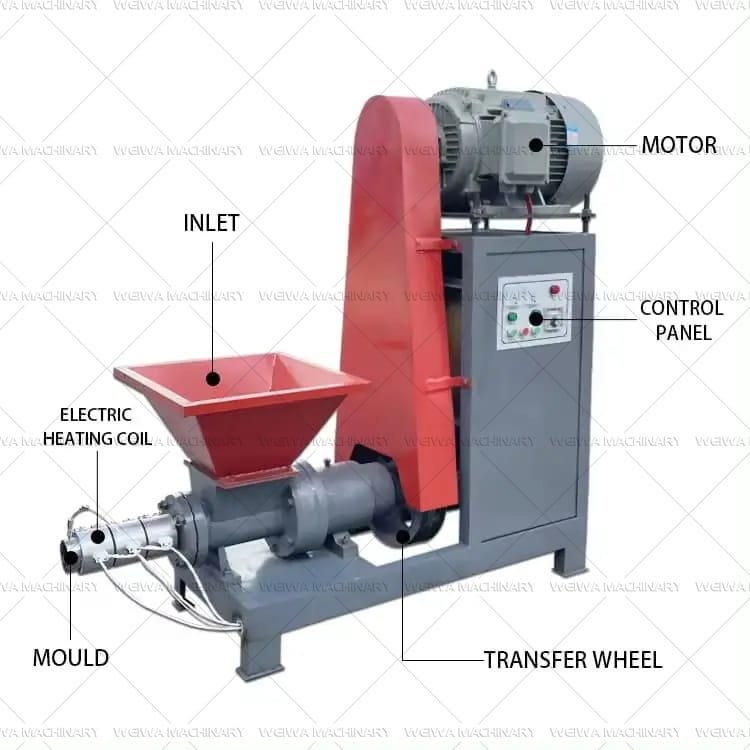
Russia possesses one of the largest forest reserves in the world, which naturally generates massive amounts of wood processing byproducts. Sawmills and timber factories often struggle with storing or disposing of fine wood dust and shavings. A sawdust extruder solves this problem by applying high pressure and temperature to lignocellulosic material without the need for binders. In the cold climate of many Russian regions, having an efficient heating fuel source is not just economical but necessary. The sawdust extruder machine functions by compressing raw sawdust through a heated die, where the natural lignin in wood acts as a glue, forming dense, cylindrical briquettes that burn longer and hotter than traditional firewood.
The recent shipment includes our flagship sawdust extruder model, which has been specifically configured to handle the moisture content typically found in Russian softwood species. Unlike generic machines, our equipment adjusts for the specific density of pine and spruce residues, ensuring the output briquettes have minimal cracks and maximum calorific value. This adaptability makes the sawdust extruder an ideal choice for local manufacturers who deal with variable raw material quality throughout the year.
The Role of Sawdust Briquette Machine in Modern Biomass Energy
A sawdust briquette machine is more than just a piece of industrial equipment; it is a gateway to sustainable energy production. In Russia, where logistics can be challenging due to vast distances, transporting bulky loose sawdust is inefficient and costly. By using a sawdust briquette machine, the volume of the material is reduced by up to ten times. This compaction significantly lowers transportation costs, allowing Russian businesses to sell their fuel products in distant markets or store large quantities in compact spaces.
Our client’s new production line integrates seamlessly with existing woodworking operations. The sawdust briquette machine operates on a continuous feed system, meaning there is no downtime between batches. This is particularly important for large-scale operations in Russia that require consistent output to meet industrial heating demands. The machine’s robust construction ensures longevity even under harsh working conditions, which are common in Siberian factories. Además, the final product—the briquette—has a uniform shape and size, making it compatible with automated feeding systems used in modern boilers.
Technical Insights into Sawdust Briquetting Machine Operation
Many clients ask about the difference between various types of presses, and it is important to clarify how a sawdust briquetting machine works compared to a piston press. While piston presses use mechanical force to punch briquettes out, a screw-type sawdust briquetting machine uses a rotating screw to generate friction heat. This thermal process is crucial because it plasticizes the lignin in the wood fibers. Without this heat, the briquettes would crumble easily. Our engineers explained this principle to the Russian client during the pre-shipment inspection, demonstrating why our technology guarantees a superior binding quality.
The shipment to Russia included not only the main sawdust briquetting machine but also auxiliary equipment such as dryers and crushers. Raw material preparation is key to successful briquetting. If the sawdust is too wet, the extrusion process will jam; if it is too dry, the lignin will not melt properly. Por lo tanto, the entire production line was calibrated to maintain an optimal moisture level of around 8-12%. This holistic approach—providing a full line rather than a single machine—ensures that the client achieves maximum efficiency from day one.
Why Russia Chooses Sawdust Extruding Technology?
The demand for ecological fuel in Russia is growing rapidly due to increasing environmental regulations and rising fossil fuel costs. Traditional coal and gas are being replaced by renewable alternatives, and wood briquettes produced by a sawdust extruder fit perfectly into this trend. The briquettes are carbon-neutral, meaning they do not contribute to a net increase in atmospheric CO2. When burned, they produce very little ash, which can be collected and used as a potassium-rich fertilizer.
Another reason Russian companies invest in a sawdust extruder machine is the return on investment. Although the initial setup requires capital expenditure, the payback period is often less than eighteen months. The cost of raw materials—sawdust and wood chips—is extremely low or even free in many cases, as sawmills are willing to give away waste to avoid landfill fees. By converting this waste into a marketable commodity, our Russian partner can tap into both domestic and international export markets. European countries neighboring Russia are already showing strong interest in importing high-quality Russian wood briquettes.
Quality Control and Pre-Shipment Testing
Before the containers left our factory in China, we conducted a rigorous test run of the entire charcoal production line. The sawdust extruder was fed with simulated Russian softwood dust to ensure the parameters were correctly set. We invited the client to witness the test via video call, allowing them to see the machine’s capacity and the quality of the extruded rods in real time. During the test, the sawdust briquetting machine maintained a stable pressure of over 200 MPa, which is the standard required for producing commercial-grade briquettes suitable for long-distance transport.
We also focused on safety features. The Russian market has strict technical regulations, and our machines comply fully with Eurasian Economic Union standards. Emergency stop buttons, overload protection, and thermal sensors were installed on every critical component. This attention to detail ensures that the operators in Russia can run the sawdust extruder safely even during extended shifts.
Installation and After-Sales Support in Russia
Shipping heavy machinery across continents requires careful planning, and we handled all logistics, including customs clearance documents for Russia. Upon arrival at the port of Saint Petersburg, the client will receive on-site installation guidance from our senior engineer. We understand that language barriers can be a challenge, so we provided a detailed operation manual translated into Russian, specifically tailored for the sawdust extruder model shipped.
Our after-sales service does not end with installation. We have established a spare parts warehouse accessible to Russian clients, ensuring that any worn components of the sawdust briquette machine can be replaced promptly. Además, we offer remote troubleshooting via WhatsApp and email, allowing our technicians to diagnose issues quickly without delay. This commitment to support builds trust and ensures the longevity of the equipment.
Environmental Impact of Sawdust Briquetting Machine Usage
From an environmental perspective, deploying a sawdust briquetting machine in Russia contributes significantly to reducing deforestation pressures. Instead of cutting fresh trees for fuelwood, industries can rely on waste wood. The process also reduces the risk of spontaneous combustion in sawdust storage areas, which is a known fire hazard in wood processing plants. By converting fine dust into solid briquettes, the workshop environment becomes cleaner and safer for workers.
The calorific value of briquettes produced by our sawdust extruder reaches up to 4200 calorías/kg, which is comparable to low-grade coal but without the sulfur emissions. For Russian regions that suffer from severe winter smog due to coal burning, switching to briquettes made by a sawdust extruder machine presents a viable solution for cleaner air. Local authorities are increasingly supporting such transitions by offering subsidies to factories that adopt green technologies.
Customization for Russian Raw Materials
Not all sawdust is created equal. Russian timber often contains resinous softwoods, which behave differently under pressure compared to hardwoods. Our R&D team modified the compression ratio of the sawdust extruder screw specifically for this shipment. This customization prevents tar formation inside the barrel and ensures smooth extrusion. The die hole diameter was also adjusted to produce a larger briquette size preferred by Russian boiler manufacturers.
Feedback from the client indicated that previous machines they tested from other suppliers frequently clogged when processing wet pine sawdust. Our sawdust briquette machine incorporates a unique dehumidifying zone within the compression chamber, effectively managing moisture without external dryers in moderate conditions. This feature alone can save thousands of dollars in energy costs for drying equipment.
Future Prospects for Charcoal Production in Russia
Mirando hacia adelante, the market for charcoal and briquettes in Russia is expected to expand beyond domestic heating. There is a growing niche in barbecue charcoal production for export to Europe and Asia. High-quality lump charcoal made from birch and oak is already in demand, and our equipment can be adapted to produce both shisha charcoal and BBQ sticks. The versatility of the sawdust extruder allows for quick changes in production focus depending on market trends.
By investing in a complete production line today, our client is positioning themselves at the forefront of Russia’s green energy transition. The infrastructure is in place to scale up production as demand grows, and the sawdust briquetting machine provides the flexibility needed to adapt to future challenges.
Acerca de Maquinaria de Weiwa
Weiwa Machinery is a leading manufacturer of biomass densification equipment based in China. With over a decade of experience in designing and exporting charcoal machines, we specialize in providing turnkey solutions for sawdust extrusion, wood pelletizing, and biomass briquetting. Our product range includes sawdust extruders, briquetas de aserrín, secadores rotativos, hornos de carbonización, and complete production lines tailored to client specifications. We serve customers worldwide, with a strong presence in Russia, Eastern Europe, Sudeste Asiático, and Africa. Committed to innovation and quality, Weiwa Machinery ensures every machine delivered meets international standards for performance and durability.
For inquiries about our sawdust extruder machine or to discuss your project in Russia, please contact us directly.
Multitud: +8613838093177
Whatsapp: +8613838093177
Correo electrónico: info@cjlmachinegroup.com


 Veloz
Veloz

 +8615937143060
