


Why Uganda Needs a Horizontal de carbonización?
Uganda has abundant biomass resources. Sawmills in Masaka and Mbarara generate hardwood offcuts. Sugarcane fields in Luuka and Bugiri produce bagasse. Coconut and palm kernel shells arrive from lakeside trade routes. Traditional earth kilns still dominate rural charcoal production, but they waste wood, emit heavy smoke, and deliver inconsistent fixed carbon content.
A horizontal carbonization furnace offers a different path. Instead of burning wood in open pits, the chamber heats biomass in a sealed, low-oxygen environment. The same model shipped by Weiwa Machinery handles wood logs, bambú, cáscara de coco, briquetas de aserrín, and agricultural residues without changing the core structure. For Uganda, where raw material size and moisture vary by region, this adaptability matters more than peak hourly capacity.
What Makes This Carbonization Furnace Different?
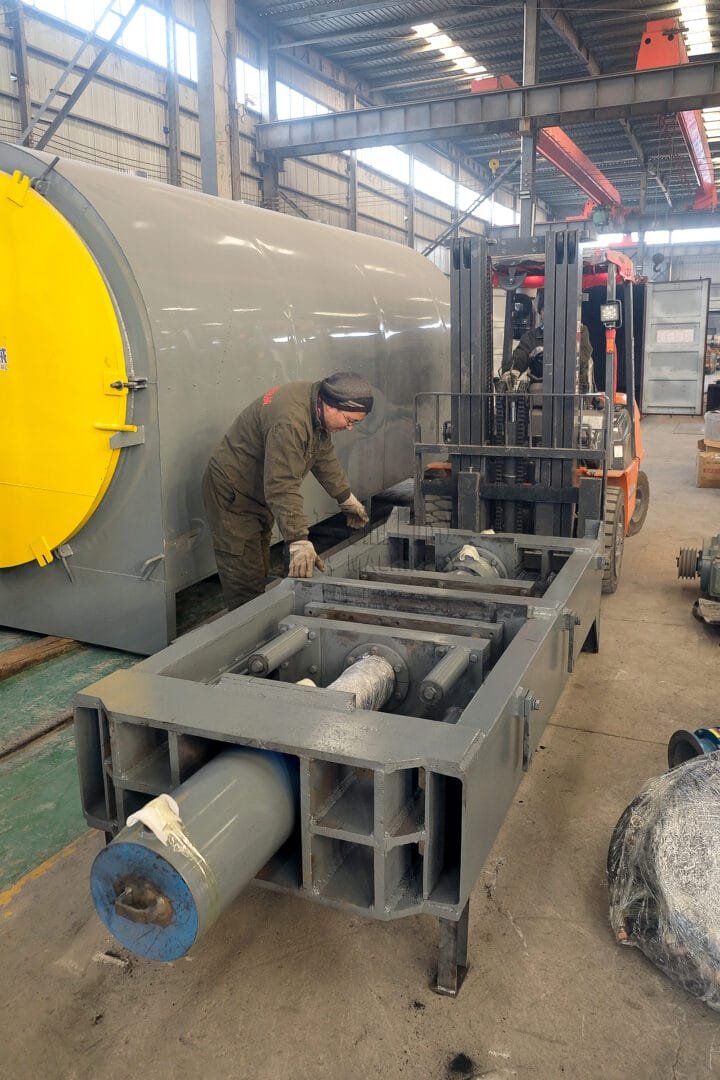
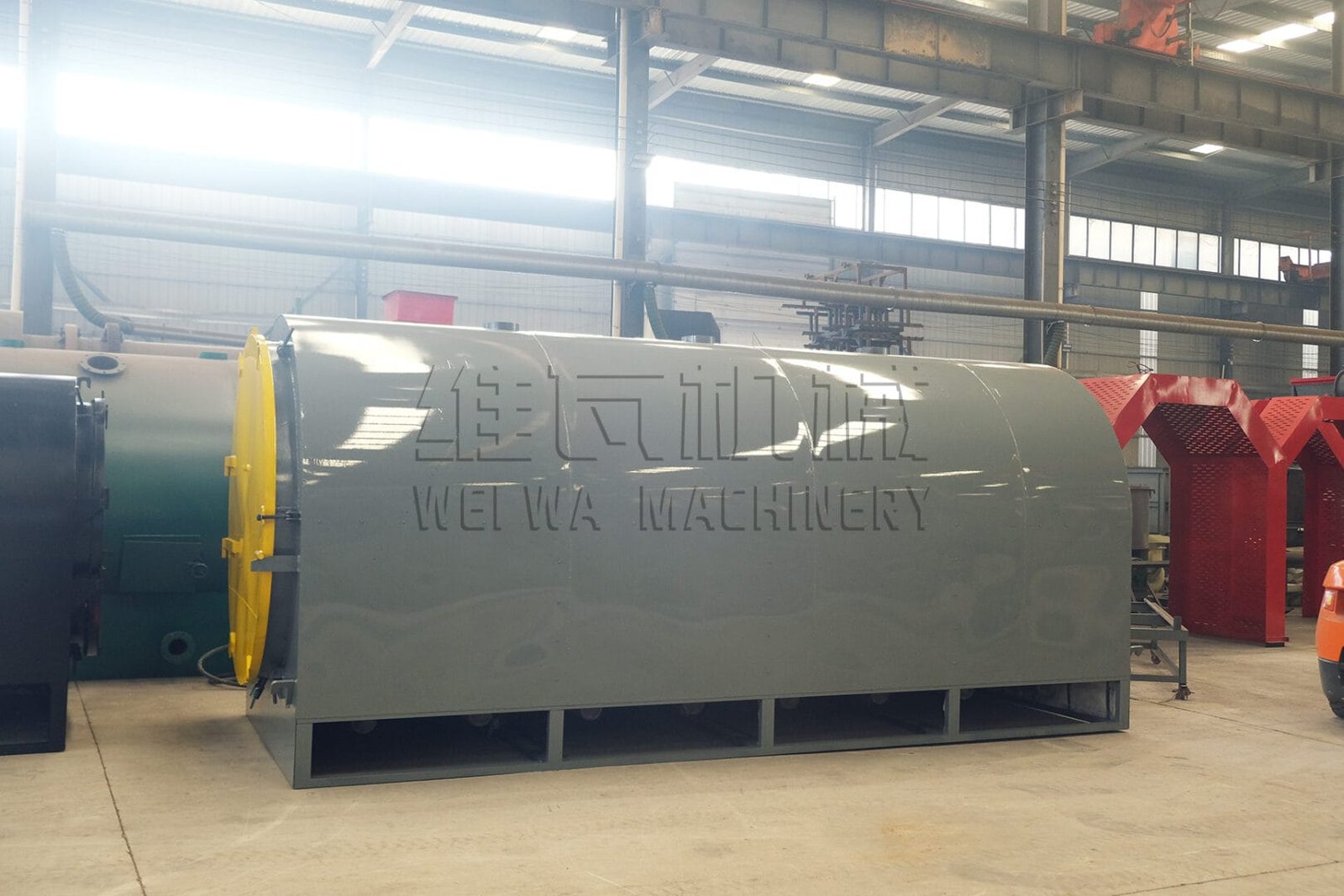
The Weiwa horizontal carbonization furnace uses a barrel-style chamber mounted on rails. Workers load material with carts, push it into the sealed chamber, and start indirect heating. The design avoids direct flame contact with raw material, which reduces ash content and improves charcoal density.
Indirect Heating and Gas Recycling
During pyrolysis, the furnace releases tar, condensate, y gas combustible. Many older systems burn this off as waste smoke. The Weiwa carbonization furnace passes the gas through a purification unit, condenses tar, and returns clean combustible gas to the burners. Internal temperature holds near 600 C without constant external fuel input. In Uganda, where firewood prices rise during wet seasons, that recycling loop directly cuts operating cost.
Rail Loading and Sealed Chamber Design
Vertical furnaces require cranes or manual lifting. The horizontal model uses a ground-level rail system. At the Uganda site, three workers moved two full carts of mixed hardwood and briquettes into the chamber in under twenty minutes. The door uses compressed asbestos packing and high-temperature rock wool. durante el juicio, no visible smoke escaped the seal even when internal pressure peaked.
Shipment and On-Site Preparation in Uganda
The furnace left the Weiwa workshop in Gongyi, Henan, after a full pre-installation test. Export packaging included moisture-proof wrapping, steel bracing inside the container, and separate crates for the purification tower, admirador, and control cabinet. The container arrived at the Ugandan client’s yard within the scheduled window.
Local installation took six working days. Weiwa provided a printed manual with diagram-based steps to reduce language barriers. The client’s team assembled the rail track, positioned the chamber, connected the gas return pipe, and mounted the PLC panel on a shaded wall. Electrical supply was stabilized with a 380V step-down transformer, which Weiwa recommended during the quotation stage.
Trial Run Results of the Charcoal Making Machine in Uganda
The first trial batch used 320 kg of mixed matooke stalk briquettes and 180 kg of dried Musizi hardwood cut below 20 cm length. Moisture content measured 14 percent. The team sealed the chamber, started the burner with a small wood fire, and let the gas recovery system take over after hour two.
Temperature Stability and Smoke Control
Chamber temperature reached 420 C in 90 minutos. By hour four, it stabilized between 580 C and 610 C. The PLC logged fluctuations under plus or minus 8 C for the remaining cycle. The purification tower outlet stayed clear. Neighbors standing 15 meters from the unit reported no eye irritation, which the client noted as a major improvement over their previous drum kiln.
Charcoal Yield from Hardwood and Sawdust Briquettes
Total input was 500 kg. After cooling and unloading, the client collected 168 kg of hardwood charcoal and 142 kg of briquette charcoal. Combined yield was 62 percent. Fixed carbon tested at 74 percent on a handheld analyzer. The charcoal showed uniform black surfaces, low powder loss during bagging, and a metallic ring sound when pieces struck each other. For Uganda’s wholesale market, where buyers judge quality by sound and fracture edge, this result matched commercial grade.
Horizontal Carbonization Furnace in Uganda Market Outlook
Uganda’s charcoal demand stays high because urban kitchens, panaderías, and roasted-maize vendors rely on solid fuel. Imported LPG remains expensive outside Kampala. A charcoal making machine that runs on local residues and returns clean gas can protect margins even when wood prices shift.
Weiwa Machinery expects more orders for the horizontal carbonization furnace in Uganda from cooperatives that currently share one vertical kiln. The rail-loading format fits narrow rural sheds. El 0.8 a 1.5 ton per day range covers a family business scaling into a district supplier. The gas recycling feature also helps producers near national parks address smoke-complaint risks before they become license issues.
¿Por qué elegir? Maquinaria de Weiwa Máquina de fabricación de carbón?
Weiwa Machinery builds biomass equipment for export markets with different power voltages, humidity levels, and raw material shapes. The horizontal carbonization furnace is not a resized Chinese domestic model. Door thickness, liner steel grade, and fan curve are adjusted per order. Spare seals, thermocouples, and burner nozzles ship with the container so the client does not wait for air freight.
For Uganda specifically, Weiwa added a rain cover suggestion for the purification tower, a Swahili-English label option for the control panel, and a lower leg base to keep the rail system above muddy ground during rainy months. These are small changes, but they decide whether a charcoal making machine runs for five years or fails in the second season.
If you are comparing a horizontal carbonization furnace in Uganda against a vertical kiln or an imported rotary model, request the trial log from our May shipment. The numbers above are not laboratory estimates. They came from a working yard with local wood, local labor, and tropical afternoon heat.
Weiwa Machinery is a Henan-based manufacturer with more than 20 years of experience in biomass carbonization and briquetting systems. Our horizontal carbonization furnace, máquina de fabricación de carbón, and full carbonization furnace range have been delivered to Asia, África, and Latin America. We support clients with layout drawing, container loading plans, video installation guidance, y suministro de repuestos.
Contact: Multitud / WhatsApp +8613838093177
Correo electrónico: info@cjlmachinegroup.com


 Veloz
Veloz

 +8615937143060
