


In the heart of industrial innovation and sustainable resource utilization, Weiwa Machinery continues to lead with cutting-edge solutions tailored for global markets. Recientemente, our team had the privilege of conducting an on-site trial of our continuous carbonization furnace for a client based in Qatar. Using locally available rice husk as feedstock, the test not only validated the efficiency of our technology but also marked a significant step forward in introducing advanced charcoal production methods to the Qatari market. This blog delves into the science behind continuous carbonization furnaces, the outcomes of our Qatar trial, and the vast potential these machines hold for transforming biomass waste into valuable charcoal in arid regions like Qatar.
Understanding Horno de carbonización continua Technology
En Weiwa Machinery, we believe that sustainable manufacturing begins with understanding the tools that drive it. A continuous carbonization furnace is a state-of-the-art system designed to convert biomass materials—such as rice husks, cáscara de coco, chips de madera, or agricultural residues—into high-quality charcoal through a controlled, uninterrupted thermal decomposition process. Unlike traditional charcoal kilns that operate in batches, continuous carbonization furnaces enable non-stop feeding and discharging of raw materials, ensuring consistent output and higher energy efficiency.
The Science Behind Continuous Carbonization
Carbonization itself is a thermochemical process where organic materials are heated in the absence of oxygen, driving off volatile compounds and leaving behind carbon-rich solids (carbón). In a continuous setup, this process is optimized through precise temperature control (typically between 400°C and 600°C), regulated airflow, and automated material handling. The furnace’s design minimizes heat loss, maximizes charcoal yield, and reduces harmful emissions by capturing and reusing combustible gases generated during pyrolysis. This makes continuous carbonization not just efficient, but also environmentally friendlier than conventional charcoal making methods.
For clients in Qatar, where agriculture may be limited but agro-processing byproducts like rice husks (imported or from regional trade) are accessible, this technology offers a pathway to valorize waste into a profitable commodity. The ability to process materials continuously means smaller footprints and lower labor costs, critical factors for businesses operating in regions with high operational expenses.
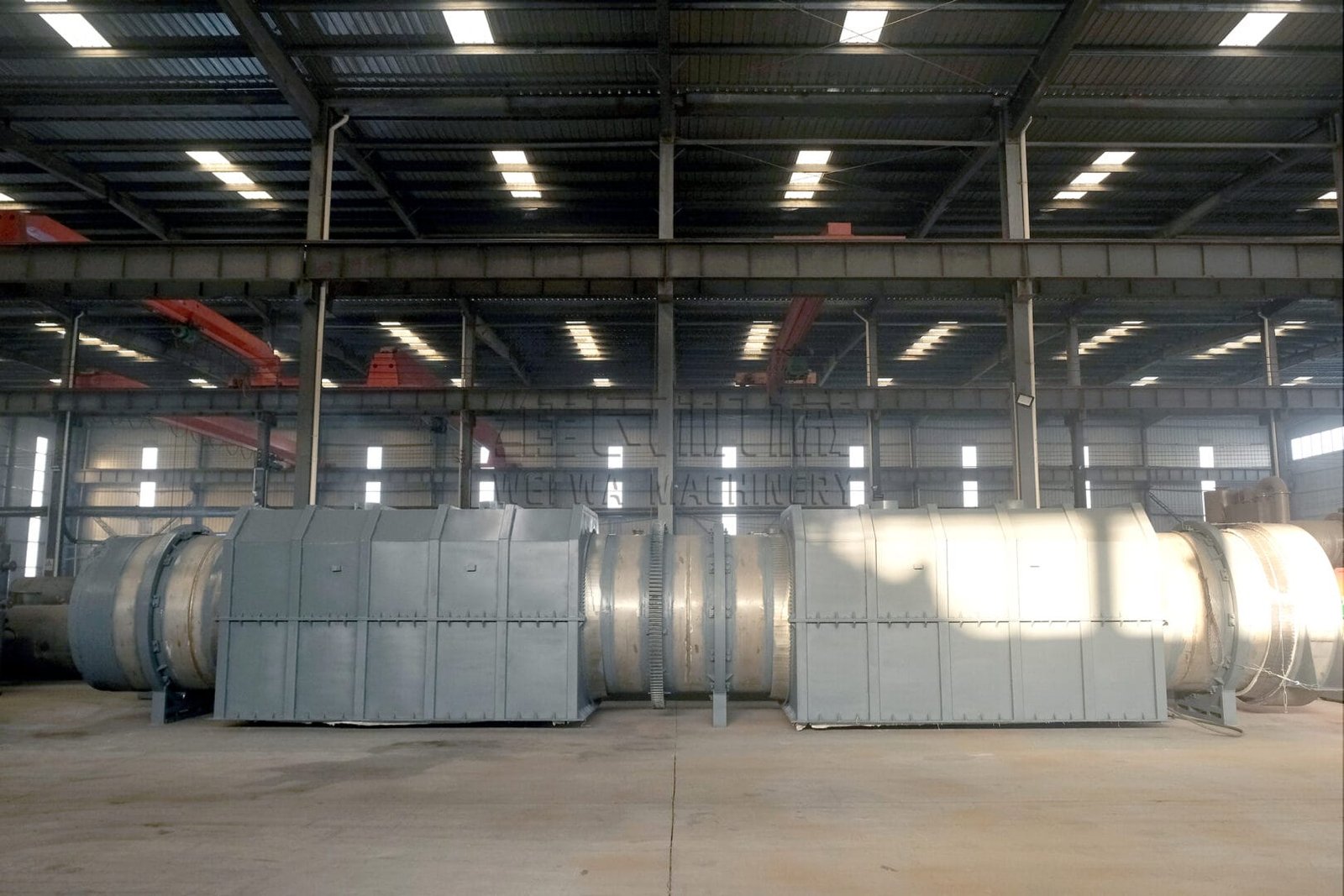
The Qatar Trial: Rice Husk to Charcoal in Action
Qatar’s Vision 2030 emphasizes economic diversification and sustainability, creating a fertile ground for innovative technologies that align with green growth. Our client, a local entrepreneur focused on sustainable energy solutions, approached Weiwa Machinery seeking a reliable way to produce charcoal locally using rice husk—a lightweight, silica-rich byproduct often discarded or underutilized. After thorough consultation, we arranged a trial of our continuous carbonization furnace in Qatar to demonstrate its suitability for the region’s unique needs.
Pre-Trial Preparation: Tailoring to Local Conditions
Before the trial, our engineering team conducted a detailed analysis of Qatar’s climate and infrastructure. High ambient temperatures and dust are common challenges, so we ensured the furnace’s cooling systems and filtration units were reinforced for durability. Además, since rice husk has a low bulk density and high volatility, we adjusted the furnace’s feeding mechanism to prevent clogging and optimized the temperature gradient to enhance carbon retention.
The Trial Process: Seamless Operation, Impressive Results
The trial spanned three days, during which we processed approximately 500 kilograms of rice husk per day. The continuous carbonization furnace operated flawlessly, with automated systems managing feeding, calefacción, and discharge without interruption. Key observations included:
- Calidad de carbón consistente: The output charcoal exhibited a fixed carbon content of 75-80%, surpassing typical batch-kiln results (60-70%). This high carbon content makes it ideal for use as a clean cooking fuel or as a feedstock for activated carbon production.
- Eficiencia de alto rendimiento: For every 100 kg of rice husk input, the furnace produced 25-28 kg of charcoal, with minimal ash residue (abajo 5%). Traditional kilns often yield 15-20% charcoal from similar feedstocks, highlighting the furnace’s superior conversion rate.
- Energy Self-Sufficiency: The furnace’s gas recovery system captured pyrolysis gases (mainly methane and hydrogen), which were reused to heat the furnace. This reduced external fuel requirements by 90%, a critical advantage in Qatar where energy costs are a key concern.
- Bajas emisiones: Equipped with a multi-stage scrubber, the system emitted negligible particulate matter and sulfur oxides, aligning with Qatar’s strict environmental regulations.
Our client was particularly impressed by the furnace’s ease of operation—requiring only one technician to monitor controls—and its ability to run 24/7 con un tiempo de inactividad mínimo. “This machine doesn’t just make charcoal; it makes sustainable business sense,” noted the client. “In Qatar, where we need solutions that save space, time, and resources, this continuous carbonization furnace checks all boxes.”
Why Continuous Carbonization Furnace Holds Promise for Qatar?
The success of our trial underscores the immense potential of continuous carbonization furnaces in Qatar. Beyond the technical merits, several market dynamics position this technology as a game-changer for the country:
Tapping Into Agro-Waste Valorization
While Qatar’s domestic agriculture is limited, it imports significant quantities of rice and other grains, generating rice husk waste that often ends up in landfills. By converting this waste into charcoal, businesses can reduce disposal costs and create a revenue stream from a previously undervalued resource. Además, charcoal made from rice husk burns cleaner than fossil fuels, supporting Qatar’s push for renewable energy adoption in households and small industries.
Meeting Demand for Clean Cooking Solutions
Despite urbanization, many rural areas in Qatar and neighboring Gulf countries still rely on traditional biomass fuels, which contribute to indoor air pollution. High-quality charcoal from continuous carbonization furnaces offers a safer alternative, with higher calorific value and longer burn times. As awareness of health and environmental impacts grows, demand for such clean fuels is poised to rise.
Supporting Industrial Applications
Charcoal is not just a cooking fuel—it’s a versatile industrial material. In Qatar’s growing chemical and water treatment sectors, carbón activado (derived from high-purity charcoal) is used for purification processes. Our continuous carbonization furnace produces charcoal with the purity needed for further activation, opening doors to B2B partnerships in these industries.
Aligning With Economic Diversification Goals
Qatar’s efforts to diversify beyond oil and gas have created incentives for green manufacturing. Investing in continuous carbonization technology allows local entrepreneurs to build low-capital, high-margin businesses while contributing to national sustainability targets. The furnace’s compact design also suits Qatar’s urban landscape, where space is at a premium.
Overcoming Perceptions: Charcoal Kiln vs. Modern Charcoal Making Machines
Traditional charcoal kilns have long been associated with slow processing, inconsistent quality, and environmental harm. En contraste, modern charcoal making machines like our continuous carbonization furnace represent a paradigm shift. Where batch kilns require manual loading and cooling cycles (taking days to complete a single batch), continuous systems deliver charcoal hourly, with precision control over every variable.
For Qatar, this means faster return on investment. A single continuous carbonization furnace can produce 6-8 tons of charcoal weekly, compared to 1-2 tons from a traditional kiln. This scalability is vital for meeting both local demand and export opportunities to neighboring markets hungry for sustainable charcoal products.
Looking Ahead: Weiwa Machinery’s Commitment to Qatar
The Qatar trial was more than a product demonstration—it was a testament to our commitment to empowering global clients with technology that solves real-world problems. En Weiwa Machinery, we don’t just manufacture continuous carbonization furnaces; we engineer solutions that bridge the gap between waste and wealth, tradition and innovation.
As we look to expand in Qatar, we plan to offer localized support, including training programs for operators, maintenance workshops, and partnerships with local suppliers to ensure seamless after-sales service. Our goal is to make advanced charcoal production accessible to businesses of all sizes, fostering a circular economy where nothing goes to waste.
Acerca de Maquinaria de Weiwa
Founded with a vision to revolutionize biomass utilization, Weiwa Machinery specializes in designing and manufacturing high-performance charcoal making machines, including continuous carbonization furnaces, carbonizadores, and auxiliary equipment. With over a decade of experience, our team combines engineering expertise with a deep understanding of global market needs, delivering customized solutions that prioritize efficiency, sostenibilidad, and user-friendliness.
From small-scale farms to large industrial plants, we partner with clients worldwide to turn biomass waste into valuable resources. Our continuous carbonization furnace for Qatar and other regions stands as a symbol of our dedication to innovation, calidad, and a greener future.
Whether you’re exploring charcoal production for the first time or upgrading existing operations, Weiwa Machinery is your trusted ally in sustainable manufacturing. Contact us today to learn how our technology can transform your business.


 Veloz
Veloz

 +8615937143060
