


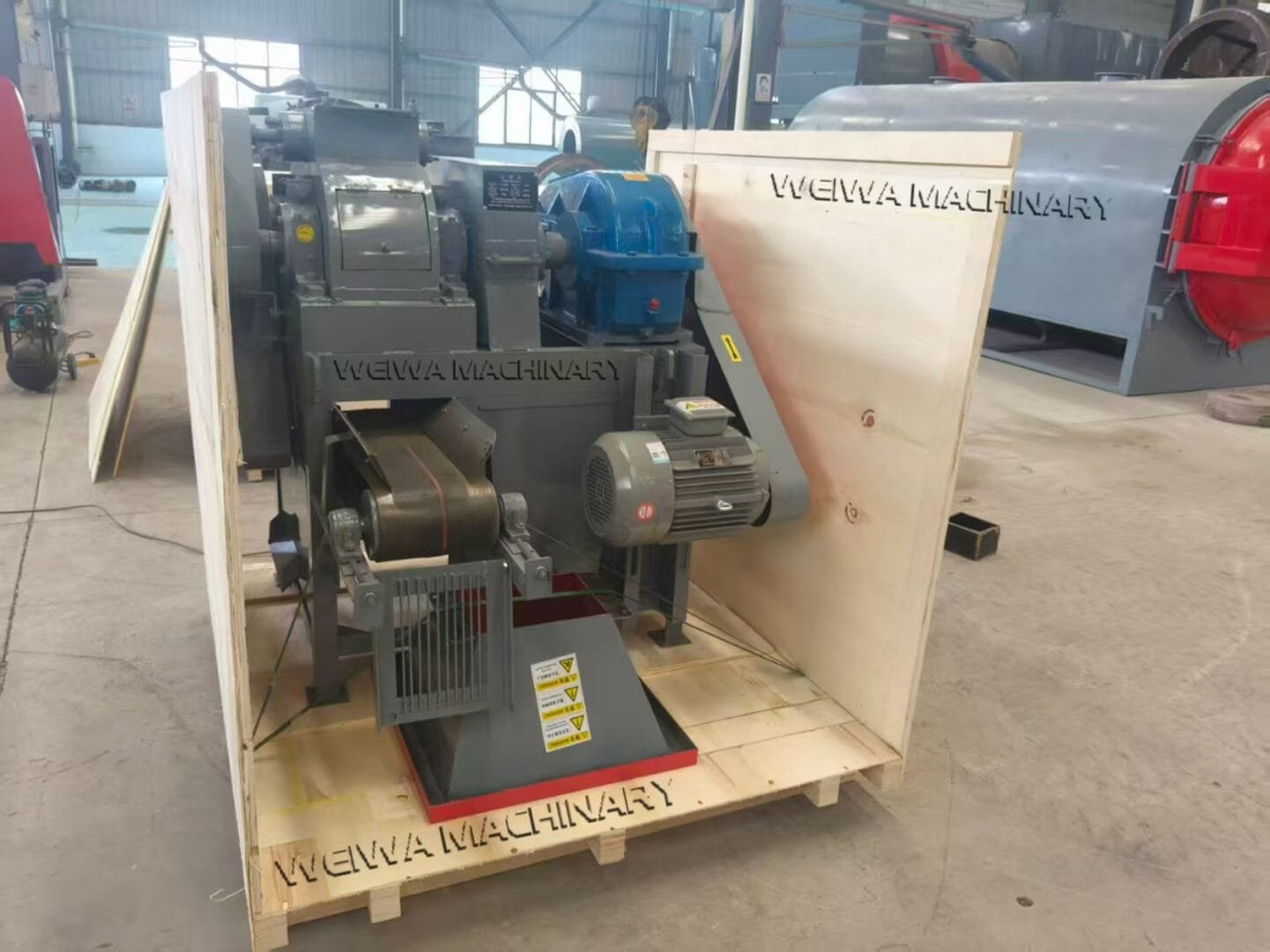
En los últimos años, the demand for sustainable solid fuel in South Africa has grown steadily due to rising energy costs, environmental awareness, and the deeply rooted braai culture that relies heavily on high‑quality charcoal. Across Gauteng, KwaZulu‑Natal, Western Cape, and emerging industrial hubs, entrepreneurs are increasingly investing in briquette production as a profitable way to convert agricultural residue, serrín, cáscara de coco, coal fines, and charcoal powder into uniform, high‑density fuel. At the center of this transformation lies the Ball Charcoal Briquettes Machine, a roller‑pressing technological solution capable of applying extremely high pressure to form consistent spherical, oval, pillow, cuadrado, or customized briquettes without excessive binder consumption. Maquinaria de Weiwa, with more than thirty years of manufacturing experience and a professional after‑sales team, has delivered complete charcoal ball press machine production lines to more than 130 países, including a significant footprint in South Africa, helping local factories turn low‑value powder waste into premium combustible products through making charcoal balls in South Africa at industrial scale.
South Africa Energy Landscape and Why Charcoal Briquette Machine Adoption Is Accelerating
South Africa remains one of the largest economies in Africa, with a complex energy matrix that includes coal‑fired power plants, renewable initiatives, liquid fuels, and widespread residential solid‑fuel usage. Despite national electrification progress, millions of households and small businesses still depend on charcoal and biomass for cooking, calefacción, and informal industrial processes. Traditional lump charcoal is irregular, dusty, difficult to transport, and often associated with inefficient combustion and higher emissions. En contraste, machine‑pressed briquettes produced by a Charcoal Briquette Machine offer uniform size, higher bulk density, longer burning time, lower ash content, and reduced smoke, aligning with both consumer preferences and environmental regulations gradually taking shape in South African municipalities.
The country also generates vast quantities of biomass by‑products annually, including sawdust from timber processing in Mpumalanga, sugarcane bagasse in KwaZulu‑Natal, cáscaras de arroz, coconut shells imported through Durban, and coal fines from mining operations. These materials, if left unmanaged, create disposal challenges and environmental liability. Sin embargo, when processed through a scientifically designed charcoal ball press machine integrated into a full production line, they become feedstock for making charcoal balls in South Africa that can serve local BBQ markets, hospitality sectors, urban retailers, and even regional exports to Botswana, Namibia, Lesotho, and Eswatini. Market analysts project steady growth in Southern Africa’s briquette sector, driven by urbanization, tourism recovery, and the need for affordable off‑grid heating solutions in townships and rural areas.
Braai Culture and Consumer Preference for Uniform Charcoal Balls
Barbecue, locally known as braai, is more than a cooking method in South Africa; it is a social institution celebrated on public holidays and weekends. Restaurants, guesthouses, and catering businesses require charcoal that ignites quickly, maintains stable heat, and produces minimal flare‑ups. Irregular lump charcoal often fails to meet these expectations, whereas spherical or oval briquettes manufactured by a Ball Charcoal Briquettes Machine provide predictable combustion performance. The ability to control briquette diameter between 20 mm and 80 mm, along with shape customization, allows South African producers to tailor products for household braai kits, commercial grilling chains, and packaged retail brands. Weiwa Machinery has observed that oval and rounded pillow shapes are particularly popular in South African orders because they pack efficiently in bags, resist breakage during transport, and create uniform airflow when stacked in grills.
Industrial Heating and Alternative Fuel Demand in South African Manufacturing
Beyond domestic use, several South African industries require compact, high‑calorific fuel for metal processing, brick kilns, drying units, and boiler辅助 heating. Coal fines and metallurgical dust generated on‑site are frequently stockpiled due to their low market value in powder form. A charcoal ball press machine or coal briquette press integrated into a closed‑loop production line enables these enterprises to recycle internal waste into shaped briquettes that can be reused in auxiliary furnaces or sold to nearby plants. This circular economy approach reduces raw material procurement costs and landfill fees while improving sustainability reporting. In provinces such as Gauteng and Limpopo, Weiwa Machinery has supported feasibility studies where making charcoal balls in South Africa extended beyond biomass to include chrome ore fines, manganese alloy dust, and magnesium oxide powder, demonstrating the versatility of roller‑pressing technology supplied by our engineering team.
Scientific Principles Behind Máquina de briquetas de carbón de pelota and Roller Pressing Technology
To appreciate why a Charcoal Briquette Machine is central to this industry, it is necessary to understand the mechanical and material science principles governing briquette formation. The Ball Charcoal Briquettes Machine operates on a twin‑roller extrusion mechanism. Two counter‑rotating rollers, machined with precision‑aligned mould cavities, compress powdered feed under hydraulic or mechanical pressure ranging from several tons to over ten tons per square centimeter depending on model specification. As material enters the nip zone between rollers, air voids are expelled, particles deform plastically, intermolecular bonds strengthen, and a coherent dense ball forms. No external adhesive is strictly mandatory if raw material lignin content, humedad, and fineness are optimized, but in practice, a small percentage of starch, melaza, bentonite, or custom binder is often introduced via a twin‑shaft mixer to improve green strength and post‑drying durability.
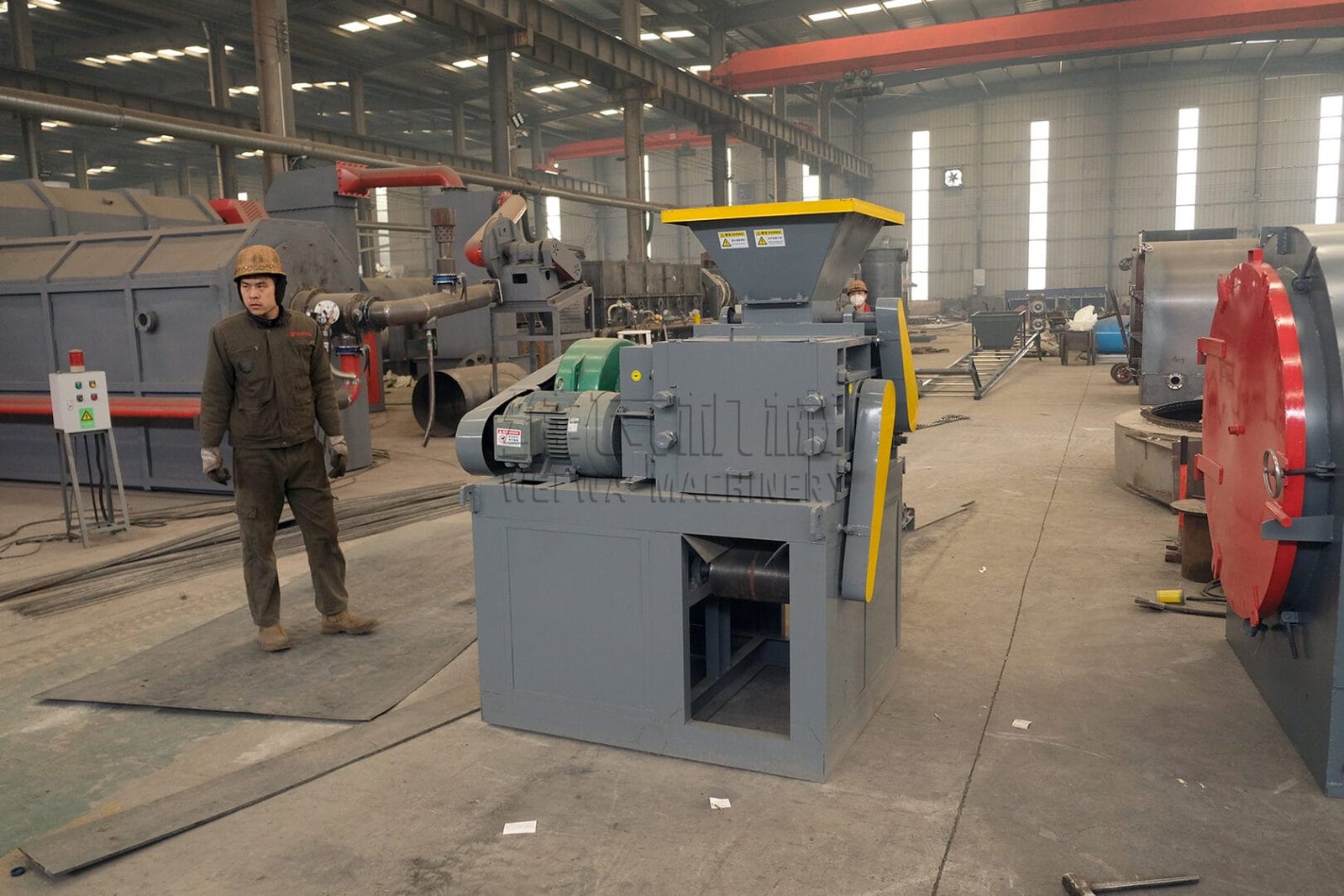
The rollers themselves are typically constructed from hardened alloy steel, surface‑treated to resist abrasion from sharp charcoal or mineral particles. Weiwa Machinery designs roller sleeves with CNC‑engraved pockets that determine final briquette geometry—round, elíptico, cuadrado, pillowed, or bread‑shaped. Pressure settings, roller speed synchronization, and feeding screw configuration must be calibrated according to material type. Por ejemplo, making charcoal balls in South Africa using softwood sawdust charcoal requires different compaction force compared to anthracite coal fines. Our engineers provide on‑site commissioning and remote adjustment guidance to ensure each charcoal ball press machine achieves forming rates above 90 percent with minimal recirculation of semi‑pressed material.
Particle Size Distribution and Moisture Control in Briquette Quality
A frequently overlooked factor in briquette production is feed preparation. Raw charcoal or coal powder must be crushed to a uniform size, usually below 3 mm, to ensure complete filling of mould cavities and consistent density. Oversized particles cause bridging, incomplete compression, and surface cracks, while excessively fine dust may require higher binder ratios. Moisture content is equally critical; most Ball Charcoal Briquettes Machine applications perform optimally when material moisture prior to pressing is between 8 y 12 percent. Too dry, and particles fail to develop cohesive bonds; too wet, and steam generated under pressure creates internal pores leading to crumbling after drying. South African clients often face seasonal humidity variations, especially in coastal cities like Durban and Cape Town, necessitating rotary drum or mesh belt dryers upstream of the Charcoal Briquette Machine to stabilize input conditions. Weiwa Machinery production lines integrate crushing, sieving, mixing, and pre‑drying modules to standardize feed properties before material reaches the briquette press.
Hydraulic System Versus Mechanical Spring Loading in Charcoal Ball Press Machine
Two dominant pressure application methods exist in industrial charcoal ball press machine design: fixed mechanical spring loading and adjustable hydraulic systems. Spring‑loaded models are cost‑effective, robust, and suitable for uniform recipes where material characteristics remain stable. Hydraulic models, increasingly popular among South African mid‑size plants, allow operators to fine‑tune pressure via control panels, accommodate variable raw material batches, and overload protection to prevent roller damage when foreign hard objects enter the hopper. Weiwa Machinery offers both configurations, with hydraulic units featuring PLC interfaces, pressure gauges, and optional automatic greasing systems that reduce manual maintenance—a valuable feature for factories operating multiple shifts while making charcoal balls in South Africa under tight delivery schedules.
Complete Charcoal Ball Production Line Work Flow From Raw Material to Packaged Briquettes
While the Ball Charcoal Briquettes Machine is the core shaping equipment, a commercially viable briquette operation requires a synchronized sequence of unit operations. Weiwa Machinery delivers turnkey lines comprising crushers, vibrating screens, twin‑shaft mixers, silos, conveyors, Prensa de briqueta, mesh belt or tunnel dryers, cooling conveyors, screening classifiers, and packaging stations. Below is a detailed narrative of each stage as implemented in South African installations.
The process begins with crushing large lumps of charcoal, carbonized biomass, or coal fines using a hammer mill or jaw crusher to achieve the target particle size distribution. Crushed material passes through a vibrating sieve where oversized fractions return to the crusher and undersized qualified powder proceeds to the mixing stage. Inside a twin‑shaft mixer, powdered feed is blended with predetermined amounts of water and binder. Homogeneous mixing is crucial; uneven binder dispersion leads to weak spots inside briquettes that fracture during drying or handling. Después de mezclar, the plastic‑like mass transfers to a buffer silo that ensures continuous feeding to the charcoal ball press machine, preventing pulsating flow that could destabilize roller pressure.
At the briquetting unit, the Charcoal Briquette Machine compresses material into balls which then discharge onto a belt conveyor entering the drying system. Freshly pressed briquettes retain moisture from mixing and binder solution; por lo tanto, a mesh belt dryer with controlled temperature zones (típicamente 80 a 200 degrees Celsius depending on throughput) removes residual water to below 5 percent, solidifying structural integrity. In regions with arid climates such as parts of Northern Cape, solar drying yards can complement mechanical dryers for cost saving, though industrial buyers often prefer controlled thermal drying to guarantee consistent quality year‑round. Post‑drying, briquettes may pass through a secondary screener to separate deformed or broken pieces, which are recycled to the mixer. Qualified balls proceed to weighing, bagging, branding, and palletizing for distribution across South African retail networks or export containers.
Customization of Production Line Capacity for South African Market Entry Levels
Weiwa Machinery recognizes that South African entrepreneurs range from small‑scale startup workshops in township economic zones to large agro‑processing corporations with existing biomass waste streams. Consequently, our Ball Charcoal Briquettes Machine lines scale from 0.5 ton per hour pilot systems to 10 ton per hour industrial plants. A typical entry‑level configuration for making charcoal balls in South Africa might include a 400 mm roller diameter press, a 500 kg/h hammer crusher, a 1 cubic meter twin‑shaft mixer, and a 3‑layer mesh belt dryer, all mounted on compact foundations with standard 380V/50Hz electrical compatibility. For higher throughput, we supply tandem press arrangements, automated batching systems, and PLC‑based central control rooms. Our technical team prepares custom layout drawings based on client site dimensions, raw material analysis, and target hourly capacity, ensuring optimal material flow and maintenance access within available floor space.
Integration of Carbonization Units for End‑to‑End Charcoal Production
It is important to clarify that briquetting and carbonization are distinct stages. A Charcoal Briquette Machine processes already carbonized powder into shaped fuel. Some South African clients initially possess raw biomass (residuos de madera, cáscara de coco, bagazo de caña de azúcar) and require a carbonization furnace to convert it into charcoal before briquetting. Weiwa Machinery manufactures continuous rotary carbonization kilns, hoisting type furnaces, and horizontal carbonizers that can be coupled upstream of the briquette line. This integrated approach enables clients to control feedstock quality, reduce reliance on purchased charcoal powder, and capture higher margin by branding both the carbonization and briquetting process as locally produced premium fuel. When advising on making charcoal balls in South Africa, our engineers evaluate whether on‑site carbonization is economically justified based on raw material logistics, energy costs, and environmental permitting.
Market Potential and Economic Logic of Making Charcoal Balls in South Africa
The business case for investing in a charcoal ball press machine in South Africa rests on three pillars: abundant low‑cost feedstock, growing differentiated fuel demand, and export adjacency. Nationally, forestry and agriculture generate hundreds of thousands of tons of residue annually. Sawmills discard sand‑laden sawdust; sugarcane mills accumulate bagasse; fruit processing yields peach pits, almond shells, and citrus peels; coal mines discard micron‑sized fines unusable in boilers. Purchasing or aggregating these materials at low cost creates a favorable input margin. Transforming them via a Ball Charcoal Briquettes Machine into standardized briquettes adds measurable value per ton, especially when packaged under private labels for supermarket chains, camping supply retailers, and hospitality groups.
Field data from Weiwa Machinery installations indicate that a well‑managed 2 ton per hour plant making charcoal balls in South Africa can achieve payback within 12 a 24 months depending on raw material sourcing contracts, labor structure, and local briquette selling price, which varies by region and season. Urban centers like Johannesburg, Pretoria, Durban, and Cape Town command premium pricing for clean‑burning BBQ briquettes, particularly those marketed as low‑smoke, sustainably sourced, or additive‑free. Industrial briquettes for heating often trade on calorific value and ash specifications, where consistent density from a Charcoal Briquette Machine ensures predictable performance and repeat orders.
Environmental Compliance and Circular Economy Narrative in South Africa
South African environmental policy increasingly emphasizes waste minimization, air quality improvement, and job creation in green sectors. Briquette production aligns with these objectives by diverting organic and mineral fines from open dumping or uncontrolled burning, thereby reducing particulate emissions and groundwater contamination risks. Además, the sector creates semi‑skilled employment in material collection, equipment operation, quality control, and distribution—important in regions targeting inclusive economic growth. When presenting a charcoal ball press machine project to municipal authorities or development finance institutions, Weiwa Machinery clients often leverage the circular economy angle, demonstrating how making charcoal balls in South Africa converts liability into asset while supporting provincial clean‑energy targets. Our team assists by providing technical dossiers, machine certifications, and reference letters from similar climate zones to strengthen funding applications.
Export Opportunities From South Africa to Southern African Development Community Markets
Another dimension of market potential is cross‑border trade. South Africa’s logistics infrastructure—ports of Durban, Richards Bay, Cape Town, and extensive road/rail networks—positions local briquette manufacturers to serve neighboring SADC countries where charcoal demand outstrips supply. High‑density briquettes produced by a Ball Charcoal Briquettes Machine withstand longer haulage better than fragile lump charcoal, reducing in‑transit loss and justifying slightly higher ex‑factory pricing. Several Weiwa Machinery clients have expanded from domestic supply to containerized exports within eighteen months of commissioning, leveraging consistent quality from their charcoal ball press machine line as a brand differentiator. Packaging design, moisture‑proof bagging, and pallet stability become critical at this stage, areas where our turnkey solutions include optional automatic weighing and sealing machines.
Why Choose Weiwa Machinery as Your Ball Charcoal Briquettes Machine Partner?
Weiwa Machinery is not merely an equipment vendor; we are a technical partner with more than thirty years of specialized experience in briquetting and carbonization technologies. Having served over two million customers across 130 países, we understand the operational realities of making charcoal balls in South Africa: voltage fluctuations, dust management, spare parts lead time, operator training needs, and after‑sales responsiveness. Our charcoal ball press machine frames are welded with automated processes from high‑strength steel to endure continuous high‑pressure cycles. Roller sleeves are interchangeable, CNC‑machined to micron tolerances, and available in various alloys depending on abrasiveness of processed material—whether charcoal, carbón, yeso, polvo de metal, or mineral concentrates.
We maintain a professional after‑sales team providing 24/7 online technical support via email and WhatsApp, detailed English operation manuals, wiring diagrams, and troubleshooting flowcharts with every shipment. Wear parts such as roller sleeves, springs, scraper blades, and coupling bushes are stocked for rapid air freight dispatch to minimize downtime. For South African clients requiring deeper assistance, we arrange remote video commissioning and, where feasible, on‑site engineer deployment for installation supervision and operator training. Además, Weiwa Machinery offers customized design and site planning services: our senior project consultants draft factory layout drawings based on your workshop dimensions, raw material flow, and capacity goals, ensuring the Charcoal Briquette Machine integrates logically with storage, dust extraction, electrical panels, and future expansion bays.
Custom Voltage Configurations and South Africa Electrical Standards
South Africa predominantly operates on 230V single‑phase and 400V triple‑phase, 50 Hz power systems. Weiwa Machinery pre‑configures motors, control cabinets, and protection devices to match these standards, including optional variable frequency drives for soft starting and energy regulation. For remote sites with unstable grid supply, we advise on generator sizing and power factor correction to protect the Ball Charcoal Briquettes Machine from voltage sags that could affect roller synchronization. Control panels are labeled in English with IP54 or higher enclosures to resist dust ingress—a practical consideration in charcoal and coal powder environments common in making charcoal balls in South Africa.
Embalaje, Envío, and Installation Support for South Africa Deliveries
Equipment destined for South African ports is packed according to export‑grade standards. Small‑size units are enclosed in wooden cases suitable for LCL shipping; large‑size machinery is nude packed for full container load with vulnerable components crate‑protected; special packing is accommodated per customer requirement. We coordinate with freight forwarders familiar with Durban, Cape Town, and Port Elizabeth customs procedures, providing commercial invoices, packing lists, certificate of origin, and CE or ISO documentation where applicable. A llegado, our technical documents guide local electricians and mechanics through foundation preparation, alignment, belt tensioning, and hydraulic oil filling. The first production trial typically occurs under video connection with our engineers to fine‑tune pressure settings and binder ratio—ensuring your charcoal ball press machine delivers qualified briquettes from day one.
Raw Material Versatility of Charcoal Briquette Machine Beyond Charcoal
Although the keyword focus is on Ball Charcoal Briquettes Machine and making charcoal balls in South Africa, it is worth emphasizing that Weiwa Machinery presses handle a wide spectrum of powders. Coal coke powder, polvo de hierro, magnesium oxide, polvo de cobre, mineral de cromo, lead zinc scrap, bauxita, polvo de metal no ferroso, silicon manganese alloy powder, polvo de aluminio, virador, yeso, lodo, and desulfurization gypsum can all be shaped using appropriate roller patterns and pressure configurations. This versatility future‑proofs your investment; a factory initially producing charcoal briquettes can later diversify into coal briquettes for industrial clients or mineral briquettes for metallurgical recycling by simply changing roller sleeves and adjusting process parameters. South African mining supply chains, in particular, present opportunities to deploy Charcoal Briquette Machine technology for fines re‑utilization, reducing waste and generating new revenue lines.
Shape Customization and Mold Design Considerations
Briquette shape influences packing density, combustion behavior, and consumer perception. Our design office collaborates with clients to develop mould drawings for oval, egg, pillow, cuadrado, redondo, bread‑shape, or entirely bespoke geometries bearing logos or surface textures. For making charcoal balls in South Africa aimed at premium BBQ retail, a smooth‑surface oval with slight edge rounding reduces ash shedding and improves bag presentation. For industrial coal briquettes, a squared pillow with ribbed pattern may enhance stacking stability in silos. The Ball Charcoal Briquettes Machine accommodates roller diameters from 400 mm to 1000 mm and pocket depths tailored to desired briquette size, typically 20–80 mm as noted in our product documentation. Custom engraving can also embed subtle brand identifiers, an advantage for South African producers building long‑term market recognition.
Operational Best Practices for Sustainable Briquette Production in South Africa
Success with a charcoal ball press machine extends beyond machinery purchase; it requires disciplined operation and maintenance culture. Weiwa Machinery recommends daily cleaning of hoppers and mixers to prevent binder hardening, weekly greasing of roller bearings and checking V‑belt tension, and monthly inspection of mould cavity wear—replacing sleeves when diameter enlargement exceeds tolerance to maintain briquette dimensional accuracy. Training at least two operators per shift on feeding rhythm, pressure observation, and emergency stop procedures mitigates human error. In South African contexts where labor turnover may occur, we supply video training libraries and multilingual manuals to onboard new staff efficiently. Dust collection systems should be integrated upstream of the Charcoal Briquette Machine to protect worker respiratory health and reduce explosive dust accumulation, aligning with occupational safety standards increasingly enforced in South African manufacturing.
Another best practice is maintaining a raw material characterization log. Variations in charcoal source—hardwood versus softwood, coconut shell versus bagasse—affect volatile content, ash fusion temperature, and compressibility. By recording moisture, tamaño de partícula, and binder performance for each batch, plant managers optimize Ball Charcoal Briquettes Machine settings and reduce reject rates. South African climate diversity, from humid KwaZulu‑Natal coast to arid Karoo interior, makes such process control essential for year‑round consistency in making charcoal balls in South Africa that meet retailer specifications.
Future Outlook for Ball Charcoal Briquettes Machine Industry in South Africa
Mirando hacia adelante, several trends will shape the trajectory of briquette adoption in South Africa. Primero, urbanization and middle‑class growth will sustain BBQ culture and demand for convenient, clean‑burning fuel formats. Segundo, industrial energy cost pressures may push more manufacturers to on‑site waste‑to‑fuel loops using Charcoal Briquette Machine lines. Tercero, regional integration under SADC frameworks could facilitate standardized briquette quality certifications, enabling cross‑border brand expansion. Cuatro, environmental taxation or landfill restrictions on organic waste may accelerate conversion of biomass residues into marketable solids. Throughout these developments, Weiwa Machinery continues to refine roller metallurgy, hydraulic control precision, and digital monitoring features to keep our charcoal ball press machine range aligned with evolving South African operational expectations.
We also anticipate increased interest in hybrid lines combining carbonization and briquetting within a single facility, particularly among agro‑processors with captive residue streams such as sugar mills, timber plantations, and nut‑processing plants. Making charcoal balls in South Africa from vertically integrated production not only captures margin across two process stages but also insulates producers from fluctuating purchased charcoal powder prices. Our engineering team is prepared to design such integrated layouts, complete with heat recovery suggestions between carbonizer exhaust and dryer inlet to improve overall thermal efficiency—a selling point for energy‑conscious South African projects.
Acerca de Maquinaria de Weiwa and Contact Information
Weiwa Machinery brings more than thirty years of professional experience in the design, manufacture, and export of briquetting and carbonization equipment. Our product portfolio covers Ball Charcoal Briquettes Machine, máquina de prensa de bolas de carbón, coal briquette press, mineral powder press, twin shaft mixers, trituradores, secadores rotativos, mesh belt dryers, hornos de carbonización, and auxiliary conveying systems. We have become the first choice for over two million customers in more than 130 countries including Indonesia, India, Malasia, Laos, Myanmar, Tailandia, Vietnam, Filipinas, Pakistán, Sri Lanka, Líbano, Georgia, Pavo, Polonia, Czech Republic, Mongolia, Corea del Sur, Rumania, Egipto, Sudán, Tunisia, Argelia, Etiopía, Tanzania, Equatorial Guinea, Zambia, México, Sudáfrica, and many others.
Our strengths lie in durable machinery built from excellent materials with reliable structure and precision manufacturing, a professional after‑sales team offering 24/7 support, customized service including tailor‑made production line design, and technical drawing‑based site planning to optimize your workshop layout. We welcome factory visits and are ready to assist you from initial inquiry to final commissioning. If you are considering making charcoal balls in South Africa or importing a Charcoal Briquette Machine for local distribution or industrial use, contact Weiwa Machinery for a free quotation and technical proposal.
Contáctenos
Multitud: +8613838093177
Whatsapp: +8613838093177
E‑Mail: info@cjlmachinegroup.com
Website: https://cjljx.com/product/ball-charcoal-briquettes-machine
You are welcome to reach out now and let Weiwa Machinery support your briquette business success in South Africa with proven technology and dedicated service.


 Veloz
Veloz

 +8615937143060
