


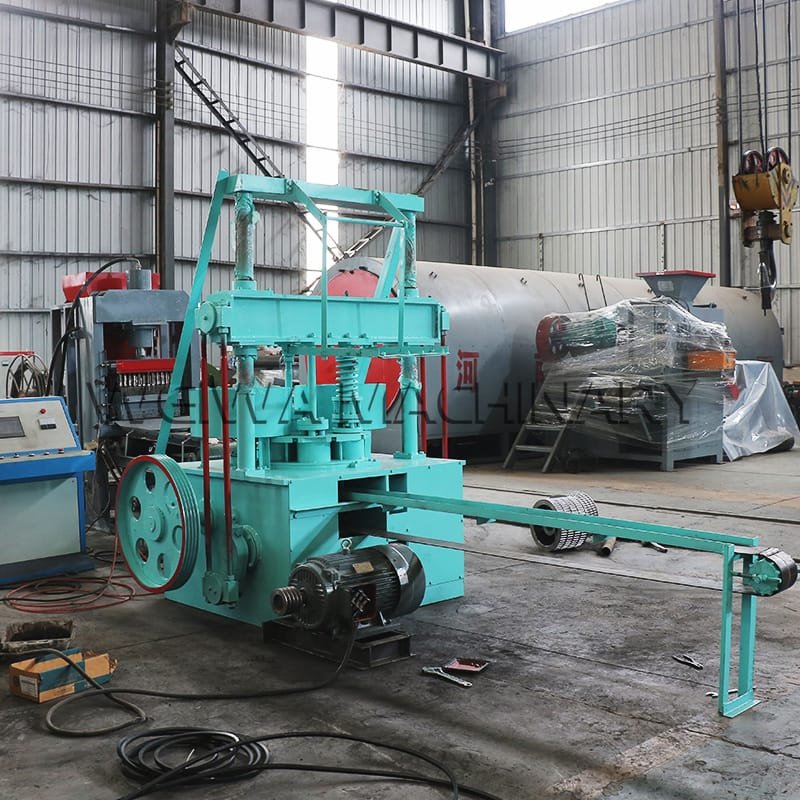
Why the South Africa Client Asked for a Live Machine Trial?
South Africa has a strong braai culture, a large household heating segment and an active market for affordable solid fuel. Al mismo tiempo, raw material quality is not uniform. Coal dust from one region may have different moisture, ash and volatile content than charcoal fines from another region. Biomass residue, serrín, coconut shell charcoal and wood charcoal powder also behave differently under pressure.
For this reason, the South Africa client did not want a sales pitch. The client wanted proof. Before committing to a container order, the buyer asked Weiwa Machinery to run the honeycomb charcoal coal briquette forming machine with material ratios close to what he would use in Johannesburg, Durban, Pretoria, Cape Town and rural distribution areas.
A responsible coal briquettes making machine supplier should accept this kind of request. A machine may look good in a photo, but briquette quality depends on pressure, mold design, tamaño de partícula, binder ratio, moisture content and ejection stability. The trial removed guesswork.
¿Qué es un Honeycomb Briquette Charcoal Machine?
A honeycomb briquette charcoal machine is a rotary-table punching press that compresses fine carbon-based powder into solid blocks with through-holes. The holes create airflow, improve ignition, support cleaner combustion and give the product its recognizable honeycomb appearance. The machine is different from a screw extruder. Instead of pushing continuous material through a die, the honeycomb punching machine forms individual briquettes inside closed molds with vertical pressure.
Buyers use different names for the same equipment family. Some search for honeycomb briquette charcoal machine. Some search for honeycomb charcoal coal briquette forming machine. Others use coal briquettes making machine or honeycomb punching machine. From the manufacturer side, the difference is usually mold size, motor power, station quantity, output capacity and optional feeding or drying system.
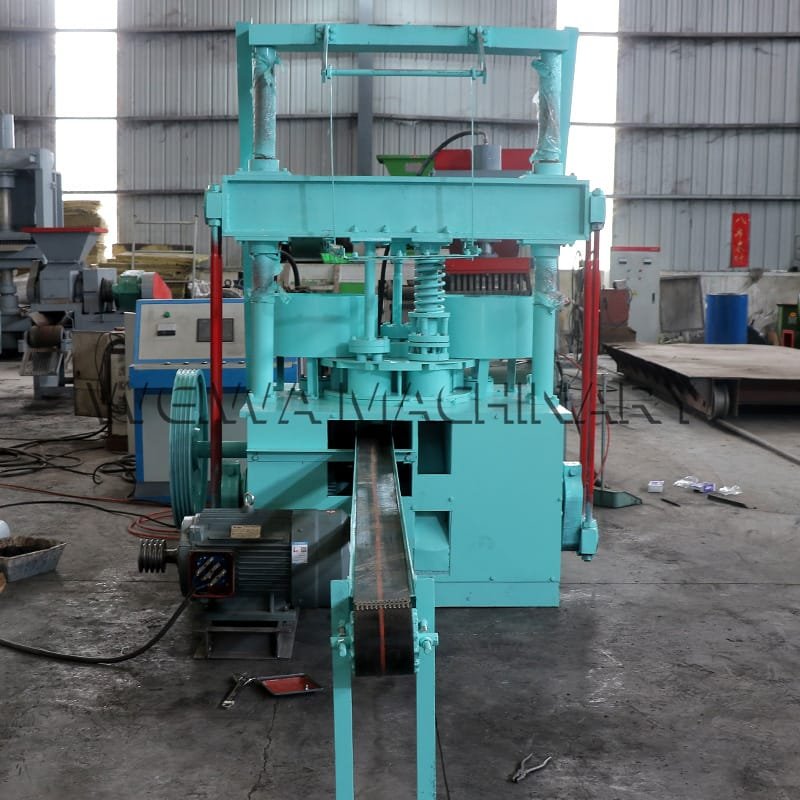
Main Components of the Machine
The machine starts with a hopper and metering feeder. Pre-mixed powder drops into mold barrels mounted on a rotating table. As the table indexes, a punch head moves downward and compresses the material. Fixed pins create the honeycomb holes. Ejector pins then push the finished briquette onto a discharge channel. The cycle repeats continuously, which makes the equipment suitable for semi-industrial workshops and full production lines.
The most important parts are the mold barrel, punch head, hole pins, camshaft or crankshaft system, reducer, motor, frame and lubrication system. Because the mold set is changeable, one honeycomb briquette charcoal machine can serve multiple product lines if the operator plans diameter, height and hole pattern in advance.
Raw Materials the Machine Can Process
The South Africa client tested several blends. The machine handled coal powder, polvo de carbón, polvo de carbón, multas de coque, furnace slag, lignito, brisa, middlings, coal ash and certain biomass charcoal residues. Each material needs a slightly different preparation method. Coal dust usually needs screening below 3 mm. Charcoal fines often need binder and controlled moisture. Mixed fuel requires stable dosing so the combustion profile stays repeatable.
durante el juicio, Weiwa engineers explained that powder fineness, moisture and binder type decide whether the briquette cracks, swells, crumbles or burns too fast. The client learned that the honeycomb charcoal coal briquette forming machine is only one part of the system. Aplastante, mixing, binder dosing and drying are equally important for commercial success.
How the Trial Was Conducted at the Weiwa Factory?
The tested unit was configured as a customer-specified honeycomb punching machine with an 11 kW drive system, rotary indexing table, hardened punch assembly and adjustable mold set. Weiwa prepared two representative batches. Batch A simulated South African bituminous coal dust screened below 3 mm. Batch B used a blend of coal dust and charcoal powder with starch-based binder and controlled moisture.
The client watched the full cycle from feeding to ejection. In two hours of continuous operation, the machine produced thousands of uniform briquettes. Diameter, height, hole count and surface finish were measured on the factory floor. The client also tapped finished samples, dropped them from waist height and later burned several pieces in a controlled stove to check flame stability, burn time and ash formation.
Sample Parameters Shown to the Client
For the South Africa trial, the client selected a 220 mm class mold with 19 holes and 15 mm inner hole diameter. The same honeycomb briquette charcoal machine can be supplied with smaller or larger diameters, 16 agujeros, 22 agujeros, custom hole arrays, round shape, forma hexagonal, square shape or special geometry for local stoves.
Smaller holes usually increase resistance and extend burning time. Larger holes usually improve ignition and airflow. Height can be adjusted within the mold range. Surface density looked high, edges stayed sharp, and no major tail cracking appeared during the run. The client confirmed that the coal briquettes making machine delivered the kind of product South African resellers can package, stack and market.
Why Hole Pattern Matters for the South African Market?
In South Africa, honeycomb briquettes can serve rural heating, small factories, community cooking points and braai fuel shops. Each application wants a different burn curve. A household stove may prefer steady heat and long burn time. A braai supplier may prefer fast ignition and consistent glow. An industrial user may care more about calorific value and low breakage during transport.
The honeycomb punching machine gives the producer control. By changing hole count, hole diameter, briquette diameter and raw-material ratio, the same equipment can make different commercial products. That flexibility is one of the main reasons the honeycomb briquette charcoal machine in South Africa is attracting new investors.
Sample Showcase Observed During the Visit
After the running test, Weiwa laid out samples by category. The first group was coal-based honeycomb briquettes for heating and general thermal use. The second group was charcoal-coal blends for braai and outdoor cooking. The third group was finer household-size pieces. The fourth group was a custom sample for distributors who wanted stronger branding and cleaner combustion.
All samples showed consistent hole diameter, smooth outer surface and firm structure. The client noted that the briquettes did not crumble when handled. Ash residue looked manageable. Ignition was acceptable with the blended recipe. For pure charcoal fines, the engineer recommended a better binder ratio and slightly lower moisture before full-scale production.
The sample showcase was not only about appearance. It was about bankability. A fuel product must survive loading, transporte, storage, retail shelving and end-user burning. The trial proved the honeycomb charcoal coal briquette forming machine could deliver a product with commercial shelf appeal.
South Africa Market Outlook for Honeycomb Briquettes
South Africa is one of the most active solid-fuel markets in Africa. Braai culture, tourism, weekend outdoor cooking, rural heating and small-scale industry all create demand for affordable fuel. Charcoal briquettes are increasingly preferred because they burn more consistently than loose charcoal, store better than wood and can be formulated for longer heat retention.
Market research shows the South African charcoal briquettes market was valued at about USD 165 million in 2023 and is forecast to exceed USD 300 million by 2030, with a CAGR near 9 percent. Barbecue remains the largest application, while hotels, restaurantes, informal food vendors and household users continue to expand demand. [8](@ref)
This creates a clear opportunity. Coal dust and charcoal fines are often treated as waste. A honeycomb briquette charcoal machine converts that waste into uniform, sellable fuel. Distributors can build private labels. Rural entrepreneurs can supply nearby towns. Urban braai brands can differentiate with cleaner-burning, better-packaged blocks.
Where the Demand Comes From?
Gauteng has dense urban demand and strong distribution infrastructure. KwaZulu-Natal combines port logistics with active retail and hospitality fuel demand. The Eastern Cape shows fast-growing outdoor-cooking consumption as disposable income and leisure activity rise. Limpopo, Mpumalanga and North West have coal exposure, mining communities and rural heating needs.
A smart buyer does not try to serve the whole country on day one. The honeycomb punching machine allows a South African entrepreneur to start with one mold, one raw-material blend and one distribution channel, then expand into charcoal briquettes, biomass briquettes or industrial fuel blocks later.
Competitive Advantage of Honeycomb Format
Honeycomb briquettes are easy to stack. The holes create controlled airflow. Density can be tuned for longer burn time. Shape can be matched to local stoves and retail packaging. Compared with irregular lumps, honeycomb blocks look more standardized, which helps branding and pricing.
For the South African market, this matters because buyers want predictable performance. A restaurant owner does not want one bag that burns in 20 minutes and another bag that barely lights. The honeycomb briquette charcoal machine reduces that risk by making every piece from the same mold and pressure cycle.
Why Buyers Compare Honeycomb Punching Machine with Other Presses?
Some buyers first hear about roller briquette machines. Others look at screw extruders. Roller presses are good for certain shapes and high-volume mineral briquettes. Screw extruders are common for charcoal sticks and shisha charcoal. The honeycomb punching machine is different because it forms discrete blocks with precise hole patterns and high single-piece density.
For honeycomb coal and charcoal products, punching is often the better choice when the buyer wants sharp edges, accurate hole geometry and consistent height. The coal briquettes making machine family includes several technologies, but not every technology fits honeycomb design. This is why Weiwa usually recommends a material test before the client chooses the final configuration.
Customization Options Weiwa Machinery Offers
Weiwa can customize diameter from around 70 mm to 260 mm depending on application. Common diameters include 90 mm, 100 mm, 120 mm, 140 mm, 180 mm, 220 mm and 240 mm. Height can be adjusted within mold limits. El número de agujeros puede ser 8, 12, 16, 19, 22 or custom. Shape can be round, hexagonal, cuadrado, rectangular or project-specific.
potencia del motor, station count, feeder type, binder system, trituradora, mezclador, conveyor, dryer and packing machine can all be added later. The honeycomb charcoal coal briquette forming machine is the core asset, but a complete line gives better product consistency and lower labor cost.
Common Mistakes New South African Producers Should Avoid
The first mistake is buying a machine before testing raw material. Coal dust, charcoal powder and biomass charcoal are not the same. The second mistake is ignoring moisture. Too much moisture causes swelling and slow drying. Too little moisture reduces binding and creates dusty edges.
The third mistake is poor sieve preparation. Particles above 3 mm can block corners and create weak spots. The fourth mistake is weak binder management. Starch, bentonite, molasses or customized binders all behave differently. The fifth mistake is forgetting drying and storage. Even a perfect honeycomb briquette charcoal machine cannot compensate for a wet warehouse and bad packaging.
Weiwa’s trial process helps clients avoid these errors early. The South Africa client left the factory with sample photos, burn-test notes, mold drawings, recommended binder ratio, maintenance checklist and a clearer production plan.
After-Sales Support and Operator Training
A honeycomb punching machine is mechanical, but commercial success depends on operation discipline. Weiwa provides an English operation manual, mold drawings, spare-parts list, commissioning report and WhatsApp after-sales support. Technicians can guide the client on camshaft lubrication, mold removal, punch clearance, screen replacement, voltage stabilization and daily cleaning.
For African conditions, voltage fluctuation is a real issue. The South Africa client was advised to install a suitable voltage stabilizer if the workshop power supply is unstable. Mold sleeves should be inspected after a defined production volume. Grease points should be serviced on a fixed shift schedule. These small habits protect output and extend machine life.
Business Model for a South African Honeycomb Briquette Plant
A new investor can start with a 1-ton-per-hour class line or even a smaller semi-automatic setup. The workflow usually includes raw-material receiving, aplastante, screening, mixing with binder, honeycomb punching, curing or sun drying, quality checking, bagging and distribution.
Phase one can target local braai shops and township retailers. Phase two can add branded 5 kg and 10 kg bags for supermarkets and hardware stores. Phase three can introduce coconut shell charcoal briquettes, sawdust charcoal briquettes or industrial fuel blocks using the same honeycomb briquette charcoal machine platform with different molds and recipes.
Margins improve when the producer controls raw-material sourcing. Coal dust from nearby mines, charcoal fines from charcoal processors and biomass residue from sawmills can all become feedstock. Instead of paying for finished fuel, the entrepreneur buys waste powder, adds value and sells a standardized product.
¿Por qué elegir la maquinaria Weiwa??
Weiwa Machinery is a Chinese manufacturer of briquette machines, charcoal equipment, carbonization furnaces and complete fuel production lines. The company has supplied equipment to more than 130 países, including South Africa, Indonesia, India, Vietnam, Malasia, Pakistán, Egipto, Pavo, Mexico and South Africa’s neighboring African markets.
Every customer-specified honeycomb charcoal coal briquette forming machine can be tested with representative material before shipment. Weiwa provides factory layout design, mold customization, guía de instalación, entrenamiento del operador, English manuals, spare parts support and long-term technical consultation.
The South Africa trial proved an important point. The machine is not just a press. It is a business tool. When the right raw material, mold, binder and drying system are combined, the coal briquettes making machine becomes the foundation of a local fuel brand.
Conclusión
The honeycomb briquette charcoal machine trialed for the South Africa client delivered uniform samples, stable operation and clear commercial potential. The honeycomb punching machine is practical for braai fuel, household heating, rural distribution and small industrial thermal use. South Africa’s growing charcoal briquette market makes this equipment especially attractive in 2026 y más allá.
If you plan to import a honeycomb briquette charcoal machine in South Africa, do not buy blindly. Ask for a material test. Request sample parameters. Confirm mold flexibility. Check after-sales support. Weiwa Machinery can help you move from raw powder to branded fuel blocks with less risk.
Contact Maquinaria de Weiwa
If you want a live trial, sample report or production line quotation, contact Weiwa Machinery directly.
Móvil / WhatsApp: +86 138 3809 3177
Correo electrónico: info@cjlmachinegroup.com
Product reference: Máquina de briquetas de carbón de nonas de nonas
Weiwa Machinery welcomes South African importers, distributors and project investors to visit the factory, run their own material and see the honeycomb briquettes before placing a container order.


 Veloz
Veloz

 +8615937143060
