


The Successful Dispatch Of Máquina de briquetas de aserrín To The Philippines
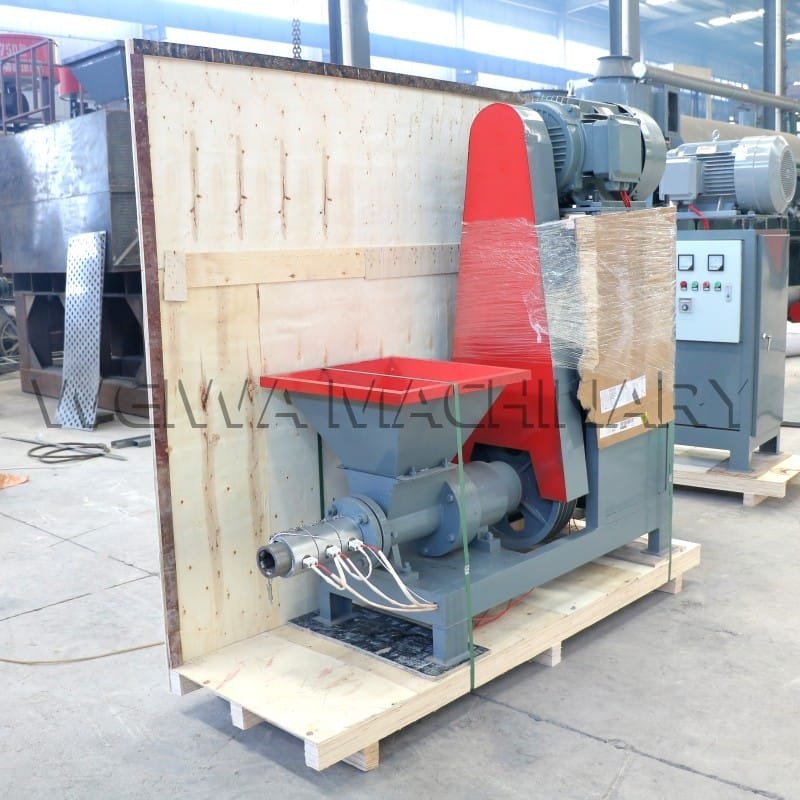
La semana pasada, our factory was filled with excitement as we prepared the final shipment of a complete máquina de extrudio de aserrín production line bound for the Philippines. This order represents another milestone for Weiwa Machinery in expanding efficient biomass energy solutions across Southeast Asia. el cliente, located in a region rich with agricultural resources, required a robust system capable of converting waste wood and sawdust into high-value solid fuel. After weeks of meticulous production and testing, the machines were loaded onto the cargo ship, ready to begin their journey to Manila. This dispatch is not just about transporting machinery; it is about delivering a sustainable solution that transforms local agricultural residues into profitable products. Our team ensured every component, from the grinders to the main extrusora de aserrín, met international quality standards before leaving the factory floor.
The entire production line includes a series of integrated equipment designed to work in harmony. The core of this system is the powerful máquina de briquetas de aserrín, which utilizes high pressure and temperature to compress fine biomass particles into dense, uniform sticks. Alongside the extruder, we included a specialized drying system to ensure the raw material moisture content remains below 12%, a critical factor for successful briquetting. The packaging process followed strict export protocols, utilizing sturdy wooden boxes reinforced with iron frames to withstand the long sea voyage. For clients in the Philippines, receiving machinery in perfect condition is paramount, and our logistics team coordinated closely with the shipping company to guarantee timely arrival. This shipment underscores our commitment to providing reliable, turnkey solutions for biomass processing.
Understanding The Science Behind Sawdust Briquetting Technology
Many people wonder how loose sawdust transforms into hard, combustible charcoal sticks. The process begins with the raw material, typically wood chips, cáscaras de arroz, o cáscaras de coco, which must first be crushed into a powder with a diameter of less than 5mm. Once the material reaches the máquina briquetadora de aserrín, the magic happens through mechanical pressure. Inside the machine, a massive screw propeller pushes the biomass powder forward into a compression chamber. Due to the high friction and pressure generated within this confined space, the temperature rises significantly, reaching levels where the natural lignin in the wood fibers begins to melt. Lignin acts as a natural glue, binding the wood particles together without the need for any chemical additives.
This thermoplastic property of lignin is what allows the extrusora de aserrín to form continuous, hollow-core rods. As the compressed material exits the die head, it cools rapidly, solidifying into a stable shape. The resulting briquettes are not merely compressed dust; they are reformed wood with a density far greater than natural timber. This high density makes the final charcoal product easier to transport and store. Unlike traditional logwood, these briquettes have a consistent shape—often hexagonal or square—which maximizes packing efficiency. Understanding this scientific principle helps Filipino entrepreneurs appreciate why controlling moisture and particle size is essential for operating the máquina de extrudio de aserrín effectively.
Why The Philippines Needs Efficient Sawdust Extruder Solutions?
The Philippine archipelago possesses abundant biomass resources, including vast coconut plantations, rice farms, and furniture manufacturing hubs. Sin embargo, a significant portion of this organic matter is discarded as waste, often burned in open fields, contributing to air pollution. Introducing a modern extrusora de aserrín addresses two critical issues simultaneously: waste management and energy generation. By utilizing materials like coconut husks, paja de arroz, and wood offcuts, businesses can create an alternative fuel source that burns hotter and cleaner than traditional charcoal. The demand for affordable, high-quality charcoal in the Philippines remains consistently high, driven by both household cooking needs and commercial applications.
A properly configured máquina de briquetas de aserrín allows local producers to tap into this market while promoting environmental sustainability. The fuel produced has a calorific value over 20% higher than ordinary wood charcoal, meaning less fuel is needed to achieve the same cooking heat. Además, because the briquettes are made from waste, the production cost is significantly lower than purchasing imported fossil fuels. For many Filipino communities, adopting this technology means creating jobs in rural areas, reducing deforestation pressure, and generating a steady income stream from previously unused materials. The adaptability of the máquina briquetadora de aserrín to handle diverse local feedstocks makes it an ideal investment for the region.
From Raw Dust To Solid Fuel: The Production Workflow
Operating a charcoal production line involves several sequential stages, each crucial to the final product quality. Inicialmente, raw biomass undergoes size reduction in a hammer mill or crusher. This step ensures the material fed into the máquina de extrudio de aserrín is uniformly fine, preventing blockages and ensuring smooth extrusion. Following grinding, the material enters a rotary drum dryer. Moisture control is non-negotiable; if the moisture exceeds 12%, the lignin will not activate properly, resulting in crumbly, low-density briquettes. The dried material then flows into the hopper of the extrusora de aserrín, where it is conveyed into the forming sleeve.
Under intense pressure, the material compacts and extrudes through a die, forming hollow rods typically 50mm to 80mm in diameter. These green sticks, still hot from the process, are cut to length and left to cool naturally. At this stage, they are considered “white coal” or biomass briquettes. To convert them into black charcoal, the briquettes undergo carbonization in a kiln, a process that removes volatile compounds and further increases carbon content. The entire workflow demonstrates the efficiency of an integrated system centered around the máquina de briquetas de aserrín. Each phase is designed to maximize output while minimizing manual labor, making it suitable for medium to large-scale operations in the Philippines.
Technical Specifications And Customization Options
Nuestro máquina briquetadora de aserrín models are engineered for durability and high throughput. Depending on the client’s requirements, we offer different power configurations ranging from 15kW to 90kW, capable of producing 200kg/h to over 1000kg/h. The screw shaft, being the heart of the extrusora de aserrín, is constructed from high-strength alloy steel and treated with a special hardening process to resist abrasion. We understand that raw materials vary greatly between regions; por lo tanto, we customize the compression ratio of the screw based on whether the client uses softwood, madera dura, cáscara de arroz, or coconut shell. This customization ensures optimal performance and extends the service life of wearing parts.
For the Philippine market, we often recommend specific die shapes that cater to local preferences. While some clients prefer the standard hexagonal shape for its anti-rolling properties, others opt for square or pentagonal designs. The diameter selection—typically 50mm, 60mm, or 70mm—depends on the intended use of the final charcoal. Larger diameters burn slower and are preferred for industrial boilers, whereas smaller diameters ignite faster for domestic cooking. Every máquina de extrudio de aserrín leaving our facility undergoes a test run using sample materials provided by the client, ensuring the settings are perfectly tuned before shipment.
Installation And Operational Training In The Philippines
Delivering machinery is only half the battle; ensuring it runs smoothly is the other. Upon arrival in the Philippines, our technical team will guide the client through the installation process remotely, with detailed video tutorials and real-time communication. For larger projects, we can dispatch engineers to assist with on-site setup, though most clients find the machines straightforward to install due to the plug-and-play design philosophy. Operating the máquina de briquetas de aserrín requires minimal training because the control panel features intuitive indicators for temperature and pressure monitoring. Workers quickly learn to identify signs of improper feeding or overheating, allowing them to adjust parameters proactively.
Maintenance routines are also simple. Regular lubrication of the gearbox and periodic inspection of the screw tip are the primary upkeep tasks. Because the extrusora de aserrín operates continuously, establishing a daily maintenance checklist ensures longevity. We provide comprehensive manuals in English, which is widely understood in the Philippines, along with spare parts kits to cover initial wear and tear. Our after-sales support extends beyond the warranty period, ensuring that clients feel confident operating their new biomass production line.
Environmental Impact And Economic Benefits
Adopting a máquina briquetadora de aserrín aligns perfectly with global trends toward renewable energy and circular economy principles. In the Philippines, where electricity costs can be high and access to clean fuel is limited in remote areas, biomass briquettes offer a decentralized energy solution. The combustion of these briquettes produces significantly less smoke and particulate matter compared to burning raw biomass or low-grade charcoal. Since no binders are added during the extrusion process, the ash content remains low, making it suitable for use in restaurants and homes without causing respiratory issues.
Economically, the return on investment for a máquina de extrudio de aserrín is compelling. The cost of raw materials—sawdust, coconut waste, rice husk—is negligible or even free in many agricultural zones. Converting this waste into charcoal multiplies its value several times over. A single production line can generate enough revenue to pay back the initial machinery investment within months, depending on local market prices. Además, the business creates upstream jobs in material collection and downstream jobs in packaging and distribution. For Filipino entrepreneurs looking to diversify their agricultural operations, integrating a extrusora de aserrín into their existing workflow presents a low-risk, high-reward opportunity.
Global Reach And Customer Trust In Biomass Machinery
With customers in over 130 países, Weiwa Machinery has established a reputation for reliability and innovation in the biomass equipment sector. Our experience with diverse climates and raw materials—from the humid conditions of Indonesia to the dry climate of Egypt—has enabled us to refine our máquina de briquetas de aserrín designs for maximum resilience. The Philippines represents a key growth market where we have already successfully installed multiple lines. Feedback from previous clients highlights the robustness of our machines and the consistency of the briquettes produced. We continuously gather data from field operations to improve our technology, ensuring that each new generation of máquina briquetadora de aserrín outperforms the last.
Trust is built on transparency and results. We encourage potential buyers in the Philippines to visit our factory or speak with existing clients in neighboring countries like Vietnam, Malasia, or Indonesia. Seeing the machine in operation and understanding the production costs firsthand provides invaluable confidence. Our logistics network is optimized for Southeast Asian routes, ensuring competitive shipping rates and reliable delivery schedules. Whether you are a seasoned charcoal producer or a newcomer exploring biomass opportunities, partnering with an experienced manufacturer mitigates risks associated with importing heavy industrial equipment.
Acerca de Maquinaria de Weiwa
Weiwa Machinery is a leading manufacturer specializing in biomass briquetting and charcoal production equipment. With years of expertise in mechanical engineering and environmental technology, we provide comprehensive solutions ranging from single machines to complete turnkey production plants. Our product portfolio includes extrusoras de aserrín, secadores rotativos, hornos de carbonización, and auxiliary equipment designed to process various biomass wastes into high-density solid fuels. Serving over 2 million customers worldwide, we pride ourselves on combining advanced technology with practical, user-friendly designs. Our mission is to promote sustainable energy utilization by transforming agricultural and forestry residues into valuable resources. For inquiries about briquetas de aserrín or customized production lines for the Philippine market, please contact us directly.
Contact Information:
Móvil: +8613838093177
Whatsapp: +8613838093177
Correo electrónico: info@cjlmachinegroup.com
The successful shipment to the Philippines marks another chapter in our global journey, proving that sustainable technology knows no borders. We look forward to seeing the positive impact this máquina de extrudio de aserrín will bring to local communities and industries across the archipelago.


 Veloz
Veloz

 +8615937143060
