


India’s Growing Demand for Making Charcoal Balls in India
India generates massive volumes of agricultural residue every year. Cáscara de arroz, cáscara de coco, serrín, groundnut shell, tallo de algodón, sugarcane bagasse and forestry waste are available in almost every state. Traditionally much of this biomass is burned openly, dumped, or used in very low efficiency furnaces. Al mismo tiempo, urban and peri-urban demand for clean burning BBQ charcoal, hookah lounge fuel, hotel tandoor briquettes and industrial heating blocks is rising. Making charcoal balls in India converts low value powder and dust into a uniform, high density, long burning product that can be sold by weight, by bag, or by contract to distributors.
Government clean cooking programs, rural energy access schemes, and the simple economics of replacing imported LPG cylinders with locally pressed charcoal balls all push the same direction. A small Indian operator who previously bought finished charcoal from a wholesaler can now crush local waste, carbonize it, mix with binder, and press it into branded pillow or oval balls. The margin sits in the pressing step. That is why searches for ball charcoal briquettes machine and charcoal ball press machine inside India have grown steadily over the past three years.
Weiwa has supplied equipment to more than 130 países. Among them, the South Asian cluster including India, Sri Lanka, Nepal, Bangladesh and Pakistan shows the fastest repeat order rate for roller type briquette presses. Indian buyers usually start with a 1 ton per hour line, then scale to 2 o 3 tph after six months once local retailers accept their ball shape and moisture level.
What a Máquina de briquetas de carbón de pelota Actually Does?
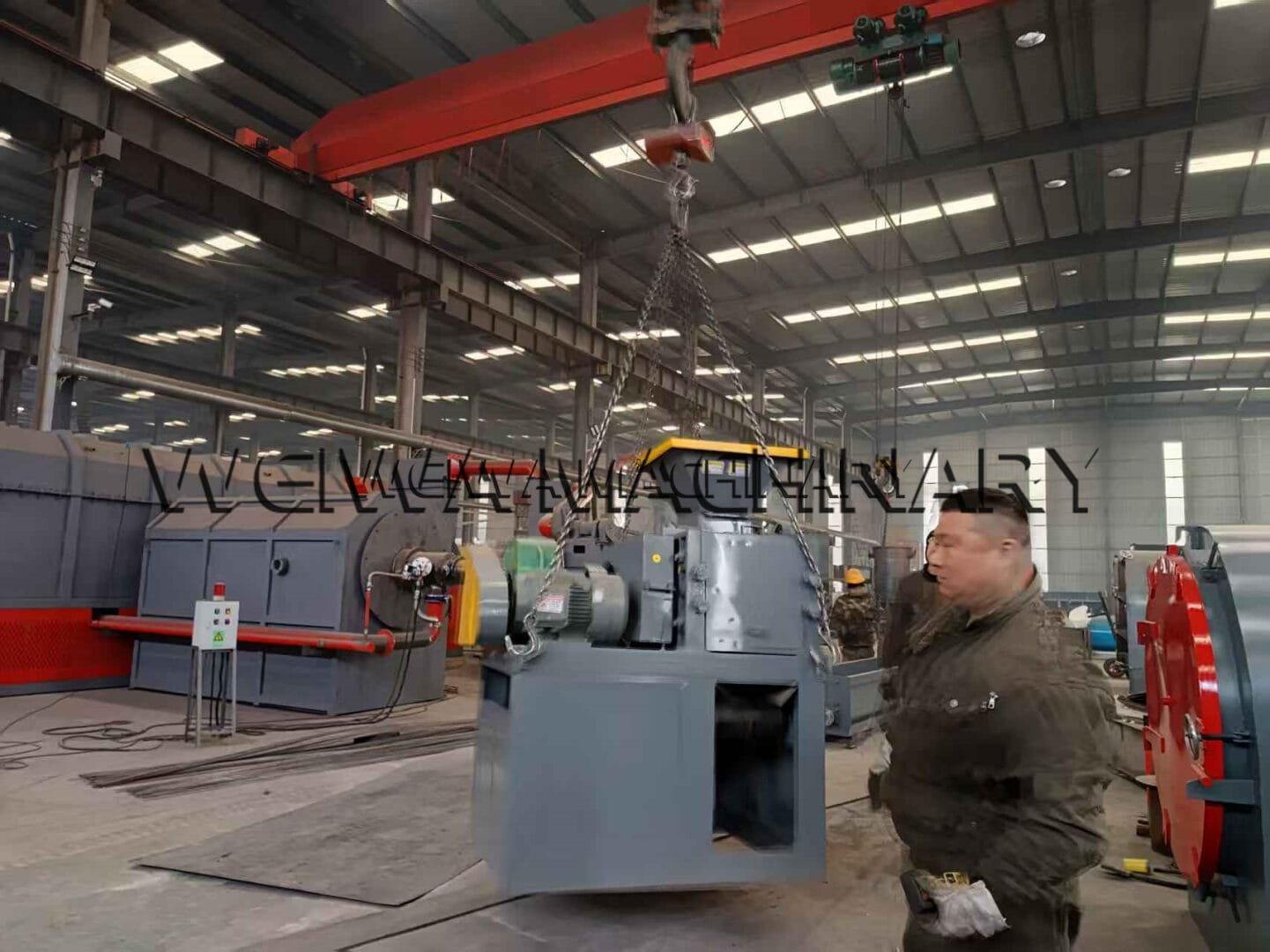
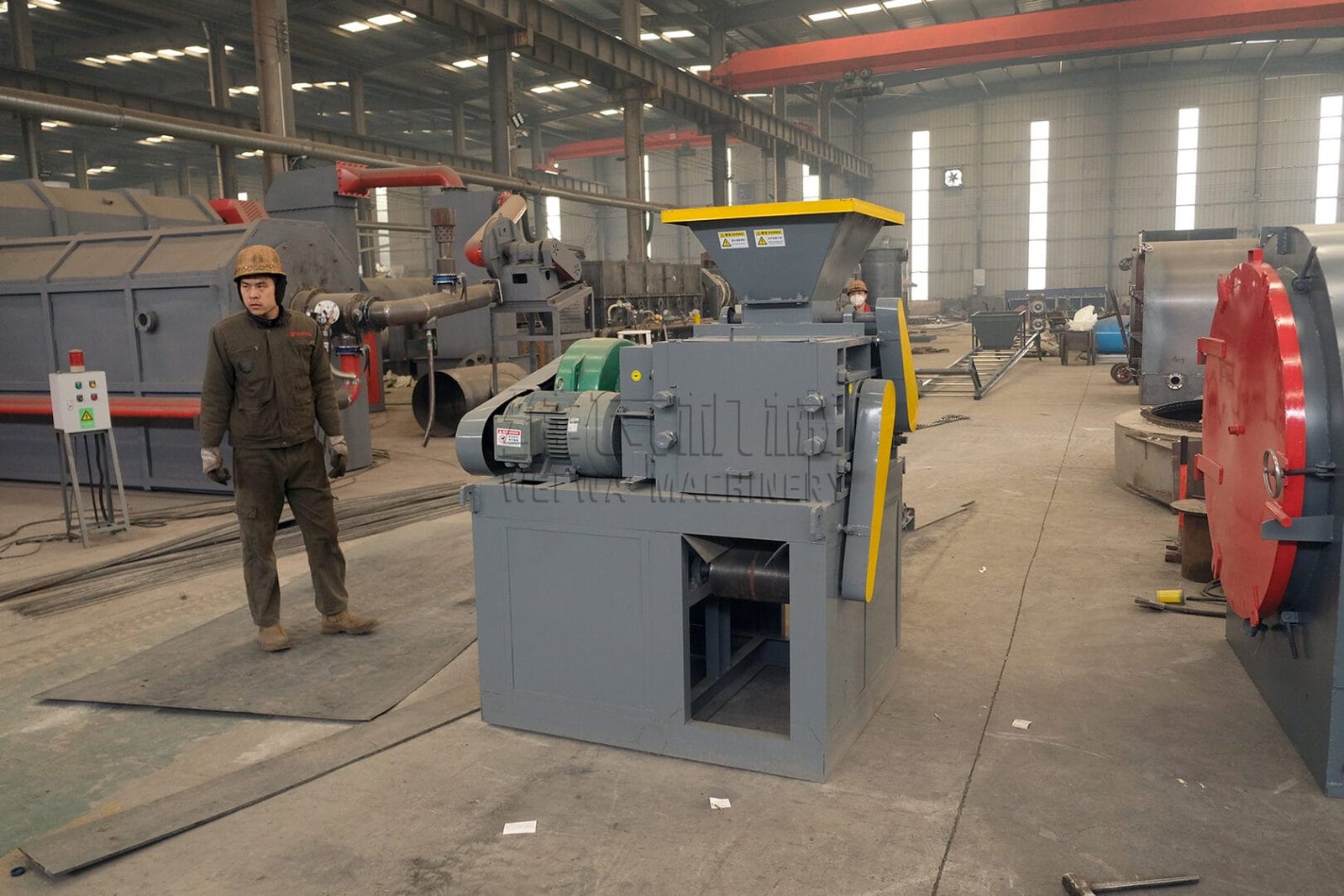
A ball charcoal briquettes machine is a roller pressing type briquette press. It is not an extruder and not a hydraulic single stroke press, although we also manufacture those for other shapes. In the roller press, two counter rotating alloy rollers carry matching molds. Charcoal powder pre mixed with water and binder falls into the feeding hopper, is forced into the roller pockets, and is squeezed at high pressure into a solid ball. Pressure typically ranges between 15 y 30 MPa depending on recipe and moisture. The output ball has low porosity, high drop resistance, and uniform size.
Roller Press Principle Behind the Charcoal Ball Press Machine
The core of any charcoal ball press machine is the roller pair. Weiwa uses 65Mn or 9Cr2Mo forged rollers, surface hardened, pocket machined by CNC. When the gap between rollers is set correctly and the feed screw maintains steady material level, every pocket fills, every ball compacts, and every discharge falls cleanly without tailing powder. If the powder is too dry, balls crack. If too wet, they stick to the roller. The machine itself does not decide recipe; your raw material does. That is why our sales engineer asks for a 1 kg sample before confirming mold depth.
Indian clients often assume the machine alone makes the business. In reality the ball charcoal briquettes machine is only one node in a chain. The chain starts with carbonization and ends with drying and packing. But because the press determines shape, densidad, and brand identity, it is the node most buyers remember.
Common Briquette Shapes for Indian BBQ and Shisha Market
With changeable rollers, the same charcoal briquette machine can produce oval balls, forma de huevo, almohada, round ball, square cube, or custom logo embossed balls. For North Indian tandoor supply, 40 a 50 mm pillow shape is common. For Mumbai hookah lounges, 25 a 33 mm round charcoal balls with low ash are preferred. For industrial smelting or foundry use, 60 a 80 mm oval or square blocks tolerate handling better. Weiwa stocks standard molds and also cuts custom molds from client CAD files within 12 working days.
Full Charcoal Briquette Machine Production Line Explained
When Indian clients ask for making charcoal balls in India at commercial scale, we never ship only a press. A complete charcoal briquette machine production line from Weiwa contains crushing, mixing, conveying, pressing, el secado, and optional screening and packing. Below is the standard flow we drew for the recent Indian container order.
Crushing and Mixing Stage
Charcoal chunks from the carbonization furnace are first fed to a hammer crusher or double stage crusher. Output size is controlled under 3 mm. Fine powder matters because coarse particles create weak balls and fast burnout. After crushing, the powder enters a twin shaft paddle mixer or horizontal ribbon mixer together with measured water and binder. Starch, cassava flour, melaza, lime, or proprietary gum can be used. Indian clients with cheap tapioca starch usually choose starch binder at 4 a 6 percent. The mixer runs eight to twelve minutes until the mass feels like damp coffee grounds. Conveyor transfers the mix to a buffer silo above the press.
Ball Pressing and Drying Stage
From the silo, the mix feeds the ball charcoal briquettes machine. Formed balls drop onto a mesh belt dryer. We recommend a multi layer mesh belt dryer heated by diesel, gas, steam coil, or waste heat from carbonization. Final moisture drops from around 18 percent after pressing to below 6 percent. At that point the balls are black, ring hard, and ready for cooling and bagging. A small Indian line uses 8 meter single layer dryer; a 2 tph line uses 18 a 24 meter three layer dryer. The whole line runs with one electric panel and three to five workers per shift.
Many beginners forget the dryer budget. A charcoal ball press machine can make 1 ton of wet balls per hour, but if those balls are not dried the same day, they soften, deform, and rot in the monsoon. So Weiwa always sizes the dryer equal to or larger than press capacity, never smaller.
Why Indian Buyers Prefer a Turnkey Charcoal Ball Press Machine Line?
Indian entrepreneurs are practical. They do not want to call a Chinese roller supplier, an Indian mixer fabricator, and a local dryer welder, then argue about flange size for three weeks. They want one responsible party. Weiwa acts as that party. We supply the full charcoal briquette machine line, provide the GA drawing, mark foundation holes, list cable sizes, and assign one after sales engineer to the WhatsApp group. When the Indian client receives the container, our video call guides the crane unloading, base leveling, belt alignment, and first trial with local charcoal powder.
Turnkey also means spare parts compatibility. Rollers, bearings, couplings, mesh belts, and reducer seals are standard grades available in India or stocked in our warehouse for express air shipment. We do not use obscure Japanese servo motors that take 60 days to import. We use CE marked motors with Indian voltage class 415V/50Hz and English nameplates.
Real Case: Weiwa Factory Dispatch to an Indian Client
In the recent dispatch, the client ordered a 1.2 tph ball charcoal briquettes machine line for a suburb of Coimbatore. Raw material was coconut shell charcoal purchased from Kerala plus sawdust charcoal from a furniture cluster. Target product was 28 mm round charcoal balls for hookah cafes in Chennai and Bangalore. We configured a 600 mm double roller press, 800 mm hammer crusher, 500 kg twin shaft mixer, 12 meter two layer dryer, and a 6 meter cooling conveyor. Before payment, we ran a 200 kg trial using sent sample charcoal. Bulk density reached 0.92 g/cm3, drop test from 1 meter gave zero breakage in 50 bolas, and burning time in a standard shisha bowl reached 85 minutos. The client approved, paid balance, and the line left Qingdao port in one 40 foot high cube container.
Making charcoal balls in India for the cafe market is not about maximum output. It is about consistent diameter, low spark, and white ash. The roller pocket finish decides spark level. Weiwa polishes pockets to Ra 1.6 and chamfers the inlet so powder does not shear. That detail is why Indian shisha importers reject cheap presses after one batch.
How to Choose Capacity and Roller Molds for India?
Choose press size by finished ball demand, not by ambition. A 1 tph ball charcoal briquettes machine line needs roughly 1.3 tons of mixed material per hour, 25 kW connected power, y 150 square meters of covered shed plus 200 square meters open yard for drying and storage. If your monthly plan is 60 tons of balls, choose 1 tph and run 20 days double shift. If plan is 200 tons per month, choose 2 tph. Do not buy 3 tph on day one unless you already have distributor contracts.
Mold selection depends on sales channel. For retail pouches in Delhi supermarkets, 35 a 40 mm pillow shape with Weiwa logo emboss sells well. For export to Gulf shisha market via Mumbai port, 25 mm round with center dimple is the Dubai standard. For industrial cupola or annealing furnace use in Ludhiana, 70 mm oval with 8 percent binder survives stacking. Tell us your buyer, not just your raw material, and we select pocket geometry accordingly.
Remember a charcoal ball press machine is a wear machine. Roller life under Indian coconut shell charcoal is typically 800 a 1200 working hours before pocket refresh. Weiwa sends one spare roller pair in the container and quotes rebuild service separately. Budget for that from month four onward.
Why Choose Weiwa Machinery for Your Charcoal Briquette Machine Project?
Weiwa Machinery has more than thirty years of working experience in briquetting and pressing equipment. We are not a trading company that rebrands someone else’s press. Our own workshop in Henan handles plate cutting, roller machining, press assembly, electrical wiring, and trial run. Our after sales team speaks English, responds on WhatsApp within one business day, and can read your local voltage, humidity, and dust conditions into the design.
We provide customization service. If your site is 18 meters long and 7 meters wide, we redraw the line to fit, not the other way around. We supply design drawings, foundation plans, pipe routing, and 3D layout before production. We welcome Indian clients to visit our factory, inspect the ball charcoal briquettes machine running with charcoal powder, and witness the dryer outlet moisture test. After shipment we guide installation by video and, when needed, send an engineer to Chennai, Ahmedabad, or Kolkata for seven to ten days.
Our machines are already running in Indonesia, India, Malasia, Laos, Myanmar, Tailandia, Vietnam, Filipinas, Pakistán, Sri Lanka, Líbano, Georgia, Pavo, Polonia, Czech Republic, Mongolia, Corea del Sur, Rumania, Egipto, Sudán, Tunisia, Argelia, Etiopía, Tanzania, Equatorial Guinea, Zambia, México, South Africa and more. Over two million end users worldwide have used briquettes made on Weiwa presses. That track record is why Indian buyers come back for a second line.
Contact Weiwa Machine for Quotation and Factory Layout
If you are evaluating making charcoal balls in India, send us three things: your monthly target tonnage, your main raw material name and photo, and your city. We reply with a recommended charcoal ball press machine model, full line quotation in USD, container count, installation timeline, and a draft factory layout drawing. We do not charge for the first layout discussion.
Reach Weiwa Machinery directly:
Móvil / WhatsApp: +8613838093177
Correo electrónico: info@cjlmachinegroup.com
Whether you need a single ball charcoal briquettes machine or a complete charcoal briquette machine production line with dryer and civil works plan, Weiwa is ready to help you press your first commercial charcoal ball in India.


 Veloz
Veloz

 +8615937143060
