


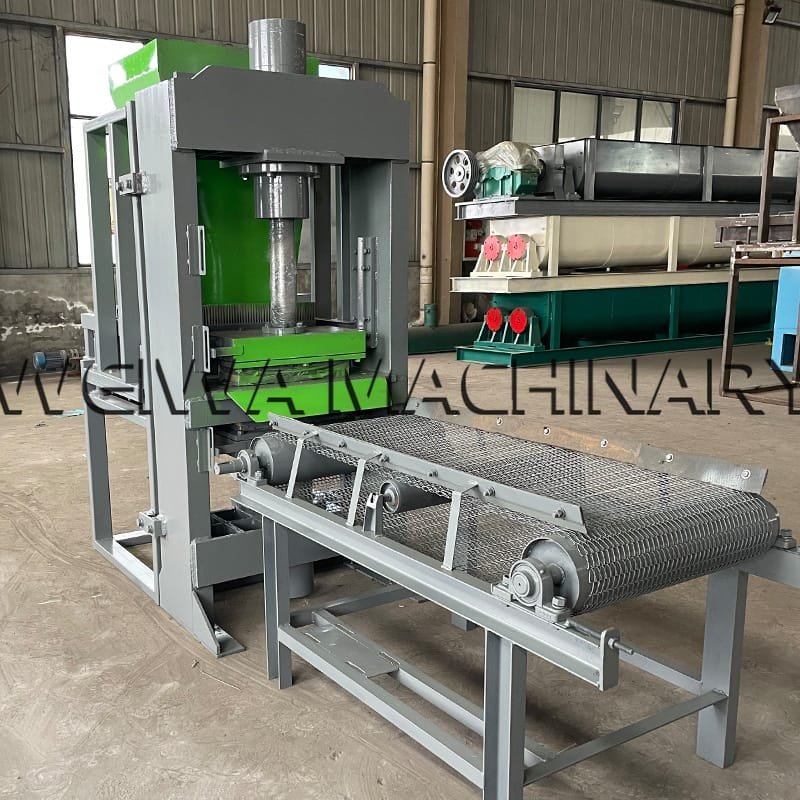
The global transition toward sustainable energy has placed coconut shell charcoal at the forefront of the premium barbecue market. For producers in Sri Lanka, the abundance of raw coconut shells presents a massive economic opportunity. Namun, the difference between a low-grade byproduct and a high-value export lies in the technology used for processing. Di mesin Weiwa, we have observed a significant trend: professional Sri Lankan producers are moving away from traditional mechanical extruders in favor of the mesin hidrolik. This shift is driven by the need for a arang barbekyu product that possesses superior density, a finer finish, and more reliable combustion characteristics.
The Strategic Advantage of Coconut Shells in Sri Lanka
Sri Lanka is uniquely positioned as a global hub for coconut-based products. The shells produced here have an naturally high carbon content and low ash levels, making them the ideal raw material for high-end arang barbekyu. When these shells are carbonized, they form a high-calorie charcoal powder that requires a sophisticated binding and pressing process to reach its full potential. The market demand in Europe and the Middle East for “clean-burning” fuel means that Sri Lankan producers cannot afford to produce brittle or low-density briquettes. Utilizing a high-pressure mesin hidrolik is no longer just an option; it is a prerequisite for entering the premium export market where consistency is the primary metric for success.
Why Raw Material Quality Matters for Export?
In the international trade of arang cangkang kelapa, “kualitas” is defined by the carbon-to-ash ratio and the physical integrity of the briquette. If the charcoal is pressed using inferior methods, it will often crumble during shipping or produce excessive smoke when lit. By using a mesin hidrolik, the carbonized powder is subjected to a slow, consistent force that allows the binder to distribute evenly. This results in a arang barbekyu that maintains its shape even under the high temperatures of professional grills. For the Sri Lankan exporter, this translates to fewer customer complaints, better brand reputation, and the ability to command a higher price point per ton.
Engineering Excellence in Hydraulic Press Design
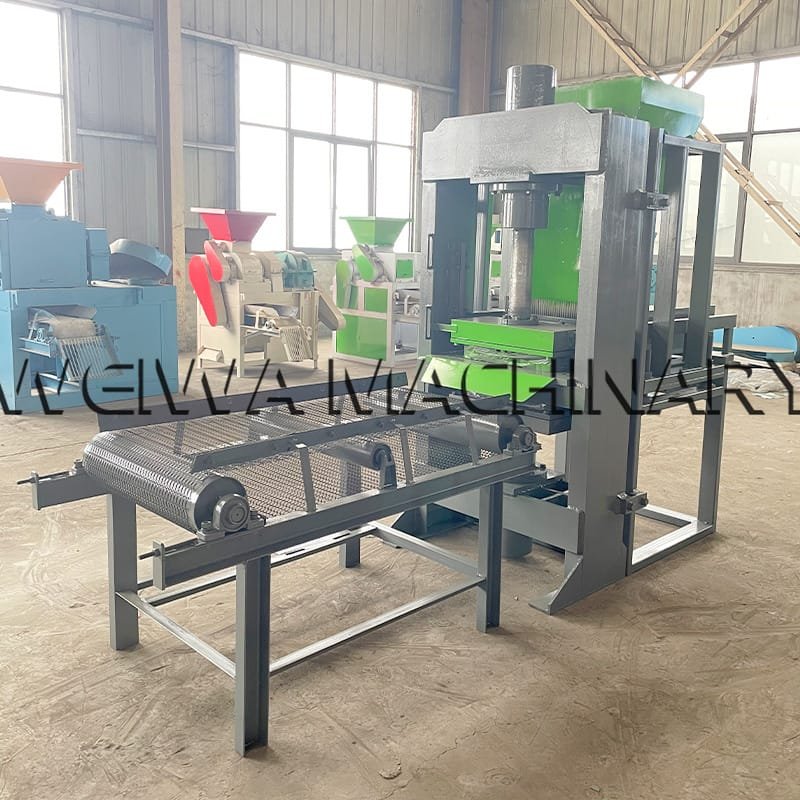
The technical core of the Weiwa Machinery mesin hidrolik is its precision-engineered hydraulic station. Unlike mechanical screw presses that rely on friction and heat to form a shape, our hydraulic system uses pure fluid power to compress the charcoal powder. This design is inherently more stable. The hydraulic cylinders are controlled by a PLC system, allowing the operator to adjust the pressure based on the specific moisture content of the coconut shell powder. This level of control ensures that every single piece of arang barbekyu produced in a Sri Lankan facility meets the exact same specifications, regardless of environmental fluctuations.
Hidrolik vs.. Mechanical Pressing Technology
When comparing technologies, the most striking difference is the wear and tear on the machinery. Mechanical screw extruders often suffer from rapid degradation because the abrasive nature of coconut shell carbon quickly wears down the screw and sleeve. This leads to a decline in pressure and, consequently, a decline in charcoal density over time. Sebaliknya, itu mesin hidrolik from Weiwa Machinery operates with a vertical or horizontal stroke that minimizes internal friction. This not only extends the lifespan of the molds but also ensures that the arang barbekyu remains consistent from the first hour of production to the last. For a long-term operation in Sri Lanka, the reduced maintenance costs of a hydraulic system significantly improve the overall return on investment.
Achieving a Finer and Denser Output with Hydraulic Force
Itu “finer and denser” requirement is where the mesin hidrolik truly excels. Because the pressure is applied in a controlled, static manner rather than a high-speed rotating motion, the charcoal particles are forced together without being “sheared.” This creates a remarkably smooth surface finish that is visually appealing and physically robust. The density achieved by our hydraulic press can reach up to 1.3g/cm³ or higher, which is significantly more than traditional methods. In the hands of a Sri Lankan producer, this means the arang cangkang kelapa becomes a “heavy” product—a sign of quality that distributors look for when testing for moisture resistance and structural durability.
The Relationship Between Density and Combustion Effects
The ultimate test of arang barbekyu is how it behaves in the grill. There is a direct scientific correlation between the density of the briquette and its combustion efficiency. A denser briquette, produced by a high-tonnage mesin hidrolik, has a much lower rate of oxygen penetration during the initial ignition phase. This might sound counterintuitive, but it actually allows the charcoal to burn more slowly and at a more consistent temperature. Ini “controlled burn” is what professional chefs require. By eliminating the air pockets that are common in low-pressure briquettes, our hydraulic design ensures that the heat is released evenly, providing a steady cooking environment for several hours without the need for constant refueling.
Eliminating Sparking and Increasing Burn Time
One of the most common complaints about low-quality charcoal is “sparking,” which occurs when air pockets or uncarbonized matter inside the briquette expand rapidly under heat. The massive pressure exerted by the Weiwa mesin hidrolik removes these internal voids entirely. Sebagai akibat, itu arang barbekyu produced is exceptionally safe and “quiet” on the grill. Lebih-lebih lagi, the high density acts as a thermal reservoir; once the briquette is lit, it retains heat for a much longer duration. For the end-user, this means a 1kg bag of high-density arang cangkang kelapa will often outlast 2kg of standard wood charcoal, making it the more economical and eco-friendly choice for the modern consumer.
Optimizing the Production Line for Maximum ROI
Di mesin Weiwa, we understand that the mesin hidrolik is only one part of a successful business. To truly optimize a charcoal plant in Sri Lanka, the entire production flow—from carbonization and grinding to mixing and drying—must be perfectly synchronized. Our technical team specializes in site planning and the design of customized drawings that reduce labor costs and maximize throughput. We focus on creating a “closed-loop” system where the fine output of the hydraulic press is moved seamlessly to the drying room, ensuring that the structural integrity of the arang barbekyu is preserved throughout the curing process.
Tentang Mesin Weiwa
Weiwa Machinery was established in 1990 and has over 30 years of working experience in the biomass and charcoal equipment industry. Over the past three decades, we have built a reputation for engineering excellence and customer-centric service. Our company is supported by a professional after-sales team and a dedicated technical team that can handle everything from equipment installation to operator training. We understand that every project is unique, which is why we provide customized services, including the design of specialized drawings and comprehensive site planning to suit your local conditions in Sri Lanka.
Whether you are looking to produce premium arang barbekyu or high-quality shisha fuel, Mesin Weiwa adalah mitra tepercaya Anda. We invite you to contact us for professional inquiries, technical consultations, or to request a customized quote for your production line.
Contact Information:
- Massa: +8613838093177
- Whatsapp: +8613838093177
- E-mail: info@cjlmachineGroup.com


 Wechat wechat

 +8615937143060
