


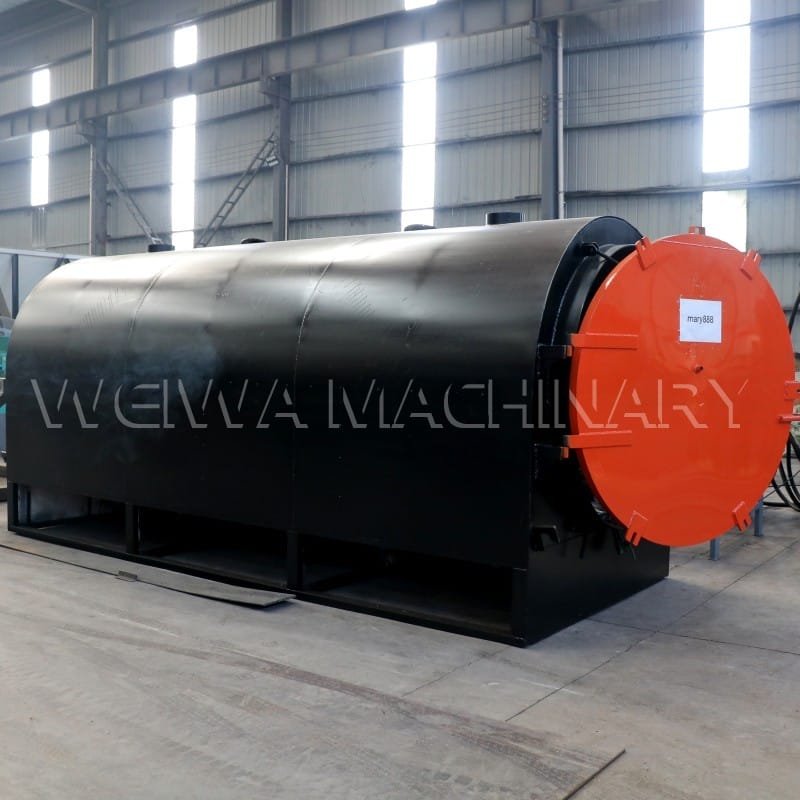
This shipment is not just a logistics story. It is also a market story. Kenya’s charcoal sector is changing. Urban cooking, roadside grilling, bakeries, and small metal workshops still rely on solid fuel, but county governments, environmental officers, and serious entrepreneurs are no longer satisfied with open-earth burning. A horizontal carbonization furnace in Kenya is becoming the practical bridge between traditional charcoal making and a controlled, reusable-gas, higher-yield production model.
Why Kenya Is Ready for the Tungku karbonisasi horizontal?
Kenya consumes charcoal at a scale that surprises many outside observers. Nairobi, Mombasa, Kisumu, Nakuru, Eldoret, and countless rural towns all depend on charcoal for daily energy. Traditional earth-mound kilns and brick kilns still dominate the informal supply chain, but they share the same problems: wasted wood, heavy smoke, long carbonization cycles, inconsistent quality, and yield numbers that rise or fall depending on rainfall, wind, and operator experience.
A horizontal carbonization furnace changes that equation because it carbonizes biomass inside a sealed barrel chamber, recycles its own pyrolysis gas, and cools the batch in a controlled way. For a Kenya buyer who previously burned one ton of wood to get two hundred kilograms of marketable charcoal, moving to a charcoal making machine for Kenya that recovers tar and condensate is not a luxury purchase. It is a margin decision.
Kenya’s Biomass Waste Is the Hidden Feedstock Advantage
Kenya is not short of carbonizable material. Coconut shell from the coast, maize cob and rice husk from irrigation belts, coffee husk from the central highlands, sawdust from furniture clusters, bamboo offcuts, and croton nut shell from arid counties all have carbonization potential. The key is moisture control. Most Weiwa clients are advised to keep feedstock under thirty percent moisture before loading.
Unlike a continuous rotary kiln that prefers uniform small chips, the horizontal barrel chamber accepts logs up to a workable length, basket-loaded briquettes, Kerang kelapa, and mixed shell loads without pre-crushing everything. That flexibility matters in Kenya, where raw-material shape changes by season and by county. A charcoal kiln for Kenya must handle reality, not just laboratory feedstock.
Policy Pressure Is Pushing Earth Kilns Out
Forest logging restrictions, county-level air-quality concerns, and growing pressure on open burning are pushing producers toward enclosed equipment. A charcoal making machine for Kenya that can demonstrate reduced smoke and tar recovery on site has a better chance of passing inspection and winning cooperative or NGO-funded projects. Weiwa designed the horizontal carbonization furnace with this compliance path in mind, not only for private resellers but also for groups that must answer to local authorities.
What a Horizontal Carbonization Furnace Actually Does?
A horizontal carbonization furnace is a barrel-style chamber mounted on rails, enabling easy loading via carts and gradual carbonization under indirect heating. Its compact footprint and advanced gas-purification system allow it to recycle tar and condensates, feeding clean combustible gas back into the burners to sustain internal temperatures near 600 ° C., thus reducing fuel consumption and smoke.
Designed for wood logs, bambu, Kerang kelapa, briket serbuk gergaji, dan residu pertanian, this model excels in balanced heat distribution and automation, offering low maintenance and high charcoal yields for small- to medium-scale producers.
Indirect Heating Instead of Burning the Wood Directly
The furnace does not set the raw wood on fire. It heats the chamber from outside while the biomass inside breaks down anaerobically. Volatile gases escape, pass through a condensation and purification stage, drop their tar, and the cleaned gas returns to the burner as supplementary fuel. In the Kenya pre-shipment trial, external firewood use dropped by roughly thirty percent after the second batch because the furnace began eating its own gas.
For any horizontal carbonization furnace in Kenya, that self-sustaining cycle is the real economic feature. Firewood purchase price eats profit. Diesel generator rates punish inefficiency. Labor turnover punishes complicated touchscreen menus. The horizontal model attacks all three problems at once.
Gas Recycling and Tar Recovery in Plain Language
When wood temperature climbs past 180 ° C., volatiles leave the biomass. Those volatiles travel through a condenser, where heavier tar and condensate separate. The lighter cleaned gas returns to the burner manifold. The tar drum collects brown condensate that some buyers later test for wood-preservative or adhesive applications.
This is why a modern charcoal making machine for Kenya is different from a drum with a hole in the side. The horizontal carbonization furnace manages gas, panas, and cooling instead of simply hoping the pile chars evenly underground.
Inside the Weiwa Shipment Headed to Kenya
The container we sent contained more than a single steel barrel. The main horizontal barrel arrived with refractory lining, the rail track and loading cart were crated separately, the combustion chamber carried dual burners, the gas purification tower shipped with the tar collection drum attached, and the water-cooling jacket pipe set was bundled to avoid bending during ocean transport.
The PLC control box included temperature sensors, a thermostat dial, a thermocouple readout, and three indicator lamps. Weiwa deliberately avoided a deep touchscreen menu jungle because rural Kenya yards often see voltage drops at night and labor turnover remains high. Mechanical-plus-digital control logic means a worker can learn the machine in an afternoon.

Pre-Shipment Trial Before the Container Was Sealed
Before loading, our engineer ran a no-load heating test. The burner reached 320 °C in 38 minutes using diesel, then switched to recycled gas and held 590 ke 610 °C for two hours. No flameout. No gauge drift. We shared the video with the Kenya buyer on WhatsApp.
The buyer replied in mixed English and Swahili, confirming the Mombasa foundation was ready and the inland truck was booked. Documentation included the commercial invoice, packing list, CE and ISO references, HS code 8417809090, wiring diagram, foundation drawing, and a daily log sheet.
How the Furnace Was Packed for East Africa?
The barrel chamber was sandblasted, coated with high-temperature paint, wrapped in anti-rust film, then anchored into a 20-foot container with steel cables. The door faced the container rear. Gas pipes were crated separately. Spare gaskets, pengukur tekanan, termokopel, and a Swahili-labeled fault-light glossary went into one small crate so the client would not wait for a full container reload when a minor part failed.
That last detail matters more than it sounds. Spare-parts availability is the quiet killer of imported machinery in Africa. Weiwa keeps barrel seals, pengukur tekanan, and burner sets in stock for the horizontal carbonization furnace line so a Mombasa or Nairobi buyer can receive common parts in five to nine days rather than waiting months.
Kenya Field Reality: Why the Horizontal Model Wins
Kenya buyers often compare three machine families: the hoisting carbonization furnace, the continuous carbonization plant, and the horizontal carbonization furnace. Each has a place. The hoisting model lifts inner pots vertically and suits tight-height workshops. The continuous model suits sawdust and rice husk at scale. The horizontal model sits between them: batch style, rail-cart loading, lower height than vertical pots, bigger door than a rotary kiln, and simpler control than a fully automatic line.
For a Kenya client doing two to four batches per day with three laborers, the horizontal unit is usually the safest first charcoal making machine.
Kekuatan, Labor, and Maintenance in Rural Kenya
Rural Kenya yards often see voltage drop at night. The furnace control box needs stable 380 V or a voltage stabilizer. Labor is available but turnover is real, so Weiwa kept the control language physical: a dial, a readout, three lamps. No hidden submenus.
Maintenance is also simple. Gasket inspection every 40 cycles. Tar tank drain every 5 cycles. Burner nozzle cleaning every 10 cycles. The client trained two workers in one afternoon because the steps are physical, not software skills. A horizontal carbonization furnace for Kenya has to survive dust, rain, uneven power, and inexperienced operators during the first month.
Capacity Should Match Real Biomass Supply
One Kenya client first asked for a 3-ton-per-day model. We talked him down to a 1.2-ton barrel because his weekly wood truck brought eight to nine tons of split logs, not twenty-one. A 3-ton furnace sitting half empty every cycle loses heat through unused steel volume.
For a startup in Kisumu or Nakuru, one 1.2-ton horizontal carbonization furnace plus a small briquette press is usually the sane first step. Matching barrel volume to actual feed avoids false economies and keeps fuel bills manageable.
Charcoal Quality Kenya Buyers Can Actually Sell
Yield is only half the story. Charcoal grade decides the resale price. In the Weiwa trial run, mixed hardwood cut into 40 ke 60 centimeter lengths with average moisture 11.8 percent produced 680 kilograms of charcoal from 2,050 kilograms of green wood. That is 33.1 percent yield by weight, inside the expected 30 ke 38 percent band for dry hardwood.
The charcoal had a uniform black surface, no white unburned spots, and rang when struck. A local laboratory slice showed fixed carbon around 82 persen, ash under 4 persen, and moisture under 5 percent after shed cooling. For urban sack sellers, that grade lights faster and burns longer.
Smoke Complaints Drop With Enclosed Carbonization
During the holding phase, the chimney released faint heat shimmer with almost no black smoke. Neighbors thirty meters away reported no irritation. The tar tank collected 6.5 liters of brown condensate in one cycle.
In a Kenya setting, fewer smoke complaints can mean fewer county-council fines. A charcoal kiln for Kenya is not only bought for output. It is bought for peace with the surrounding community.
Batch Time Versus Traditional Mound Kilns
Traditional mound kilns often need seven to ten days, depend on weather, and suffer from air leaks that turn good wood into ash. The Weiwa horizontal cycle ran like this:
Ignition to 200 °C took 42 menit. From 200 ke 300 ° C., gas began flowing and the tar tank filled with condensate. Pada 300 °C the operator opened the gas return valve. From 300 ke 580 °C took three hours and twenty minutes. The holding phase at 590 ke 605 °C lasted ninety minutes. Door-closed cool-down took five hours. Total cycle from loading to unloading was ten hours and forty minutes.
Compared with earth kilns, the horizontal carbonization furnace compresses production time by an order of magnitude while keeping quality repeatable.
Horizontal Carbonization Furnace vs Charcoal Kiln for Kenya
Many Kenya inquiries ask for a charcoal making machine for Kenya as if it were one SKU. It is not. The right choice depends on raw-material shape, land slope, power reliability, labor skill, and whether the buyer wants batch or continuous operation.
A charcoal kiln for Kenya built from an old oil drum may look cheap. But drum modifications often leak gas, warp after a few burns, and give unsafe door seals. The Weiwa horizontal carbonization furnace uses refractory lining, rail-supported barrel movement, controlled gas return, and a tar recovery path that a homemade drum cannot match.
When a Horizontal Furnace Is the Wrong Choice?
The horizontal model is not magic. If a buyer has unlimited uniform sawdust, a continuous plant may fit better. If a buyer has a very narrow urban plot with low crane access, a hoisting furnace may fit better. If a buyer expects zero labor and zero maintenance, no machine will save the project.
Weiwa does not push the most expensive machine on day one. The horizontal carbonization furnace is recommended because it matches the real Kenyan starting point: mixed biomass, limited capital, available labor, and a need for cleaner charcoal.
Scaling Path After the First Furnace
The model also scales. A producer can start with one horizontal carbonization furnace doing three batches a day, then add a second barrel sharing the same purification tower. When volume passes two tons of charcoal per day, Weiwa upgrades the client to a continuous carbonization furnace and keeps the first horizontal unit as backup or for odd-shaped logs.
That upgrade path is why repeat orders from Kenya, Tanzania, and Uganda keep arriving. The machine grows with the business instead of stranding the buyer in a too-small or too-complex system.
Kenya Market Segments That Benefit Most
The horizontal carbonization furnace in Kenya is not only for one type of buyer. Coconut-shell traders along the coast can convert waste shell into barbecue charcoal. Coffee and maize cooperatives in the highlands can turn husks and cobs into biochar or fuel charcoal. Women-led enterprise groups in Kisumu can run batch production with three workers. Ranches dealing with invasive Prosopis juliflora can carbonize a problematic shrub into sellable product.
Each segment has different feedstock, but all of them value the same things: low smoke, fair price, easy fix.
Coastal Coconut Shell Charcoal Business
Kenya’s coast produces coconut shell that often goes unused or is burned openly. A horizontal carbonization furnace converts that shell into high-density charcoal for grilling and hookah markets. Because the barrel handles shell loads well, coastal buyers do not need expensive pre-grinding lines.
Highland Agri-Waste Carbonization
In central Kenya, coffee husk and maize cob are abundant after harvest. Dried properly, both materials carbonize into useful charcoal or biochar. Biochar can return to soil as amendment, while charcoal can enter the cooking-fuel market. The horizontal furnace gives cooperatives a batch system that does not require a chemical engineer on site.
Inland Urban Charcoal Resellers
Nakuru, Eldoret, and Nairobi resellers care about sack consistency. Buyers want charcoal that lights quickly, breaks less during transport, dan terbakar lebih lama. Uniform barrel carbonization delivers that consistency far better than mound kilns, where one pile can contain both over-burned ash and under-carbonized wood.
Common Kenya Buyer Questions Before Ordering
Most Kenya inquiries follow the same pattern. The buyer wants to know whether the machine will arrive, whether local workers can run it, whether spare parts will come, and whether the charcoal will sell at a premium.
Will the Furnace Survive a Rural Yard?
Ya, if the foundation is correct. Weiwa pre-sends the foundation drawing before shipment. The concrete pad must be level, the rail beds must be anchored, and the tar drum must sit where workers will actually drain it. Dust and rain will come. That is why the barrel uses refractory lining and why seals are kept in stock.
Can the Machine Run on Unstable Power?
The control system can be paired with a stabilizer or generator buffer. The core heating logic does not depend on cloud software. If the display blinks during a voltage drop, the thermocouple and indicator lamps still tell the operator what to do.
What About Spare Parts in Mombasa or Nairobi?
Common parts ship from China in five to nine days. The crate in this shipment included seals, gauges, and thermocouples. For East Africa, that logistics buffer is part of the product, not an afterthought.
Is a Charcoal Kiln for Kenya Cheaper Than This Furnace?
A fabricated drum kiln has a lower purchase price. But when smoke fines, hasil rendah, limbah kayu, unsafe doors, and short equipment life are counted, the horizontal carbonization furnace usually wins on cost per sellable kilogram of charcoal.
Weiwa’s Commissioning and After-Sales Model
Weiwa Machinery does not treat shipment as the end of the transaction. For this Kenya order, the package included one remote commissioning video call, a documented seven-day on-site support plan, a spare-parts kit, and a WhatsApp response window where our sales engineer replies in English or Chinese within a few hours.
The client also received a Swahili glossary sheet for the six most common fault lights. When the door seal showed slight compression marks after cycle six, Weiwa sent two replacement gaskets by air cargo before the client even asked.
Training That Does Not Require an Engineer’s Degree
Operators learn four things first: load the cart, close the door, watch the temperature curve, drain the tar tank. Everything else is built around those actions. A horizontal carbonization furnace for Kenya should be runnable by a team that has never touched a PLC.
Documentation Kenya Importers Need
Kenya buyers face port procedures, inland transport, and sometimes county inspections. Weiwa prepares commercial invoices, packing lists, HS codes, gambar pondasi, wiring diagrams, daily log sheets, and manuals with plain commissioning steps. The goal is not only to sell a machine but to help the client clear the port and start production.
Environmental Case for Horizontal Carbonization in Kenya
Kenya’s charcoal debate is often framed as ban versus livelihood. The better frame is efficiency versus waste. Earth kilns waste wood and release smoke. A horizontal carbonization furnace recovers gas, captures tar, shortens cycle time, and raises yield from the same amount of biomass.
That means a producer can make the same amount of charcoal with less harvested wood. For counties worried about deforestation and air quality, that difference matters.
Biochar Side Path for Soil Projects
Some Kenya groups do not only want fuel charcoal. They want biochar for soil moisture retention, acidity correction, and carbon sequestration trials. The horizontal furnace can produce lower-temperature biochar from maize cob, Kopi sekam, KULUT NAS, and pruned biomass. One machine serves both the energy market and the regenerative agriculture market.
Invasive Species Utilization
Prosopis juliflora and other invasive plants create conflict in arid Kenya. Carbonizing them into charcoal or biochar turns a land-management problem into a revenue stream. The horizontal barrel handles irregular woody feed better than a continuous rotary kiln built for uniform chips.
Logistics: Gongyi Workshop to Mombasa Port
The route for this order was straightforward but carefully staged. Pertama, the barrel and rail system were finished and painted. Kedua, the gas system and electrical box were tested separately. Ketiga, the no-load heating trial was recorded. Fourth, the container was packed with steel cables and anti-rust film. Fifth, documents were emailed to the Kenya importer before vessel departure.
After Mombasa clearance, the inland truck moves the container to the client site. The foundation should already be cured. The crane or forklift should already be arranged. The workers should already have seen the loading video.
Why Foundation Timing Matters in East Africa?
Concrete cure time is not a detail. If the pad is poured after the container arrives, the machine sits in the yard while the clock runs on demurrage, labor, and buyer enthusiasm. Weiwa sends the foundation drawing early so the pad is ready before the bill of lading moves.
Container Loading Details That Prevent Damage
Barrel chambers are heavy and round. If they roll, paint scratches and seals shift. Weiwa uses saddle brackets, steel cables, and separated pipe crates. Gas pipes bent in transit are a headache; separated crating prevents that. Spare parts in a small crate prevent a six-week delay over a ten-dollar gasket.
Why Buyers Compare Horizontal Carbonization Furnace in Kenya Listings?
Search listings for horizontal carbonization furnace in Kenya often mix Chinese factories, Kenyan resellers, and generic “charcoal machine” pages. The buyer’s job is to separate real manufacturers from trading listings. The fastest signal is documentation: does the supplier show the foundation drawing, the gas-return schematic, the tar tank location, and a real pre-shipment trial?
Weiwa publishes shipment scenes, trial curves, and component photos because a charcoal making machine for Kenya is a long-term asset. The buyer should see the machine before it leaves China, not only after a dispute.
Red Flags in Cheap Listings
No foundation drawing. No gas-return explanation. No tar tank photo. No refractory lining specification. No spare-parts list. No commissioning video. If a listing promises miracles but cannot show the condenser, the buyer should slow down.
What a Serious Supplier Should Provide?
A serious supplier provides barrel dimensions, lining material, burner type, gas purification flow, cooling method, cycle time, yield expectation by feedstock, foundation drawing, electrical requirement, spare-parts list, and after-sales contact. The horizontal carbonization furnace is not a mystery box. It is industrial equipment with a clear thermal process.
Kenya Charcoal Pricing and Payback Logic
Payback is rarely about the machine alone. It is about yield multiplied by selling price minus wood, labor, mengangkut, and fuel. A mound kiln may look free, but if it wastes forty percent of the wood and produces inconsistent sacks, the “free” kiln becomes expensive.
A horizontal carbonization furnace in Kenya improves payback through three levers: higher yield from the same wood, recycled gas lowering external fuel use, and premium grading that lets the seller charge more per sack.
Yield Improvement Is the Quiet Profit Driver
Moving from low-twenties yield to low-thirties yield sounds small. Over months, it means fewer trucks of wood, fewer labor hours, and more sellable charcoal per hectare of harvested biomass. For a batch producer, that delta pays for seals, tar drums, and eventually the next barrel.
Recycled Gas Lowers the Fuel Bill
Once pyrolysis gas ignites and returns to the burner, the furnace needs far less external firewood or diesel. In Kenya, where rural firewood price and generator diesel both cut into margin, that self-sustaining phase is the single biggest operating-cost cutter.
Human Side of the Kenya Shipment
Behind the steel and gas lines is a simple story. A Kenya entrepreneur got tired of watching wood turn to ash and smoke. He wanted a machine his workers could run, his neighbors could tolerate, and his buyers could trust. Weiwa did not sell him the biggest furnace. We sold him the right barrel for his wood supply.
That is the difference between a equipment exporter and a machinery partner. The container leaves China, but the relationship continues through commissioning, spare parts, yield tuning, and future expansion.
Worker Confidence Changes Output
When operators understand the machine, they stop fearing it. They load correctly, they watch the temperature, they drain the tar, they report seal marks early. A horizontal carbonization furnace for Kenya succeeds partly because it respects the operator’s intelligence instead of burying the process inside software.
Neighbor Relations Matter in Rural Projects
Charcoal projects fail when neighbors complain about smoke, risiko kebakaran, and night burning. Enclosed carbonization with gas recovery reduces those complaints. In Kenya’s county system, fewer complaints can mean fewer interruptions and a longer operating life for the business.
Future of Charcoal Production in Kenya
The future is not the disappearance of charcoal. Charcoal demand in Kenya will remain strong for cooking, roasting, baking, and small industry. The future is cleaner carbonization, better yield, traceable feedstock, and machines that can be maintained locally.
Weiwa’s next step in this market is modular scaling: one horizontal furnace, then two barrels on one purification tower, then a continuous line for clients who outgrow batch production. The horizontal carbonization furnace becomes the training ground, the cash-flow machine, and the reliability backbone of a larger plant.
Automation Will Come Gradually
Kenya buyers do not all need touchscreens and sensors everywhere. They need reliable heat, clear alarms, and parts that arrive. Weiwa is adding smarter temperature logging and remote diagnostics, but the control philosophy stays simple: a worker should always know what the machine is doing without opening a manual.
Local Maintenance Ecosystem Is the Real Moat
A local welder can patch a barrel lining. A local electrician can replace a thermostat. A courier can bring a gasket from Nairobi or Mombasa. That ecosystem keeps the furnace running when the supplier is asleep in another time zone. A charcoal making machine for Kenya must be repairable by the market around it.
Should You Start With a Horizontal Carbonization Furnace?
If you have mixed biomass, batch production, limited capital, and a need for cleaner charcoal, the answer is usually yes. If you have unlimited uniform sawdust and 24-hour skilled staffing, a continuous plant may fit. If you have a tiny urban plot and want vertical loading, a hoisting furnace may fit.
But for most first-time Kenya charcoal entrepreneurs, the horizontal carbonization furnace hits the sweet spot: low height, cart feeding, gas recycling, simple control, and scalable growth.
Kenya Feedstock Checklist Before You Order
Know your moisture. Know your daily wood or shell volume. Know your power supply. Know your labor count. Know your target bags per week. Those five numbers decide barrel size better than any sales pitch.
Export Documents You Should Request
Ask for commercial invoice, packing list, HS code, foundation drawing, wiring diagram, manual, spare-parts list, trial video, and warranty terms. A charcoal kiln for Kenya is an import project, not a marketplace checkout. The documents protect you at the port and during commissioning.
Tentang Mesin Weiwa
Weiwa Machinery is a Chinese manufacturer of biomass carbonization equipment, Mesin Pembuat Arang, Briket mesin, Crushers, and related processing lines. Our workshop is based in Gongyi, Henan, and our equipment has been exported to many countries and regions across Africa, Asia Tenggara, Amerika Selatan, dan Timur Tengah.
We focus on practical machinery for real working yards: machines that can be loaded by cart, repaired by local welders, powered through unstable conditions, and upgraded as the business grows. The horizontal carbonization furnace is one of our most requested models because it solves the problems small- and medium-scale producers actually face.
Mesin wei wa telah menjadi pilihan pertama untuk lebih dari 2 million customers served across related machinery categories and projects. We do not believe in overselling the biggest machine. We believe in matching the barrel to the biomass, the control to the operator, and the spare parts to the market.
What Weiwa Ships With Every Horizontal Furnace?
Refractory-lined horizontal barrel, rail track and loading cart, dual burners, gas purification tower, tar collection drum, water-cooling pipe set, control box with sensors, foundation drawing, manual, spare seals, gauges, termokopel, and commissioning support. The machine is only the beginning; the shipment system is the product.
Talk to Weiwa About Your Kenya Charcoal Project
If you are comparing a horizontal carbonization furnace in Kenya with imported vertical kilns or local drum modifications, send Weiwa Machinery your raw-material photos, moisture level, and daily target. We will size the barrel, send the foundation drawing, run a pre-shipment trial, and pack the container for Mombasa.
A charcoal making machine for Kenya should not be a gamble. It should be a documented, repeatable system that turns wood, batok kelapa, maize cob, Kopi sekam, bambu, or briquettes into premium charcoal with less smoke and less wasted fuel.
Hubungi Mesin Weiwa
Massa / Whatsapp: +8613838093177
E-mail: info@cjlmachineGroup.com
Product reference: https://cjljx.com/products/tanhua/horizontal-carbonization-furnace
Whether you are in Mombasa, Nairobi, Kisumu, Nakuru, Eldoret, or anywhere along the Kenya charcoal supply chain, Weiwa can help you move from earth-kiln uncertainty to enclosed, gas-recycling, higher-yield charcoal production.


 Wechat wechat

 +8615937143060
