


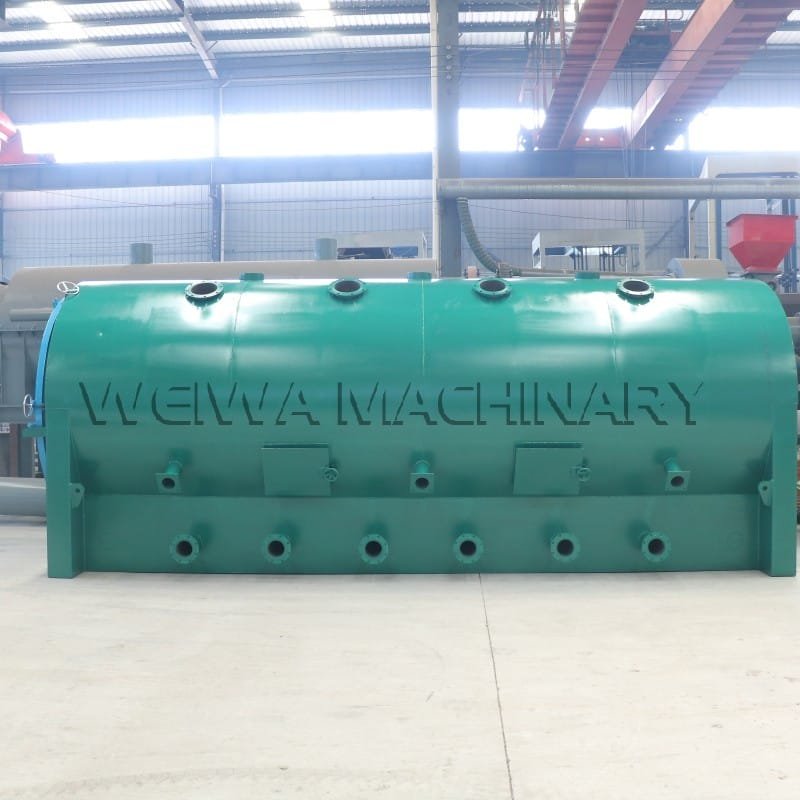
Why the Philippines Needs a Better Charcoal Making Machine?
The Philippines has abundant coconut plantations, rice mills, penggergajian, bamboo clusters, and agricultural residue streams. In many provinces, charcoal is still made with earth mounds, brick kilns, or improvised drums. Those methods are cheap to start but expensive to operate because they waste wood, produce heavy smoke, deliver inconsistent charcoal quality, and expose the operator to fire and health risks.
A modern charcoal making machine is not a luxury for large factories only. For Filipino cooperatives, farm-based processors, BBQ charcoal suppliers, and biomass recyclers, the right machine can turn agricultural waste into a stable product with predictable fixed carbon content. That is why inquiries for horizontal carbonization furnace for the Philippines have increased over the past two years.
The Philippine market is also sensitive to space, humidity, feedstock moisture, and labor cost. A vertical retort may look compact, but loading irregular coconut shells and bamboo cuts is harder. A horizontal carbonization furnace in the Philippines usually fits better because the chamber is low, the cart system reduces carrying, and the indirect heating path protects brittle shells from direct flame.
What Makes a Tungku karbonisasi horizontal Different from a Traditional Charcoal Kiln?
A traditional charcoal kiln relies on partial combustion of the feedstock itself. You stack wood or shells, cover them, limit oxygen, and hope the pile carbonizes evenly. In reality, the outside burns too much, the inside stays raw, and rainfall or wind can ruin the batch. Yield swings between 20 percent and 33 percent are normal for informal kiln operators.
A horizontal carbonization furnace is a controlled thermal system. The biomass sits inside a sealed barrel-style chamber. Heat comes from external burners, not from burning the feedstock directly. Volatile gases leave the chamber, pass through a condenser, drop tar and condensate, and the cleaned combustible gas returns to the burners. This closed loop is the reason smoke drops and fuel cost falls.
Rail-Mounted Barrel Chamber and Cart Loading
The chamber is mounted on rails. Workers load coconut shells, Log kayu, bambu, briket serbuk gergaji, or mixed agricultural residue into a cart, push the cart into the barrel, tutup pintunya, and start the cycle. After carbonization and cooling, the barrel or cart is rolled out. No one needs to climb hot masonry or shovel charcoal from a pit.
Untuk klien Filipina, this matters because labor is often seasonal and training new workers should be simple. Cart loading reduces back injuries, shortens batch changeover, and makes the whole process look more like a factory line than a farm fire.
Indirect Heating and 600 °C Carbonization Zone
Indirect heating means the flame never touches the material. The barrel warms gradually, the biomass releases moisture and volatiles, and the internal temperature moves toward the stable carbonization zone near 600 ° C.. Because the material is not burning openly, fixed carbon stays higher and powder loss is lower.
Di Filipina, where coconut shell and bamboo can crack under sudden heat, gradual heating is critical. A good horizontal carbonization furnace protects the structure of the shell and produces denser charcoal pieces that pack, toko, and export better.
Tar Condensation and Combustible Gas Return
The purification side is where the horizontal carbonization furnace beats most older charcoal kiln designs. Ter, condensate, and smoke byproducts are not released into the neighborhood. They are cooled, separated, and the combustible fraction is sent back to the burner manifold.
Once the return gas ignites, permintaan bahan bakar eksternal turun tajam. In field tests with similar Weiwa units, diesel or firewood consumption during the main carbonization phase can fall by 30 percent or more compared with conventional heating. For a Filipino producer paying for firewood or LPG, that saving repeats every batch.
Shipment Scene from the Weiwa Workshop
The unit destined for the Philippines was built, welded, and torque-checked in our Gongyi workshop. Our team inspected the barrel welds, penjajaran rel, door seal compression, burner fittings, condensation tower, gas return line, draft fan, and control panel before packing.
Before loading, we ran a pre-delivery trial with mixed hardwood and coconut shell briquette. The barrel reached around 320 °C within the first hour, crossed 500 °C before the middle of the second hour, and stabilized near 580 ke 600 °C during the active carbonization stage. The gas return line was opened only after volatile flow and condenser temperature were within range.
Export packing followed our standard heavy-machinery process. Metal surfaces received anti-rust treatment because ocean freight to Manila or Cebu exposes equipment to salt air and humidity. The barrel, rail frame, burner assembly, condensation tower, chimney section, control cabinet, spare seals, termokopel, and tool kit were packed separately with position diagrams. The client did not receive a mystery container. They received an assembly map.
We also prepared an English manual, a layout drawing, a spare-part list, and an inspection video. The Philippine buyer could see the machine run on video before the container closed. That transparency is part of how Weiwa works with overseas charcoal projects.
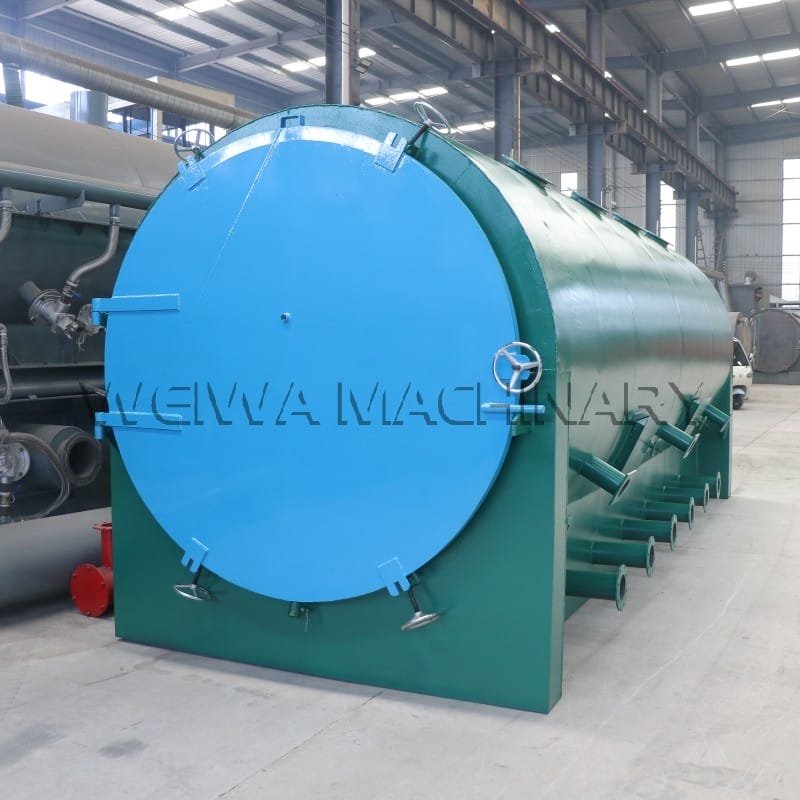
Trial Run in the Philippines with Coconut Shell and Wood Waste
After arrival, the client positioned the furnace on a concrete pad with enough space for cart movement, cooling bay, condenser unit, and firewood or LPG storage. Our remote engineer joined the commissioning call, checked door seal compression, verified thermocouple readings, and walked the operator through first ignition.
The first trial batch used coconut shells, a small amount of bamboo offcut, and mixed wood waste typical of a Philippine farming community. Initial moisture was higher than ideal after local rainfall, but the dryer section and gradual heat ramp handled it without blocking the gas path.
Within six hours, the system reached stable carbonization conditions. Smoke from the stack was minimal because the purification tower was already at operating temperature. The operator adjusted the draft fan and gas return valve according to the control panel, then let the batch stabilize.
Setelah dingin, the charcoal showed uniform color, low powder ratio, and good piece integrity. Coconut shell charcoal from the horizontal carbonization furnace had the dense, metallic sound that buyers look for in BBQ and shisha grades. Wood waste charcoal was suitable for heating, briquette feedstock, or further crushing into biochar blends.
Charcoal Yield and Smoke Performance in Tropical Conditions
Yield always depends on feedstock density, kelembaban, Ukuran partikel, and cycle time. In the Philippine trial, coconut shell retention was strong. Mixed wood waste gave a lower but still acceptable yield because the moisture content was managed during the pre-drying phase.
The most visible result was smoke reduction. Neighbors near the site reported far less irritation than with the client’s old earth kiln. The combustible gas return meant the furnace did not need continuous external firewood feeding, so the site stayed cleaner and the operator spent less time hauling fuel.
For Philippine regulators and barangay officials, smoke control is no longer a side benefit. It is becoming a compliance issue. A horizontal carbonization furnace for the Philippines is attractive precisely because the gas purification and closed chamber make permitting discussions easier than with open burning.
Another field point is humidity. Tropical storage raises feedstock moisture quickly. The Weiwa unit does not pretend moisture is irrelevant. The operating procedure asks the client to pre-dry shells and wood to a reasonable range, log moisture, and extend the early heating phase when rain-affected material is used. That discipline protects yield and reduces tar load in the condenser.
Who Should Buy a Horizontal Carbonization Furnace for the Philippines?
This machine is not for everyone. A backyard user who burns one sack of wood per week does not need it. The horizontal carbonization furnace fits buyers who treat charcoal as a business.
Coconut processors in Mindanao, Negros, or Samar can convert plantation waste into higher-value shell charcoal. Rice mill owners can use husk briquettes and sawdust as supplementary feedstock. BBQ charcoal traders in Metro Manila or Cebu can standardize product grade instead of buying inconsistent kiln charcoal from many small suppliers. Biomass cooperatives can pool agricultural residue and run scheduled batches.
The machine also suits Filipino buyers who already tried a homemade drum kiln and became frustrated with smoke complaints, hasil rendah, and fire risk. A horizontal carbonization furnace in the Philippines is the next step up: still batch-based, still manageable, but engineered instead of improvised.
Small- and medium-scale producers benefit most. They usually cannot justify a fully continuous pyrolysis plant, but they can justify a rail-mounted batch furnace that pays back through fuel savings, labor savings, and better charcoal price.
Horizontal Carbonization Furnace vs Traditional Charcoal Kiln in the Philippines
The comparison is not complicated. A traditional charcoal kiln is cheap to build and expensive to run. A horizontal carbonization furnace costs more upfront and saves money across the life of the machine.
Traditional kilns need manual stacking, manual unloading, long cooling time, and constant fire watching. Yield is operator-dependent. Smoke is high. Weather can destroy the batch. Product grade changes from one pile to the next.
The horizontal carbonization furnace uses carts, seals, sensors, kondensor, and gas recovery. Loading is easier. Cooling and discharge are safer. Temperature data is visible. Smoke is captured. Yield becomes repeatable. For a Filipino entrepreneur who wants bankable numbers, that difference matters more than the initial price tag.
This is also why many buyers no longer search only for a generic charcoal kiln. They search for horizontal carbonization furnace in the Philippines or charcoal making machine for the Philippines because they want a system that matches local feedstock, local emissions expectations, and local labor conditions.
Feedstock Flexibility for the Philippine Market
One strength of the Weiwa horizontal carbonization furnace is feedstock flexibility across harvest seasons. The Philippines does not have one biomass stream all year. Coconut shell availability, rice husk volume, residu tebu, bamboo pruning, sawmill offcut, and imported hardwood scraps all appear in different quantities.
A rigid machine forces the buyer to wait for one material. The horizontal barrel accepts irregular shapes: whole shells, short bamboo cuts, branch wood, briquetted sawdust, and mixed residue. The operator logs batch weight, kelembaban, target temperature, and cooling time. Over a few batches, the client builds their own recipe book.
Misalnya, dry coconut shell may run with a shorter high-heat phase and give premium BBQ charcoal. Mixed wood waste may run with a longer pre-dry phase and produce general-purpose charcoal for briquetting or heating. Rice husk briquettes may be added in moderate proportion to improve bed uniformity. The furnace does not care about the calendar. It cares about moisture, kepadatan, seal quality, and temperature control.
Operating Discipline That Makes the Machine Profitable
No charcoal making machine turns messy feedstock into perfect charcoal without operator discipline. The Weiwa furnace removes many manual risks, but the client still controls the result.
Pertama, sort the feedstock. Remove soil, stones, plastik, and metal. Kedua, control moisture. Biomass should be reasonably dry before loading. Ketiga, check the door seal every cycle. A leaking chamber loses gas, loses heat, and lowers yield. Fourth, watch the condenser. Tar buildup reduces gas quality and can clog the return line. Fifth, log every batch. Weight in, weight out, temperature curve, cooling time, and charcoal grade should be written down.
Filipino clients who follow these steps usually see the furnace outperform their old kiln within the first two weeks. Clients who treat it like a magic box and dump wet rice husk with stones inside will blame the machine for their own prep mistakes. Our manuals and remote training exist to prevent that gap.
After-Sales Support for Philippine Buyers
Weiwa Machinery does not disappear after the container leaves China. The Philippine client receives the same WhatsApp line used by our sales and engineering team. Photos, short videos, thermocouple readings, door-seal questions, and gas-return issues can be answered quickly without retelling the whole project story to a new agent.
Spare parts such as seals, termokopel, bantalan kipas, solenoid valves, and controller components are listed with model numbers. Common wear items can be couriered, and standard industrial parts can often be sourced locally if the manual name is followed. For electrical parts, the control panel uses clear industrial labels so a local electrician can understand the system.
Remote commissioning covers installation check, first ignition, gas return sequence, condenser drainage, emergency shutdown, and daily maintenance. For most horizontal carbonization furnace for the Philippines orders, an overseas engineer flight is not required at first. The buyer saves money, and the machine still gets a proper handover.
Logistics and Site Preparation Before the Furnace Arrives
Many delays happen not because the machine fails, but because the site is not ready. Before the furnace arrives in the Philippines, the buyer should prepare a level concrete pad, a covered area for feedstock drying, a cooling zone, LPG or firewood supply, a water source for condensation if required, and a 380 V or specified single-phase power connection depending on model.
The chamber, condenser, and burner need clearance for cart movement and maintenance. The client should also assign one supervisor who completes Weiwa training and becomes the batch logger. One trained supervisor is worth three casual laborers who guess the temperature by looking at the smoke.
Shipping normally goes to Manila, Cebu, Davao, or another main port, then by truck to the site. We recommend full container load for the barrel and condenser because shared containers invite damage. A bent rail or warped flange can cost more than the freight saved.
Environmental Angle for the Philippine Biomass Sector
The Philippine government and many local communities are pushing against open burning. A horizontal carbonization furnace supports that direction because it captures volatiles instead of releasing them into the air. Tar and condensate are collected, not dumped blindly. Combustible gas is reused, not wasted.
This does not make the machine zero-impact. The operator still handles hot material, abu, and condensate. But compared with a traditional charcoal kiln, the environmental gap is large. Less smoke, less wood wasted, less manual fire exposure, and more valuable product from the same biomass stream.
For NGOs, cooperatives, and municipal biomass projects, that story is bankable. A charcoal making machine that reduces smoke complaints can be easier to site near farms and villages. A furnace that improves yield helps rural entrepreneurs earn more from agricultural residue instead of letting it rot or burn in the open.
Cost Logic for Filipino Investors
Buyers often ask whether the horizontal carbonization furnace is worth the extra cost versus a homemade kiln. The honest answer is that the kiln is cheaper on day one and more expensive every month after.
The Weiwa furnace saves money through higher yield, lower external fuel use, less charcoal breakage, fewer labor hours, lower smoke-penalty risk, and better product grade. A Filipino buyer who sells BBQ charcoal by quality can charge more for dense, low-dust, uniform pieces. A buyer who previously lost 40 percent of the wood to incomplete combustion can recover part of that loss as salable charcoal.
Payback depends on feedstock cost, batch size, working days per month, and charcoal selling price. A serious Philippine operator running multiple batches per week usually sees the machine pay for itself faster than expected, especially when coconut shell and wood waste are low-cost or free on-site.
Why Buyers Trust Weiwa Machinery?
Mesin Weiwa, also known as CJL Machine Group, is not a trading company that resells unknown factories. We design and build briquette machines, peralatan karbonisasi, and auxiliary machinery in our own workshop. Every horizontal carbonization furnace is welded, diperiksa, pressure-checked where applicable, fired, and documented before export.
Our equipment has been shipped to many countries across Southeast Asia, Afrika, Eropa, and Latin America. The horizontal model is one of our most exported batch carbonization systems because it balances capital cost, feedstock flexibility, and operating simplicity. It is not the biggest machine we make. It is often the smartest entry point for small- and medium-scale charcoal businesses.
Filipino buyers tell us they choose Weiwa for three reasons: the furnace is practical, the manuals are readable, and the engineer answers the phone. Those sounds simple, but in industrial equipment, simple execution is rare.
Common Misconceptions About Horizontal Carbonization Furnaces
Some buyers think a horizontal carbonization furnace is just a lying-down drum. It is not. A drum with fire underneath is still an open pyrolysis toy. A real Weiwa furnace has sealed chambers, penjajaran rel, indirect heat path, tar condensation, gas return, kontrol suhu, and safety components.
Others think continuous machines are always better. Continuous lines have higher throughput, but they also need steadier feedstock, bigger capital, more complex control, and more skilled staff. For the Philippines, many projects do better with a batch furnace that can pause, change feedstock, and restart without a full plant shutdown.
Another misconception is that gas recovery eliminates all fuel. In reality, the furnace still needs startup heat. The saving comes after pyrolysis gas ignites and returns to the burners. Smart buyers understand this and log fuel use honestly. That honesty is what makes the machine profitable.
Field Tips from the Philippines Commissioning Call
During the Philippine commissioning, our engineer reminded the operator to never open the door under pressure, never block the condenser outlet, never mix plastic or rubber into the feedstock, and never ignore the door seal. Those four rules prevent most field problems.
We also advised the client to keep a small covered drying platform. Tropical humidity means even “dry” shells can absorb moisture overnight. A one-day covered stack with airflow can improve batch stability more than any upgrade to the burner.
The client was surprised by how little smoke came from the stack after the purification tower warmed up. That moment is common. People expect a charcoal furnace to smoke because traditional kilns smoke. A properly running horizontal carbonization furnace changes that expectation quickly.
Product Grades Filipino Clients Can Target
With coconut shell feedstock, the furnace can support BBQ charcoal, shisha charcoal base material, activated carbon feedstock, and biochar blends. With hardwood, it supports restaurant charcoal, heating charcoal, and briquette raw material. With agricultural residue briquettes, it supports industrial biochar and soil amendment products when the temperature profile is adjusted.
The same horizontal carbonization furnace in the Philippines can serve different markets across the year. That flexibility protects the buyer from price crashes in one charcoal segment. When BBQ demand softens, the operator can shift toward biochar or industrial charcoal. When coconut shell is scarce, the machine still processes wood waste and briquetted residue.
This is why we call it a charcoal making machine rather than a single-purpose kiln. The hardware stays the same. The recipe changes with the market.
Safety Points Every Philippine Operator Should Respect
Carbonization involves heat, flammable gas, moving carts, and sealed pressure paths. The Weiwa furnace includes pressure-release and temperature-control considerations, but the operator still sets the safety culture.
Keep flammable liquids away from the burner area. Train at least two workers on emergency shutdown. Mark the gas return line clearly. Do not weld near the gas path during operation. Let the barrel cool before opening. Wear gloves, goggles, and heat-resistant clothing during discharge.
Safety is not paperwork. In rural Philippine sites, a small gas leak or a rushed door opening can injure workers and damage the chamber. The manual is short for a reason: follow it, log it, repeat it.
How Weiwa Customizes the Furnace for the Philippines?
Not every unit leaves the workshop identical. Untuk klien Filipina, we often review chamber length, cart size, burner type, LPG compatibility, kapasitas kondensor, chimney height, voltage, and spare-part kit. Coconut shell has different behavior from rice husk briquette. Bamboo has different volatile release from hardwood offcut.
If the client mainly processes shells, we tune the loading tray and gas path for shell density. If the client mixes agricultural residue, we advise drier capacity and batch moisture limits. If the site has unstable power, we discuss control-panel protection and manual override procedures.
This customization is why a horizontal carbonization furnace for the Philippines should not be bought as a generic listing. The right supplier asks about your feedstock photos, moisture estimate, ruang yang tersedia, power supply, and target product before quoting.
From Factory Floor to Filipino Farm Site
The full journey looks like this. The buyer sends feedstock information. Weiwa proposes model, chamber size, burner type, and layout drawing. The buyer confirms site power, air, pad size, and target charcoal grade. Proforma invoice follows. Production, welding inspection, trial fire, packing, and container booking proceed.
Before loading, the buyer receives spare-part list, manual, layout drawing, and inspection video. After arrival, remote training covers installation check, first ignition, gas return sequence, tar drainage, safety shutdown, and daily maintenance. Spare parcels can be couriered when wear items are needed.
This process is not glamorous. It is exactly what a serious charcoal making machine project should look like. No theater, no mystery, no “just light it and pray.”
Market Outlook for Charcoal and Biochar in the Philippines
Charcoal demand in the Philippines is unlikely to disappear. Masakan rumah tangga, street food grilling, bakery ovens, metal workshops, and resort BBQ areas all need solid fuel. Pada saat yang sama, biochar is gaining attention for soil improvement, odor control, and farm productivity.
A horizontal carbonization furnace lets one machine serve both trends. Lower-temperature runs and feedstock choices can support biochar. Higher-density shell runs can support premium BBQ charcoal. The entrepreneur is not locked into one product while the market shifts.
As environmental rules tighten, the traditional charcoal kiln will keep losing ground. Buyers who install a controllable, low-smoke, gas-recycling furnace now will be better positioned when local permits and buyer specifications start excluding open-kiln charcoal.
Why This Shipment Matters for Weiwa Machinery?
Every export unit is a field test for our design team. The Philippine shipment confirmed points we already believed: cart loading saves labor, indirect heating protects shell structure, gas recovery cuts fuel, sealed operation reduces smoke, and remote training removes the engineer-flight bottleneck.
But it also gave us local data. Humidity behavior, coconut shell batch weight, condenser load with tropical feedstock, and operator questions from a Filipino team all feed back into our next design iteration. Weiwa improves furnaces by listening to the people who run them in real weather, not only in factory conditions.
That feedback loop is why our horizontal carbonization furnace in the Philippines projects tend to scale. A first unit proves the concept. A second unit appears six months later after the cooperative sees the numbers. A third unit follows when the buyer adds biochar or shisha feedstock.
Buying Process with Weiwa Machinery
The buying process starts with photos and moisture estimate of your raw material. Weiwa proposes chamber size, burner type, gas treatment capacity, and layout drawing. The buyer confirms site power, air, pad size, and target product. Proforma invoice follows.
Production, inspection, packing, and container booking proceed. Before loading, the buyer receives spare-part list, manual, layout drawing, and inspection video. After arrival, remote training covers installation check, first ignition, gas return sequence, and safety shutdown.
For common wear parts, Weiwa keeps stocks matching popular models. For electrical parts, the manual uses standard industrial names so local suppliers can help if courier delay happens. The goal is not to make the buyer dependent. The goal is to make the buyer competent.
Signs You Are Ready for a Horizontal Carbonization Furnace
You probably ready if you have steady biomass access, a level site, basic power, and a plan to sell or use the charcoal. You are also ready if your old kiln gives inconsistent yield, your neighbors complain about smoke, or your buyers keep rejecting dusty charcoal.
You are not ready if you expect the machine to fix wet feedstock, zero labor, and zero training. The horizontal carbonization furnace is engineered, tidak ajaib. It rewards operators who sort material, log batches, check seals, and respect gas safety.
Filipino buyers who approach the machine like a small factory usually succeed. Buyers who approach it like a backyard fire usually disappoint themselves. The technology is the same. The result is different because the operating habit is different.
Horizontal Carbonization Furnace for the Philippines vs Other Markets
We have shipped similar furnaces to Kenya, Malaysia, Korea, Jerman, and Guinea. The machine is the same family, but the field story changes.
In Kenya, the pain point is earth-mound inconsistency and rainy-season moisture. In Malaysia, it is feedstock mixing and suburban smoke rules. In Korea, it is emission ordinances and premium charcoal grade. In Germany, it is biochar compliance and automation. Di Filipina, the story is coconut shell abundance, agricultural residue, tropical humidity, and the need to upgrade from informal kilns without jumping to a massive continuous plant.
That is why a horizontal carbonization furnace for the Philippines deserves its own article, its own FAQ, and its own commissioning notes. Copy-pasting a generic charcoal machine page rarely converts Filipino buyers. They want to see coconut shell, KULUT NAS, bambu, and local site conditions in the story.
Technical Recap Before You Decide
The horizontal carbonization furnace is a barrel-style retort mounted on rails. It uses carts for loading, indirect heating for gradual carbonization, a condenser for tar and condensate separation, and a gas return line for self-sustaining combustion. Internal temperature targets near 600 °C during the stable carbonization phase.
Compared with a traditional charcoal kiln, it usually delivers better yield, lebih sedikit asap, lebih sedikit tenaga kerja, safer discharge, and more repeatable product grade. Compared with a continuous plant, it usually demands less capital, less specialist staff, and less rigid feedstock specification.
For the Philippines, that middle position is powerful. It gives small- and medium-scale producers a factory-grade result without a corporate-scale budget.
Talk to Weiwa About Your Philippines Charcoal Project
If you are evaluating a horizontal carbonization furnace in the Philippines, send us your raw material photos, moisture estimate, ruang yang tersedia, power supply, and target product. We will propose chamber size, burner type, gas treatment capacity, and a layout drawing.
Whether you process coconut shell, bambu, limbah kayu, rice husk briquette, or mixed agricultural residue, Weiwa Machinery can help you move from open burning to a controlled, low-smoke, higher-yield charcoal making machine.
Hubungi Mesin Weiwa
Massa / Whatsapp: +8613838093177
E-mail: info@cjlmachineGroup.com
Tentang Mesin Weiwa
Mesin Weiwa, also known as CJL Machine Group, is a manufacturer of biomass-processing and charcoal-production equipment. We design and build horizontal carbonization furnaces, Briket mesin, Crushers, pengering, and complete charcoal production lines. Our machines are exported to many countries and regions, and our equipment is used by more than 2 juta pelanggan di seluruh dunia.
We are not a trading company that resells unknown brands. The furnace, pembakar, gas pipe, condenser, and control box are built and inspected in our own workshop. We provide layout drawings, English manuals, spare-part lists, inspection videos, and remote commissioning support so overseas buyers can start production with confidence.
Our focus is simple: help biomass-rich markets such as the Philippines turn agricultural waste, batok kelapa, wood residue, and bamboo into high-value charcoal and biochar with less smoke, lebih sedikit tenaga kerja, and better yield.


 Wechat wechat

 +8615937143060
