


What a Tungku karbonisasi berkelanjutan Really Does?
A continuous carbonization furnace is a mechanized thermal system that converts biomass into charcoal without stopping the feed and discharge cycle. Traditional pit kilns and batch ovens require cooling, unloading, relining and reheating. A continuous system feeds raw material from one end, moves it through controlled pyrolysis zones, and discharges cooled charcoal from the other end while the machine stays hot. For a charcoal making machine in Thailand where labor cost, emission rules and export quality standards all matter, this uninterrupted design changes the economics of the whole plant.
The continuous carbonization furnace handles coconut shell, Chip kayu, serbuk gergaji, KULUT NAS, jerami, bamboo and palm kernel shell. Temperature is held in the 500 ke 600 degree Celsius range. Volatile matter released during pyrolysis is not vented as smoke. Combustible components such as carbon monoxide, methane and hydrogen are recovered, cleaned and reburned inside the furnace. That closes the heat loop, cuts external fuel use and lowers the continuous carbonization furnace price payback period for the owner.
Inside the Double Cylinder Rotary System
The Weiwa continuous carbonization furnace for Thailand uses a double cylinder rotary design. The configuration looks simple from outside but the process control inside is precise.
Drying Drum and Carbonization Drum
The inner drum pre-dries high moisture feedstock. Thai coconut shell often arrives at 15 ke 25 percent moisture after monsoon storage. Pre-drying stabilizes the energy balance before the material enters the outer drum. The outer drum is the carbonization zone. Biomass spirals forward under slight incline and rotation. Rotation speed, incline angle and draft fan pressure decide residence time. Our engineers tune these values against the client’s local feedstock mix so the charcoal making machine in Thailand produces the same fixed carbon content across summer and rainy season batches.
Syngas Recovery and Self Heating Cycle
During pyrolysis, biomass releases tar vapor, wood vinegar and flammable gas. The Weiwa gas path sends these streams through a condenser and scrubber. Liquids are collected for separate sale or treatment. The cleaned gas returns to the combustion chamber as secondary fuel. After startup, the continuous carbonization furnace needs only a small auxiliary burner to compensate heat loss. In many installations the external fuel bill drops by more than 40 percent compared with a batch kiln. For a buyer comparing continuous carbonization furnace price quotes, this operating saving usually outweighs the higher capital cost within the first twelve to eighteen months.
Loading the Continuous Carbonization Furnace for Thailand
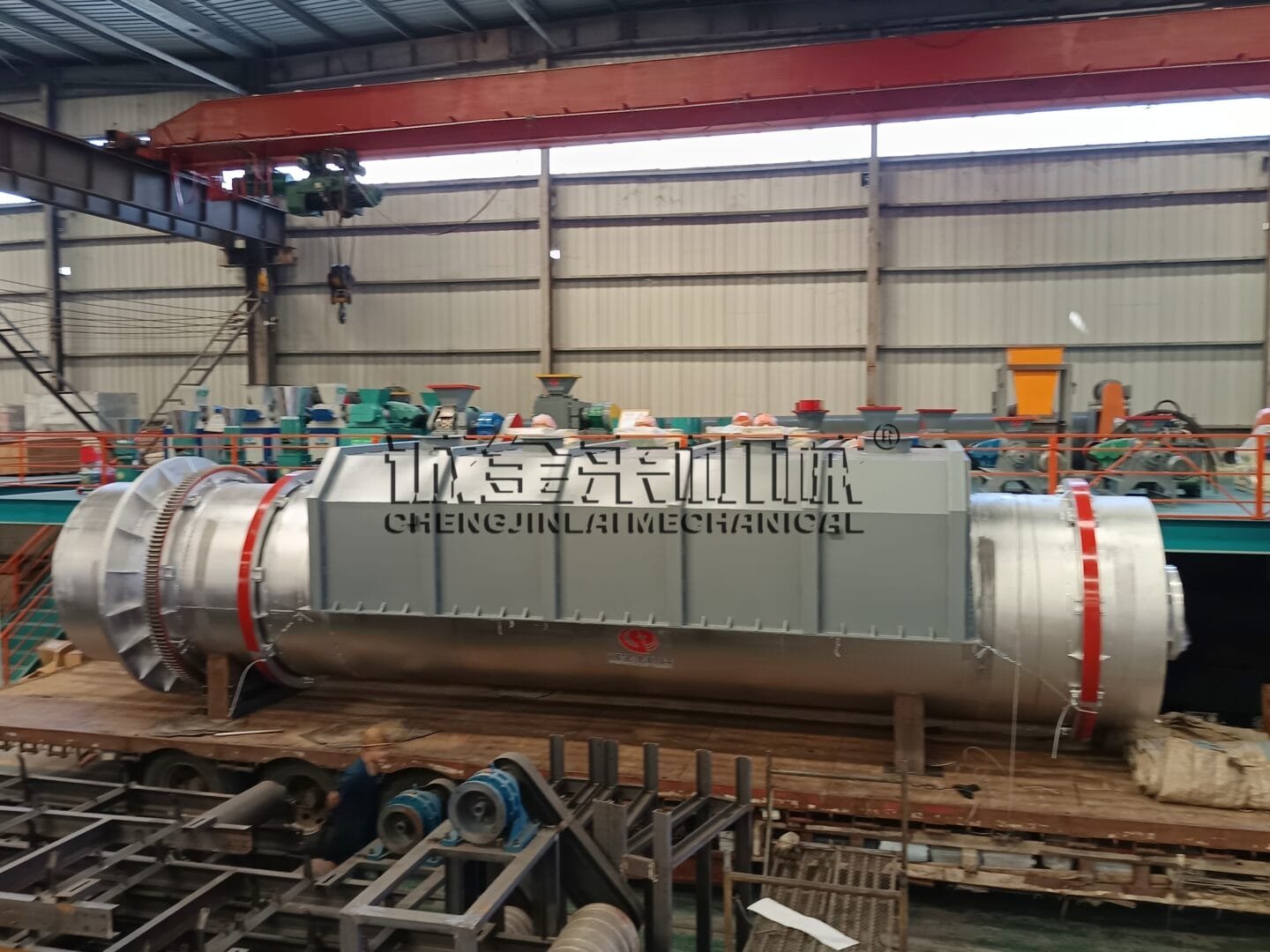
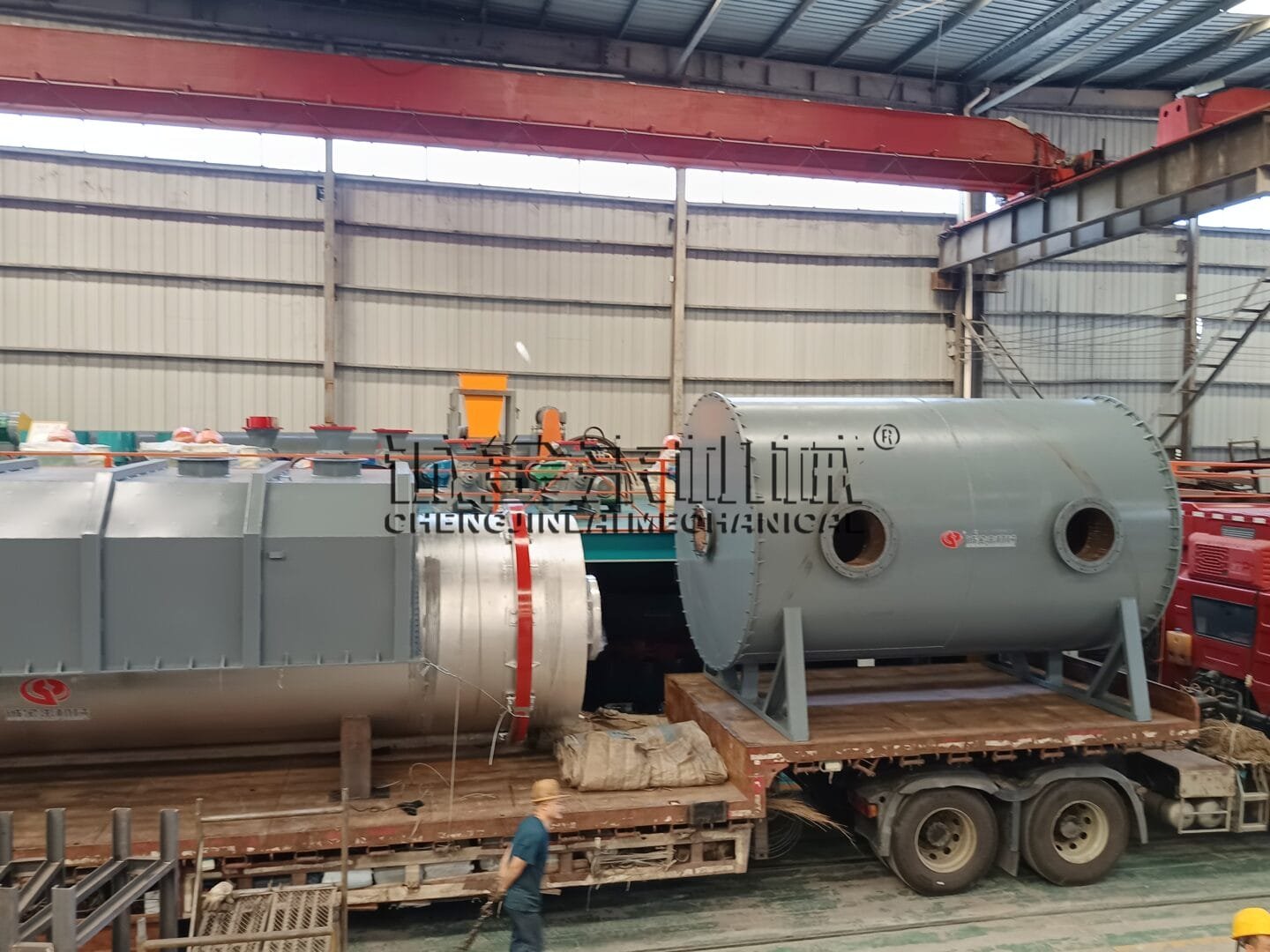
The shipment began in our Weiwa Machinery fabrication hall. The Thai order included the rotary furnace body, screw feeder, discharge cooler, gas purification skid, PLC cabinet, chimney stack and spare sealing rings. Each module was shot blasted, primed and painted with marine grade coating because the route included road transport to the port, ocean freight and final trucking inside Thailand.
Before loading, our quality team ran a no-load rotation test for thirty minutes. We checked drum alignment, reducer temperature, seal compression and sensor calibration. The HMI showed carbonization zone temperature ramp, gas pressure trend and emergency stop response. Only after the test report was signed did the crane move the main barrel onto the flat rack.
Workers wrapped the burner manifold in waterproof film and fixed vibration dampers under the feeder base. Steel wires crossed the furnace body in a crisscross pattern, then were tightened with turnbuckles and protected by rubber pads. The PLC panel traveled in a separate padded crate with desiccant bags because electronic boards suffer in humid sea containers. Photos from the scene show the double cylinder rotary continuous carbonization furnace strapped under morning light, the Weiwa flag on the workshop wall, and the logistics supervisor marking the bill of lading.
This continuous carbonization furnace for Thailand was not a stock unit. The client requested a 1.2 meter diameter drum, coconut shell screen deck, upgraded ceramic fiber insulation and Thai label plates. Customization adds lead time but removes commissioning surprises. A charcoal making machine in Thailand that matches local raw material and voltage standard starts earning sooner.
Why the Continuous Carbonization Furnace in Thailand Has Strong Demand?
Thailand produces massive agricultural residue every year. Rice mills generate husk. Coconut plantations around Samui, Surat Thani and Chumphon discard shell. Southern rubber farms leave wood offcut. Palm oil mills accumulate empty fruit bunch fiber. Open burning of this biomass still happens in parts of the country and triggers haze complaints. A continuous carbonization furnace in Thailand turns the same waste into a shelf product.
Coconut Shell and Rubber Wood Feedstock
Coconut shell charcoal is the premium segment. It has high density, low ash and steady burning time, which makes it the preferred base for hookah charcoal and high end barbecue briquettes. Rubber wood and acacia sawdust are cheaper fillers that balance cost when blended correctly. The Weiwa continuous carbonization furnace accepts both streams because the double drum design tolerates particle size variation better than a single screw carbonizer. Thai buyers who previously imported Indonesian coco charcoal now test local shell through a continuous line and keep the margin inside their own factory.
Biochar, BBQ Charcoal and Export Value
Beyond grilling charcoal, Thai operators explore biochar for soil amendment and activated carbon precursor for water filtration. The agricultural biochar path is slower but aligns with carbon credit discussion in ASEAN. The barbecue path is faster. Japanese, Korean and Middle Eastern importers already buy Thai lump charcoal when quality is consistent. Consistency is exactly what a continuous carbonization furnace delivers. Uniform temperature profile means every batch has similar fixed carbon, similar volatile matter and similar moisture after cooler discharge. That uniformity is what lets a charcoal making machine in Thailand move from domestic market to export container.
Continuous Carbonization Furnace Price Drivers for Thai Buyers
Many inquiries ask for continuous carbonization furnace price as if it were a single number. In reality the quotation moves with configuration.
Drum diameter decides throughput. An 800 millimeter drum may process 400 ke 600 kilograms per hour of dry shell. A 1200 millimeter drum doubles that range. Throughput drives steel weight, drive power, burner size and cooler length. Automation level is the second lever. A basic panel with buttons costs less than a PLC with touchscreen, remote alarm, gas analyzer and data export. Material thickness matters because Thai plants often run three shifts. We use thicker refractory lining and reinforced riding rings for buyers targeting twenty four hour operation.
Shipping adds another layer. A continuous carbonization furnace for Thailand ships as break bulk or flat rack depending on port. Sea freight, Thai import duty, lift truck rental and inland trucking change the landed cost. After sales also belongs in the price conversation. Weiwa includes wiring diagram, English operation manual, spare seal kit and video call commissioning. Thai clients who skip training pay later in downtime. When we explain total cost of ownership, the continuous carbonization furnace price stops being a sticker number and becomes a production investment.
For small Thai startups, we sometimes recommend one rotary furnace plus a briquette press instead of a full plant. For established charcoal exporters, we propose dual drum line, automatic weighing and bagging station. The right continuous carbonization furnace price is the one matched to cash flow and warehouse space, not the lowest offer on the table.
Field Conditions That Shape Furnace Design in Thailand
Thailand is hot, humid and seasonal. Humidity lengthens drying time. We enlarge the inner drying drum or add a separate rotary dryer ahead of the furnace when moisture exceeds 25 persen. Coastal locations near Ranong or Chonburi increase corrosion risk, so we upgrade to epoxy zinc rich primer and stainless trim on exposed bolts. Power fluctuation in remote sites leads us to specify wider tolerance inverters and surge protection on the control board. None of these upgrades appear in a generic product photo, but they decide whether a charcoal making machine in Thailand survives year three.
Dust control is another local concern. Thai factories near villages receive noise and smoke complaints faster than industrial zones. The Weiwa continuous carbonization furnace routes all pyrolysis gas back to combustion. Stack emission is mostly water vapor and carbon dioxide from burned syngas, not black smoke from direct biomass burning. Pairing the furnace with a simple scrubber and spark arrestor satisfies most provincial environment office checks. Buyers comparing continuous carbonization furnace in Thailand options should ask the supplier for a gas route drawing, not just a machine picture.
Commissioning and Operator Training After Arrival
Delivery is half the project. After the continuous carbonization furnace reaches the Thai site, foundation bolts must align with the skid holes, the chimney must clear roof height, and the gas skid must sit level. Our commissioning engineer joins a video call during first heat up. We watch the temperature curve pass 200, 350 Dan 500 degrees, then observe first charcoal discharge around hour six. Operators learn to read drum current. A rising amp draw at steady feed means material bridge or overload. A dropping gas pressure means seal leak. These small signals prevent big repairs.
Training covers safety release valve testing, tar collection timing, cooler water circuit check and monthly bearing grease. Thai teams who log batch weight, shell source and charcoal calorific value build a dataset that helps them blend feedstock for export grade. A charcoal making machine in Thailand is only as good as the workbook next to it.
Market Outlook for the Continuous Carbonization Furnace in Thailand
The next three years look constructive. Thailand’s biomass surplus is structural, not cyclical. Coconut water and rubber exports keep generating shell and wood waste regardless of charcoal prices. Government pressure on open burning gives factories a reason to permit a closed carbonization system. Regional demand from Malaysia, Singapore and Philippines absorbs extra Thai charcoal when local consumption slows. Continuous lines beat batch kilns on labor per ton, which matters as rural wage pressure rises.
We expect more Thai buyers to move from one batch kiln to one continuous carbonization furnace, then scale to two lines sharing a gas scrubber. The continuous carbonization furnace price will keep falling slightly as Chinese component supply matures, but differentiation will shift to automation, emission paper and spare part response time. Weiwa plans to keep a rotating stock of seals, thermocouples and reducer kits for ASEAN clients so a Thai plant can resume within days, not weeks.
Another trend is product mixing. A single continuous carbonization furnace can serve lump charcoal in dry season and biochar blend in wet season. Smart Thai owners split output: premium lumps for barbecue export, fines for briquette press, dust for biochar bagging. That flexibility protects revenue when one channel softens. The charcoal making machine in Thailand is becoming a feedstock platform rather than a single product device.
Why Buyers Shortlist Weiwa Machinery?
Weiwa Machinery is not the cheapest name in the catalog. We compete on drum welding quality, refractory packing method and control logic tested on real coconut shell. Our continuous carbonization furnace bodies are welded with continuous seam inspection, not spot tacked and painted over. Riding rings are machined, not cast rough. Electrical drawings carry Chinese and English labels. Spare part list carries photographs so the Thai maintenance team orders the correct O ring without guessing.
For this Thailand shipment, the client visited our workshop through video twice, sent shell samples for reference, and received a thermal balance sheet before paying deposit. That transparency is part of the Weiwa package. When a buyer asks continuous carbonization furnace price, we answer with capacity, moisture assumption, insulation grade and commissioning scope. The number means nothing without those variables.
Tentang Mesin Weiwa
Weiwa Machinery is a Chinese manufacturer of biomass carbonization equipment, Mesin Pembuat Arang, Tekan briket, crushers and drying systems. We design rotary continuous carbonization furnaces for coconut shell, Chip kayu, rice husk and municipal organic waste. Our team supports clients from feasibility layout to container booking, foundation drawing, commissioning and long term spare parts. The recent continuous carbonization furnace for Thailand is one of several Southeast Asian deliveries scheduled this year.
We believe the charcoal making machine in Thailand market will keep shifting from manual kilns to automated rotary lines because the math favors uptime, uniform quality and recovered heat. Weiwa intends to be the supplier that answers the phone after the machine lands, not only before the invoice is paid.
For quotation, shell sample test report or factory video call, contact Weiwa Machinery directly.
Kontak
Massa / Whatsapp: +8613838093177
E-mail: info@cjlmachineGroup.com


 Wechat wechat

 +8615937143060
