


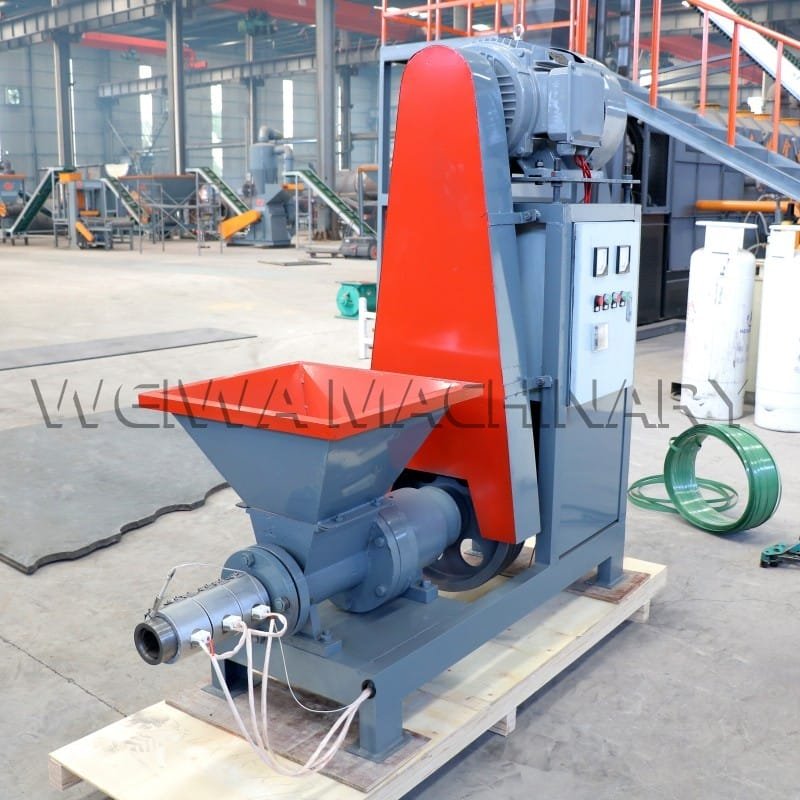
Why Chile Is Expanding Biomass Charcoal Production?
Chile has a diverse forestry sector, with extensive plantations of radiata pine and eucalyptus, alongside agricultural residues from fruit cultivation, grain processing, and vineyard management. These materials create a reliable supply of sawdust, keripik kayu, sekam padi, and crop stalks. A sawdust briquette machine allows Chilean producers to convert these low-value residues into high-density solid fuel that burns longer, transports more efficiently, and meets both domestic and export quality standards.
Energy costs in Chile remain a concern for many small and medium-sized enterprises. Replacing part of the demand for imported fuels with locally produced charcoal reduces operating costs and improves energy security. In rural regions, sawdust briquetting also reduces open burning of agricultural waste, lowering particulate emissions and supporting Chile’s environmental commitments.
Raw Material Availability in Chile
Sawdust from pine and eucalyptus sawmills is the most common feedstock for a sawdust extruder in Chile. Selain itu, sunflower stalks, grapevine prunings, and nut shells provide seasonal alternatives. The sawdust extrude machine supplied by Weiwa Machinery accepts a wide range of biomass inputs, provided particle size is below 5 mm and moisture content is controlled under 12 persen.
How a Mesin Extrude Serba Keragun Works in Tropical and Temperate Climates?
A sawdust extruder operates on the principle of thermo-compression. Di dalam mesin, a large screw conveyor pushes biomass through a heated barrel. As temperature and pressure rise, natural lignin within the wood fibers softens and acts as an internal binder. No chemical additives are required. The material is forced through a shaped die, forming dense briquettes with a central hole that improves combustion airflow.
In Chile, climate variations influence production conditions. Coastal regions experience higher humidity, which increases the importance of pre-drying. Inland and southern areas benefit from lower ambient humidity, which supports faster moisture reduction. The sawdust briquette machine supplied to Chile is equipped with an adjustable temperature control system, allowing operators to maintain consistent extrusion quality regardless of seasonal changes.
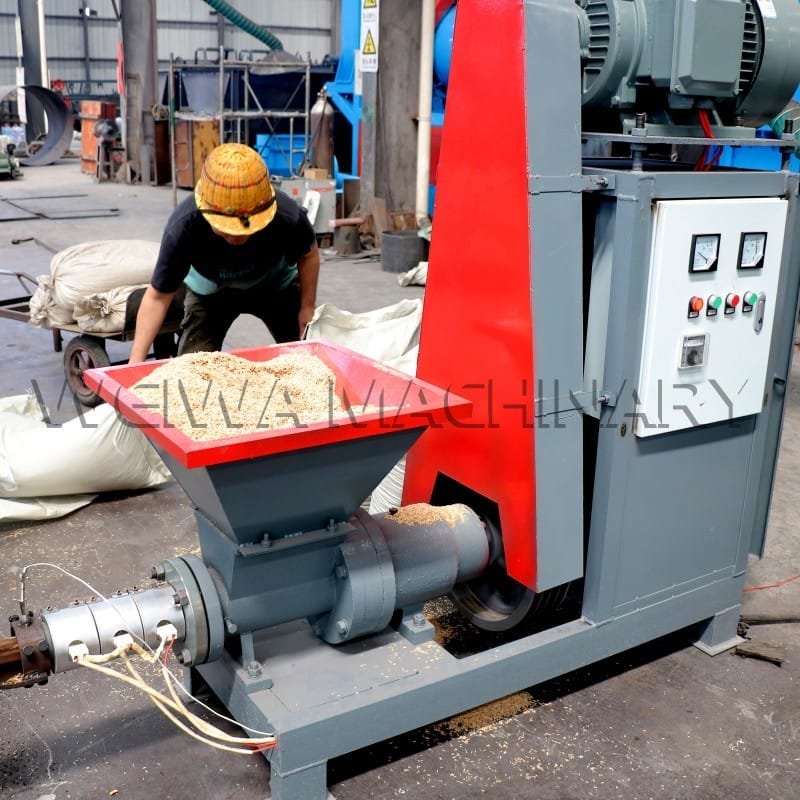
Moisture Control in Coastal and Inland Regions
Moisture control is critical for stable briquette formation. In central Chile, sawdust stored outdoors often exceeds 30 percent moisture. A rotary dryer reduces this to the required level before feeding the sawdust extrude machine. In drier northern regions, partial drying may be sufficient, but consistent monitoring remains essential. Overly dry material can reduce lignin activation, while overly wet material weakens briquette strength.
From Sawdust to Charcoal: The Complete Production Flow
The production process begins with size reduction. A wood crusher breaks branches, tangkai, and offcuts into particles of 3 ke 5 mm. This ensures uniform feeding into the sawdust extruder and prevents blockages. After crushing, the material enters a dryer, where hot air reduces moisture to below 12 persen.
Setelah dikeringkan, biomass is fed continuously into the sawdust briquette machine. Inside the compression chamber, the screw generates intense pressure while the heating ring raises the temperature to approximately 260 ke 300 Derajat Celcius. Dalam kondisi ini, lignin melts and binds the particles into solid, briket kepadatan tinggi. The extruded sticks exit the machine with a hollow core and are cut to the desired length.
These briquettes are not yet charcoal. The next stage is carbonization, typically conducted in a kiln or retort. During carbonization, volatile compounds are driven off, leaving behind fixed carbon. The final charcoal retains the original shape but becomes brittle and black. In Chile, many operators use either traditional earth kilns or modern continuous carbonization furnaces, depending on production scale and environmental regulations.
Lignin Activation Under High Pressure
Lignin activation is the core mechanism behind sawdust briquetting. Unlike pellet machines that rely on binders, a sawdust extrude machine uses the biomass’s own lignin. Under high pressure and temperature, lignin flows between fibers, filling voids and creating a strong, homogeneous structure. This is why briquettes produced by a sawdust briquetting machine have higher density and calorific value than loose biomass or simple compressed pellets.
Carbonization Methods Compatible with Sawdust Briquettes
Chilean producers often select carbonization methods based on fuel demand and environmental policy. Earth kilns are low-cost but emit more smoke. Modern retorts capture volatile gases for reuse as fuel, reducing emissions and improving efficiency. Regardless of method, briquettes produced by a sawdust extruder carbonize evenly due to their uniform density, resulting in consistent charcoal quality.
Why Chilean Buyers Choose Weiwa Sawdust Extruders?
Weiwa Machinery has supplied sawdust extrude machines to more than 130 negara, including multiple clients in South America. Chilean customers value machines that combine structural simplicity with operational reliability. Our sawdust extruder features a heavy-duty screw shaft, wear-resistant barrel lining, and a temperature regulation system that maintains stable extrusion even with variable feedstock.
Another advantage is adaptability. The sawdust briquette machine can produce different shapes, including square, heksagonal, and pentagon profiles, with or without edges. Diameters from 45 mm to 80 mm are available. This flexibility allows Chilean operators to align output with local market preferences, whether supplying household cooking fuel, Pemanasan Industri, or export-grade charcoal.
Weiwa also provides production line customization. For Chilean clients with abundant pine sawdust, we recommend higher-capacity drying systems. For mixed agricultural residues, we adjust screw compression ratios to accommodate varying lignin content. This tailored approach improves efficiency and reduces operational risks.
Installation and Operation in Chilean Conditions
Installation begins with a level concrete foundation. Vibration during extrusion can affect alignment, so precise leveling is essential. Electrical connections must comply with Chilean standards, and operators should verify voltage compatibility before startup. The sawdust extrude machine shipped to Chile was configured for 380V/50Hz operation, suitable for most industrial sites.
During the first run, operators should monitor temperature, screw speed, and feed rate. A gradual increase in feed prevents overloading. Once stable, the sawdust extruder produces continuous briquettes with minimal supervision. Routine checks include screw wear, bearing temperature, and heating element performance. With proper operation, a sawdust briquette machine can run continuously for 8 ke 10 hours per shift.
Packaging and Shipping Considerations for Chile
Exporting to Chile requires careful packaging. The sawdust extrude machine was packed in a fumigated wooden crate to meet Chilean agricultural import regulations. Internal components were wrapped in polyethylene film to prevent moisture damage during ocean transit. For customers with limited unloading equipment, Weiwa can arrange split packaging or provide detailed loading plans to simplify handling.
Maintenance Practices for Long-Term Stability
Preventive maintenance extends equipment life and preserves briquette quality. The screw shaft and barrel lining experience the most wear. Regular inspection allows timely replacement before performance degrades. Lubrication schedules should be strictly followed, especially for high-temperature bearings. Electrical cabinets must be kept clean and dry to avoid short circuits.
In Chile’s coastal regions, salt air can accelerate corrosion. Applying anti-rust coatings and scheduling more frequent inspections are recommended. Inland, dust accumulation is the primary concern. Installing dust collection systems near the crusher and dryer reduces abrasive wear on moving parts.
Environmental and Economic Benefits for Chilean Businesses
A sawdust briquetting machine supports both environmental and economic goals. By converting waste biomass into fuel, Chilean producers reduce landfill use and open burning. The resulting charcoal has a calorific value more than 20 percent higher than natural wood, improving energy efficiency. Its high density reduces transportation costs, a significant advantage in a country with long distribution distances like Chile.
Secara ekonomis, sawdust briquetting creates value from low-cost or zero-cost residues. Small workshops can start with a single sawdust extruder and expand as demand grows. Larger operations can integrate multiple machines into automated lines. In both cases, the return on investment is enhanced by stable charcoal prices and growing demand for clean-burning fuel.
From an environmental perspective, charcoal produced via sawdust extrusion and controlled carbonization emits fewer pollutants than charcoal made from whole logs or unprocessed wood. This aligns with Chile’s efforts to reduce deforestation and promote sustainable forestry practices.
Melihat ke Depan: Charcoal Production in Chile
The shipment of this sawdust extrude machine is part of a broader trend. As Chile modernizes its bioenergy sector, sawdust briquette machines will play a larger role in converting forestry and agricultural residues into valuable fuel. Operators who invest in reliable equipment, proper training, and consistent maintenance will be best positioned to benefit from this transition.
Weiwa Machinery remains committed to supporting Chilean customers with technical guidance, spare parts supply, and production optimization. Whether you are establishing a new charcoal plant or upgrading an existing line, our team can design a solution tailored to your raw materials, capacity requirements, and local conditions.
Tentang Mesin Weiwa
Weiwa Machinery is a leading manufacturer of biomass briquetting and charcoal production equipment, serving customers in over 130 negara. Our product range includes sawdust extrude machines, mesin briket serbuk gergaji, wood crushers, rotary dryers, and carbonization furnaces. With more than two million customers worldwide, we combine engineering expertise with practical field experience to deliver reliable, efisien, dan solusi yang hemat biaya. We offer free production line design, customized configurations, and comprehensive after-sales support. Factory visits are welcome.
Hubungi kami hari ini:
Massa / Whatsapp: +8613838093177
E-mail: info@cjlmachineGroup.com


 Wechat wechat

 +8615937143060
