


The roar of the cargo ship engine is not just noise; it is the sound of progress. Hari ini, at the bustling port of Qingdao, a significant shipment organized by Weiwa Machinery is being loaded onto a vessel bound for the vibrant and growing market of Malaysia. This is not merely a transaction of steel and motors; it represents a commitment to sustainable energy, agricultural recycling, and economic empowerment for our partners across Southeast Asia. Selama beberapa dekade, Malaysia has been a hub of agricultural activity, and with that comes an immense volume of biomass residues. Our mission is to transform what was once considered waste into wealth, and this latest dispatch of our Mesin briket biomassa production line is a monumental step in that direction.
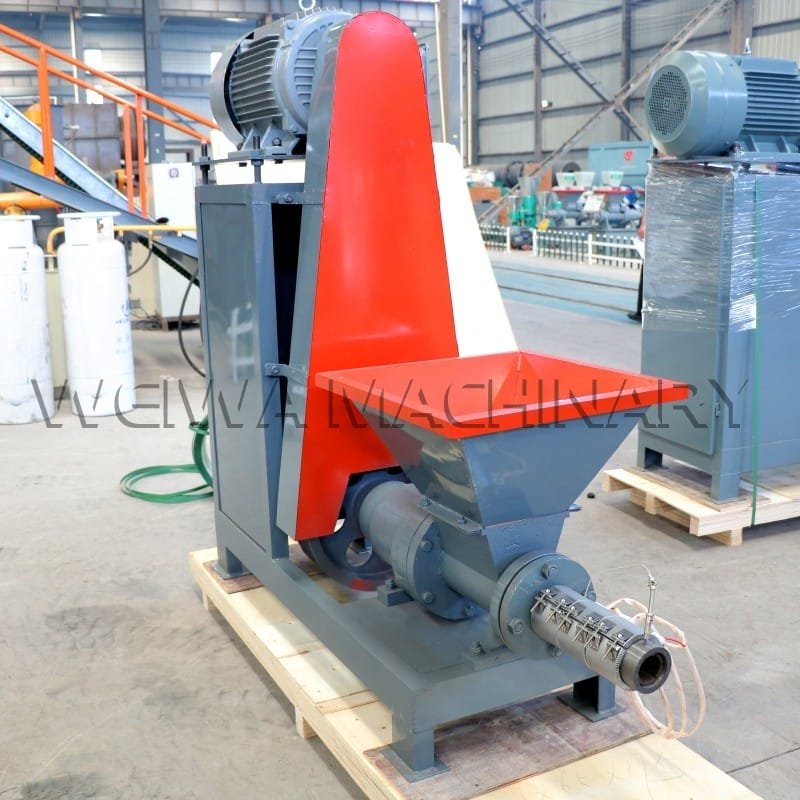
Understanding the Science Behind the Extruder serbuk gergaji
Malaysia, with its rich tropical climate, produces vast quantities of agricultural byproducts every single day. From the sprawling palm oil plantations to the timber processing mills, materials like sawdust, sekam padi, Kerang kelapa, and palm kernel shells are generated in massive volumes. Secara tradisional, these materials were either left to decay, burned openly causing severe air pollution, or used inefficiently as low-grade fuel. Namun, the landscape of energy consumption is changing. There is a global, and particularly a Malaysian, shift towards renewable energy sources and eco-friendly practices. This is where the technology behind the Extruder serbuk gergaji becomes not just relevant, but essential. The machine we are shipping today is designed to address this exact challenge: how to convert loose, difficult-to-handle, and low-energy-density biomass into a clean, high-calorific, and transportable fuel source.
Understanding the science behind this transformation is key to appreciating the value of the equipment. The process does not rely on chemical binders or additives. Alih-alih, it utilizes the natural properties of the biomass itself. When biomass like sawdust or wood chips is subjected to extreme pressure and friction within the barrel of the Biomass Extruder, its internal temperature rises significantly. This heat, combined with the mechanical pressure, softens the lignin—a natural polymer found in plant cell walls. Acting like a natural glue, the molten lignin binds the cellulose fibers together. As this mixture is forced through a die, it forms a continuous, dense rod known as a briquette or “green charcoal.” This physical change is remarkable; the density increases dramatically, making the material far easier and cheaper to transport compared to loose biomass.
Inside the Production Line Heading to Malaysia
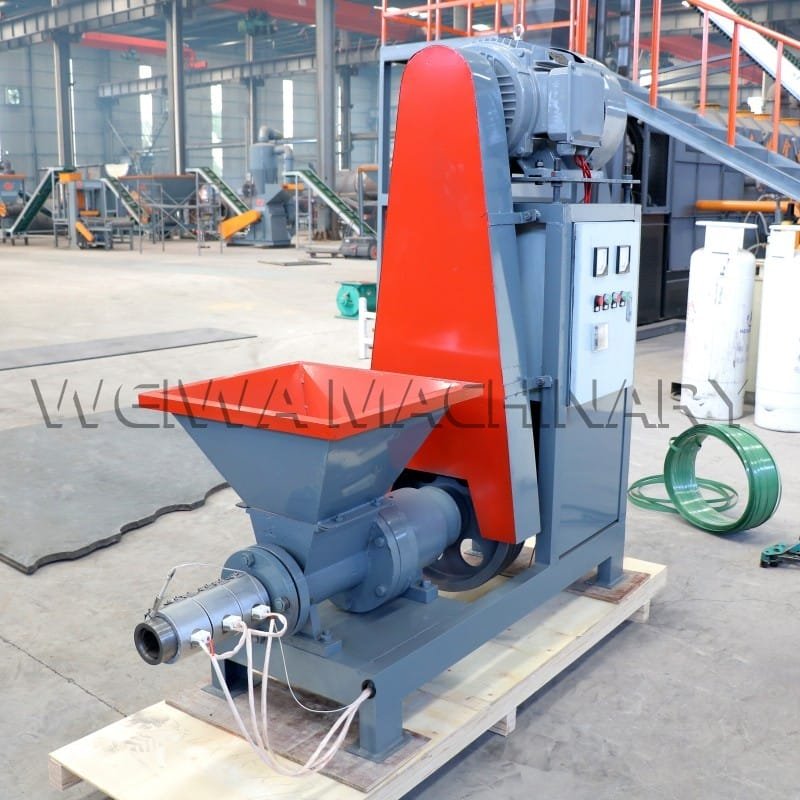
The specific production line heading to Malaysia is a comprehensive system designed for robustness and high output. It begins not with the extruder itself, but with the preparation phase. Raw material, often containing moisture levels far too high for efficient briquetting, first enters a rotary dryer. Achieving the optimal moisture content of around 8% ke 12% is critical; too much moisture creates steam that can fracture the briquettes, while too little prevents the lignin from softening correctly. Following drying, the material is fed into the crushing unit to ensure uniformity, reducing all particles to a consistent size of less than 5mm. Only then does the material enter the heart of the operation: itu Sawdust Briquetting Machine.
Our engineers have spent years refining the design of this machinery to suit the specific challenges presented by different raw materials. The Malaysian client, who operates near major agricultural zones, required a machine capable of handling not only sawdust but also palm fiber and coconut husk residues. These materials have different fibrous structures and lignin contents compared to standard hardwood sawdust. Karena itu, the screw design within the extruder had to be customized. A larger, more robust screw with specific pitch angles ensures that even the tougher fibers are compressed effectively without clogging the system. The heating ring, another crucial component, maintains a stable temperature to ensure the lignin activation process is consistent, resulting in smooth, solid briquettes every time.
The Superior Quality of Biomass Briquettes
One of the most common questions we receive regarding the Mesin briket biomassa is about the final product’s quality. The briquettes produced by this system are not simple logs. They are precision-engineered fuel sources. Typically, they emerge from the machine at a diameter of 50mm, 60mm, or 70mm, depending on the client’s requirement, and feature a unique hollow core. This hollow design is not merely aesthetic; it serves a vital functional purpose. The central hole allows for rapid and efficient ignition, as heat can travel through the core, exposing a larger surface area to the flame almost instantly. Lebih-lebih lagi, the high density of these briquettes means they possess a calorific value that is over 20% higher than that of traditional firewood. They burn longer, lebih panas, and produce significantly less smoke and ash, making them ideal for both domestic cooking and industrial boiler applications in Malaysia.
From Factory to Port: The Logistics of Shipping Heavy Machinery
The loading process at the port is a meticulously choreographed event. Each piece of equipment, from the massive dryer drum to the smaller conveyor belts, must be secured properly to withstand the rigors of sea transport. We utilize sturdy wooden crates for the main machinery, ensuring fumigation standards are met for import into Malaysia. Smaller components and spare parts are packed securely in reinforced boxes, clearly labeled for easy identification upon arrival. Our logistics team works in close coordination with freight forwarders to optimize container space, ensuring the entire production line fits securely while minimizing shipping costs for our client. Watching the crane lift the heavy-duty Extruder serbuk gergaji into the container is always a moment of pride for the Weiwa team; it signifies the culmination of weeks of manufacturing, assembly, and testing.
Economic and Environmental Impact in Malaysia
For the Malaysian market, this shipment represents more than just new equipment. It signifies a move towards energy independence. By utilizing locally sourced agricultural waste, businesses can drastically reduce their reliance on imported fossil fuels or expensive charcoal transported from other islands. The ability to produce charcoal sticks locally means lower operational costs for restaurants, hotel, and factories. Lebih-lebih lagi, it addresses a critical environmental concern. Open burning of agricultural waste is a persistent issue in many developing agricultural regions, contributing to haze and respiratory problems. By providing a profitable and efficient outlet for this waste, itu Biomass Extruder technology helps mitigate this environmental hazard. Farmers and plantation owners can now sell their residues as a valuable commodity rather than paying to dispose of them.
Post-Shipment Support and Installation
The journey of the machine does not end at the port. We understand that installing and operating complex industrial equipment can be daunting. That is why Weiwa Machinery provides comprehensive support that transcends geographical boundaries. Along with the shipment, we provide detailed installation manuals, video tutorials, and a complete set of spare parts, including screws, cutters, and bearings. Our technical team will remain in constant contact with the Malaysian client via video call to guide them through the foundation laying, machine alignment, and initial trial runs. We believe in building relationships, not just selling machines. This after-sales service ensures that the production line reaches its full operational capacity as quickly and smoothly as possible.
The Future of Charcoal Production in Southeast Asia
Looking at the broader picture of the charcoal industry in Malaysia, there is a clear trend towards mechanization and quality improvement. Consumers are becoming more discerning, demanding charcoal that is consistent in size, burns cleanly, and lights easily. The traditional method of producing charcoal in earthen kilns is not only inefficient but also results in a product with high variability. Sebaliknya, the modern Sawdust Briquetting Machine offers standardization. Every batch of briquettes produced is identical in density, kadar air, and calorific value. This consistency is invaluable for commercial enterprises that need to guarantee performance to their own customers. Whether the end-use is for shisha/hookah bars, which require high-quality, odorless charcoal, or for industrial steam generation, the reliability of machine-made briquettes is unmatched.
Another aspect worth discussing is the carbonization process that follows briquetting. While the extruder produces a “green” or raw briquette, the final step to create true charcoal involves pyrolysis—heating the briquettes in a low-oxygen environment. Our Malaysian client has opted for our recommended continuous carbonization furnace to pair with this production line. This furnace is designed to maximize carbon yield while minimizing emissions. The synergy between the Mesin briket biomassa and the carbonization furnace creates a closed-loop system where waste heat can potentially be recycled, further enhancing the overall efficiency and sustainability of the operation. The resulting charcoal is hard, glossy, and has a fixed carbon content that makes it superior to traditionally produced lump charcoal.
Kesimpulan: A Partnership for Sustainability
As the final container is sealed and the ship prepares to depart for the Malaysian coastline, we reflect on the impact this single shipment will have. It will create jobs—from machine operators to maintenance technicians, from logistics handlers to sales personnel. It will generate revenue for local farmers supplying the raw material. Most importantly, it will contribute to a cleaner environment by replacing polluting fuels with a sustainable alternative. This is the vision that drives Weiwa Machinery every single day. We are not just metalworkers; we are enablers of green industry.
The choice of Malaysia as a destination for this advanced Biomass Extruder technology is no coincidence. The country’s proactive government policies supporting renewable energy, coupled with its abundant biomass resources, make it a perfect partner for our technology. We have seen tremendous growth in inquiries from the region, and this shipment sets a precedent for future collaborations. We anticipate that the success of this production line will inspire other entrepreneurs in Southeast Asia to explore the potential of biomass densification. The scalability of our machines means that whether a client is a small-scale farmer or a large industrial conglomerate, there is a solution available.
Sebagai kesimpulan, the loading of this Extruder serbuk gergaji production line is a milestone event for Weiwa Machinery and a significant development for the sustainable energy sector in Malaysia. It encapsulates our dedication to engineering excellence, environmental responsibility, dan kepuasan pelanggan. As the vessel sails across the ocean, it carries with it the promise of innovation, the potential for economic growth, and the power of turning waste into a resource. We eagerly await news of the successful installation and operation of the machines, confident that they will exceed expectations and serve as a shining example of international cooperation in the green technology space.
Tentang Mesin Weiwa
Weiwa Machinery is a leading manufacturer and exporter of biomass densification and charcoal production equipment. With over two decades of experience, we have served more than 2 million customers across 130 negara, establishing ourselves as a trusted name in the industry. Our product range includes Sawdust Extrude Machines, wood crushers, pengering, tungku karbonisasi, and complete turnkey production lines. We specialize in designing customized solutions tailored to the specific raw materials and capacity requirements of our clients. Headquartered in China, we are committed to providing high-quality machinery, comprehensive technical support, and reliable after-sales service. For inquiries about our Mesin briket biomassa or any other equipment, please contact us directly.
Hubungi kami:
Massa: +8613838093177
Whatsapp: +8613838093177
E-mail: info@cjlmachineGroup.com
WebSSayaTe:


 Wechat wechat

 +8615937143060
