


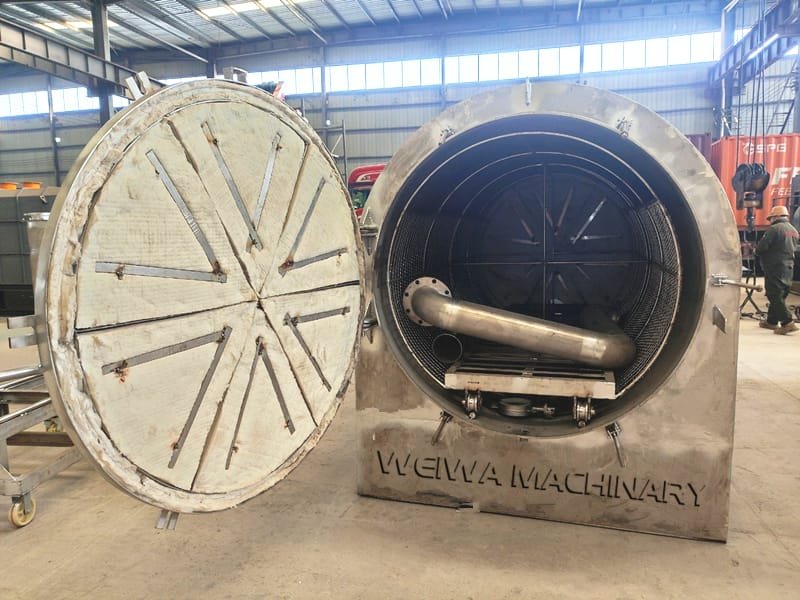
The early morning sun at Weiwa Machinery manufacturing base in Zhengzhou China did not bring the usual quiet of a standard industrial zone but instead highlighted a scene of intense coordination and global commitment. Today marks a significant milestone as our team completes the final factory acceptance and protective packaging of a large capacity horizontal carbonization furnace destined for Lilongwe Malawi. This is not merely a logistical dispatch of heavy duty industrial equipment. It represents the growing trust African entrepreneurs place in advanced charcoal making machine technology to replace outdated polluting earth kilns with sustainable efficient carbonization solutions. As the container truck slowly reversed into position under the guidance of our quality inspection engineers, every bolt on the charcoal maker was double checked, every gas purification pipe was pressure tested, and every rail mounted cart for the horizontal chamber was secured with anti vibration supports. Untuk Mesin Weiwa, exporting a horizontal carbonization furnace in Malawi is more than a commercial order. It is an opportunity to contribute to the circular bioenergy economy of Southeast Africa where agricultural residues like coconut shells sawdust briquettes and bamboo are abundant yet underutilized. The client from Malawi who has visited our workshop via live video inspection twice this month expressed particular interest in the indirect heating system that maintains internal temperatures near 600 degrees Celsius while recycling tar and condensates into clean combustible gas. This feature alone reduces fuel consumption by over thirty percent compared to traditional charcoal kiln methods still prevalent in rural Malawi. Standing beside the painted main body of the furnace, one could see the embossed Weiwa Machinery logo reflecting both the industrial rigor of Chinese manufacturing and the tailored expectations of a Malawian business owner preparing to scale up small to medium scale charcoal production.
Shipment Site Observation at Weiwa Machinery Factory for The Malawi Bound Tungku karbonisasi horizontal
The dispatch area of Weiwa Machinery was alive with the hum of electric forklifts and the methodical tapping of steel strapping machines as the horizontal carbonization furnace prepared for its journey to Malawi. Unlike standard batch kilns, this unit features a barrel style chamber mounted on heavy duty rails, designed for easy loading via carts and gradual carbonization under controlled indirect heating. Our logistics supervisor coordinated with the international freight forwarder to ensure the furnace main body, the combustion chamber insulation layers, the gas purification tower, and the PLC control cabinet were all loaded in strict sequence to prevent any shift during ocean transit from Qingdao port to Beira then trucking to Malawi. Photographs taken at the site show our technicians applying high temperature resistant paint touch ups on the furnace door seals, a detail that underscores why Weiwa Machinery clients continue to choose us as their preferred charcoal making machine supplier. The horizontal carbonization furnace in Malawi will face varying humidity levels and seasonal rains, so factory side rust proofing and moisture barrier wrapping are critical. One senior engineer explained that the compact footprint of this model makes it ideal for Malawian workshops where land expansion might be costly, yet automation and heat distribution balance must remain uncompromised. As the container doors closed, the atmosphere was not just that of a sale completed but of a partnership initiated. Inside that steel box lay not only a charcoal kiln but also the technical promise of higher charcoal yields, lower smoke emissions, and recyclable energy loops that Weiwa Machinery has refined over years of exporting to more than two million customers worldwide. The shipment includes spare sealing gaskets, multilingual operation manuals, and a digital copy of our commissioning checklist so that once the horizontal carbonization furnace arrives in Malawi, local technicians can align the rail system and calibrate the thermocouples without delay. Watching the truck depart, it becomes clear that every weld on that charcoal maker carries the weight of expectation from both a Chinese manufacturer and an African entrepreneur seeking to modernize biomass carbonization.
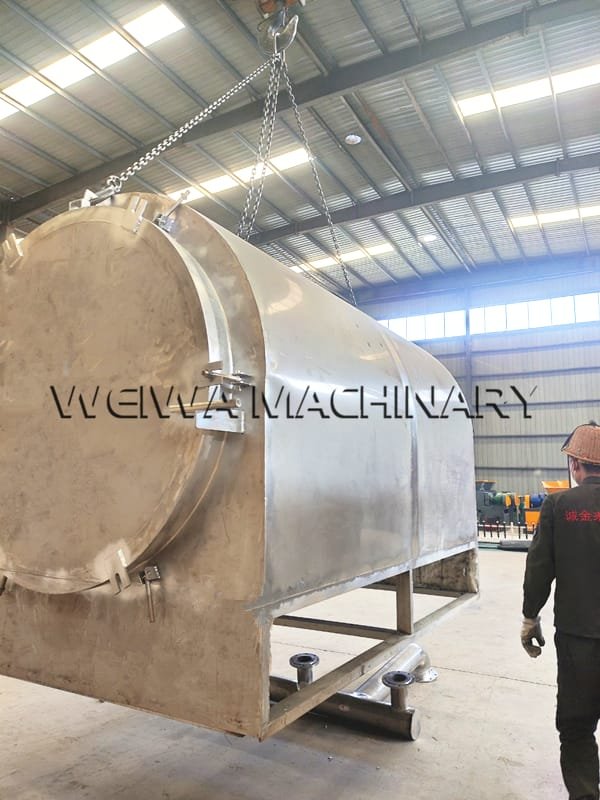
Technical Pre Delivery Inspection of The Horizontal Carbonization Furnace
Before any charcoal making machine leaves the Weiwa Machinery premises, it undergoes a multi stage inspection protocol that exceeds basic CE aligned safety checks. For the unit headed to Malawi, we conducted a no load trial run of the rail mounted cart system to ensure smooth insertion and extraction of the barrel chamber. The horizontal carbonization furnace was heated to a test temperature of 300 degrees Celsius using recycled combustible gas simulated from our in house biogas supply, verifying that the advanced gas purification system could effectively separate tar and condensates while feeding clean gas back into the burners. Our quality team measured the chamber flatness within 0.5 millimeters across the entire barrel length, crucial for balanced heat distribution when processing uneven sized raw materials such as wood logs mixed with agricultural residues. Each charcoal kiln component was cross referenced against the Malawi clients specified voltage requirements and container dimension limits to avoid customs clearance delays. The inspection report, stamped and digitized, will accompany the shipment as part of Weiwa Machinerys commitment to transparency. We also tested the emergency pressure release valve and the secondary air isolation flaps, since in Malawi the primary feedstock may include high moisture bamboo or green coconut shells during rainy seasons, which can cause volatile spikes in internal chamber pressure. This proactive factory side validation ensures that when the horizontal carbonization furnace in Malawi is fired for the first time, the learning curve for the operator is minimized and the initial charcoal yield meets the promised benchmarks of over forty percent conversion from certain dry biomass types.
Packaging and Anti Corrosion Measures for Tropical Climate Shipping
Shipping a heavy duty horizontal carbonization furnace from Central China to Southeast Africa involves prolonged exposure to salt laden air, container condensation, and potential handling roughness at transshipment ports. Weiwa Machinery employs a layered packaging strategy for every charcoal making machine export order. The main barrel chamber of the furnace is wrapped in polyethylene vapor barrier film, followed by thick woven moisture absorbent desiccant blankets placed inside the chamber to protect the inner refractory lining. External corners of the charcoal kiln are shielded with plywood reinforcement to prevent impact damage during forklift loading. All polished surfaces of the rail system and cart wheels are coated with a temporary anti rust grease that can be easily wiped off during installation in Malawi. Control panels and sensitive sensors of the horizontal carbonization furnace are crated in plywood boxes with shock absorbing foam, clearly labeled in English as fragile electronic components. We also attach stainless steel plates engraved with the equipment serial number and Weiwa Machinery contact information, ensuring that even years later, a Malawian operator can trace parts back to our factory. Given that many horizontal carbonization furnace in Malawi installations occur in semi open yards, we advise clients to store the crated components under cover upon arrival, and our packaging includes waterproof tarpaulin sheets for interim protection. These meticulous steps reflect why Weiwa Machinery is consistently chosen as the first option for global charcoal maker procurement, merging industrial durability with climate aware logistics.
Why Malawi is An Emerging Market for Horizontal Carbonization Furnace and Charcoal Making Machine Adoption?
Malawi, known for its arable land around Lake Malawi and its extensive agricultural activities, generates vast quantities of biomass waste annually including cassava stalks, maize cobs, sekam padi, Baga tebu, bamboo from riverbanks, and imported coconut shells in trading hubs. Secara tradisional, much of this organic residue is either burned in open fields causing air quality concerns or left to decay, missing an opportunity for energy recovery. The conventional charcoal kiln method in Malawi often involves pit kilns or improvised brick mounds covered with soil, which operate with low thermal efficiency, high wood consumption per ton of charcoal produced, and significant smoke emissions that affect both health and the environment. Against this backdrop, the horizontal carbonization furnace emerges as a technologically superior alternative. Its ability to process diverse raw materials uniformly under indirect heating makes it suitable for Malawian producers who may not have a single consistent feedstock. A charcoal making machine that can handle sawdust briquettes today and bamboo tomorrow provides the flexibility essential for small to medium scale enterprises in developing markets. Lebih-lebih lagi, Malawi has seen steady urban growth in cities like Blantyre and Mzuzu where demand for clean burning cooking fuel and industrial heating charcoal is rising. The horizontal carbonization furnace in Malawi can be integrated into agro processing zones, allowing sugar estates or rice mills to convert their own waste into marketable charcoal or biochar, thus creating an additional revenue stream. Government and NGO discussions around sustainable energy and reforestation indirectly encourage technologies that increase charcoal yield per tree harvested, positioning the modern charcoal kiln as a tool for resource optimization rather than depletion. Weiwa Machinery has observed increasing inquiries from Malawi not only about equipment price but about gas recycling ratios, charcoal fixed carbon content, and automation levels, indicating a maturing buyer mindset that values long term ROI over short term low cost setups. This shift aligns perfectly with the design philosophy of our horizontal carbonization furnace, which emphasizes fuel self sufficiency through combustible gas recirculation and reduced maintenance through robust barrel style construction.
Agricultural Residue Profile in Malawi Suitable for Horizontal Carbonization Furnace
Understanding local feedstock is central to configuring a charcoal maker for optimal performance. In Malawi, maize cob waste after harvest season can be collected in substantial volumes, though its loose structure requires briquetting before efficient carbonization in a horizontal chamber. Rice husks from the lowland paddies near the Shire River are another candidate, typically processed via screw press briquettes before being loaded into the horizontal carbonization furnace to avoid fine particle loss during gas flow. Baga tebu, with proper drying to below twenty percent moisture content, can be carbonized to produce a softer charcoal often used as biochar for soil amendment in Malawian farming systems. Bambu, increasingly grown along river valleys, offers high lignin content and can yield dense charcoal with excellent burning characteristics when processed in a charcoal kiln capable of maintaining stable 500 ke 600 degree Celsius ranges. Kerang kelapa, though less native, are imported through regional trade and are prized for high grade charcoal used in grilling and water filtration applications. The versatility of Weiwa Machinerys horizontal carbonization furnace allows these varied materials to be carbonized in batch or semi continuous modes depending on the cart loading system configuration. Our experience shipping charcoal making machine units to similar climates suggests that pre drying equipment such as rotary dryers should be considered alongside the furnace in Malawi to counter the high ambient humidity that can raise raw material moisture above optimal thresholds. By tailoring the feeding size, drying level, and carbonization duration to Malawian biomass profiles, operators can achieve consistent charcoal yields while minimizing incomplete carbonization or excessive ash content that sometimes plagues traditional earth kilns.
Energy and Environmental Context Driving Charcoal Kiln Upgrades in Malawi
Across Malawi, household energy reliance on firewood and charcoal remains high, yet deforestation pressures and fluctuating rainfall patterns linked to climate variability push stakeholders to seek cleaner more efficient production methods. A traditional charcoal kiln may convert only ten to fifteen percent of wood mass into saleable charcoal, with the rest lost as volatile gases, partial combustion, or unburned residue, and almost all smoke released untreated into the atmosphere. Sebaliknya, a horizontal carbonization furnace equipped with gas purification and recirculation can raise useful charcoal output to above thirty percent for dry hardwood and simultaneously capture or combust harmful volatiles. For a Malawian producer, this means fewer trees cut per ton of charcoal sold, aligning with community level reforestation goals and potentially qualifying for future carbon credit discussions. The indirect heating mechanism of the charcoal making machine also reduces on site fire hazards compared to open pit burning, a practical safety advantage in dry seasons when landscape fires are a concern. Lebih-lebih lagi, the compact footprint and rail cart loading of Weiwa Machinerys horizontal carbonization furnace in Malawi installations reduce labor intensity, allowing operators to focus on feedstock preparation and quality sorting rather than manual kiln sealing and breaking. As awareness grows regarding the economic and ecological cost of inefficient charcoal kiln practices, more Malawian entrepreneurs are evaluating total cost of ownership, where a higher initial investment in a horizontal carbonization furnace is offset by fuel savings from gas recycling, higher product market value due to uniform quality, and reduced health risks for workers. Weiwa Machinery supports this transition by providing detailed emission estimation sheets and operational training materials that help clients present their upgraded charcoal maker projects to local authorities or development partners interested in sustainable energy metrics.
Scientific Principles of Horizontal Carbonization Furnace Operation for Charcoal Maker Applications
To appreciate why the horizontal carbonization furnace outperforms traditional charcoal kiln designs, one must understand the thermal decomposition process known as pyrolysis. Carbonization is the conversion of organic biomass into charcoal, condensable liquids such as wood vinegar and tar, and non condensable gases including methane carbon monoxide and hydrogen, all achieved in an oxygen limited environment at elevated temperatures. In a horizontal carbonization furnace, the barrel chamber mounted on rails is sealed at both ends after loading raw materials via carts. Indirect heating from external burners raises the chamber temperature gradually, typically starting with a drying phase below 150 degrees Celsius where free moisture evaporates without significant chemical change. Di antara 150 Dan 270 Derajat Celcius, hemicellulose begins to decompose, releasing initial volatiles. From 270 ke 400 Derajat Celcius, cellulose and lignin undergo active pyrolysis, generating the bulk of combustible gases and liquid byproducts. Above 400 degrees Celsius and up to around 600 Derajat Celcius, the solid residue stabilizes into fixed carbon rich charcoal. The horizontal orientation allows the material bed to remain relatively static on the cart, avoiding mechanical shearing that can create fines, while the indirect heating ensures uniform temperature penetration from the chamber walls inward. Weiwa Machinerys charcoal making machine incorporates a flue gas purification system that cools the raw gas, condenses tar and wood vinegar for optional collection, and returns the cleaned combustible fraction to the burner as supplemental fuel. This closed loop energy design distinguishes the modern horizontal carbonization furnace in Malawi and other markets from primitive kilns that waste both heat and chemical energy. The ability to control heating rate, soak time, and atmospheric composition via the PLC panel enables operators to tailor charcoal properties such as fixed carbon percentage, volatile matter, and density for specific end uses ranging from domestic cooking fuel to industrial metallurgical reductant or agricultural biochar.
Indirect Heating Versus Direct Fire Kilns in Charcoal Making Machine Context
A key differentiator of the horizontal carbonization furnace is indirect heating, where the flame and combustion products from the burner do not directly contact the biomass inside the barrel chamber. Alih-alih, heat transfers through the chamber wall, creating a more controlled pyrolysis environment with reduced risk of localized over firing that can turn charcoal to ash. Traditional direct fire charcoal kiln methods often expose material to hot gases containing oxygen, leading to partial oxidation losses and uneven carbonization. In Malawis context, where some feedstocks like bamboo or sugarcane bagasse may have internal voids that accelerate airflow, indirect heating provides a safer margin against unintended combustion. The horizontal design also facilitates better sealing integrity, crucial for maintaining the low oxygen conditions necessary for charcoal formation rather than complete combustion to carbon dioxide and water. Weiwa Machinerys charcoal maker employs high temperature ceramic fiber insulation around the barrel to minimize radial heat loss, ensuring that most thermal energy contributes to carbonization rather than dissipating into the surroundings. This efficiency translates to shorter cycle times per batch and lower external fuel requirements once the gas recirculation system is active. For Malawian operators transitioning from earth kilns, the indirect heating principle may require initial familiarization with burner adjustment and gas valve sequencing, which is why Weiwa Machinery includes annotated diagrams and remote video commissioning support with every horizontal carbonization furnace shipment. Over time, the consistency offered by indirect heating becomes a competitive advantage when supplying charcoal to urban retailers or industrial buyers who specify fixed carbon content and low moisture standards.
Gas Purification and Recirculation Advantages in Horizontal Carbonization Furnace
During pyrolysis in a charcoal making machine, the off gases produced are a mixture of combustible hydrocarbons, hidrogen, karbon monoksida, carbon dioxide, water vapor, aerosol tar, and acetic acid vapors. Without treatment, these gases either escape as smoke in traditional charcoal kiln setups or require external fuel to incinerate, adding cost and pollution. The horizontal carbonization furnace designed by Weiwa Machinery channels these gases through a multi stage purification train typically including a condenser to recover liquids, a cyclone or filter to remove particulates and heavy tar droplets, and a scrubber or cooling tower to further clean the gas stream. The resulting lean combustible gas, still carrying significant calorific value, is ducted back to the combustion chamber burners to supplement or even largely replace primary fuel such as diesel or liquefied petroleum gas after the initial startup phase. In many operational cases, a well tuned horizontal carbonization furnace in Malawi can achieve up to seventy percent self heating reliance on recycled gas, drastically cutting ongoing fuel expenses. Beyond economics, this system addresses smoke nuisance complaints that often lead to conflicts between traditional charcoal kiln operators and neighboring communities. The captured liquid fractions, wood vinegar and crude tar, can be stored in sealed tanks for potential sale as bio pesticide feedstock or further refined if local regulations and markets permit. By integrating gas management into the charcoal maker design, Weiwa Machinery enables Malawian producers to position their operations as environmentally improved biomass processing units rather than mere charcoal burning sites, which may assist in permitting engagements and community relations.
Installation and Operational Considerations for Horizontal Carbonization Furnace in Malawi
Upon arrival of the container in Malawi, the horizontal carbonization furnace must be unloaded with appropriate lifting equipment capable of handling the main barrel weight, which can range from several tons depending on capacity. Weiwa Machinery provides a foundation drawing specifying reinforced concrete pad dimensions and anchor bolt placements to ensure the rail system remains level under thermal expansion cycles. Site selection should consider proximity to feedstock storage, dried material holding areas, and charcoal cooling and packaging zones, while maintaining safe distances from flammable material piles and residential structures. Electrical supply stability is a common consideration in parts of Malawi, so we recommend clients assess voltage fluctuation protection for the PLC control cabinet and consider a small backup power source for control system continuity during brief outages. The charcoal making machine commissioning begins with a no load heat test to verify temperature uniformity along the barrel using portable thermocouples at multiple points. Only after confirming thermal performance should the first cart load of dried biomass be introduced. Operators should be trained to monitor the gas purification system pressure gauges, as blockages in condensate drains can reduce recirculation efficiency. For a horizontal carbonization furnace in Malawi processing high moisture seasonal residues, pre drying becomes the critical upstream step; attempting to carbonize wet material will extend cycle time, increase condensate load, and lower charcoal yield. Weiwa Machinery advises a simple three bay material management approach: raw receiving, solar or mechanical drying yard, and dried buffer stock adjacent to the furnace loading bay. This layout minimizes handling and keeps the charcoal kiln operating at optimal feedstock moisture below twenty percent. Safety protocols must include clear signage around the combustion zone, emergency shutoff training for all personnel, and routine inspection of door seals and rail cart bearings which endure repeated thermal cycling. With these measures, the horizontal carbonization furnace becomes a reliable core asset in a Malawian charcoal production business capable of delivering consistent output across dry and wet seasons alike.
Feedstock Preparation Workflow Before Loading The Charcoal Kiln
Success with a horizontal carbonization furnace heavily depends on what happens before the cart enters the barrel. Raw biomass in Malawi often varies in size from whole maize cobs to loose rice husks, requiring different preparation paths. Loose fines such as sawdust or rice husk should be compacted into briquettes using a screw press charcoal making machine auxiliary to prevent them from being entrained in the gas stream or clogging the purification system. Larger diameter wood logs or bamboo segments should be cut to lengths slightly shorter than the barrel interior to allow easy cart loading and uniform heat exposure at the ends. Moisture testing with a simple handheld meter should be routine; anything above twenty percent moisture content will prolong the drying phase inside the furnace, consuming more external fuel and delaying the start of active carbonization. Some Malawian operators choose to pre stack biomass in ventilated shade structures for solar pre drying during the hot season, reducing mechanical drying energy if a dryer is part of the line. Sorting by material type before carbonization can also improve consistency, as hardwoods, softwoods, bambu, and agricultural residues have different pyrolysis kinetics and optimal peak temperature settings. While the horizontal carbonization furnace can handle mixed loads, dedicated batches per material type simplify quality control and allow the charcoal maker to adjust soaking time and temperature ramp rates for maximum yield. Weiwa Machinery provides a reference table correlating typical Malawian biomass types with recommended carbonization curves, which can be programmed into the PLC for repeatable results. Good housekeeping around the loading bay, keeping it free of scattered fines and ensuring carts roll smoothly on clean rails, prevents minor operational frictions that accumulate into downtime over months of production.</
Batch Cycle Management and Charcoal Quality Control for Malawi Operations
Operating a horizontal carbonization furnace in batch mode involves sequencing multiple carts if the design allows staggered loading, or completing full cycles per barrel chamber. A typical cycle includes loading and sealing, initial heating and drying, ramping to carbonization temperature around 500 ke 600 Derajat Celcius, soaking for a material dependent duration often four to eight hours for denser wood or bamboo, cooling the chamber partially before extraction, and discharging the hot charcoal cart into a sealed cooling pit or quench system to stabilize the charcoal. In Malawi, where water availability may vary seasonally, indirect water cooled discharge systems should be managed to avoid excessive consumption; often natural cooling in sealed containers with limited oxygen is preferred to prevent re ignition while conserving water. Quality control checks on the finished charcoal include visual inspection for uniform blackening without orange or brown un carbonized patches, random sampling for moisture content below five percent, and periodic laboratory or field testing of fixed carbon and ash content if selling to industrial buyers. The charcoal maker operator should maintain a log correlating each batch number with feedstock type, initial moisture, furnace temperature curve, gas recirculation rate, and final yield. Over time, this data reveals optimization opportunities such as slight adjustments to soak time for specific Malawian bamboo clones or sugarcane bagasse briquettes. Weiwa Machinery encourages clients to view the horizontal carbonization furnace not as a black box but as a tunable system where small parameter refinements compound into significant annual yield and fuel cost improvements. Sharing these operational insights with our technical team during follow up visits helps us refine future charcoal kiln designs for African conditions, reinforcing the collaborative relationship between Weiwa Machinery and Malawian charcoal producers.
Commercial Outlook of Charcoal Produced by Horizontal Carbonization Furnace in Malawi
The charcoal output from a modern horizontal carbonization furnace in Malawi commands differentiation based on quality consistency, low smoke emission during end use, and traceability of production method. Urban markets in Lilongwe Blantyre and Mzuzu increasingly see branded charcoal products packaged in woven sacks with moisture controlled liners, targeting households that value cleaner burning fuel with less ash cleanup. High density charcoal from bamboo or hardwood processed in a controlled charcoal making machine can also penetrate niche segments such as hotel grilling, safari lodge cooking, or even export to landlocked neighboring countries if cross border quality standards align. The biochar fraction, produced by tuning the furnace for lower temperature longer residence time carbonization, finds application among Malawian smallholder farmers experimenting with soil organic matter restoration, especially on depleted sandy soils. Although market education is needed, the narrative that charcoal kiln upgrades can simultaneously conserve forests and generate income resonates with development agencies and eco conscious buyers. Industrial users such as brick kilns or small metalworking shops may purchase uniform sized charcoal pieces as supplementary fuel, particularly where electricity or propane costs fluctuate. Weiwa Machinery supports clients by providing generic product specification templates and charcoal sample testing guidelines that help Malawian producers communicate their products value proposition to wholesalers and retailers. When the horizontal carbonization furnace operates with gas recycling and consistent batch control, the resulting charcoal maker output not only looks better but performs better in calorific value tests, creating a tangible reason for buyers to pay a premium over traditionally kilned charcoal. Over a multi year horizon, this price differentiation can amortize the capital cost of the advanced charcoal kiln and position the business as a quality leader in Malawis evolving bioenergy landscape.
Integration With Briquetting and Value Added Processing After Carbonization
While the horizontal carbonization furnace produces lump charcoal, market flexibility increases when paired with downstream charcoal making machine components such as crushers, mixer, and briquette presses. In Malawi, some consumers prefer uniform shaped briquettes for stacking in stoves or packaging as retail units. Setelah karbonisasi, the charcoal can be crushed to powder, mixed with a natural binder such as cassava starch or molasses if available locally, and extruded into rods or molded into oval briquettes. This integration utilizes otherwise undersized lump charcoal or fines that might be unsellable in loose form. The horizontal carbonization furnace in Malawi thus becomes the front end of a larger value chain where consistent char quality from controlled pyrolysis ensures the briquette binder requirement stays predictable and the final product has homogeneous combustion behavior. Some operators also explore activating their charcoal using steam or chemical methods, though this requires additional equipment and market linkage to water treatment or gold recovery sectors. Even without full activation, high fixed carbon charcoal from a well run charcoal kiln can be marketed as premium input for artisanal activated carbon producers. Weiwa Machinery offers modular line configurations where the horizontal carbonization furnace can be ordered with optional connecting conveyors and preliminary crushing units, allowing Malawian entrepreneurs to start with carbonization only and expand into briquetting as market demand clarifies. This phased investment approach reduces initial risk while preserving upgrade pathways, a practical consideration for many small to medium scale operators in emerging markets.
Workforce Skill Development Around Advanced Charcoal Kiln Technology
Introducing a horizontal carbonization furnace in Malawi also introduces a need for basic technical literacy among the operating crew. Tasks such as reading temperature trends on the PLC interface, interpreting gas pressure indicators, performing door seal inspections, and safely managing hot cart extractions require training beyond traditional earth kiln experience. Weiwa Machinery addresses this by supplying illustrated operation manuals in English, hosting remote video training sessions during commissioning, and maintaining a technical query response channel via email and messaging apps. Local vocational training centers or agricultural extension offices in Malawi could potentially collaborate with equipment owners to demonstrate safe biomass carbonization practices, creating community level awareness of improved charcoal making machine benefits. Skilled operators who understand the why behind indirect heating, moisture limits, and gas recirculation are less likely to misuse the charcoal kiln through practices such as overfilling carts, skipping pre drying, or forcing oxygen into the chamber to hasten heating, all of which degrade equipment life and charcoal quality. Over time, a competent local team becomes an asset not only for the business but for the region, as knowledge of horizontal carbonization principles can transfer to other biomass processing initiatives such as biochar production for soil amendment or small scale syngas exploration. Weiwa Machinery views every horizontal carbonization furnace shipment to Malawi as an entry point for technical exchange, where feedback from the field informs our R&D on corrosion resistance, spare part standardization, and control system simplification suited to varying operator expertise levels across global markets.
Mesin Weiwa Commitment and Company Introduction
Weiwa Machinery is a professional manufacturer based in Zhengzhou China specializing in charcoal manufacturing machinery and biomass carbonization solutions. With years of expertise in designing and exporting horizontal carbonization furnace, Mesin Pembuat Arang, charcoal maker, charcoal kiln, and complete production lines, we serve clients in Africa Asia Europe and the Americas. Our product range focuses on energy efficient indirect heating systems, gas purification and recirculation technology, and automated rail cart loading to reduce labor and improve safety. Having become the first choice for more than two million customers worldwide, Weiwa Machinery combines factory direct pricing, customizable specifications, and comprehensive after sales support including technical documentation, spare parts supply, and remote commissioning guidance. The horizontal carbonization furnace in Malawi and other regions reflects our commitment to helping small to medium scale producers achieve higher charcoal yields, lower fuel consumption, and cleaner operations compared to traditional methods. We continuously refine our designs based on field feedback from diverse climates and feedstocks, ensuring our charcoal kiln and carbonization equipment remain practical, tahan lama, and aligned with global sustainability trends. Whether you are establishing a new charcoal production site in Malawi or upgrading an existing plant, Weiwa Machinery provides reliable equipment and transparent communication to support your project from inquiry to long term operation.
For business inquiries, technical consultation, or quotation requests, please contact us:
Massa: +8613838093177
Whatsapp: +8613838093177
E-mail: info@cjlmachineGroup.com


 Wechat wechat

 +8615937143060
