


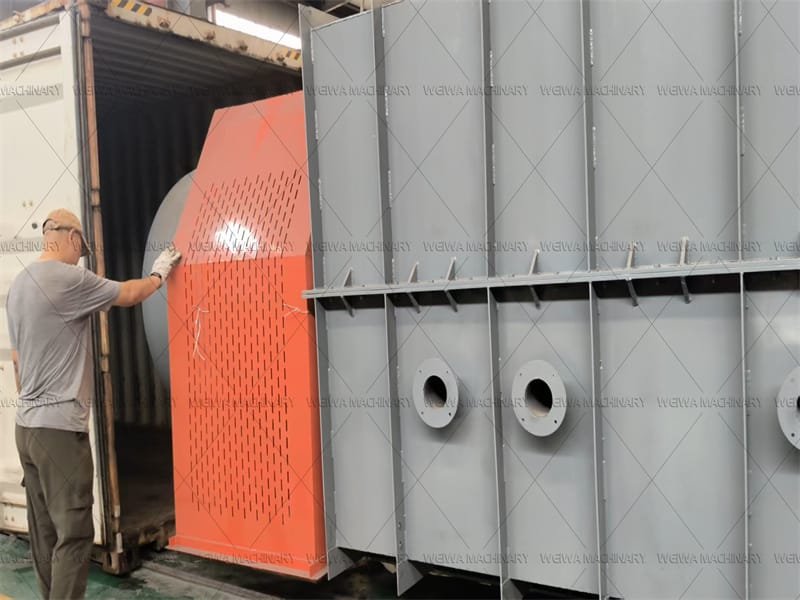
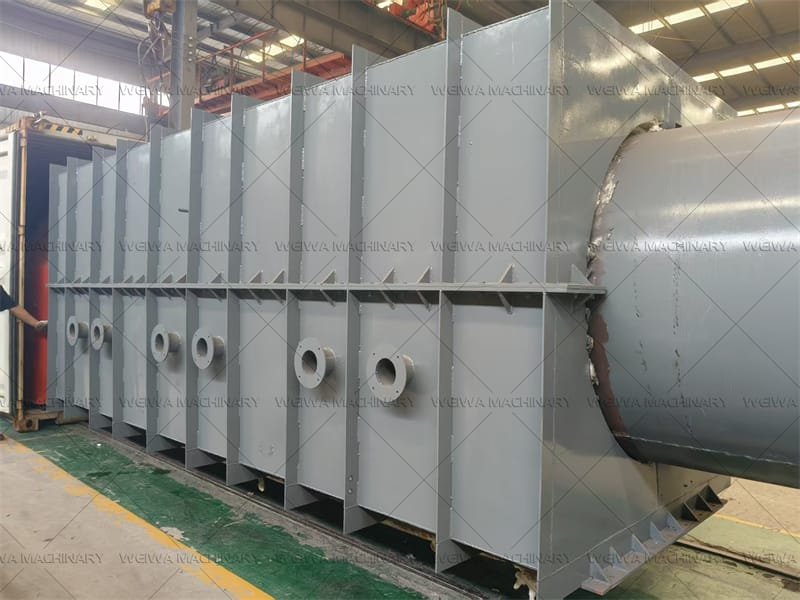
In today’s era of sustainable development and green manufacturing, charcoal production is witnessing a transformation driven by innovation. Di mesin Weiwa, we take pride in engineering advanced solutions that meet the evolving demands of biomass energy processing. Baru-baru ini, our team had the opportunity to travel far across borders to conduct an onsite trial of our continuous carbonization furnace for sawdust with a client based in Singapore. This experience not only highlighted the efficiency and reliability of our technology but also opened new perspectives on the future role of continuous carbonization furnaces in Singapore and the broader Southeast Asian market.
Understanding Continuous Carbonization Technology
The concept of carbonization has long been associated with traditional charcoal kilns that rely on batch processing and manual handling. While these methods have historical significance, they fall short in meeting modern productivity and environmental standards. The continuous carbonization furnace represents a leap forward. Designed to operate without interruption, this equipment processes raw biomass such as sawdust, Kerang kelapa, sekam padi, or other agricultural residues into high-quality charcoal through controlled pyrolysis.
Unlike conventional charcoal making machines that require frequent loading and unloading, the continuous carbonization furnace ensures a steady feed of material and uninterrupted output of biochar. This design significantly enhances throughput while reducing labor costs and emissions. For businesses aiming to industrialize their charcoal production, this machinery offers a compelling advantage.
Key Features of Weiwas Tungku karbonisasi berkelanjutan
Our continuous carbonization furnace integrates several innovations tailored for optimal performance. A core feature is the use of a sealed stainless steel reactor where biomass undergoes thermal decomposition under limited oxygen conditions. Heat recovery systems capture and reuse energy from flue gases, improving overall thermal efficiency. Selain itu, gas purification components ensure minimal emission of harmful substances, aligning with international environmental protocols.
Automation plays a crucial role. With precise control over temperature zones, feeding rates, and cooling phases, operators can maintain consistent product quality. The result is charcoal that meets commercial specifications for density, calorific value, dan membakar waktu. For sawdust, which is abundant in timber industries and woodworking hubs, this furnace transforms a low-value byproduct into a profitable commodity.
The Journey to Singapore for On Site Trial
Singapura, despite its small geographical size, serves as a strategic hub for trade and innovation in Southeast Asia. The country’s commitment to sustainability and circular economy principles makes it an ideal testing ground for advanced carbonization technologies. Klien kami, engaged in eco-friendly fuel production, sought a reliable solution for converting locally sourced sawdust into charcoal to serve both domestic needs and export markets.
Transporting and installing our continuous carbonization furnace in Singapore was a meticulous process. Our engineering team ensured all components met import regulations and site requirements. Sesampainya disana, we collaborated closely with the client’s staff to prepare the facility, calibrate instruments, and conduct preliminary safety checks. The trial phase spanned several days, during which we processed multiple batches of sawdust collected from regional furniture workshops and wood mills.
Trial Process and Performance Highlights
From the outset, the continuous carbonization furnace demonstrated remarkable stability. Raw sawdust was fed into the hopper, where a screw conveyor regulated input speed into the main reactor. Inside, temperatures were maintained between 500°C and 700°C depending on the desired charcoal grade. The pyrolysis gases generated during the process were partially combusted within the system to provide heat, showcasing the furnace’s self-sustaining energy cycle.
One notable observation was the uniformity of the final product. The charcoal produced exhibited a dense structure, low moisture content, and high calorific value, making it suitable for barbecue fuel, Pemanasan Industri, and soil amendment applications. Compared to intermittent charcoal kilns, our furnace reduced processing time per ton by nearly 40% and lowered labor involvement significantly.
Throughout the trial, emissions remained well within permissible limits, thanks to the integrated filtration unit that captured particulates and acidic vapors. This aspect resonated strongly with the client, who emphasized compliance with Singapore’s strict environmental policies. Feedback from the client’s technical team praised the intuitive control panel and real-time monitoring features, which simplified operation and minimized human error.
Scientific Principles Behind Continuous Carbonization
To appreciate the capabilities of the continuous carbonization furnace, it helps to understand the science of pyrolysis. When biomass is heated in the absence of oxygen, complex organic molecules break down into three primary components: arang padat, liquid tar, dan gas yang mudah terbakar. In batch kilns, this transformation occurs in stages with varying conditions, often leading to inconsistent outputs.
Sebaliknya, continuous carbonization furnaces maintain steady thermal profiles along different sections of the reactor. This staged approach allows for precise management of each decomposition phase, ensuring maximum charcoal yield and minimal waste. Lebih-lebih lagi, the continuous movement of material prevents localized overheating or incomplete reactions. Advanced models like ours incorporate programmable logic controllers (PLCs) to adjust parameters dynamically based on input material characteristics.
The ability to handle fine particles such as sawdust efficiently sets this furnace apart. Traditional charcoal making machines often struggle with materials of uneven size, resulting in poor heat distribution and char variability. Our design uses a pre-conditioning chamber to agglomerate fine sawdust into manageable feedstock, guaranteeing uniform exposure to pyrolysis conditions.
Environmental and Economic Implications
The deployment of a continuous carbonization furnace carries significant environmental benefits. By converting waste sawdust into charcoal, we reduce open burning and landfill disposal, both of which contribute to air pollution and greenhouse gas emissions. Lebih-lebih lagi, the furnace’s heat recovery mechanism lowers fossil fuel consumption, reinforcing its green credentials.
Secara ekonomis, clients benefit from higher productivity and lower operational costs. The elimination of downtime associated with batch processing means more output per day, directly enhancing revenue potential. Reduced manpower requirements translate into savings on labor expenses. Given Singapore’s emphasis on resource efficiency, these advantages align perfectly with national goals.
Another dimension is the potential for creating value-added products. Charcoal from our furnace can be further processed into activated carbon for water treatment or used in composite materials, expanding market opportunities. This versatility strengthens the case for adopting continuous carbonization technology in urbanized yet resource-conscious environments like Singapore.
Market Outlook for Continuous Carbonization Furnace in Singapore
Singapore may not be the largest producer of biomass, but its strategic position and regulatory framework foster innovation in sustainable technologies. The government’s Green Plan 2030 outlines ambitious targets for reducing carbon footprints and promoting renewable energy sources. Arang, particularly when derived from local waste streams, fits well within this vision as a cleaner alternative to fossil fuels.
The demand for high-quality charcoal in Singapore arises from diverse sectors including hospitality, food services, and specialty agriculture. Import dependency currently exists due to limited local production capacity. Namun, with rising awareness and support for domestic manufacturing, there is growing interest in investing in charcoal making machines that utilize indigenous resources like sawdust.
Weiwa Machinerys continuous carbonization furnace is well positioned to meet this emerging need. Its compact footprint suits Singapore’s space constraints, while its automated operation aligns with workforce optimization trends. As more enterprises recognize the economic and ecological merits, we anticipate a gradual uptake of this technology across the island nation.
Lebih-lebih lagi, Singapore’s role as a regional trade center means successful implementation here can catalyze adoption in neighboring countries facing similar sustainability challenges. Our trial has laid a strong foundation for building partnerships and scaling operations throughout Southeast Asia.
Client Testimonials and Collaborative Spirit
During the post-trial debriefing, our client expressed satisfaction not only with the machinery performance but also with the professionalism of the Weiwa Machinery team. They appreciated the transparency in sharing operational data and providing hands-on training for their staff. Such collaborative engagement underscores our commitment to customer success beyond mere equipment supply.
The client noted that the continuous carbonization furnace exceeded expectations in terms of durability and ease of maintenance. Parts susceptible to wear are designed for quick replacement, minimizing production interruptions. This consideration is vital for businesses operating in competitive environments where uptime translates directly into profitability.
Feedback like this motivates us to continually refine our designs. Listening to end users in varied contexts enables us to adapt our technology to specific regional needs, ensuring relevance and resilience in dynamic markets.
Integrating Continuous Carbonization Furnace into Broader Biomass Strategies
For Singaporean enterprises, integrating a continuous carbonization furnace into a holistic biomass strategy can unlock synergies with other green initiatives. Coupling charcoal production with composting programs or biogas plants allows fuller utilization of organic waste streams. The residual heat from the furnace might also be harnessed for drying processes or space heating, further enhancing energy efficiency.
Weiwa Machinery supports clients in mapping out such integrated approaches. Our engineers work alongside customers to assess feedstock availability, site logistics, and downstream applications, crafting solutions that maximize return on investment while advancing sustainability objectives.
As research progresses, we foresee enhancements such as AI-driven process optimization and hybrid systems combining carbonization with carbon capture, pushing the boundaries of what charcoal kilns can achieve in eco-industrial parks.
Why Choose Weiwa Machinery for Your Charcoal Making Needs?
With decades of experience in manufacturing carbonization equipment, Weiwa Machinery stands at the forefront of innovation. Our dedication to research and development ensures that each continuous carbonization furnace embodies cutting-edge technology and robust engineering. We prioritize customer collaboration, offering customized configurations to suit unique operational demands.
Quality assurance is embedded in every stage of our production process. From material selection to final assembly, rigorous testing guarantees machinery that performs reliably under diverse conditions. Global after-sales service networks enable swift technical support, safeguarding continuous operation of your charcoal making machine.
Our presence in international markets, exemplified by the recent Singapore trial, reflects our capability to deliver turnkey solutions worldwide. Whether serving small enterprises or large-scale producers, we remain committed to enabling cleaner, more profitable biomass conversion.
Kesimpulan
The successful trial of our continuous carbonization furnace for sawdust in Singapore marks a milestone in demonstrating the practicality and promise of advanced charcoal production technology. Through steady performance, kepatuhan lingkungan, and economic viability, this equipment offers a path toward greener industry practices in Singapore and beyond. As the market matures, we are confident that continuous carbonization furnaces will become integral to sustainable resource management strategies across the region.
Di mesin Weiwa, we are excited to partner with visionary clients in shaping this future, delivering machinery that empowers industries to transform waste into wealth while honoring our planet’s ecological balance.
Tentang Mesin Weiwa
Weiwa Machinery is a leading manufacturer specializing in biomass processing equipment, including continuous carbonization furnaces, Mesin Pembuat Arang, and related systems. Founded on principles of innovation, kualitas, dan keberlanjutan, we provide customized solutions to clients around the world. Our experienced engineering team combines deep technical expertise with responsive service, ensuring smooth project execution from consultation through commissioning and beyond. Driven by a mission to advance green manufacturing, Weiwa Machinery continues to expand its global footprint, helping industries harness the power of renewable resources efficiently and responsibly.


 Wechat wechat

 +8615937143060
