


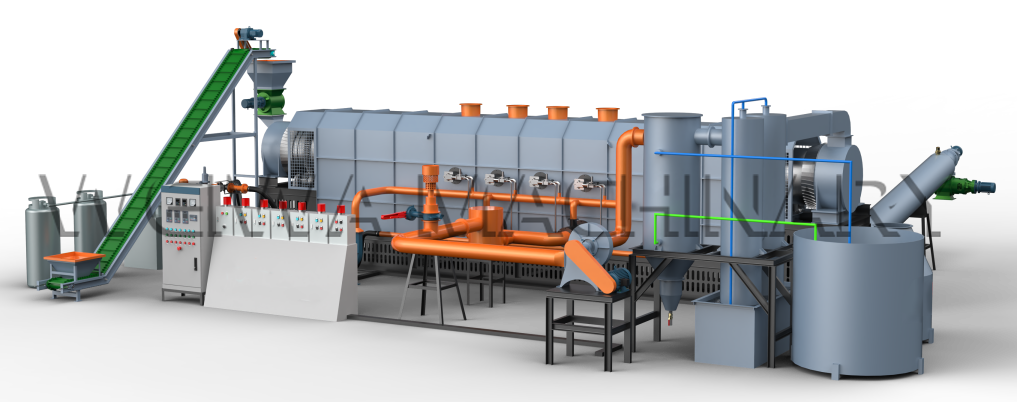
Dalam beberapa tahun terakhir, the global demand for sustainable charcoal and bio-carbon products has surged, especially in emerging markets like India. As industries seek cleaner, lebih hemat, and environmentally friendly ways to produce charcoal, tungku karbonisasi berkelanjutan have emerged as a game-changing solution. ATHenan Weiwa Machinery Manufacturing Co., Ltd, based in Gongyi City, Provinsi Henan, Cina, we’ve been at the forefront of designing and manufacturing advanced Mesin Pembuat Arang, including our highly efficient tungku karbonisasi berkelanjutan.
Baru-baru ini, we had the opportunity to test our continuous carbonization furnace for Hawaiian walnut shell on behalf of an esteemed client from India. This trial not only demonstrated the versatility and efficiency of our equipment but also highlighted the growing potential of the continuous carbonization furnace in India.
What Is a Tungku karbonisasi berkelanjutan?
Before diving into the test results, Mari kita klarifikasi apatungku karbonisasi berkelanjutan actually is and why it’s become such an important piece of equipment in the biomass carbonization industry.

Defining Continuous Carbonization
Karbonisasi is the process of converting organic materials—such as wood, Kerang kelapa, sekam padi, or in this case, Hawaiian walnut shells—into charcoal through the application of heat in an oxygen-limited environment. Traditional methods often involve batch processing, which can be time-consuming and inefficient.
Atungku karbonisasi berkelanjutan, sebaliknya, allows for a non-stop, 24/7 operasi. Raw materials are fed into the furnace continuously, carbonized, and the resulting charcoal is discharged without needing to stop the machine. This leads to higher productivity, lower energy consumption, and more stable operation—making it ideal for commercial-scale charcoal production.
Why It Matters for Global Markets?
As countries like India push for greener energy alternatives and sustainable waste management, technologies like the tungku karbonisasi berkelanjutan offer a practical solution. They enable the conversion of agricultural residues, forestry waste, and even unconventional materials like Hawaiian walnut shellsmenjadi berhargaarang, used in everything from cooking fuel to industrial applications.
The Hawaiian Walnut Shell Is An Unconventional Yet Promising Biomass
Our recent test focused on using Hawaiian walnut shells as the raw material—a somewhat unique choice that sparked interest among our Indian clients. While most carbonization projects use more common materials like sawdust, Kerang kelapa, or rice husks, Hawaiian walnut shells present different physical and chemical properties, including higher density and varying moisture content.
Why Hawaiian Walnut Shells?
The decision to test with Hawaiian walnut shells came from our Indian client, who has access to a steady supply of these shells as a byproduct of local food processing or imports. The goal was to determine whether our tungku karbonisasi berkelanjutan could effectively process this material into high-quality charcoal, opening up new possibilities for waste valorization and cost-efficient raw material sourcing.
Our team was curious to see how the furnace would handle the density and combustion behavior of the walnut shells, especially in a continuous feeding environment.
Conducting the Continuous Carbonization Furnace Test
Di mesin Weiwa, every piece of equipment we produce undergoes rigorous testing before being delivered to clients. For this particular project, we set up a controlled environment in our factory to simulate real-world operating conditions for our Indian customer.
Pengaturan
We used our standard model of the tungku karbonisasi berkelanjutan, configured to handle small to medium batches for trial purposes. The Hawaiian walnut shells were pre-processed to ensure consistent size and moisture levels, then fed into the furnace using our automated feeding system.
Key parameters such as temperature, retention time, and airflow were closely monitored throughout the carbonization cycle. Our engineers tracked the carbonization rate, charcoal yield, and overall energy efficiency to evaluate the performance.
Observations During the Test
One of the first things we noticed was how well the tungku karbonisasi berkelanjutan handled the Hawaiian walnut shells. Despite their slightly denser structure compared to other biomass materials, the furnace maintained a stable internal temperature, ensuring uniform carbonization.
The charcoal produced was of high quality—dense, with a shiny black appearance and a high fixed carbon content. Our client was particularly impressed with the low ash content and the pleasant aroma, indicating a clean burn and high-quality end product.
Another highlight was the Operasi Berkelanjutan aspect. Unlike batch furnaces that require frequent stopping and restarting, our continuous model ran smoothly for hours, demonstrating its suitability for large-scale, uninterrupted production.
Why the Tungku karbonisasi berkelanjutan Is Ideal for the Indian Market?
India presents a unique and promising landscape for the adoption of tungku karbonisasi berkelanjutan technology. With a growing population, increasing energy demands, and a strong focus on sustainability, the country is actively seeking innovative solutions for waste management and renewable energy production.
Agricultural and Forestry Waste Abundance
India generates massive amounts of agricultural residues each year, including rice husks, Baga tebu, Kerang kelapa, dan lebih banyak lagi. Selain itu, regions with nut processing industries—like those that might use Hawaiian walnut shells or similar materials—could benefit greatly from turning these byproducts into valuable charcoal.
Kamitungku karbonisasi berkelanjutan is designed to handle a wide variety of biomass materials, making it an incredibly versatile solution for India’s diverse waste streams.
Environmental and Economic Benefits
The ability to convert waste into usable charcoal not only reduces environmental pollution but also creates new economic opportunities. Farmers, processors, and small enterprises can turn what was once considered waste into a profitable product.
Lebih-lebih lagi, Thetungku karbonisasi berkelanjutan is energy-efficient and environmentally friendly, producing minimal smoke and emissions when combined with auxiliary equipment like a smoke purification system. This aligns perfectly with India’s environmental regulations and sustainability goals.
Market Demand for High-Quality Charcoal
There is a growing demand for high-quality charcoal in India, not just for domestic cooking but also for industrial applications such as metallurgy, produksi karbon aktif, and water filtration. Kamitungku karbonisasi berkelanjutan enables the production of consistent, high-grade charcoal that meets these needs.
The Future of Continuous Carbonization Furnace in India
Based on the success of this test and the increasing interest from Indian clients, we believe the tungku karbonisasi berkelanjutan has a bright future in the Indian market.
Emerging Opportunities
- Rural Entrepreneurship: Small-scale entrepreneurs in rural areas can use our Mesin Pembuat Arang to start local charcoal production businesses, creating jobs and boosting the local economy.
- Industrial Applications: Industries looking for reliable sources of activated carbon or specialty charcoal will find our equipment capable of meeting their exacting standards.
- Waste Management Solutions: Municipalities and private companies can leverage our technology to manage agricultural and forestry waste more effectively, turning it into a valuable resource.
Our Commitment to Indian Clients
Di mesin Weiwa, we are committed to providing tailored solutions that meet the specific needs of our Indian clients. Whether it’s adapting our tungku karbonisasi berkelanjutan to handle unique materials like Hawaiian walnut shells or offering localized support and training, we strive to ensure that our clients succeed.
A Successful Test with Global Implications
Uji coba kamitungku karbonisasi berkelanjutan using Hawaiian walnut shells for an Indian client was more than just a technical demonstration—it was a glimpse into the future of sustainable charcoal production. The furnace performed exceptionally well, producing high-quality charcoal efficiently and continuously, even with an unconventional raw material.
This test underscores the versatility and reliability of our Mesin Pembuat Arang and highlights the growing potential of continuous carbonization furnace technology in markets like India. As more businesses and entrepreneurs look for innovative ways to convert waste into wealth, we are confident that our equipment will play a key role in shaping a cleaner, masa depan yang lebih hijau.
Tentang Mesin Weiwa
Henan Weiwa Machinery Manufacturing Co., Ltd. has over 30 pengalaman bertahun -tahundalam industri pembuatan mesin. Located in Kota Gongyi, Provinsi Henan, Cina, we specialize in the production, R&D, and sales of a wide range of equipment, termasukBriket mesin, tungku karbonisasi, danMesin Pembuat Arang.
At WEIWA MACHINERY, our mission is to ”Buat Nilai untuk Pelanggan”. We are market-oriented and dedicated to meeting and serving our clients’ needs with high-quality machinery, professional support, and innovative solutions. Whether you’re looking to produce charcoal from biomass, upgrade your production line, or explore new raw materials like Hawaiian walnut shells, Weiwa Machinery is your trusted partner in carbonization technology.
Contact us today to learn more about our continuous carbonization furnace and how it can benefit your business.


 Wechat wechat

 +8615937143060
