


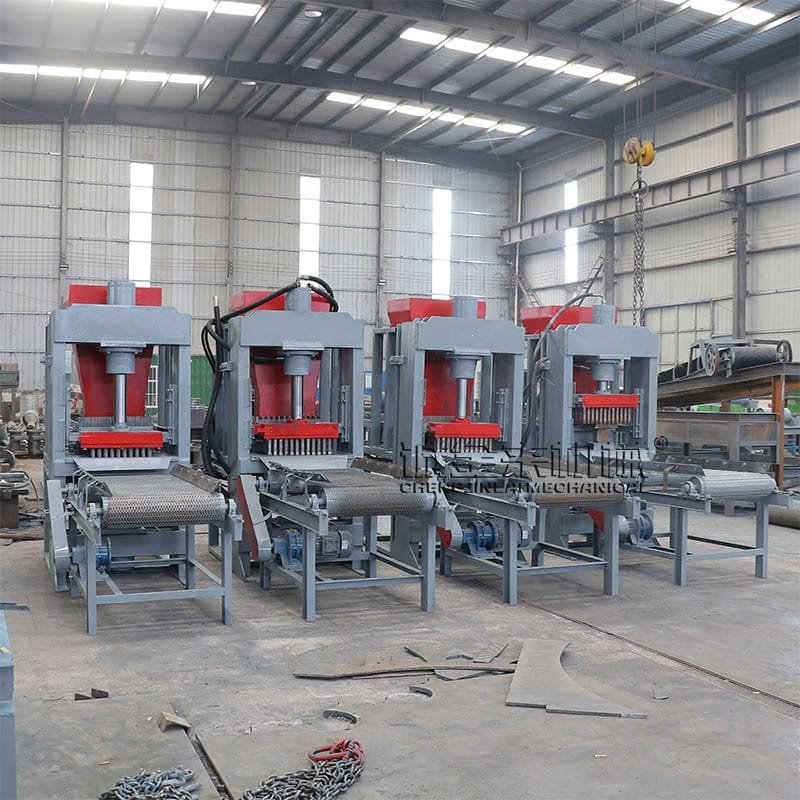
The global shisha and hookah culture has deeply rooted itself in the Middle East, and Saudi Arabia stands at the very center of this thriving industry. Over the past decade, the demand for high quality shisha charcoal has grown steadily across Riyadh, Jeddah, Dammam, and other major cities where cafes, lounges, and hospitality venues serve hookah as part of daily social life. Unlike ordinary cooking charcoal or low grade briquettes, shisha charcoal must meet strict performance standards including long burning time, minimal ash residue, uniform shape, smooth edges, quick ignition, and clean combustion without unpleasant odors. Meeting these requirements at commercial scale is not possible with traditional manual methods or outdated screw type presses. This is why the hydraulic shisha charcoal machine has become the core equipment for serious manufacturers targeting the Saudi market and wider Middle East region.
Baru-baru ini, Weiwa Machinery had the privilege of hosting a group of experienced Saudi investors and charcoal factory owners at our production facility in Henan, Cina. The purpose of their visit was clear and highly practical. They wanted to witness the real world performance of our hydraulic press briquetting machine, evaluate briquette density and surface finish, test different raw material formulas, and understand how a charcoal hydraulic press for Saudi Arabia can be integrated into their existing or planned production lines. Untuk Mesin Weiwa, factory trials are not merely demonstrations. They are an essential part of our commitment to transparency, engineering confidence, and long term partnership. With more than thirty years of experience in designing and manufacturing hydraulic briquette presses, kami percaya bahwa melihat adalah percaya, especially when the investment involves high capacity industrial machinery destined for export and continuous operation in demanding environments.
Deep Rooted Shisha Culture and Charcoal Demand in Saudi Arabia
To understand why so many Saudi business owners are actively searching for a reliable hydraulic briquette machine in Saudi Arabia, it is important to look at the cultural and economic context. Shisha smoking is not a occasional habit in Saudi Arabia. It is a social tradition practiced in homes, Restoran, tea houses, and luxury hotels. The growth of tourism under Saudi Vision 2030 has further expanded the number of cafes and lounges where premium hookah service is expected. Each hookah session typically requires multiple pieces of charcoal that must burn steadily for forty five minutes to one hour without frequent replacement. Low density charcoal that cracks, sparks, or produces excessive ash negatively affects the smoking experience and damages the reputation of both lounge owners and charcoal brands.
This rising expectation for quality has shifted the market away from irregular lump charcoal toward precision engineered briquettes produced by a hydraulic press briquetting machine. In Saudi Arabia, popular shisha charcoal shapes include cubes, segi enam, round discs, and finger lengths, each catering to different consumer preferences and bowl types. Producing these shapes consistently with tight dimensional tolerances is only achievable through high pressure hydraulic compaction. Lebih-lebih lagi, environmental awareness and raw material availability have pushed many producers toward coconut shell charcoal powder, hardwood powder, and other biomass residues rather than cutting fresh timber. Processing fine powder into dense briquettes requires controlled pressure, accurate feeding, and customizable mold systems that only a modern charcoal hydraulic press for Saudi Arabia can provide.
During discussions with our Saudi clients, it became evident that local manufacturers face three major challenges. First is achieving uniform density across thousands of briquettes per shift. Second is minimizing breakage during packaging, mengangkut, and handling. Third is scaling output without sacrificing quality. These challenges explain why interest in hydraulic shisha charcoal machine technology has surged. The Saudi market is moving from small workshop production to semi industrial and fully industrial plants that demand automation, stability, and repeatable results. For entrepreneurs evaluating return on investment, the ability to command higher prices for premium shisha briquettes compared to commodity charcoal makes the hydraulic briquette press an attractive and strategic asset.
Mengapa Hydraulic Press Briquetting Machine Outperforms Traditional Methods?
Understanding the technical advantage of a hydraulic briquette press is essential before examining the factory trial itself. Traditional charcoal forming methods such as screw extrusion or mechanical eccentric presses rely on continuous rotational force or fixed mechanical leverage. While these machines have their place in producing BBQ sticks or lower density briquettes, they often struggle to deliver the extreme and adjustable pressure required for high end shisha charcoal. Screw type machines, Misalnya, generate friction heat that can partially carbonize binders too early, leading to surface cracks or inconsistent hardness. Mechanical presses may produce speed but lack fine pressure control and gentle molding release, which are critical for fragile high density mixtures.
Sebaliknya, a hydraulic shisha charcoal machine operates on Pascal’s principle, using fluid pressure to drive a hydraulic cylinder that compresses material inside a closed mold cavity. This approach allows operators to set and adjust system pressure precisely, typically ranging from 100 ke 200 tons depending on machine model and briquette size. Because hydraulic compaction is gradual and evenly distributed, the charcoal powder binds more thoroughly with natural or added adhesives such as starch, resulting in briquettes with higher apparent density, lower porosity, and superior burning duration. The hydraulic system also enables dwell time at peak pressure, ensuring that the material settles uniformly before ejection. This reduces internal stress and prevents post pressing deformation.
Another decisive advantage is mold flexibility. A hydraulic briquette machine in Saudi Arabia must adapt to diverse market preferences. Di mesin Weiwa, our hydraulic press briquetting machine supports quick change molds made from high manganese steel or alloy materials, allowing producers to switch between cube, segi enam, bulat, and custom logo embossed shapes without replacing the entire press structure. The same machine can handle different powder characteristics by tuning filling depth, pressing cycles, and ejection settings. For Saudi clients who often serve multiple distributors with varying shape requirements, this versatility translates into faster response to market trends and lower capital expenditure compared to buying separate dedicated lines.
Energy efficiency and operator safety further distinguish the hydraulic briquette press. Modern units are equipped with PLC intelligent control systems, touch screen interfaces, overload protection, and optional automatic feeding conveyors. The system can store recipe parameters for different raw material blends, reducing dependency on individual operator skill and ensuring batch to batch consistency. Lower noise levels, reduced vibration, and enclosed guarding also make the charcoal hydraulic press for Saudi Arabia more suitable for factories that must comply with workplace safety and environmental expectations, especially as industrial zones in Saudi Arabia adopt stricter operational standards.
Arrival of Saudi Clients and Factory Preparation at Weiwa Machinery
The visit began with a warm welcome at our Henan factory, where Weiwa Machinery has operated for more than thirty years. Our Saudi guests included factory owners already producing traditional charcoal, distributors supplying hookah lounges, and new investors exploring entry into the premium shisha charcoal sector. Before the trial, our technical team held a detailed consultation to understand their raw material sources, expected daily capacity, preferred briquette sizes, packaging formats, and local energy conditions. This step reflects our belief that a hydraulic shisha charcoal machine should never be sold as a generic product. It must be matched to the client’s specific production ecosystem.
To prepare for the demonstration, we selected three representative material mixes. The first was coconut shell charcoal powder with low moisture content, which is increasingly popular in Saudi Arabia due to its clean burn and sustainability profile. The second was hardwood charcoal powder blended with a small percentage of starch binder. The third was a hybrid biomass mix containing date pit powder, which aligns with agricultural waste recycling opportunities in parts of the Middle East. Each mix was pre crushed and sieved to ensure uniform particle size, as we always emphasize that even the best hydraulic press briquetting machine cannot compensate for poorly prepared raw material. Feeding uniformity, moisture control, and binder distribution are foundational to successful briquetting.
Our team also prepared several mold sets including 25 millimeter cubes, 40 millimeter hexagons, Dan 33 millimeter round discs with center holes, reflecting common Saudi market preferences. The hydraulic briquette press designated for the trial was a multi cavity down stroke hydraulic machine equipped with a 160 ton main cylinder, PLC control panel, proportional pressure valves, and an automatic oil cooling system to maintain stable performance during continuous runs. We explained each component’s function, from the hydraulic power unit and accumulator to the mold base alignment and ejection pins, so that the clients could evaluate not only the output quality but also the engineering reliability behind it.
Live Factory Trial of Hydraulic Shisha Charcoal Machine
Once preparations were complete, the trial commenced with the coconut shell charcoal mixture. The raw powder was fed into the hopper connected to a volumetric feeder that ensured consistent fill weight in each mold cavity. As the hydraulic press briquetting machine cycled, the Saudi clients observed the quiet and steady operation of the hydraulic system compared to the high impact noise of mechanical presses they had seen elsewhere. The first pressing cycle completed within seconds, and the ejected cubes showed sharp edges, glossy surfaces, and no visible cracks. Our technician measured dimensions with calipers and demonstrated that tolerance remained within fractions of a millimeter across multiple cavities.
To test durability, we conducted a simple drop test from waist height onto a concrete surface, simulating rough handling during packing. The briquettes produced by the charcoal hydraulic press for Saudi Arabia remained intact, which drew approving nods from the visitors who had previously struggled with brittle products. We then increased the system pressure gradually to show how density and hardness can be fine tuned. At higher pressure, the cubes became heavier for the same volume, directly correlating with longer potential burn time. The clients noted that such adjustability would allow them to balance raw material cost against product grade, offering both mid range and premium lines under the same equipment investment.
Berikutnya, we ran the hardwood mix and the date pit hybrid mix. Switching molds took less than twenty minutes, highlighting the practical benefit of interchangeable mold plates. The hydraulic briquette machine in Saudi Arabia must often handle seasonal raw material variations, and the trial proved that pressure curves and filling depth could be recalibrated quickly through the PLC interface. Throughout the run, we explained how the hydraulic system maintains constant pressure even if material fill fluctuates slightly, preventing under pressed or over pressed briquettes. The Saudi team also inspected the lubrication points, hydraulic oil filtration, and electrical cabinet layout, confirming that maintenance access and component quality met their expectations for long term operation in dusty environments.
One of the most valued aspects of the visit was the open discussion on production line integration. We walked the clients through how the hydraulic shisha charcoal machine connects upstream with crushers, mixer, and rotary dryers, and downstream with conveyor cooling tables, curing racks, and automatic packaging machines. Using 3D design drawings and plant layout plans, we showed how a factory of five thousand to ten thousand square meters could be arranged to optimize material flow, minimize manual handling, and comply with fire safety clearances. For Saudi investors concerned about space planning and utility connections, this level of customization and technical guidance is often the deciding factor when choosing a machinery supplier.
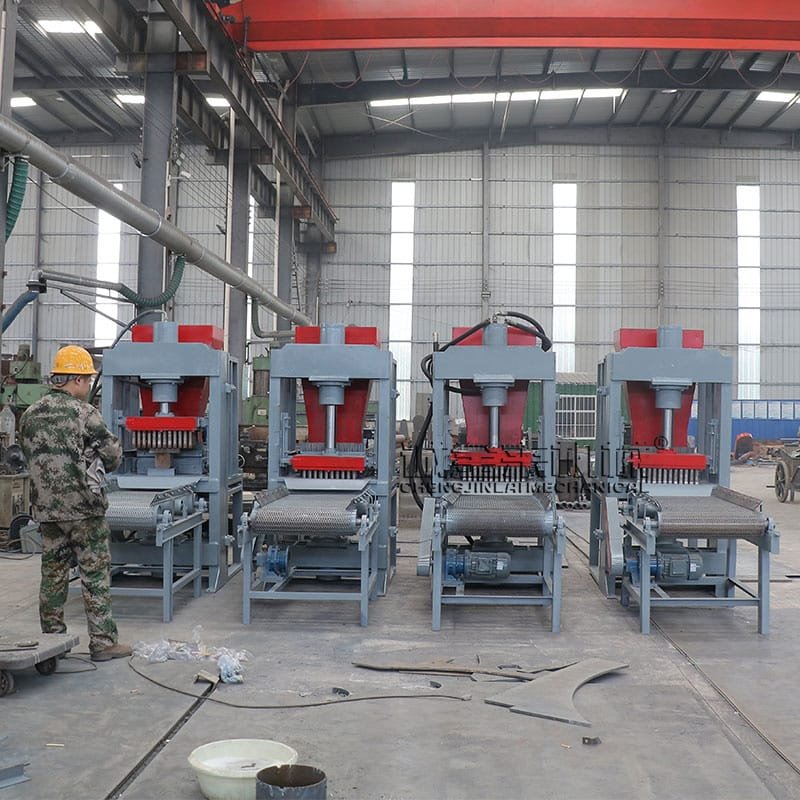
Market Potential of Hydraulic Briquette Machine in Saudi Arabia
The factory trial naturally led to a broader conversation about market potential. Industry observations indicate that Saudi Arabia’s shisha charcoal import and local production volumes have grown consistently, driven by population demographics, tourism expansion, and premiumization of hookah offerings. Namun, supply still struggles to match quality expectations. Many existing local producers rely on imported Chinese or Southeast Asian machinery that lacks pressure control, dukungan suku cadang, or mold customization. Others operate manual lever presses with low output and high labor intensity. This gap creates significant opportunity for factories equipped with a modern hydraulic briquette press capable of delivering export grade briquettes at scale.
Several macro trends support the case for investing in a charcoal hydraulic press for Saudi Arabia today. First is the shift toward coconut shell based charcoal, which commands higher margins but requires high pressure molding to achieve density without excessive binder. Second is the increasing organization of the retail market, where branded shisha charcoal in printed boxes demands uniform shape and professional appearance. Third is the push for industrial automation in Saudi manufacturing, aligned with economic diversification goals that encourage local value added production rather than reliance on imports. A hydraulic press briquetting machine fits neatly into this narrative by enabling local plants to produce premium briquettes domestically, reduce logistics costs, and respond faster to distributor feedback.
From a competitive standpoint, Saudi manufacturers who adopt hydraulic technology early can differentiate through consistent quality. In the hookah market, word of mouth among lounge owners and consumers is powerful. A briquette that burns evenly for sixty minutes with minimal ash quickly builds brand loyalty. Over time, this allows producers to access not only the domestic Saudi market but also export channels to UAE, Kuwait, Qatar, and Egypt. The scalability of a hydraulic briquette machine in Saudi Arabia means that initial lines with one or two presses can expand into multi press clusters supported by centralized mixing and drying systems, creating economies of scale and stronger negotiating power with raw material suppliers.
Weiwa Machinery’s perspective, shaped by decades of serving global clients, is that the hydraulic shisha charcoal machine is not a short term trend but a structural upgrade in how charcoal is manufactured for the Middle East. As environmental regulations tighten and consumers become more discerning, low density, high emission, irregular charcoal will lose ground. Kepadatan tinggi, clean burning, precisely shaped briquettes made by hydraulic compaction will dominate. For Saudi entrepreneurs evaluating market entry or capacity expansion between 2026 Dan 2030, the window to establish brand presence with reliable equipment is open now.
Technical Details That Matter for Long Term Operation
Beyond the trial and market outlook, the Saudi delegation raised important questions about durability, spare parts, and adaptation to local conditions. A hydraulic briquette press is a heavy duty machine with components subject to high cyclic loads. Di mesin Weiwa, we addressed this by explaining our use of reinforced welded frames, chrome plated cylinders, high quality seals from reputable suppliers, and hydraulic valves selected for stability under continuous running. The oil cooling and heating system ensures viscosity remains optimal whether the machine operates in cold winter workshops or hot climates similar to parts of Saudi Arabia where ambient temperatures exceed forty degrees Celsius.
Electrical control systems are another critical area. Our PLC based panels support multiple language interfaces including English and Arabic upon request, and can log production counts, pressure faults, and maintenance reminders. For remote troubleshooting, we offer optional IoT modules that allow our engineers in China to diagnose certain issues online, reducing downtime for Saudi clients. Mold life was also discussed in detail. Depending on abrasive characteristics of the charcoal powder and production volume, a well maintained manganese steel mold can produce millions of briquettes before rework. We maintain mold drawing archives for every client so that replacements can be manufactured and shipped quickly without sending samples back and forth.
Power configuration is adaptable to Saudi electricity standards, typically three phase 380 ke 415 volts at 50 atau 60 hertz depending on regional grid specifications. Motors are selected with efficiency classes suitable for continuous industrial use, and control voltage is isolated for safety. For factories in areas with unstable power, we recommend adding voltage stabilization or generator compatibility, which our team can specify during plant layout planning. These seemingly small technical considerations accumulate to determine whether a hydraulic shisha charcoal machine runs smoothly for five years or fifteen years, and they reflect the depth of engineering support that Weiwa Machinery provides as part of its thirty year legacy.
Customization Services and Factory Layout Planning by Weiwa Machinery
One reason Saudi clients choose to engage with Weiwa Machinery beyond the initial machine trial is our ability to deliver turnkey customization. Purchasing a hydraulic press briquetting machine is only one part of building a profitable charcoal business. Success depends on how raw material receiving, penumpasan, pengeringan, Percampuran, cetakan, curing, penyaringan, and packaging are orchestrated into a coherent workflow. Our technical department prepares scaled factory layout drawings that account for equipment footprints, maintenance aisles, raw material storage zones, finished goods warehouses, dust extraction points, and employee pathways. This planning reduces redesign costs after construction and helps secure approvals from local authorities when industrial permits are reviewed.
For clients who require branded briquette shapes, we design custom mold cavities with logos, patterns, or unique geometries that differentiate products on retail shelves. The charcoal hydraulic press for Saudi Arabia must also accommodate future upgrades such as automatic weighing and boxing lines, stretch wrapping machines, and palletizing robots. By designing the hydraulic briquette machine in Saudi Arabia installation with expansion in mind, we help clients protect their investment and avoid bottlenecks that appear once demand exceeds initial capacity. Our engineers can also advise on optimal mixer types, binder preparation tanks, and drying methods ranging from solar tunnels to heat pump or mesh belt dryers depending on local climate and energy costs.
Training is integral to our customization package. During machine delivery and installation, our technicians provide onsite training covering daily operation, pressure setting adjustment, mold change procedures, lubrication schedules, hydraulic oil inspection, and basic fault diagnosis. For clients unable to host immediate onsite visits, we conduct detailed video training sessions and supply multilingual operation manuals with annotated diagrams. The goal is to transfer knowledge so that Saudi factory teams can operate the hydraulic shisha charcoal machine confidently and safely, maintaining product quality without constant external dependence.
After Sales Team and Long Term Partnership
Weiwa Machinery’s commitment does not end at shipment. With more than thirty years of industry experience, we have built a professional after sales team that understands the urgency of keeping production lines running. Spare parts such as seals, pistons, mold inserts, hydraulic filters, and electrical relays are stocked for common machine models and can be shipped internationally with documented customs friendly packaging. For the hydraulic briquette press, we maintain bill of materials records for every machine we produce, so that even years later a client can request a replacement part with exact compatibility confirmation.
Our after sales communication channels are responsive across multiple time zones covering Saudi Arabia. Whether through email, messaging applications, or video call, technical queries about the hydraulic briquette machine in Saudi Arabia receive structured replies including photos, short videos, and PDF guidance notes. When major installations require onsite commissioning, we coordinate visa, travel, and accommodation logistics to dispatch senior engineers familiar with both the machinery and cross cultural site conditions. This continuity of support is especially important for Saudi investors who may be new to charcoal machinery and need a reliable partner to navigate early production challenges such as recipe fine tuning, humidity related cracking, or packaging compatibility.
Selama bertahun-tahun, we have seen that long term partnerships grow when suppliers listen as much as they manufacture. The feedback from Saudi clients who tested our hydraulic press briquetting machine has influenced improvements in mold surface polishing, ejector pin geometry, hopper anti bridging design, and noise damping enclosures. Each factory visit, including the recent trial discussed in this article, adds to our collective knowledge of how a charcoal hydraulic press for Saudi Arabia should evolve to meet real workshop conditions. We view every client not as a one time buyer but as a collaborator in refining industrial solutions for the global shisha charcoal sector.
Reflections on the Factory Visit and Future Collaboration
Saat persidangan berakhir, the Saudi delegation spent time reviewing sample briquettes under handheld magnifiers, discussing weight per cubic centimeter, surface smoothness, and edge definition. They also examined rejected samples from intentional under pressure runs to understand failure modes and how the hydraulic system prevents them. Conversations moved naturally from technical specs to business models, including raw material sourcing from coconut importers, pricing tiers for different densities, private label opportunities, and distribution through wholesalers serving hookah lounges. The transparency of the factory trial built trust that no brochure alone could convey.
Plans emerged for the next steps. The clients expressed intent to finalize factory site selection in Saudi Arabia, share architectural drawings for layout feedback, and narrow down mold specifications based on distributor input. They also requested additional test runs using slightly different binder percentages to optimize cost per ton. Weiwa Machinery welcomed these requests, reinforcing that the hydraulic shisha charcoal machine is not a rigid off the shelf product but a configurable production tool. We scheduled follow up technical meetings to refine the proposal, discuss container loading plans for machines and ancillary equipment, and outline a timeline that aligned with their construction schedule.
For us, hosting Saudi clients is both a responsibility and an opportunity. It reaffirms that the hydraulic briquette press we manufacture carries the potential to support real businesses, create local employment, and contribute to industrial upgrading in a market as dynamic as Saudi Arabia. The shisha charcoal industry is evolving from informal batch production to engineered, branded, and quality controlled manufacturing. Participating in that transformation alongside knowledgeable clients is a source of pride for our team and a testament to the relevance of hydraulic technology in today’s charcoal sector.
Conclusion on Hydraulic Technology and Saudi Market Synergy
The synergy between hydraulic compaction technology and the Saudi shisha charcoal market is grounded in clear technical and commercial logic. High density briquettes require controllable, high magnitude pressure delivered gently and consistently. Hydraulic press briquetting machines provide exactly that, along with mold flexibility, automation readiness, and process stability. Saudi Arabia’s cultural affinity for shisha, growing hospitality sector, and push for localized high quality production create a fertile environment for such machinery to deliver measurable value. Factory trials like the one described here bridge the gap between specification sheets and operational reality, allowing informed investment decisions.
Weiwa Machinery remains committed to engineering excellence, transparent demonstration, customized design, and responsive after sales service. Our thirty plus years of experience are reflected not only in the robustness of each hydraulic shisha charcoal machine we build but also in the way we engage with clients from initial inquiry to long term operation. For businesses evaluating a charcoal hydraulic press for Saudi Arabia or comparing suppliers of hydraulic briquette machine in Saudi Arabia, we invite direct communication, factory visits, and material tests. Seeing the machine press fine powder into perfect briquettes under controlled hydraulic force is ultimately the most convincing argument for the technology and for the partnership that supports it.
Tentang Mesin Weiwa
Weiwa Machinery is a manufacturer with more than thirty years of working experience in the field of briquette machinery and carbonization equipment. Based in Henan, Cina, we specialize in hydraulic shisha charcoal machines, hydraulic press briquetting machines, charcoal extrude machines, mesin briket arang bola, tungku karbonisasi berkelanjutan, tungku karbonisasi horizontal, and complete charcoal production lines. Our team includes senior engineers, skilled machinists, and a professional after sales department that supports global clients with installation guidance, spare parts supply, and technical troubleshooting.
We offer customized services including mold design, 3D factory layout drawings, plant planning, and production formula suggestions such as fast burning charcoal and fruity charcoal formulations. Every hydraulic briquette press we produce is tested before delivery, and we welcome clients to visit our factory for live trials with their own materials. Whether you are establishing a new shisha charcoal plant in Saudi Arabia or upgrading an existing line, Weiwa Machinery aims to create value through reliable equipment and practical solutions.
Please feel free to contact us for inquiries and quotations.
Hubungi kami
Massa: +8613838093177
Whatsapp: +8613838093177
E-mail: info@cjlmachineGroup.com


 Wechat wechat

 +8615937143060
