


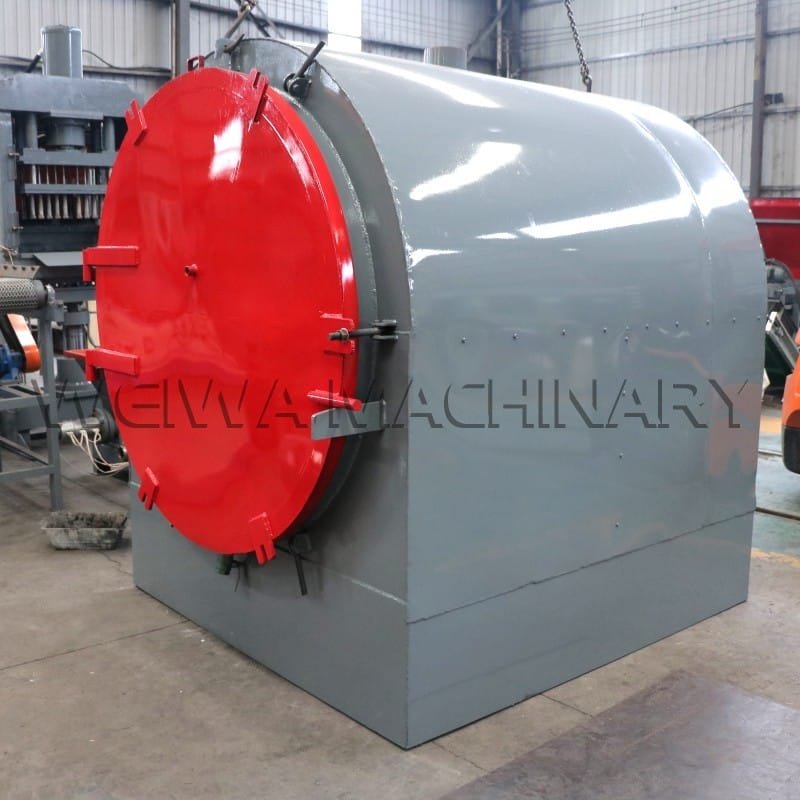
Perkenalan
Di mesin Weiwa, we believe that advanced machinery should bridge gaps between industries and regions, turning local resources into sustainable value. Baru-baru ini, our team achieved a meaningful milestone: shipping a tungku karbonisasi horizontal to Libya, a country rich in agricultural and forestry residues yet seeking efficient ways to convert these materials into high-quality charcoal and biochar. This blog takes you to the shipment site, explores the science behind tungku karbonisasi horizontal, highlights their relevance in Libya’s market, and shares the exciting trial results that reaffirm our commitment to global sustainability.
The Journey of Our Tungku karbonisasi horizontal to Libya
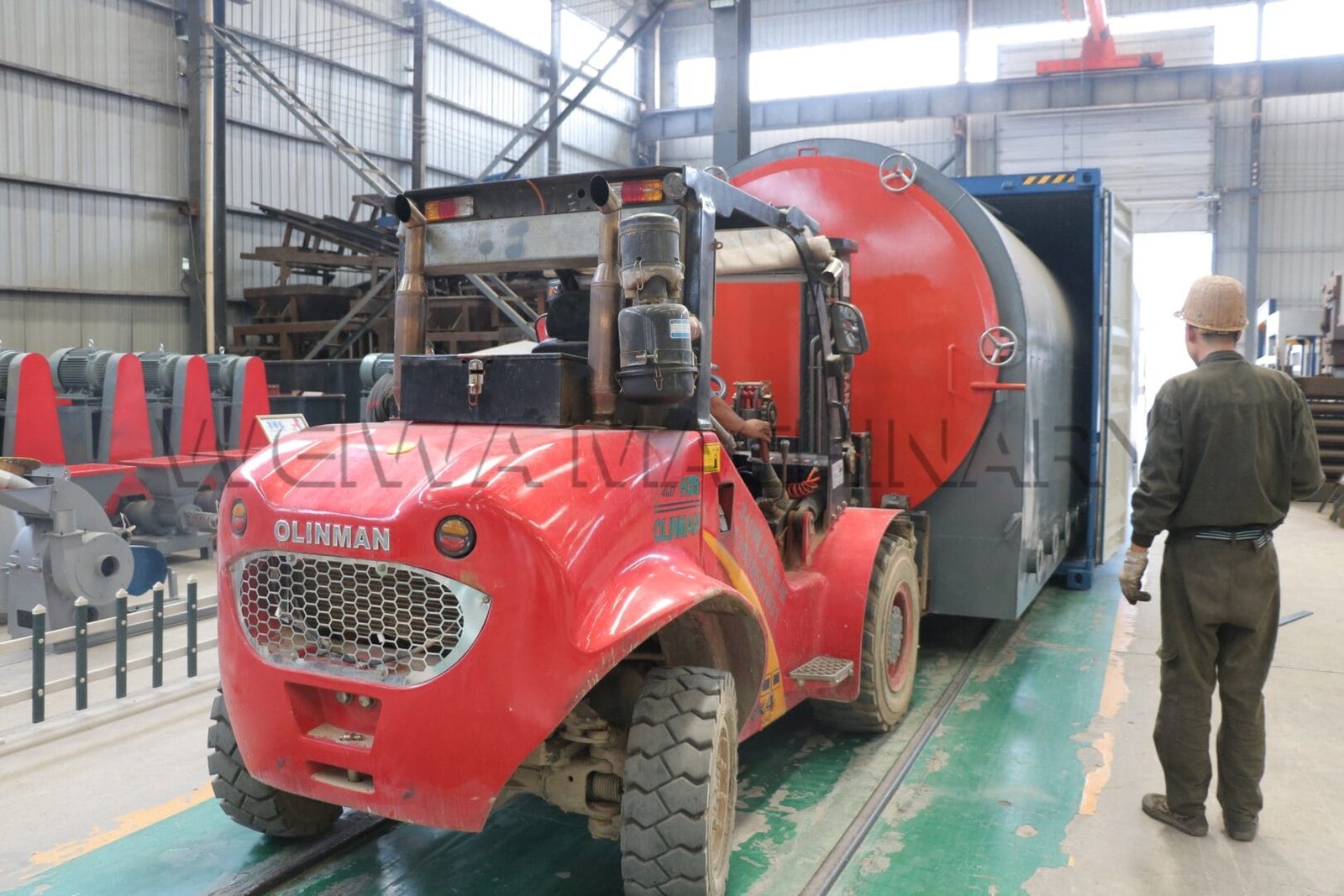
The departure of this tungku karbonisasi horizontal was more than a logistics operation—it was the start of a partnership aimed at transforming Libya’s biomass utilization. Loaded with precision-engineered components, the furnace traveled thousands of miles from our manufacturing base to the Libyan port, where local partners awaited its arrival. Untuk Mesin Weiwa, every shipment is a promise: to deliver not just equipment, but solutions that empower communities.
Kamitungku karbonisasi horizontal is designed for durability and adaptability, making it ideal for diverse climates like Libya’s arid landscapes. Before shipping, our engineers conducted rigorous quality checks, ensuring the furnace could handle continuous operation while maintaining energy efficiency. This attention to detail reflects our core philosophy: machinery must perform reliably in real-world conditions, whether in a factory or a remote production site.
Understanding Horizontal Carbonization Furnaces – Science Meets Sustainability
To appreciate why this tungku karbonisasi horizontal matters for Libya, let’s first demystify its technology. Unlike vertical kilns, which rely on gravity-fed batches, horizontal carbonization furnaces process materials in a continuous, controlled flow. Inside, biomassa (seperti kerang kelapa, keripik kayu, or olive pits) is heated in an oxygen-limited environment, driving off volatile gases and leaving behind carbon-rich solids—charcoal or biochar.
How Horizontal Carbonization Works?
The process begins with feeding raw materials into the furnace’s horizontal chamber. As they move slowly through zones of increasing temperature (typically 400–700°C), chemical reactions break down organic matter: water evaporates, tars and gases are released (and often recycled to fuel the furnace), and the remaining carbon structure densifies. This method ensures uniform heating, reducing waste and producing consistent, high-carbon products. For Libya, where uneven traditional kilns often yield low-quality charcoal, this precision is a game-changer.
Key Advantages for Biomass Conversion
What makes tungku karbonisasi horizontal stand out in markets like Libya? Pertama, their continuous operation minimizes downtime, critical for meeting growing demand. Kedua, they optimize heat retention, cutting fuel consumption by up to 30% compared to batch systems. Ketiga, they produce cleaner emissions, aligning with global trends toward eco-friendly manufacturing. For Libyan entrepreneurs, this means lower operational costs and a product that meets international quality standards—whether for local cooking fuel or export-grade charcoal.
The Rising Demand in Libya for Charcoal Making Machines
Libya’s economy has long relied on oil, but in recent years, there’s been a strategic shift toward diversifying into agriculture and renewable resources. With vast stretches of unused agricultural land and abundant crop residues (date palms, wheat straw, and acacia trees), the country holds immense potential for biomass-based industries. Namun, limited access to modern Mesin Pembuat Arang has hindered progress—until now.
Local businesses and cooperatives have expressed urgent needs for equipment that can turn underutilized biomass into profitable commodities. Arang, a staple for cooking in many Libyan households, faces supply shortages due to inefficient traditional methods. Sementara itu, biochar—valued globally for soil amendment and carbon sequestration—presents a new revenue stream. Kamitungku karbonisasi horizontal addresses both needs, positioning Libya to tap into domestic and international markets.
Horizontal Carbonization Furnace in Libya Delivers Results
Sesampainya disana, our technical team wasted no time setting up the tungku karbonisasi horizontal for a trial run. Partnering with local operators, we tested the machine using readily available feedstocks: date palm fronds and olive pomace, two abundant byproducts in Libya’s coastal regions.
Seamless Installation and Operator Training
Installation began with leveling the foundation and connecting the furnace to a small-scale gas recovery system (to repurpose volatile gases for heating). Our engineers prioritized hands-on training, teaching local staff to monitor temperature curves, adjust feed rates, and troubleshoot minor issues. Di dalam 48 jam, the team was operating the furnace independently—a testament to its user-friendly design.
Impressive Output and Quality Metrics
The trial exceeded expectations. Pengolahan 500 kg of mixed biomass per hour, Thetungku karbonisasi horizontal produced charcoal with a fixed carbon content of 85% (well above the 70% benchmark for commercial charcoal) dan kadar abu rendah (under 5%). Biochar samples, analyzed by a local agricultural lab, showed excellent porosity—ideal for improving soil water retention in Libya’s dry climate. Energy consumption was 25% lower than estimates, thanks to efficient heat recycling.
Operators reported minimal smoke and odor during processing, addressing environmental concerns common with older kilns. “This machine turns our waste into gold,” said Ahmed, a partner at the trial site. “We used to burn date fronds, now we sell charcoal and improve our farms with biochar.”
Beyond the Furnace – Empowering Libya’s Biomass Ecosystem
While the tungku karbonisasi horizontal is the star, its impact extends to the broader ecosystem. By creating demand for agricultural residues, it incentivizes farmers to collect and sell byproducts instead of burning them—reducing air pollution. Local workshops are already emerging to supply maintenance parts, fostering job creation. Lebih-lebih lagi, the furnace’s scalability allows smallholders to start with pilot projects before expanding, lowering entry barriers for rural entrepreneurs.
Untuk Mesin Weiwa, this project aligns with our mission to make carbonization furnaces for charcoal accessible worldwide. We view Libya not just as a market, but as a partner in building a circular economy where waste becomes wealth.
Why Choose Weiwa Machinery for Your Carbonization Needs?
With over a decade of experience in designing biochar furnacesDanMesin Pembuat Arang, Weiwa Machinery has earned trust across Asia, Afrika, and Latin America. Our horizontal carbonization furnaces are built with corrosion-resistant materials, modular components for easy maintenance, and smart control systems that adapt to varying feedstocks. We don’t just sell equipment—we provide end-to-end support, from feasibility studies to after-sales training.
In Libya, our commitment goes beyond the initial shipment. We’re working with local institutions to develop training programs, ensuring operators master the technology and pass on knowledge to future generations. This holistic approach is why clients return to us for their scaling needs.
Kesimpulan
The successful delivery and trial of our horizontal carbonization furnace in Libya mark more than a business achievement—they signal a step toward sustainable development. As Libya embraces modern Mesin Pembuat Arang, it joins a global movement to harness biomass for energy, pertanian, and economic growth. Di mesin Weiwa, we’re proud to be part of this journey, proving that innovative engineering can turn challenges into opportunities, one furnace at a time.
Tentang Mesin Weiwa
Weiwa Machinery is a leading manufacturer of biomass processing equipment, berspesialisasi dalamtungku karbonisasi horizontal, biochar furnaces, danMesin Pembuat Arang. Didirikan pada 2010, we combine R&D expertise with a customer-centric approach, delivering tailored solutions to clients in over 50 negara. Our mission is to drive sustainable resource utilization through reliable, energy-efficient machinery—because we believe better technology makes a better world.
- Massa:+8613838093177
- Whatsapp:+8613838093177
- E-mail:info@cjlmachineGroup.com


 Wechat wechat

 +8615937143060
