


Why Laos Is a Strong Market for Mesin Briket Sarang Lebah?
Laos has abundant biomass resources, active charcoal trading, and a growing need for affordable cooking fuel. Many small workshops still shape briquettes by hand or buy inconsistent charcoal from intermediaries. A honeycomb briquette charcoal machine changes that equation because it turns low-cost powder into a higher-value fuel product with predictable size, kepadatan, dan membakar waktu.
In Vientiane and nearby provinces, fuel shop owners care about three things. The briquette must light easily. It must burn longer than loose charcoal. It must be cheap enough to replace firewood without increasing the retail price too much. The honeycomb briquette charcoal machine in Laos is attractive because the honeycomb holes improve airflow, reduce smoke, and make the briquette easier to ignite with a small amount of starter fuel.
Southeast Asia is moving slowly but clearly toward cleaner cooking. Honeycomb briquettes are not a magic replacement for gas or electricity, but they are a practical upgrade from raw coal and wet firewood. That is why distributors, agricultural cooperatives, and charcoal traders are asking Weiwa Machinery for machine demonstrations before placing an order.
Local Raw Materials Available in Laos
The Laotian client prepared a mix of hardwood charcoal dust, denda batubara, and a small percentage of cassava starch as binder. Charcoal dust came from local barbecue charcoal wholesalers. Coal fines were sourced from cross-border traders. The moisture content was initially too high, sekitar 17 persen, so the material was screened and sun-dried before feeding the honeycomb charcoal coal briquette forming machine.
This matters for buyers because machine selection depends on feedstock. A coal briquettes making machine configured for dry coal powder will not perform the same way with fresh rice husk charcoal. Weiwa engineers always ask for a material photo, mesh size, moisture level, and target briquette diameter before recommending a model.
Small Workshops Can Compete with Large Suppliers
One important lesson from the Laos market is that small workshops can compete. A 140-type or 220-type honeycomb punching machine does not require a large factory. Dengan 50 ke 80 meter persegi, one operator, one mixer, one crusher, and one briquette machine, a team can supply neighborhood food stalls, weekend markets, and provincial retailers.
The barrier is no longer technology. The barrier is consistency. Buyers return to the supplier who delivers the same briquette every week. That is exactly what a properly calibrated honeycomb briquette charcoal machine provides.
How the Honeycomb Charcoal Coal Briquette Forming Machine Works?
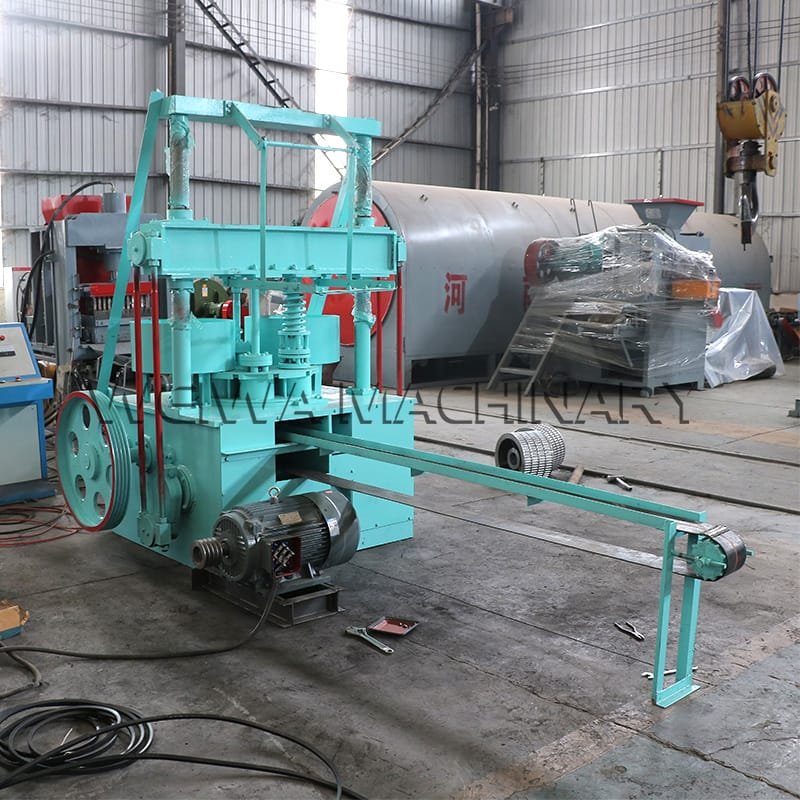
The honeycomb charcoal coal briquette forming machine uses a rotary table, punch head, and mold barrel. Pulverized charcoal or coal is fed into the hopper. The material drops into the mold cavity. The punch head compresses the material upward or downward depending on the machine design. The result is a round or cylindrical block with several holes in the center.
Those holes are not decorative. They act like chimneys. Air moves through the briquette, the flame stabilizes, and combustion becomes more complete. Compared with a solid lump of charcoal, the honeycomb shape gives faster ignition and steadier heat output.
Raw Material Preparation Comes First
No honeycomb briquette charcoal machine can fix bad input material. The powder should be fine enough to fill the mold, dry enough to hold shape, and sticky enough after binding to avoid crumbling. In the Laos trial, the charcoal dust was crushed below 3 mm. Moisture was reduced to 10 ke 12 persen. Binder was added at around 4 ke 6 percent depending on the batch.
If the powder is too coarse, the briquette surface looks rough. If moisture is too high, the punch zone sticks and the ejection becomes unstable. If binder is too low, the briquette breaks during stacking. Weiwa technicians check all three variables before the first production run.
Compression and Mold Formation
Selama persidangan, the client chose a 140 mm mold for large household briquettes and a 90 mm mold for restaurant use. The honeycomb punching machine changed molds in less than twenty minutes. Each stroke produced one finished piece. The operator only needed to monitor feeding, watch the discharge chute, and remove deformed pieces.
The honeycomb charcoal coal briquette forming machine kept a steady rhythm. Output depended on mold size, material density, and motor configuration. For the Lao client, the target was not maximum speed. The target was uniform pieces that could be dried, packed, and sold under a local brand.
Ejection and Finished Briquette Quality
Good ejection means the briquette leaves the mold without cracking. In the Laos test, finished pieces had sharp hole edges, flat top surface, and no powder shedding. The client tapped one briquette on the table. It did not collapse. That simple test told the workshop team the calibration was correct.
A coal briquettes making machine is only useful if the product survives handling. Transport, stacking, and retail display all involve friction. The Laos samples passed because pressure, kelembaban, and binder were balanced before mass production started.
Weiwa Machinery Trial Run for the Lao Client
Weiwa Machinery treated the Laos project as a joint test, not a sales demo. Our export team spoke with the client about daily output, local fuel prices, packaging size, and competitor products. Our technical team reviewed the raw material. Then we ran the honeycomb briquette charcoal machine with the client’s own material instead of laboratory-perfect powder.
This approach builds trust. International buyers do not want a video made with selected material. They want to know whether their real charcoal dust will work. The Laos trial answered that question with samples, not promises.
Raw Material Used in the Laos Trial
The blend contained approximately 60 percent hardwood charcoal dust, 30 percent coal fines, Dan 10 percent mixed biomass residue. Cassava starch binder was used because it is available in the region and safe for cooking fuel. The client wanted a product that burns longer than pure charcoal but costs less than imported barbecue briquettes.
Our team explained that a honeycomb briquette charcoal machine in Laos should be tuned for local economics. If imported binder is expensive, local starch works. If coal fines are cheap, the ratio can shift. The machine is not rigid. The formula is flexible.
Moisture and Particle Size Check
Before running the honeycomb charcoal coal briquette forming machine, Weiwa engineers measured moisture with a handheld meter. The first batch read 14.8 persen. That was acceptable but not ideal. After two hours of shaded drying, moisture dropped to 11.2 persen. Particle size was checked with a 3 mm sieve. Sekitar 88 percent of the material passed the sieve, which was good enough for the 140 mm mold.
Many buyers skip this step and blame the machine later. In reality, the coal briquettes making machine is only as good as the preparation before it.
Machine Setup and Mold Configuration
For the trial, Weiwa used a 7.5 kW class honeycomb punching machine with a rotary table. The client wanted two products from one machine. Karena itu, we installed a quick-change mold system. The large mold produced 140 mm household briquettes. The smaller mold produced 90 mm food-stall briquettes.
Mold pressure was adjusted gradually. Starting too high can cause overheating. Starting too low creates soft briquettes. The correct setting depends on material bulk density. After six test cycles, the Lao operator could feel the difference in sound and discharge movement.
Production Speed and Briquette Quality
The trial ran in three sessions. Morning session focused on feeding consistency. Midday session focused on mold change and hole pattern. Afternoon session focused on continuous running for forty minutes.
The honeycomb briquette charcoal machine maintained stable piece weight. Diameter tolerance was small. Hole pattern remained centered. Surface finish improved after the feed hopper was leveled and the returning material was removed from the cycle. The client recorded output manually and compared it with Weiwa’s estimated capacity table.
Client Feedback from Vientiane Workshop
The Lao client said the machine was easier to operate than expected. The team liked the simple control panel, the open mold area, and the fact that spare parts looked similar to other local machinery. The biggest surprise was burn time. A 140 mm honeycomb briquette burned longer than their usual lump charcoal and produced less visible smoke after the ignition phase.
Untuk Mesin Weiwa, that feedback matters more than specifications on paper. A honeycomb briquette charcoal machine in Laos must survive dust, humidity, voltage fluctuation, and informal workshop conditions. The trial proved the machine could handle real operation, not just factory showroom conditions.
Sample Briquettes Produced During the Laos Test
The sample batch included three types. The first was a standard 140 mm household honeycomb briquette with 12 holes. The second was a 90 mm restaurant briquette with 9 holes. The third was a denser coal-charcoal hybrid briquette for longer nighttime heating.
All three samples were photographed from four angles, weighed, stacked, dropped from 30 cm, and burned in a simple stove. Itu 140 mm sample ignited within a few minutes when placed over glowing charcoal. Itu 90 mm sample was better for small food stalls because it fit common stoves and did not overheat the pan.
Household Honeycomb Briquette Sample
The household sample targeted weekly market sales. Weight was consistent. Edges were clean. After drying for one day, the briquette did not shed powder during packing. The client planned to sell these in packs of ten with a simple paper wrapper.
This is where the honeycomb charcoal coal briquette forming machine creates business value. The product looks standardized. Standardized products can be branded. Branded products can be priced higher than anonymous charcoal lumps.
Restaurant and Street Food Briquette Sample
Street food vendors in Laos need fast heat and easy portion control. Itu 90 mm sample gave steady flames without large flames jumping toward the cooking surface. Vendors liked that one briquette could support a short noodle or grilled-meat service window.
A coal briquettes making machine configured for street food markets should prioritize ignition speed and size consistency. Maximum compression is less important than daily repeatability.
Hybrid Heating Briquette Sample
The hybrid sample contained more coal fines and slightly more binder. It burned slower and produced more fixed carbon heat. This product was aimed at cooler highland areas and small guesthouses that still use solid fuel for water heating.
The honeycomb punching machine handled the denser mix well, but cycle speed was reduced slightly to protect mold life. Weiwa advised the client not to chase maximum output with harder material. Profits come from selling finished briquettes, not from stressing the machine.
Southeast Asia Fuel Market and Clean Cooking Demand
Southeast Asia has many fuel options, but the middle market is underserved. Premium imported briquettes are too expensive for daily users. Arang lepas itu berantakan. Firewood is cheap but heavy and smoky. Honeycomb briquettes sit in the practical middle: cleaner than wood, cheaper than premium cubes, and easier to transport than loose dust.
Countries such as Vietnam, Thailand, Indonesia, Cambodia, Myanmar, and the Philippines already have briquette clusters. Laos is earlier in the cycle, which means first movers can build local brands before competition becomes intense. A honeycomb briquette charcoal machine in Laos is therefore not only a production tool. It is a market-entry tool.
Charcoal Dust Is a Low-Cost Input
Charcoal wholesalers often treat fine dust as waste. It leaks from bags, lowers storage quality, and creates cleanup work. A smart buyer collects or purchases this dust cheaply, processes it, and sells finished briquettes at several times the raw powder value.
The honeycomb charcoal coal briquette forming machine turns marginal material into a shelf product. That arbitrage is the core business model for many small fuel factories in Asia.
Clean Cooking Policies Support Adoption
Governments in the region are promoting cleaner cooking, rural enterprise, and reduced deforestation. Honeycomb briquettes are not zero emission, but they are better than wet wood and loose coal when made with controlled binders and proper drying.
Weiwa Machinery does not oversell the environmental angle. We explain honestly that a coal briquettes making machine reduces waste and improves combustion, but buyers still need ventilation, dry storage, and responsible sourcing.
Cross-Border Trade Opportunities
Laos can supply briquettes to Thai border towns, Vietnamese traders, and Chinese Yunnan buyers during certain seasons. Cross-border fuel trade is informal but active. A honeycomb punching machine with interchangeable molds lets one factory serve multiple markets with different preferred sizes.
Misalnya, one mold for the domestic Lao market. One mold for Thai barbecue stalls. One mold for Vietnamese heating customers. The machine stays the same. Only the mold and formula change.
Coal Briquettes Making Machine vs Honeycomb Punching Machine
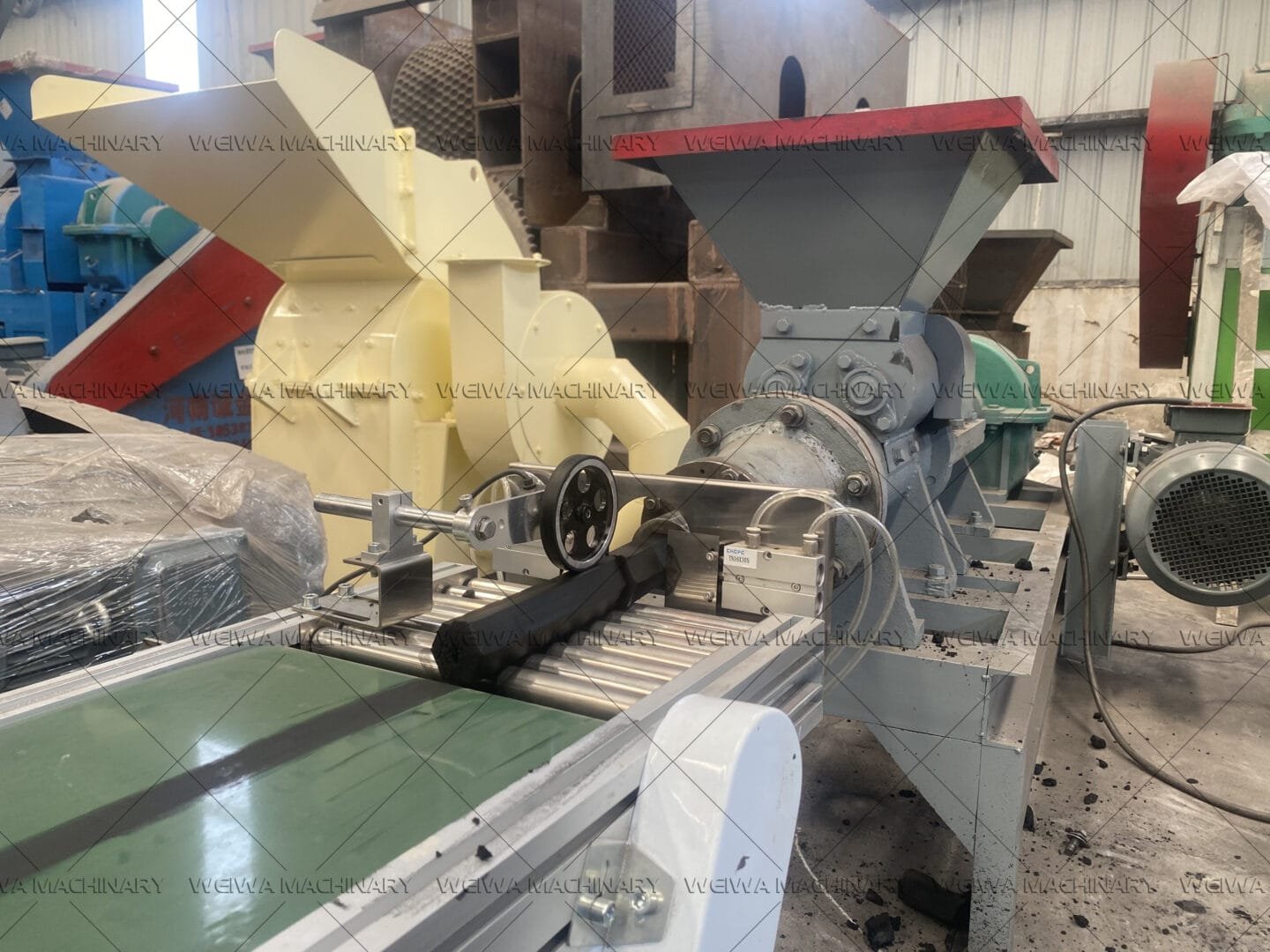
Buyers often confuse these terms. A coal briquettes making machine is a broad category. It can include roller press machines, screw extruders, hydraulic presses, and rotary punch machines. A honeycomb punching machine is a specific type that forms block-shaped briquettes with holes.
If your goal is household honeycomb coal, the punching machine is usually better. If your goal is pillow-shaped or oval briquettes for industrial boilers, a roller press may be better. Weiwa Machinery helps clients choose based on product shape, burn use, and local customer habit.
When to Choose the Honeycomb Punching Machine?
Choose the honeycomb punching machine when the market wants traditional honeycomb coal, long-burning cooking blocks, or recognizable hole-pattern briquettes. This machine is common in parts of Asia because users already understand the shape.
The honeycomb briquette charcoal machine is also easier to explain to end users. You can hold the product up and say, this lights faster because of the holes. That message sells well in local markets.
When to Consider Other Briquette Equipment?
If the client wants barbecue cubes, arang shisha, or pillow briquettes, Weiwa may recommend a different line. The honeycomb charcoal coal briquette forming machine is excellent for solid fuel blocks, but it is not the best choice for every briquette style.
This is why Weiwa asks for product photos before quoting. A good supplier matches the machine to the market. A poor supplier simply ships the cheapest unit.
Who Should Buy This Machine in Laos and Southeast Asia?
The honeycomb briquette charcoal machine in Laos is suitable for charcoal traders, agricultural cooperatives, rural energy startups, restaurant supply wholesalers, and families upgrading from manual molding.
You do not need to be a large factory. Many successful buyers start with one crusher, one mixer, one dryer area, and one honeycomb punching machine. They reinvest profits, add a second mold, then hire a second operator.
Charcoal Traders
Traders already handle powder, lumps, and bags. Adding a coal briquettes making machine lets them capture value they currently lose as dust. Instead of sweeping charcoal fines into the trash, they press it into sellable fuel.
Cooperatives and Rural Enterprises
Cooperatives can collect rice husk charcoal, sawdust charcoal, and agricultural residue from members. The honeycomb charcoal coal briquette forming machine turns shared raw material into a common product. Members receive income from sales instead of letting residue rot or burn openly.
Restaurant Supply Wholesalers
Wholesalers already visit food stalls every week. Adding briquettes to the product list increases order value. Itu 90 mm restaurant briquette from the Laos trial was designed exactly for this channel.
How to Start a Honeycomb Briquette Business with Weiwa?
Starting a briquette business is not complicated, but it requires sequence. Pertama, identify your raw material. Kedua, define your target briquette size. Ketiga, calculate daily output. Fourth, choose mold and power configuration. Fifth, plan drying and storage space. Only then should you confirm the machine price.
Weiwa Machinery supports buyers from inquiry to installation. For the Laos client, we reviewed material photos, proposed a mold plan, shared a test video, and explained container packing. The honeycomb briquette charcoal machine was only one part of the solution.
Send Us Your Material First
The fastest way to get an accurate quote is to send photos of your charcoal dust, denda batubara, or biomass residue. Include moisture condition, available quantity per day, and target briquette diameter. Weiwa can then recommend whether a 140-type, 180-jenis, 220-jenis, or larger honeycomb punching machine fits your plan.
Request a Trial Video
If you cannot travel to China immediately, request a material test video. Our team can run your sample in the workshop and record the honeycomb charcoal coal briquette forming machine with your powder. You will see feeding, compression, ejection, and finished pieces.
This is more honest than a generic factory video. A coal briquettes making machine may look good in a brochure, but the real question is whether your material becomes a good briquette.
Plan Power, Ruang angkasa, and Labor
Most honeycomb briquette charcoal machine models run on three-phase power. Buyers should confirm voltage before ordering. Space requirements are modest, but drying area matters more than machine footprint. Labor can be one skilled operator plus one helper after training.
Weiwa provides layout suggestions so the flow moves from raw material yard to crusher, pengaduk, machine, drying racks, and packing zone without backtracking.
Common Buyer Questions About Honeycomb Briquette Machines
Can the machine use only charcoal dust?
Ya. The honeycomb briquette charcoal machine can run on charcoal dust alone if the powder is fine, dry, and bound correctly. Many buyers add a small binder to improve strength.
Can it also process coal fines?
Ya. The honeycomb charcoal coal briquette forming machine handles coal fines, bubuk kokas, Debu arang, and blended biomass. Ratio and binder change with the material.
Is the honeycomb punching machine difficult to maintain?
TIDAK. Daily maintenance is simple: clean the mold, check lubrication, inspect the punch head, and remove returned material. Weiwa supplies a spare-part list and operation guide.
Do I need different machines for different sizes?
Not always. One coal briquettes making machine can serve several products if you use interchangeable molds. That is usually cheaper than buying multiple machines.
How long until I recover investment?
It depends on raw material cost, daily output, local retail price, and packing format. Buyers in Southeast Asia often improve margins by branding finished briquettes instead of selling loose powder.
Talk to Weiwa Machinery for Quotation and Trial Video
If you are searching for a honeycomb briquette charcoal machine in Laos, you do not need to guess. Send Weiwa Machinery your material photo and target piece size. Our team will return a mold suggestion, a test video if requested, and a landed cost estimate.
The Laos trial proved one important point. Local material can become a high-quality honeycomb briquette when the honeycomb charcoal coal briquette forming machine is configured correctly. The coal briquettes making machine is not magic. It is engineering, preparation, and after-sales support working together.
For molded fuel projects in Laos, Thailand, Vietnam, Indonesia, Cambodia, Myanmar, and the wider Southeast Asian market, Weiwa Machinery can supply the honeycomb punching machine, matching crusher, pengaduk, pengering, and production line layout.
Hubungi Mesin Weiwa
Seluler: +8613838093177
Whatsapp: +8613838093177
E-mail: info@cjlmachineGroup.com
Tentang Mesin Weiwa
Weiwa Machinery is a Chinese manufacturer of briquette and charcoal processing equipment based in Henan Province. Our product range covers the honeycomb briquette charcoal machine, Mesin Punching Honeycomb, Mesin Pembuat Briket Batubara, Crusher arang, pengaduk, pengering, peralatan karbonisasi, and complete briquette production lines.
We export to more than 130 countries and have served customers in Indonesia, India, Malaysia, Laos, Myanmar, Thailand, Vietnam, Filipina, Pakistan, Sri Lanka, Libanon, Georgia, Turki, Polandia, Czech Republic, Mongolia, Korea Selatan, Rumania, Mesir, Sudan, Tunisia, Aljazair, Etiopia, Tanzania, Equatorial Guinea, Zambia, Meksiko, Afrika Selatan, and Nigeria. More than two million end users worldwide use fuel made on Weiwa equipment.
We welcome factory visits. Every export machine is run before painting. Every mold is measured twice. Every container is photographed from four angles. For the honeycomb charcoal coal briquette forming machine, we keep demo units on the workshop floor so overseas buyers can fly in and see their exact model run with their own material.
If you are planning a honeycomb briquette charcoal machine in Laos project, send us your raw material photo and target piece size. We will return a mold drawing, a test video, and a landed cost estimate within three working days.


 Wechat wechat

 +8615937143060
