


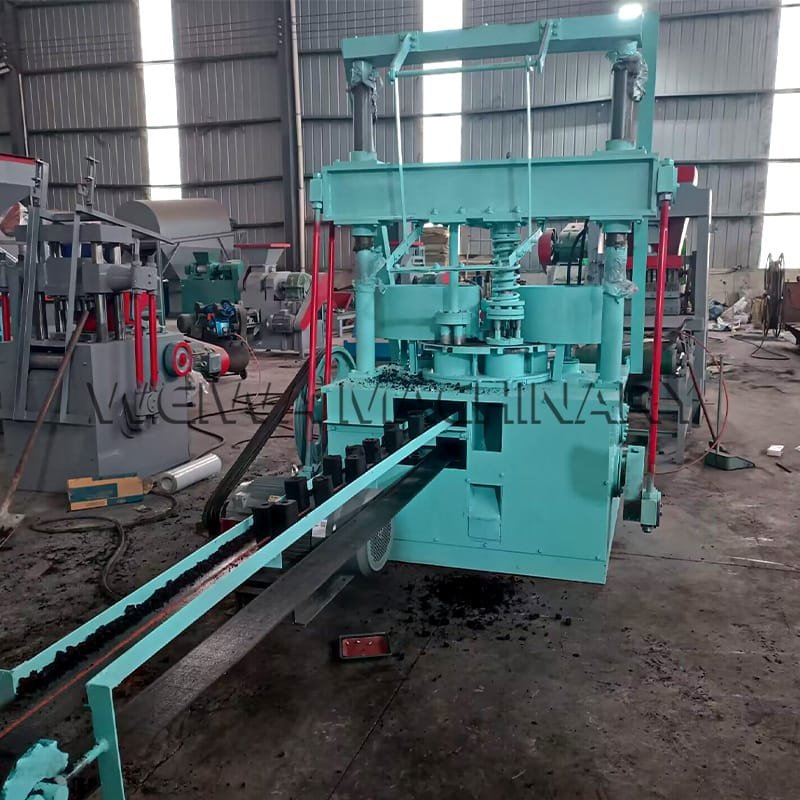
In the heart of Vietnams growing clean energy movement, Weiwas recent on site trial of a honeycomb briquette charcoal machine for a local client marked more than just a technical demonstration. It was a bridge between advanced biomass processing technology and the practical needs of households and small enterprises seeking affordable, low emission fuel. As a manufacturer dedicated to engineering solutions that turn agricultural residues and coal fines into valuable solid fuel, Weiwa Machinery views such trials as opportunities to align our machines with regional demands while educating users on the science and benefits of honeycomb briquetting.
The Role of Honeycomb Briquette Charcoal Machines in Modern Energy Solutions
Across Southeast Asia, rising awareness of indoor air pollution and deforestation has driven demand for alternative cooking fuels. Honeycomb briquette charcoal machines occupy a unique niche here, transforming loose carbonaceous materials into dense, structured briquettes that burn longer and cleaner than raw biomass or unprocessed coal. Tidak seperti arang benjolan tradisional, these briquettes feature a distinctive hexagonal or square cellular pattern—hence the name honeycomb—that increases surface area for efficient combustion while maintaining structural integrity during handling and storage.
The core principle behind a honeycomb briquette charcoal machine lies in high pressure compaction. Raw materials such as coconut shell charcoal powder, Debu Batubara, serbuk gergaji, or rice husk charcoal are fed into a hopper, then forced through a die with precision engineered punches. The die dictates the size and shape of the cells, while the punch applies uniform force to bind particles without additives in many cases. This process not only densifies the material but also creates channels that enhance airflow during burning, reducing smoke and particulate emissions. For markets like Vietnam, where many families rely on open fires or inefficient stoves, this design translates to less respiratory irritation and lower fuel consumption.
Weiwas honeycomb briquette charcoal machine stands out for its adaptability to diverse feedstocks, a critical feature given Vietnams abundant agricultural waste. The machine can process materials with moisture content adjusted to optimal levels, ensuring consistent briquette quality even when supply sources vary seasonally. This flexibility is particularly valuable for small scale producers who may source charcoal from multiple suppliers or switch between coconut shell and coal fines based on availability.
Why Vietnam A Strategic Focus for Honeycomb Charcoal Coal Briquette Forming Machines?
Vietnams energy landscape presents a compelling case for honeycomb charcoal coal briquette forming machines. The countrys rapid urbanization coexists with widespread rural communities where access to natural gas remains limited. Many households still depend on wood or unprocessed coal, contributing to deforestation and health hazards. Government initiatives promoting clean cooking and circular economy practices have created fertile ground for briquette adoption, yet adoption hinges on accessible, reliable equipment.
Clients in Vietnam often prioritize machines that balance affordability with durability, given budget constraints for small businesses and cooperatives. They also seek equipment that minimizes downtime, as continuous production is key to meeting local market demand. Weiwas honeycomb briquette charcoal machine addresses these needs through robust construction using alloy steel dies and punches that resist wear, even with abrasive materials like coal dust. The machines compact footprint suits small workshops, while its user friendly controls reduce training time for operators—a crucial factor for clients expanding their workforce quickly.
Lebih-lebih lagi, the environmental narrative resonates deeply in Vietnam. By converting waste into fuel, honeycomb briquettes support waste reduction goals, turning what was once discarded into a revenue stream. For clients focused on corporate social responsibility, this dual benefit of profit and sustainability strengthens their market position.
Preparing for the Trial Aligning Machine Specs With Client Needs
When our Vietnamese client approached Weiwa Machinery, they specified a honeycomb briquette charcoal machine tailored to produce medium sized briquettes suitable for household stoves. Their priority was consistent density and minimal breakage during transport, as their distribution network covers both urban retailers and rural vendors. After reviewing their feedstock—a blend of coconut shell charcoal and coal fines—we recommended a model with adjustable punch pressure and a die set optimized for mixed materials.
Preparation involved calibrating the machines hydraulic system to ensure pressure could be fine tuned for the clients specific mix ratio. We also provided guidance on pre processing steps, such as grinding raw materials to a uniform particle size and drying them to the ideal moisture range of eight to twelve percent. Proper preparation is often overlooked but critical; uneven particle sizes lead to weak briquettes, while excess moisture prevents effective binding.
Transporting the machine to the clients facility in Ho Chi Minh City required careful coordination to comply with import regulations and ensure safe handling of precision components. Our team arrived early to assemble the machine, run diagnostic checks, and train local technicians on maintenance protocols—steps that reflect Weiwas commitment to post sale support beyond mere delivery.
The Trial Day Demonstrating Honeycomb Punching Machine Capabilities
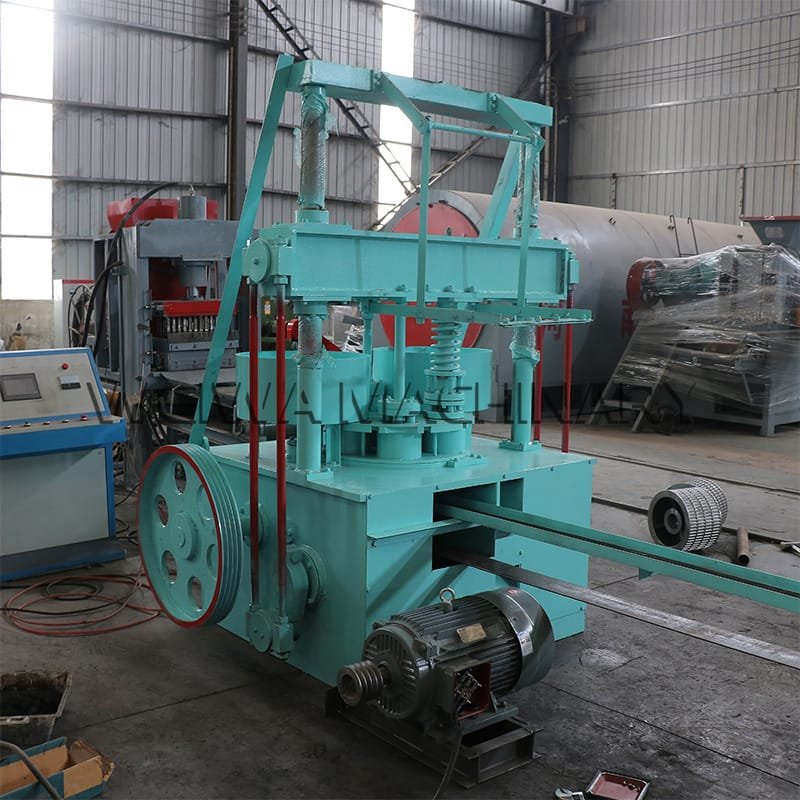
On the day of the trial, the clients workshop buzzed with anticipation. The honeycomb punching machine was positioned near raw material storage, with conveyors feeding prepared charcoal coal mixture into the hopper. Our engineers initiated the first batch, adjusting the feed rate to match the machines optimal throughput. Within minutes, the first briquettes emerged: cylindrical forms about five inches long with clearly defined hexagonal cells, each cell roughly half an inch across.
The clients team inspected the samples for hardness by dropping them from waist height onto concrete—no cracks appeared. They also tested combustion by lighting a briquette in a traditional clay stove, noting the steady flame and minimal smoke compared to their usual fuel. One technician remarked on the even burn pattern, observing that the honeycomb structure prevented the central voids common in poorly made briquettes, which often cause uneven heat distribution.
Throughout the trial, we emphasized the machines ease of operation. The control panel displays real time pressure readings and cycle counts, allowing operators to detect anomalies immediately. Changing dies to produce different cell sizes took under fifteen minutes, a feature the client valued for potential product diversification. When asked about output, we demonstrated how the machine could produce up to twelve hundred briquettes per hour at full capacity, scalable down for smaller batches during low demand periods.
Science Behind the Sample Exploring Honeycomb Briquette Structure
To help the client and readers understand why these briquettes perform so well, we delved into the science of their design. The honeycomb pattern is not merely aesthetic; it is a functional solution to combustion efficiency. Each cell acts as a mini furnace, with oxygen circulating freely around the burning surface. This promotes complete combustion, reducing the release of carbon monoxide and unburned hydrocarbons.
Material bonding in the honeycomb briquette charcoal machine relies on mechanical compression rather than chemical binders in most formulations. The pressure ruptures surface pores in charcoal particles, allowing natural lignin or bitumen in coal to act as an adhesive when heated during compaction. This results in briquettes that hold together without added glues, appealing to health conscious consumers wary of chemical residues.
Density is another critical factor. Weiwas machine achieves densities of one point two to one point four grams per cubic centimeter, significantly higher than loose charcoal powder. Higher density means more energy stored per briquette, extending burn time. For the clients target market, this translates to fewer briquettes needed per meal, lowering daily fuel costs.
Addressing Client Queries on Coal Briquettes Making Machine Practicalities
Selama persidangan, the clients questions revealed common concerns among new entrants to briquette production. One query centered on power consumption: How would the honeycomb briquette charcoal machine impact operational expenses? We explained that the machines motor is energy efficient, designed to deliver high torque without excessive electricity use, and that production volumes justify the power input through reduced raw material waste.
Another concern was maintenance frequency. Our engineers detailed the simple upkeep routine: lubricating moving parts weekly, inspecting punches for wear monthly, and replacing dies every six to twelve months depending on usage intensity. We also highlighted Weiwas policy of supplying spare parts locally in Vietnam, minimizing downtime if replacements are needed.
The client also asked about scalability. Could the honeycomb punching machine grow with their business? We discussed modular options, such as adding parallel production lines or upgrading to automated feeding systems, allowing them to increase output without investing in entirely new machinery. This forward looking approach reassured them that their initial investment could adapt to future expansion.
Sustainability and Market Potential for Honeycomb Briquette Charcoal in Vietnam
Beyond technical performance, the trial underscored the sustainability story that makes honeycomb briquette charcoal machines attractive in Vietnam. By utilizing coconut shell waste—a byproduct of Vietnams thriving coconut industry—producers divert material from landfills and reduce reliance on forest harvesting. Coal fines, often discarded by mining operations, gain value as a binder, creating a circular economy loop.
Market research suggests that Vietnamese consumers are willing to pay a modest premium for briquettes that burn cleaner, especially in urban areas where air quality is a pressing issue. The governments push for reduced firewood use in rural kitchens further supports demand growth. For clients, this means a product with built in market appeal, backed by a machine that ensures consistent quality to build brand trust.
Weiwa Machinery sees education as part of our mission. Selama persidangan, we shared data on emission reductions achieved by switching to honeycomb briquettes, helping clients make informed pitches to distributors and end users. This transparency builds partnerships grounded in measurable environmental benefits.
Why Choose Weiwa Machinery for Honeycomb Briquette Solutions?
Our trial in Vietnam reinforced why clients worldwide turn to Weiwa Machinery for honeycomb briquette charcoal machines. We combine engineering rigor with regional customization, ensuring each machine fits the clients feedstock, production scale, and market goals. Our after sales service includes on site training, remote troubleshooting, and access to a parts network spanning major Asian markets.
Innovation drives us: recent upgrades to our honeycomb charcoal coal briquette forming machine include noise reduction features and smart sensors that alert operators to pressure fluctuations before they affect briquette quality. These enhancements stem from feedback like the Vietnamese clients, whose insights help us refine machines for real world conditions.
We understand that investing in a coal briquettes making machine is a step toward economic resilience and environmental stewardship. Thats why we prioritize durability and ease of use, empowering clients to focus on growing their business rather than grappling with equipment issues.
Conclusion A Partnership Forged in Innovation and Trust
The successful trial of our honeycomb briquette charcoal machine in Vietnam was more than a product demonstration; it was a validation of Weiwas philosophy that great machinery solves human problems. By merging precise engineering with an understanding of local needs, we helped our client see the potential of clean fuel production, backed by samples that spoke louder than specifications.
For businesses in Vietnam and beyond seeking a reliable honeycomb punching machine, Weiwa Machinery offers not just equipment but a pathway to sustainable growth. Our team stands ready to collaborate, from initial consultation to installation and beyond, ensuring every client maximizes the value of their investment.
As the world moves toward greener energy, honeycomb briquettes represent a tangible step forward—and with the right machine, that step becomes a stride. Let Weiwa Machinery be your partner in making that journey.
Tentang Mesin Weiwa
Weiwa Machinery is a leading manufacturer specializing in biomass and coal briquetting equipment, including honeycomb briquette charcoal machines, mesin pembuat briket batubara arang sarang lebah, coal briquettes making machines, and honeycomb punching machines. With a focus on innovation, daya tahan, and customer centric solutions, we serve clients across Southeast Asia, Afrika, and Latin America, helping them transform waste into wealth. Our commitment to quality is matched by comprehensive after sales support, ensuring seamless operation and long term success.
Contact us today to learn how our honeycomb briquette charcoal machine can elevate your production:
Mob Whatsapp +8613838093177
E Mail info@cjlmachinegroup.com


 Wechat wechat

 +8615937143060
