


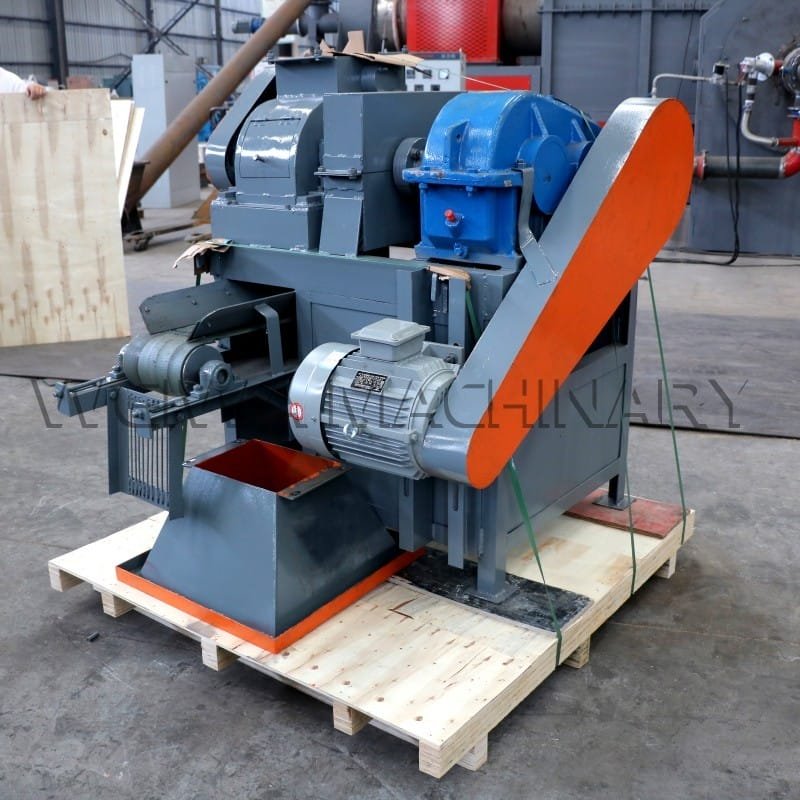
Shipment Scene at the Weiwa Factory Loadout Yard
The Paraguayan buyer first contacted us through WhatsApp after seeing a Peruvian case study on our site. He ran a small timber yard near Concepción where offcuts from paraíso and cedar were carbonized in earth kilns. His problem was familiar: roughly 18 percent of the output came back as fines under 3 mm, plus broken lump charcoal that retailers rejected. He did not want a second carbonization furnace. He wanted to recycle the waste into sellable balls. Our sales engineer sent him a one page questionnaire on raw material moisture, daily available feedstock, local electricity, and target bag weight. Based on the reply we proposed a 1.5 ton per hour line, not the 3 ton unit he originally imagined, because 1.5 ton matched his current fines volume and left room to grow.
In the workshop the ball charcoal briquettes machine went through a 40 minute dry run with coke powder before packing. The forced screw feeder dosed material steadily. The rollers turned at 14 rpm. The hydraulic unit held gap pressure while our technician switched the mold pair twice to show the buyer’s supervisor over video call how oval and pillow cavities swap in under 25 menit. After the run the rollers were cleaned, coated, and wrapped. The twin shaft mixer received a trial batch of charcoal powder, air, and starch paste at 9 percent moisture. The mesh belt dryer was fired with a biomass burner simulator to confirm airflow and belt speed. Nothing ships from Weiwa without a running video stored in the order folder.
Packing followed our standard split method. The hammer crusher and vibrating sieve traveled in the container as nude machines bolted to a wooden base. The mixer, buffer silo, ball press, pengering, and bagging table were partially disassembled to save height. Small parts, bantalan, seal kits, and mold drawings went into a sealed plywood case with foam lining. The control cabinet was crated separately with desiccant bags. We printed the bill of lading with the destination port, marked fragile faces in Spanish and English, and sent the buyer a packing list where every HS code, net weight, and spare part quantity matched the commercial invoice.
That scene is not unusual for us. What made it worth a blog post is the market behind it. Making charcoal balls in Paraguay is moving from backyard hobby to registered micro factory, and the buyers who move early will own shelf space before the bigger Brazilian and Argentine brands notice.
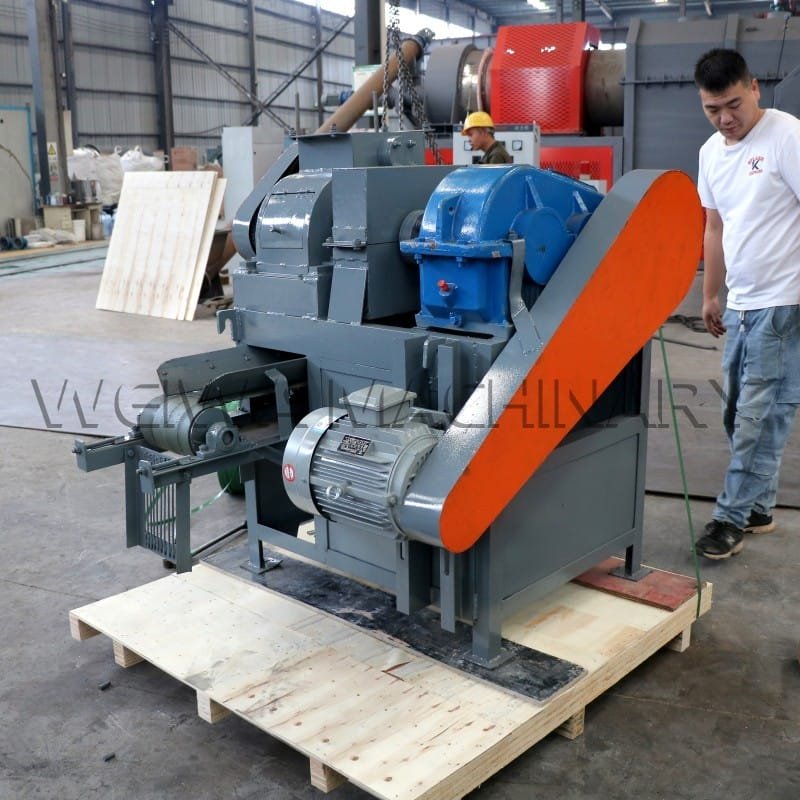
Why Making Charcoal Balls in Paraguay Is Gaining Speed?
Paraguay holds roughly 17.8 million hectares of forest, tentang 44 percent of national territory, and forestry ranks among the government’s strategic priorities through 2035. Eucalyptus dominates commercial plantations, with paraíso, pinus, and cedar filling smaller lots. The country recorded around 101 million dollars in forestry exports in 2025, and charcoal with briquettes accounts for the majority of that value. When plantation area grows and kiln throughput rises, the share of fines grows with it. A charcoal briquette machine is the cheapest bridge between waste powder and retail income.
Forestry Residue and Charcoal Dust as Feedstock
The client in Paraguay feeds his press with three streams. Pertama, carbonization fines from his own earth kilns. Kedua, sweepings from the lump charcoal grading screen. Ketiga, purchased dust from neighboring sawmills that burn eucalyptus offcuts and sell the powder cheap because they have no press. All three streams are dry, abu rendah, and high fixed carbon, which means the balls hold heat longer on an asado grill. A ball charcoal briquettes machine does not care whether the powder came from quebracho or coconut shell import, as long as the fraction sits under 3 mm and the moisture stays below 12 percent before mixing.
BBQ Culture and Retail Sack Demand
Paraguayans grill year round. Family asado, roadside chicken stalls, and weekend river trips all pull steady charcoal demand. Supermarkets in Asunción and Ciudad del Este already stock imported briquettes in 5 kg and 10 kg bags, but the price gap between imported pillow briquettes and local lump charcoal is wide enough that a domestic ball product priced in the middle sells fast. The buyer we shipped to chose oval 35 oleh 28 mm because that shape nests in a 10 kg polypropylene sack, leaves fewer voids, and lights quicker than a 50 mm round ball. Shape is not decoration. Shape decides breakage rate on the back of a pickup truck.
Export Window to Neighboring Mercosur Markets
Paraguay sits next to Brazil, Argentina, and Bolivia with road corridors and the Paraguay Paraná waterway giving access to Atlantic ports. A line making charcoal balls in Paraguay can serve local municipalities and still truck pallets to Posadas or Campo Grande within two days. Several Argentine distributors already import Brazilian briquettes; a Paraguayan factory with lower electricity and cheaper labor can undercut that flow if the product passes moisture and ash tests. The charcoal briquette machine we sent included a rotary screen after the dryer so export grade batches stay under 5 percent final moisture and under 8 percent fines.
What a Ball Charcoal Briquettes Machine Actually Does?
A ball charcoal briquettes machine is a roller type press. Two counter rotating alloy rollers carry matching cavities. Powder drops from a buffer silo into a forced screw feeder, the feeder pushes material into the nip where the cavities close, and pressure squeezes air from the particle gaps while rearranging the grains into a dense ball. No glue is needed if the charcoal lignin and resin content survive carbonization, but most commercial plants still add 3 ke 6 percent starch paste or molasses to improve green strength before drying. The same charcoal ball press machine principle works on coal coke powder, oksida besi, magnesium oxide, copper concentrate, Bijih kromium, gips, and desulfurization dust, yet for Paraguay the only relevant feedstock is charcoal dust.
Roller Press Principle Behind the Charcoal Ball Press Machine
Roller pressing beats manual molding in three ways. Pressure stays constant because roller gap, screw speed, and hydraulic setting are fixed on the control panel. Shape stays identical lot after lot, which matters when a supermarket buyer opens ten sacks and expects the same oval. Throughput scales with roller diameter: A 360 mm roll model gives two to three tons per hour, A 450 mm roll model gives four to five tons, and an 850 mm roll model passes fifteen tons. The Paraguayan line used a 450 mm roll with 65Mn alloy surfaces hardened to resist silica in dusty charcoal. Cavities were engraved by CNC so wall finish stayed smooth and release angle prevented sticking.
Shapes You Can Make With One Charcoal Briquette Machine
Round balls suit hookah and premium BBQ. Oval balls suit retail 10 kg sacks. Pillow shapes dry faster because of higher surface area. Square balls appeal to shisha exporters who want clean edges for cardboard boxes. Bread shaped balls appear in some African and Middle Eastern orders. The charcoal briquette machine we built for Paraguay carried quick swap bearings so the client can change mold pairs without pulling the roller shaft. He starts with oval BBQ balls for the local market, then pilots square shisha balls for export to the Middle East without buying a second press.
The Full Charcoal Briquette Machine Production Line We Sent
A standalone press is never enough. Commercial making charcoal balls in Paraguay needs particle control, moisture conditioning, pressing, pengeringan, and screening. The container to Asunción held six stations arranged in a U shape to fit a 300 square meter workshop. The flow ran from crusher to sieve to mixer to silo to press to dryer to cooler to bagging table.
Crushing and Sieving Charcoal Lumps
Charcoal from kilns arrives as irregular chunks, half burned ends, and dusty fines. The hammer crusher broke oversize pieces and reduced everything toward 3 mm. A vibrating sieve below the crusher removed grit and sand that would otherwise scratch roller cavities. We advised the buyer to keep a magnetic separator before the hopper because nail fragments from kiln covers destroy rollers within a week. Uniform powder mixes better with binder and feeds smoothly into the ball charcoal briquettes machine.
Twin Shaft Mixing With Water and Binder
The twin shaft mixer blended charcoal powder with water and cooked starch binder. Blades turned the mass for eight to twelve minutes while a spray nozzle added water in two stages. Target exit moisture was 9 persen. Under mixing leaves balls that crumble in the sack. Over mixing wastes binder and lengthens drying. We set the mixer motor to 380V 50Hz with a voltage tolerance kit because rural Paraguay can swing between 360V and 410V during dry season load shifts. The buyer can later add a wheel mill if he moves to premium BBQ balls with higher breakage resistance.
Pressing With the Charcoal Ball Press Machine
From the mixer an inclined conveyor lifted conditioned powder into the buffer silo above the charcoal ball press machine. A variable speed screw feeder dosed material evenly into the roller nip. Operators watched ammeter load, not guesswork. When load rose, screw speed dropped. When balls showed hairline cracks, moisture was 1 percent too low. The press frame was welded box steel, the gearbox was hardened helical, and the hydraulic unit held constant gap pressure so oval cavities never drifted into half moon shapes. Output fell onto a transfer chute toward the dryer.
Mesh Belt Drying and Final Screening
Paraguay humidity makes sun drying unreliable for commercial volume. The mesh belt dryer ran on a biomass burner, pushed 60 degree air across a moving bed, and brought balls from 9 percent to under 5 percent moisture in about 40 menit. Dried balls gained surface hardness, smoked less at ignition, and survived stacking in 25 kg sacks. A cooling conveyor let them settle, then a rotary screen pulled out fines that recycled back to the mixer. Finished balls moved to a semi automatic weighing table where two workers filled 10 kg branded sacks at roughly 700 sacks per eight hour shift.
How Paraguayan Buyers Should Size the First Line?
We do not recommend a new entrant jump to 5 ton per jam. Making charcoal balls in Paraguay works best when the first line matches available fines, not ambition. A 0.5 ton per hour pilot unit suits a sawmill that wants to test retail bags for six months. A 1 ke 2 ton per hour line suits a charcoal trader with stable kiln dust supply and one delivery truck. Above 3 ton per hour you need a dedicated warehouse, a second dryer, and a proper dust collection permit.
The buyer in this case chose 1.5 ton per hour because his own kilns delivered 1.1 ton of fines on a good day and he could buy another 0.6 ton from neighbors. That margin let him run five days a week, close Saturday for maintenance, and still fill 3,500 sacks monthly. He will upgrade the roller to 520 mm before adding a second mixer, not before.
After-Sales, Customization and Layout Planning by Weiwa Machinery
Weiwa Machinery has more than thirty years of experience in briquette and carbonization equipment. We are not a trading company that resells unknown presses. We machine rollers in house, weld frames in our own shop, and test run every charcoal briquette machine before it leaves Gongyi. The Paraguayan order included Spanish labels on the control cabinet, a spare roller pair, a mold drawing set in AutoCAD, and a U shaped workshop layout drawn to scale with foundation bolt positions.
Our after sales team answers on WhatsApp within one business day. We send commissioning videos, roller gap calibration sheets, binder recipe cards for starch and molasses, and remote support through phone camera when a belt drifts or a feeder jams. For clients who want more than a machine, we deliver site planning: where to put the crusher so dust blows away from the mixer, where to slope the conveyor, how wide the sack stitching table should be, and how many pallets fit before the forklift turns. Customization is not an upsell. For a ball charcoal briquettes machine headed to Paraguay, customization is the difference between a line that runs and a line that sits.
Talk to Mesin Weiwa About Your Charcoal Project
If you are evaluating making charcoal balls in Paraguay, or you already run kilns and hate sweeping fines into the ditch, send us your raw material photo, moisture reading, and daily available powder tonnage. We will propose a ball charcoal briquettes machine configuration, not a catalog quote. We will tell you whether a 1 ton line or a 3 ton line fits your shed. We will draw the layout before you pay the deposit.
Weiwa Machinery builds charcoal ball press machine lines for BBQ retail, hookah export, and industrial fuel shaping. We export to Indonesia, India, Malaysia, Vietnam, Turki, Polandia, Afrika Selatan, Peru, Congo, and now Paraguay. More than two million end users have handled briquettes pressed on our rollers. You are welcome to visit our factory, watch a press run, and take the mold samples home.
Contact us for a quotation and layout drawing.
Massa: +8613838093177
Whatsapp: +8613838093177
E-mail: info@cjlmachineGroup.com


 Wechat wechat

 +8615937143060
