


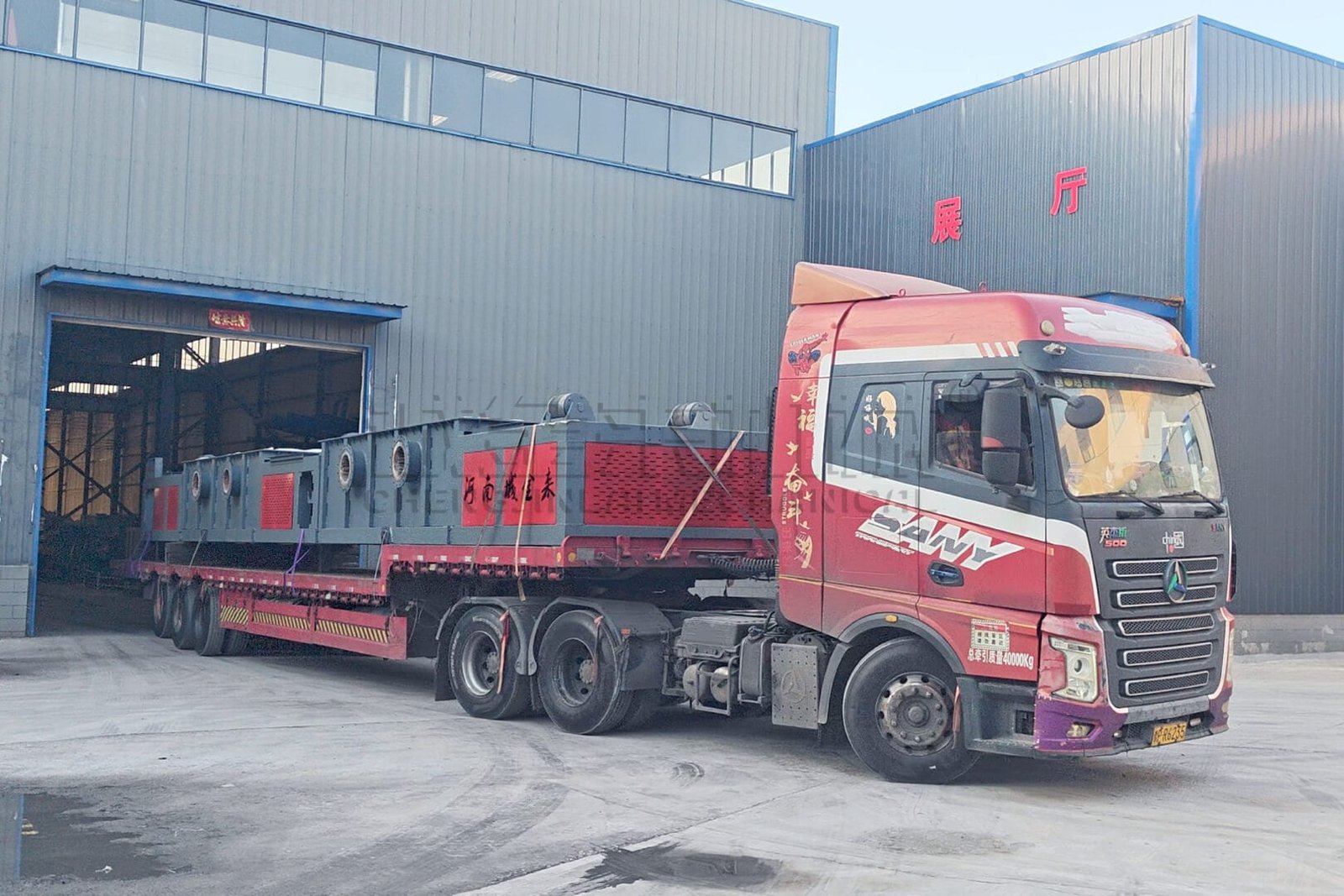
Shipment Site: 連續碳化爐 Ready for Indonesia
The loading area at the Weiwa production base was busy but highly controlled. The continuous carbonization furnace was positioned for final quality verification before container loading. Engineers checked the main furnace body, feeding screw, discharge system, gas recovery pipeline, dust removal unit, PLC control cabinet, temperature sensors, and safety valves. Each component was traced against the inspection sheet, because equipment sent to Indonesia must survive ocean freight, high humidity, port handling, and tropical site conditions.
After inspection, the furnace sections were wrapped with moisture-proof film, protected with edge guards, fixed inside steel frames, and secured with heavy lashing belts. Spare parts, tools, wiring diagrams, English-Indonesian operation manuals, and customs documents were packed in a separate reinforced crate. The goal was simple: when the continuous carbonization furnace arrives in Indonesia, the client should be able to move from unloading to installation with minimum delay.
What makes this shipment meaningful is not only the machine itself, but the application behind it. Indonesia has abundant palm kernel shell, 椰子殼, 稻殼, 木屑, 木屑, and plantation residue. A continuous carbonization furnace in Indonesia is no longer an experimental purchase. It has become a practical investment for charcoal exporters, biochar producers, palm plantations, and agro-waste processors.
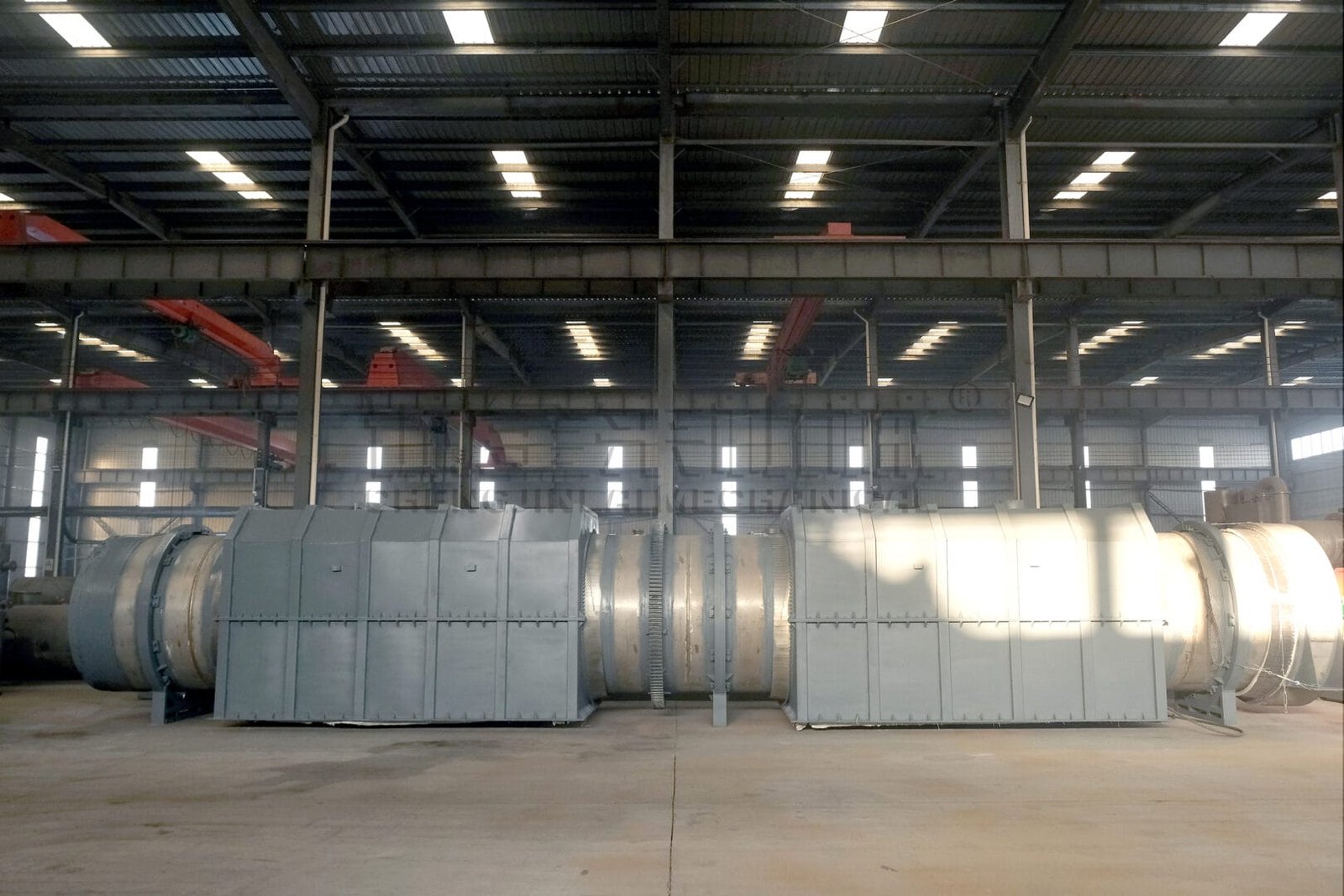
What a Continuous Carbonization Furnace Really Does
A continuous carbonization furnace is an industrial pyrolysis system designed to convert biomass into charcoal or biochar through controlled thermal decomposition in a low-oxygen environment. Unlike traditional pit kilns or batch brick kilns, the continuous system keeps feeding, 烘乾, 碳化, cooling, and discharging moving without stopping the whole production line.
The raw material enters the pre-drying zone first. Moisture drops to a suitable range, usually close to 10 到 15 percent, which protects the carbonization stage from unstable temperatures. The material then moves into the carbonization zone, where heat breaks down volatile matter and leaves a carbon-rich solid. Combustible gases released during the process are not wasted. They are recovered, conditioned, and reused as an energy source for the furnace. This closed-loop heat design is one of the main reasons a continuous carbonization furnace can run with lower external fuel consumption than older batch systems.
The discharged charcoal is then cooled and collected. Depending on feedstock, the output can be used for barbecue charcoal, shisha charcoal, 水煙木炭, 工業燃料, activated carbon raw material, or agricultural biochar. For Indonesian buyers, this flexibility is critical because the same plant can serve multiple markets: local heating, export charcoal, 土壤改良劑, and renewable energy projects.
Palm Kernel Shell and Coconut Shell Feedstock
Indonesia is one of the world’s largest palm and coconut producers. Palm kernel shell is dense, dry, and energy-rich. Coconut shell has high fixed carbon potential and is widely used for premium BBQ and shisha charcoal. Both materials are ideal for a continuous carbonization furnace for Indonesia because they can produce high-density charcoal with relatively low ash content.
Rice husk and sawdust are also common. These lighter materials require different feeding speed and residence time, but the Weiwa system can be adjusted through screw speed, zone temperature, and airflow control. That adaptability is why many investors compare a charcoal making machine in Indonesia not only by price, but by feedstock flexibility and after-sales engineering support.
Factory Trial Results Before Delivery
Before export, the continuous carbonization furnace was run inside the Weiwa factory using representative biomass samples. The trial was not a short demonstration. It included cold commissioning, heating curve verification, feeding stability testing, gas recovery observation, emission control checks, discharge temperature measurement, and charcoal quality sampling.
During the trial, the furnace maintained a stable carbonization temperature band generally between 450 和 600 攝氏度. Temperature fluctuation stayed within a narrow range because the PLC system adjusted feeding speed and combustion support in real time. Operators did not need to open the furnace repeatedly, which reduced oxygen intrusion and helped maintain uniform charcoal quality.
Charcoal samples from the trial showed consistent color, low surface oxidation, low moisture after cooling, and stable bulk density. Palm kernel shell samples produced hard, glossy charcoal suitable for industrial fuel and further processing. Coconut shell samples produced high-quality charcoal with the density and burn characteristics preferred by premium charcoal markets. Sawdust and rice husk trials produced fine biochar suitable for soil application, briquette raw material, or mixed fuel products.
Gas Recovery and Energy Saving
One of the strongest results from the trial was gas self-use. Volatile gases released during pyrolysis contained combustible components. Instead of releasing them as smoke, the Weiwa continuous carbonization furnace directs them through a recovery and combustion system. The gas is cleaned, cooled where required, and reintroduced as thermal energy.
This reduces dependence on diesel, 煤炭, or purchased gas. In tropical biomass projects, where feedstock is available year-round, the energy-saving effect becomes even more valuable. Lower fuel cost means shorter payback period, and lower smoke emission means better acceptance from local communities and regulators.
Why Indonesia Needs Continuous Carbonization Furnace Technology?
Indonesia generates massive volumes of agricultural and plantation waste every year. In the past, much of this material was burned in fields, dumped, or left to decompose. Open burning creates air pollution. Decomposition releases greenhouse gases. Both outcomes waste energy that could be captured as charcoal, 生物炭, 熱, or revenue.
A continuous carbonization furnace in Indonesia solves several problems at once. It reduces farm and plantation waste, creates a storable carbon product, supports renewable energy goals, and gives rural areas a new processing industry. For palm plantations, coconut processors, and rice mills, the equipment turns a disposal cost into a salable commodity.
Government interest in biochar and waste-to-energy is also growing. Biochar can improve soil structure, increase water retention, reduce nutrient leaching, and support carbon sequestration. In a country with heavy rainfall, acidic soils, and large monoculture plantations, those benefits are not theoretical. They directly affect yield, fertilizer cost, and long-term land productivity.
Local Biochar and Charcoal Demand
Indonesian charcoal is not only consumed domestically. Coconut shell charcoal briquettes from Southeast Asia are exported to Middle Eastern, European, and Asian shisha markets. Biochar is increasingly discussed for soil rehabilitation, mining land restoration, and carbon project development. Industrial users also buy charcoal as an alternative fuel for boilers, 窯爐, and drying systems.
This layered demand explains why searches for charcoal making machine in Indonesia keep rising. Buyers are no longer asking whether biomass charcoal is viable. They are asking which machine can run continuously, comply with environmental rules, and still deliver attractive return on investment.
Continuous Carbonization Furnace Price and Investment Logic
Many buyers begin with one question: what is the continuous carbonization furnace price? The honest answer is that price depends on capacity, feedstock type, automation level, gas treatment system, cooling system, chimney filtration, steel grade, motor brand, PLC brand, container loading plan, and destination port.
A small pilot line is cheaper but may not match industrial throughput. A large plant with gas recovery, secondary combustion, cyclone dust removal, water-cooling discharge, and automatic feeding costs more, but it can lower labor cost, fuel cost, and rejection rate. For Indonesian projects, the correct way to evaluate continuous carbonization furnace price is not the cheapest quotation, but total cost per ton of qualified charcoal.
Weiwa Machinery usually helps clients calculate payback using five variables: local feedstock cost, daily capacity, charcoal selling price, fuel and power saving, and labor reduction. A machine with a slightly higher purchase price but better gas recovery and lower maintenance often outperforms a cheap furnace that stops frequently, produces uneven charcoal, or fails environmental inspection.
For investors comparing charcoal making machine in Indonesia options, the comparison should include spare-part availability, local voltage compatibility, operator training, installation support, and the supplier’s export experience. A low price without engineering support can become an expensive mistake after the container arrives.
Charcoal Making Machine in Indonesia: Market Outlook
The market outlook for charcoal and biochar equipment in Indonesia is strongly positive. Palm kernel shell supply is tied to the palm oil industry. Coconut shell supply is tied to coconut processing and copra production. Rice husk supply is tied to rice milling. Wood residue supply is tied to furniture, plywood, and sawmill clusters. In other words, feedstock is not a bottleneck; feedstock is a permanent byproduct of existing agriculture.
As export buyers demand cleaner production and traceable supply chains, Indonesian charcoal producers will need better equipment. Traditional kilns cannot easily document temperature history, 排放控制, or product consistency. A continuous carbonization furnace for Indonesia can record operating data, stabilize quality, and reduce the smoke complaints that often surround old charcoal sites.
Another growth driver is biochar for agriculture and carbon projects. Global buyers are interested in verified carbon removal. If Indonesian biochar producers combine high-quality pyrolysis equipment with proper feedstock sourcing and documentation, they can enter higher-margin environmental markets rather than competing only on bulk charcoal price.
The coconut shell charcoal export chain is also maturing. Grinders, mixers, 壓塊機, dryers, and packaging machines are increasingly integrated into one line. That means the continuous carbonization furnace is no longer a standalone machine. It is the core of a complete charcoal making machine in Indonesia production ecosystem.
Installation, Training, and After-Sales Support
Weiwa Machinery treats overseas projects as long-term partnerships. After the continuous carbonization furnace arrives in Indonesia, the workflow includes foundation checking, container unloading guidance, component identification, mechanical assembly, electrical connection, pipeline connection, trial feeding, parameter setting, charcoal sampling, operator training, maintenance training, and production optimization.
Training covers safe startup, normal operation, emergency shutdown, fire prevention, gas system checks, bearing lubrication, screw wear inspection, dust removal cleaning, and spare-part inventory management. The objective is not only to start the machine once, but to help the client run it reliably for years.
Why Buyers Choose Weiwa Machinery?
Weiwa Machinery has deep experience in biomass processing, charcoal equipment, 機器煤球, crushers, dryers, and complete biochar production lines. The company’s advantage is not only fabrication. It is process engineering: matching the right furnace configuration to the client’s raw material, moisture level, target product, local regulations, and budget.
For the Indonesian market, Weiwa designs equipment with tropical conditions in mind. Humidity-resistant electrical components, anti-corrosion surface treatment, reinforced foundations, clog-resistant feeding systems, and easy-access cleaning doors are built into the engineering discussion from the beginning.
Clients also value transparency. Weiwa provides clear technical drawings, realistic capacity ranges, honest continuous carbonization furnace price breakdowns, and practical advice about which optional systems are necessary. Not every client needs the most complex configuration. A good supplier explains the difference instead of simply quoting the most expensive line.
The shipped furnace described in this article is a good example. The client needed stable coconut shell and palm kernel shell carbonization, acceptable smoke control, automated feeding, recoverable gas energy, and simple local operation. Weiwa did not oversell unrelated features. The delivered continuous carbonization furnace for Indonesia was configured around the client’s actual business case.
Talk to Weiwa Machinery
If you are evaluating a continuous carbonization furnace in Indonesia, the most important step is not requesting the lowest price first. The most important step is sending your raw material type, 水分含量, daily target, available space, local power supply, and export or local sales plan. With that information, Weiwa Machinery can propose the right model, explain the continuous carbonization furnace price clearly, and design a charcoal making machine in Indonesia solution that fits your market.
Whether you process coconut shell, palm kernel shell, 稻殼, 木屑, 木屑, 竹子, or mixed biomass, Weiwa can supply a single machine or a complete production line. The furnace shipped this month is only one example of how Indonesian biomass waste can be transformed into a profitable, 清潔工, and more sustainable product.
Contact Weiwa Machinery
暴民: +8613838093177
WhatsApp: +8613838093177
電子郵件: info@cjlmachinegroup.com
關於 WEIWA機械
Weiwa Machinery is a manufacturer and exporter of biomass carbonization equipment, 木炭製造機, 機器煤球, crushers, dryers, and complete biochar production lines. With years of experience serving customers in Southeast Asia, 非洲, 中東, and Latin America, Weiwa focuses on practical engineering, durable fabrication, and export-ready after-sales service.
The company’s product range covers batch carbonization kilns, 連續碳化爐, coconut shell charcoal plants, palm kernel shell biochar lines, sawdust and rice husk carbonization systems, shisha charcoal production lines, and activated carbon raw-material plants. Each project is evaluated according to feedstock characteristics, capacity requirement, environmental conditions, and target market.
Weiwa Machinery’s mission is straightforward: help customers turn agricultural and forestry waste into high-value charcoal, 生物炭, and renewable energy products. From factory trial to overseas installation, Weiwa supports buyers with technical consultation, customized design, quality inspection, export documentation, 訓練, and long-term spare-part supply.
For Indonesian investors, Weiwa is more than an equipment supplier. It is a process partner that understands tropical biomass, export-quality charcoal standards, and the real operating conditions of a continuous carbonization furnace in Indonesia.


 微信
微信

 +8615937143060
