


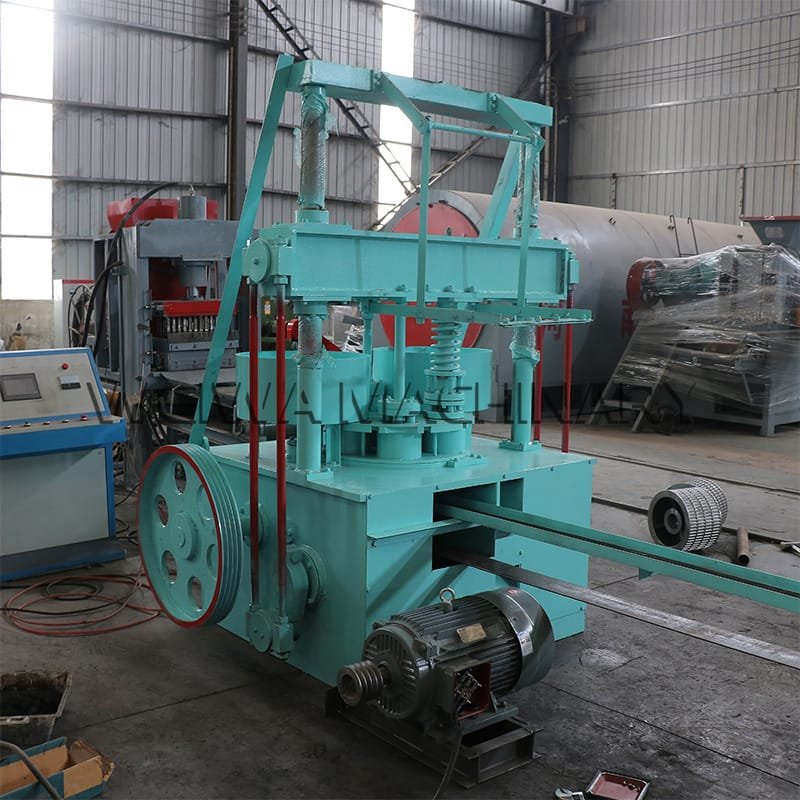
Why the Vietnam Client Requested This Honeycomb Briquette Machine?
Vietnamese fuel producers are increasingly moving from loose coal, firewood, and irregular charcoal chunks toward standardized briquettes. The reason is simple: distributors want consistent size, households want cleaner burning, and small factories want products that package, stack, and ship without breaking. The Vietnam client already understood this market shift. Their request was specific. They wanted a honeycomb briquette charcoal machine in Vietnam operating condition, not a laboratory prototype.
Their raw material mix included charcoal powder, 煤粉, and locally available biomass residues. They cared about hole pattern, burning stability, briquette hardness, and whether the machine could run continuously without frequent die problems. For them, the honeycomb punching machine was not a novelty. It was a production tool that had to deliver repeatable results.
What a Honeycomb Briquette Charcoal Machine Actually Does?
A honeycomb briquette charcoal machine compresses powdered raw materials into block-shaped fuel with multiple holes passing through the body. Those holes are not decorative. They create channels for air to enter the briquette during combustion. Better airflow means more stable ignition, steadier flame, less choking smoke, and more complete burning of the fixed carbon inside the briquette.
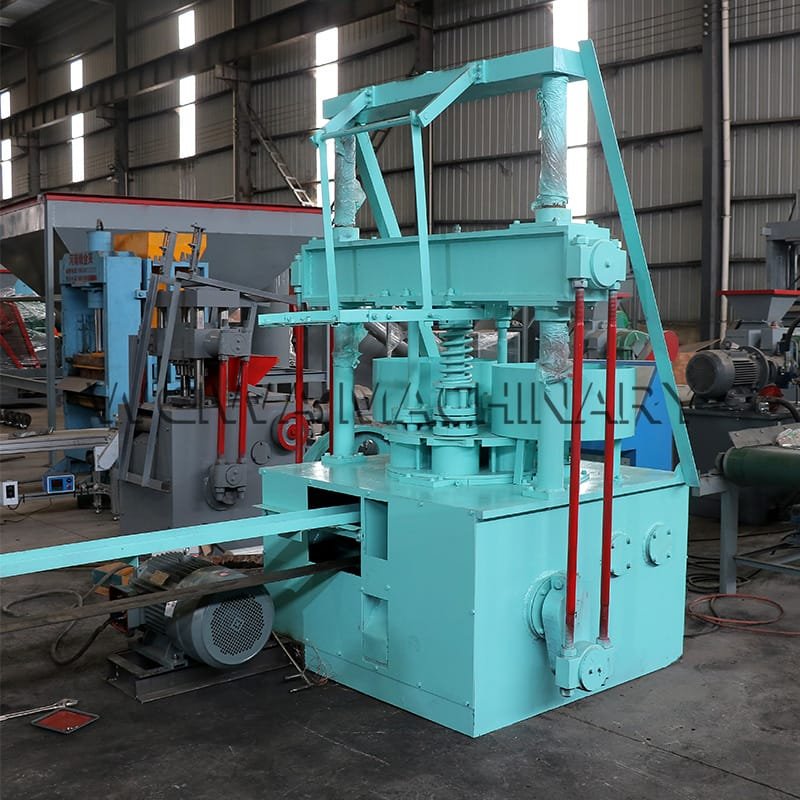
The machine is different from a roller press or screw extruder. In this system, material is fed into the hopper, conditioned to the right moisture and particle size, pressed into the mold cavity, and punched into shape. The punching action gives the briquette its characteristic honeycomb holes. That is why buyers often search for honeycomb punching machine when they already know the hole structure is important for their market.
Raw Materials Suitable for Vietnamese Feedstock
The same coal briquettes making machine can handle several materials if the preparation is correct. Charcoal powder from coconut shell, sawdust charcoal, 煤塵, coke fines, anthracite powder, and furnace slag can all be formed into briquettes. In Vietnam, coconut shell charcoal and rice husk charcoal are especially interesting because they turn agricultural byproducts into higher-value fuel. The key is particle uniformity. Material that is too coarse feeds unevenly. Material that is too fine may trap air and create soft briquettes.
How the Honeycomb Punching Mechanism Forms Briquettes?
During the trial, the punch enters the mold, compresses the material under controlled pressure, and forms the holes at the same time the outer shape is created. The mold determines diameter, height, number of holes, and hole diameter. Because the client had already specified the machine type, our task was calibration rather than persuasion. We checked moisture content, adjusted feed speed, verified punch alignment, and observed ejection behavior. When the punch and die are matched correctly, the briquette leaves the machine with sharp edges and clean holes.
Preparing the Trial Around the Client’s Specified Machine
Before running the machine, our team reviewed the client’s target briquette weight, local voltage situation, expected daily output, and finished-product use. Some buyers want household cooking briquettes. Others want industrial heating blocks. The Vietnam client wanted samples that could be shown to distributors, so appearance and consistency mattered as much as combustion data.
Material preparation started with screening. Oversized particles were removed. Moisture was brought into a workable range so the powder would bind under pressure without sticking to the punch. We then ran a short warm-up cycle to check vibration, noise, and feeding stability. Only after the machine behaved consistently did we begin collecting trial samples for inspection.
Sample Briquettes Produced During the Vietnam Trial
The first thing the client’s team noticed was uniformity. Batch after batch, the briquettes left the machine with the same diameter, same height, and the same hole arrangement. For a distributor, uniformity is commercial value. It means labeling, 包裝, and pricing can be standardized.
Density and Surface Structure
Dense briquettes burn longer and resist crumbling. The trial samples showed tight surface texture with no loose powder on the edges. When tapped, they produced a solid sound rather than a dull, sandy response. High density does not mean over-compression. If pressure is too high, the briquette may crack during cooling. The objective is a balanced density that supports long burn time while keeping the structure stable.
Hole Pattern and Airflow
The honeycomb holes were evenly spaced and symmetrical. This matters because uneven holes cause uneven burning. One side may ignite quickly while another side stays dark, which frustrates end users. The honeycomb charcoal coal briquette forming machine used in the trial produced a pattern that allowed air to move through the center and outer channels, giving a steadier flame curve from ignition to ash.
Breakage, Stacking and Transport Behavior
After cooling, the samples were stacked and lightly handled to simulate workshop movement. Minimal edge chipping was observed. For export-oriented producers or suppliers delivering to rural retailers, low breakage is critical. A briquette that crumbles in the bag loses value before it reaches the stove. The trial samples held their shape well, which gave the client confidence in packaging and logistics.
Burn Performance Observed in the Trial
Combustion observation is where the honeycomb design proves itself. The samples ignited reliably and maintained a stable burning front. Because air could pass through the holes, the briquette did not suffocate under its own mass. Smoke at ignition was noticeably lower than with damp lump charcoal. Ash formation was manageable, and the remaining structure stayed intact longer than loosely compressed charcoal.
The client compared the samples with locally available charcoal chunks. The honeycomb briquettes gave more predictable cooking behavior. There was less need to fan the fire, less sudden flare-up, and more controllable heat. For restaurants, street-food stalls, and households using fixed stoves, that controllability is a strong selling point.
Why Honeycomb Charcoal Coal Briquette Forming Machine Fits Vietnam?
Vietnam has abundant agricultural residues and growing demand for cleaner household fuel. A honeycomb charcoal coal briquette forming machine allows local entrepreneurs to use local materials, employ local labor, and sell a standardized product in nearby towns. Instead of exporting raw residue cheaply and importing finished fuel expensively, the producer keeps more value inside the local economy.
The machine also fits the small-factory model. It does not require a massive plant. With proper material preparation, one line can supply shops, wholesalers, and institutional kitchens. As demand grows, the producer can add a second machine, automate feeding, or integrate crushing, mixing, and drying equipment into a complete line.
Coal Briquettes Making Machine Selection Notes for New Buyers
Buyers often start by asking for the cheapest machine, but the smarter question is which coal briquettes making machine matches their material and market. If the raw material is mostly charcoal powder, die wear is different than with hard anthracite. If the buyer wants 90 mm household briquettes, the mold is different than for 120 mm industrial blocks. If humidity is high, the drying section matters as much as the press itself.
A correct selection process includes raw material analysis, target briquette specification, required hourly or daily output, local power supply, labor skill level, and after-sales access. Weiwa Machinery normally recommends clients send material samples before final configuration. That prevents the common mistake of buying a generic machine and later discovering the die, pressure setting, or feeder does not match the real powder.
關於 WEIWA機械
Weiwa Machinery is a briquette and carbonization equipment manufacturer serving customers in Vietnam, 印度尼西亞, 印度, 馬來西亞, 菲律賓, 巴基斯坦, 火雞, 埃及, 南非, 墨西哥, and many other markets. We produce honeycomb briquette charcoal machines, 蜂巢式木炭型煤成型機, 型煤製造機, honeycomb punching machines, crushers, mixers, dryers, carbonization furnaces, and complete briquette production lines.
Our advantage is not only machine fabrication. It is application engineering. We help clients choose the right mold, adjust pressure and feeding system, train operators, supply wear parts, and upgrade the line as the business grows. For the Vietnam client, this meant the trial was not a sales show. It was a joint check of whether the specified machine could truly produce market-ready honeycomb briquettes.
If you are evaluating a honeycomb briquette charcoal machine in Vietnam or any other market, send us your raw material type, target briquette size, daily capacity, and voltage. We will recommend a practical configuration, share reference cases, and arrange a trial-style demonstration with sample inspection.
Contact Weiwa Machinery
暴民 / WhatsApp: +8613838093177
電子郵件: info@cjlmachinegroup.com
Product page: https://cjljx.com/product/honeycomb-charcoal-briquettes-machine


 微信
微信

 +8615937143060
