


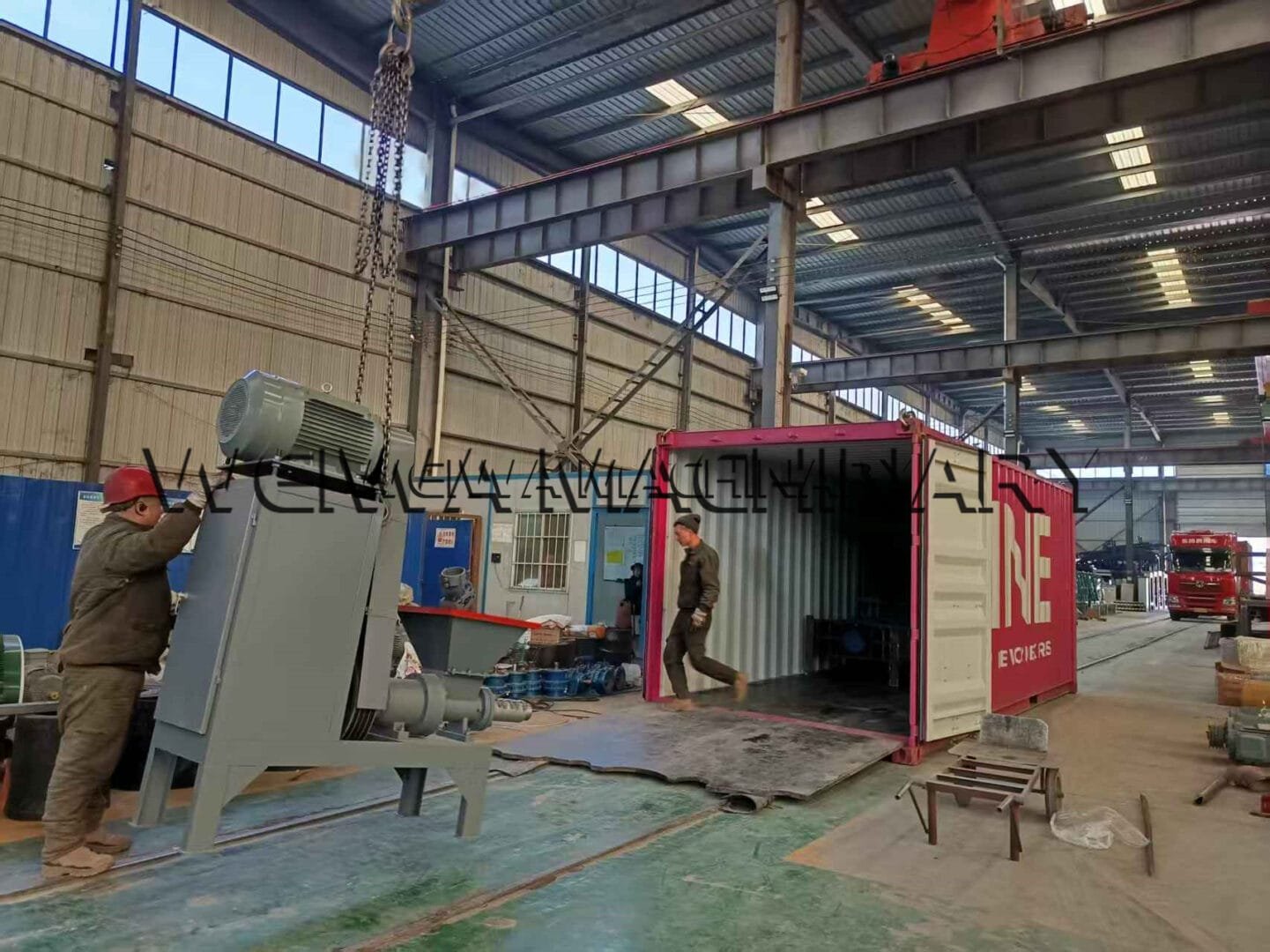
在Weiwa機械, we believe that innovation should cross borders and empower communities. 最近, we proudly loaded and shipped a complete charcoal production line to Iraq — a project that marks a milestone not only for our company but also for biomass energy development in the region.
Setting the Scene
Iraq, with its rich agricultural landscape and abundant agro-waste such as sawdust, 稻殼, 和稻草, holds tremendous potential for sustainable biomass solutions. 然而, much of this raw material remains underutilized due to limited processing technology. 認識到這一差距, stakeholders in Iraq reached out to Weiwa Machinery for a tailored solution — a full-scale sawdust extruder-based charcoal machine production line capable of converting waste into wealth.
The urgency for alternative fuel sources has grown over recent years, driven by deforestation and fluctuating global energy prices. Locally produced charcoal from renewable biomass offers a viable path forward. Our mission was clear: deliver robust, easy-to-operate machinery that aligns with Iraqi industries’ capabilities while ensuring high output and low environmental impact.
The Role of Sawdust Extrude Machines
What Is a Sawdust Extrude Machine?
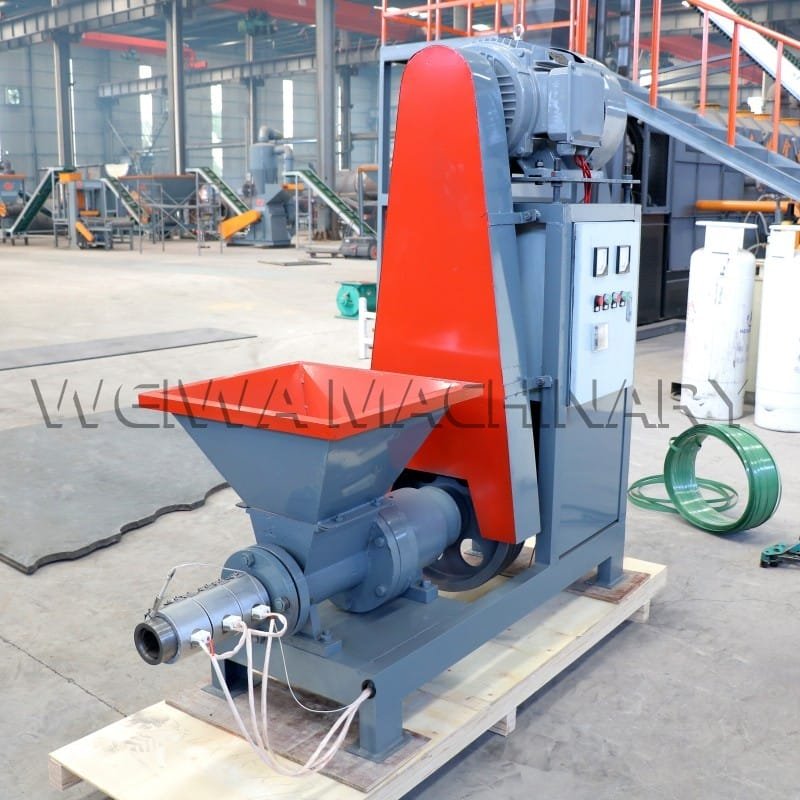
一個 木屑擠出機 is at the heart of modern biomass densification systems. It applies heat and pressure to compress loose sawdust particles into solid forms, such as rods or briquettes, without requiring binders in many cases. In Iraq, where natural binding components exist within certain wood types, our machines leverage these properties to maximize efficiency.
The core mechanism involves feeding raw sawdust into a screw conveyor, where frictional heat softens lignin — a natural polymer in wood that acts as a binder when heated. As the material moves through the barrel under high pressure, it forms dense cylindrical shapes ready for carbonization. This process ensures minimal additives, preserving the eco-friendly nature of the final product.
Sawdust Briquette Machine vs. Sawdust Briquetting Machine
While often used interchangeably, there are subtle distinctions between a 木屑壓球機 and a 木屑壓塊機. The former typically refers to equipment producing pillow-shaped or rod-type briquettes via extrusion, whereas briquetting machines may include both hydraulic and mechanical presses for varied geometries. 在Weiwa機械, our extrusion-based 木屑壓球機 excels in continuous operation, offering consistent quality and lower power consumption — ideal for Iraq’s industrial setups.
Our design prioritizes durability, ease of maintenance, and adaptability to different moisture levels common in Iraqi feedstock. Whether processing pine sawdust from northern forests or hardwood residues from date palm industries, the machine maintains optimal performance.
The Journey to Iraq – Logistics and On-Site Preparation
Shipping heavy industrial equipment across continents requires meticulous planning. Our team coordinated closely with logistics partners to ensure safe transport of the charcoal production line, including the sawdust extruder, crushers, dryers, carbonization furnaces, and packaging units. Each component was securely packed to withstand transit challenges en route to Iraq.
Upon arrival, our engineers joined local technicians to assemble and test the system. Training sessions were conducted to familiarize operators with routine maintenance, troubleshooting, and safety protocols. We emphasized the importance of monitoring input material size and humidity to maintain briquette integrity — a key factor in maximizing furnace efficiency during carbonization.
Science Behind Charcoal Making – A Practical Guide for Iraq
Understanding the transformation from sawdust to charcoal demystifies the value of investing in a sawdust extrude machine in Iraq. Let’s explore the stages:
原料準備
Biomass must be dried to around 8–12% moisture content before extrusion. Iraqi users can utilize solar drying or our integrated rotary dryer to achieve consistency. Uniform particle size (usually 3–5 mm) ensures smooth flow through the sawdust extruder and prevents blockages.
擠壓過程
During extrusion, the combined action of heat (from friction) and pressure causes partial decomposition of cellulose and hemicellulose, releasing volatile gases. Lignin melts and re-solidifies upon cooling, binding particles into cohesive briquettes. This step significantly increases energy density compared to loose sawdust.
Carbonization – Turning Briquettes into Charcoal
The extruded briquettes enter a kiln or retort furnace where oxygen is restricted. Pyrolysis occurs: organic matter breaks down into charcoal, 焦油, and combustible gases. Controlled heating at 300–600°C yields high-carbon charcoal suitable for cooking, 冶金, or further activation into activated carbon. Iraqi enterprises can use the residual gas to fuel the carbonizer, enhancing sustainability.
This closed-loop approach minimizes emissions and maximizes resource efficiency — aligning with Iraq’s growing emphasis on green manufacturing.
Benefits for Iraq – Economic and Environmental Impacts
Deploying a 木屑壓塊機 in Iraq unlocks multiple advantages:
- Waste Valorization: Agricultural and woodworking residues become revenue streams instead of landfill burden.
- Energy Independence: Reduces reliance on imported fossil fuels and firewood, easing pressure on forests.
- Job Creation: From collection and sorting to machine operation and sales, the value chain supports rural employment.
- Cleaner Air: Briquettes burn more efficiently than loose biomass, lowering particulate emissions in homes and industries.
而且, government incentives for renewable projects could further accelerate adoption. Our team provided feasibility insights to help Iraqi partners navigate regulatory landscapes and secure funding.
Overcoming Challenges – Tailoring Solutions for Local Conditions
Iraq’s climate poses unique hurdles: high ambient temperatures can affect machine cooling, while dust storms require reinforced filtration. Weiwa Machinery addressed these by equipping our sawdust extruder with enhanced thermal management and sealed bearings. We also recommended scheduling maintenance during cooler periods to optimize longevity.
Material variability was another consideration. Some regions produce greener sawdust with higher sap content, which demands adjusted drying times. Our modular dryer design allows quick adaptation, ensuring uninterrupted production regardless of seasonal changes.
Training programs continue post-installation, with remote support available via video calls and spare parts dispatched promptly from our warehouses. This commitment ensures that the sawdust extrude machine in Iraq operates reliably year-round.
Real-Time Insights from the Field – Early Results
Within weeks of commissioning, Iraqi clients reported impressive outputs: 到 1 ton of charcoal per day from 4–5 tons of raw sawdust, depending on feedstock type. Briquette density reached 1.1–1.3 g/cm³, enabling longer burning times and reduced smoke — a direct benefit for households and small-scale industries.
Feedback highlighted user-friendly controls and rapid ROI, with payback periods estimated at 12–18 months under full-capacity usage. These early wins reinforce confidence in biomass charcoal as a cornerstone of Iraq’s sustainable energy future.
Looking Ahead – Scaling Impact Across the Region
This shipment is more than a single transaction; it represents a model replicable across the Middle East and North Africa. Countries facing similar biomass surplus and energy challenges can adopt our integrated approach: from 鋸末擠出機 to carbonization units, all designed for rugged reliability and scalability.
Weiwa Machinery remains committed to R&D, exploring automation and AI-driven monitoring to further boost efficiency. Future upgrades may include solar-powered components, reducing grid dependence in off-grid Iraqi communities.
關於 WEIWA機械
Founded with a vision to turn waste into worth, Weiwa Machinery specializes in manufacturing high-performance biomass processing equipment, including sawdust extrude machines, 木屑壓球機, and complete charcoal production lines. With decades of engineering expertise and a global presence spanning Asia, 非洲, 和中東, we deliver turnkey solutions backed by training, technical support, and customized designs.
Our philosophy centers on empowering clients through knowledge transfer and robust machinery that thrives in diverse environments. Every project, like the recent Iraq shipment, reflects our dedication to sustainability, 品質, and partnership.
Whether you seek to establish a small briquette workshop or a large-scale carbonization plant, Weiwa Machinery stands ready to guide you from concept to commissioning — transforming biomass dreams into tangible success.


 微信
微信

 +8615937143060
