


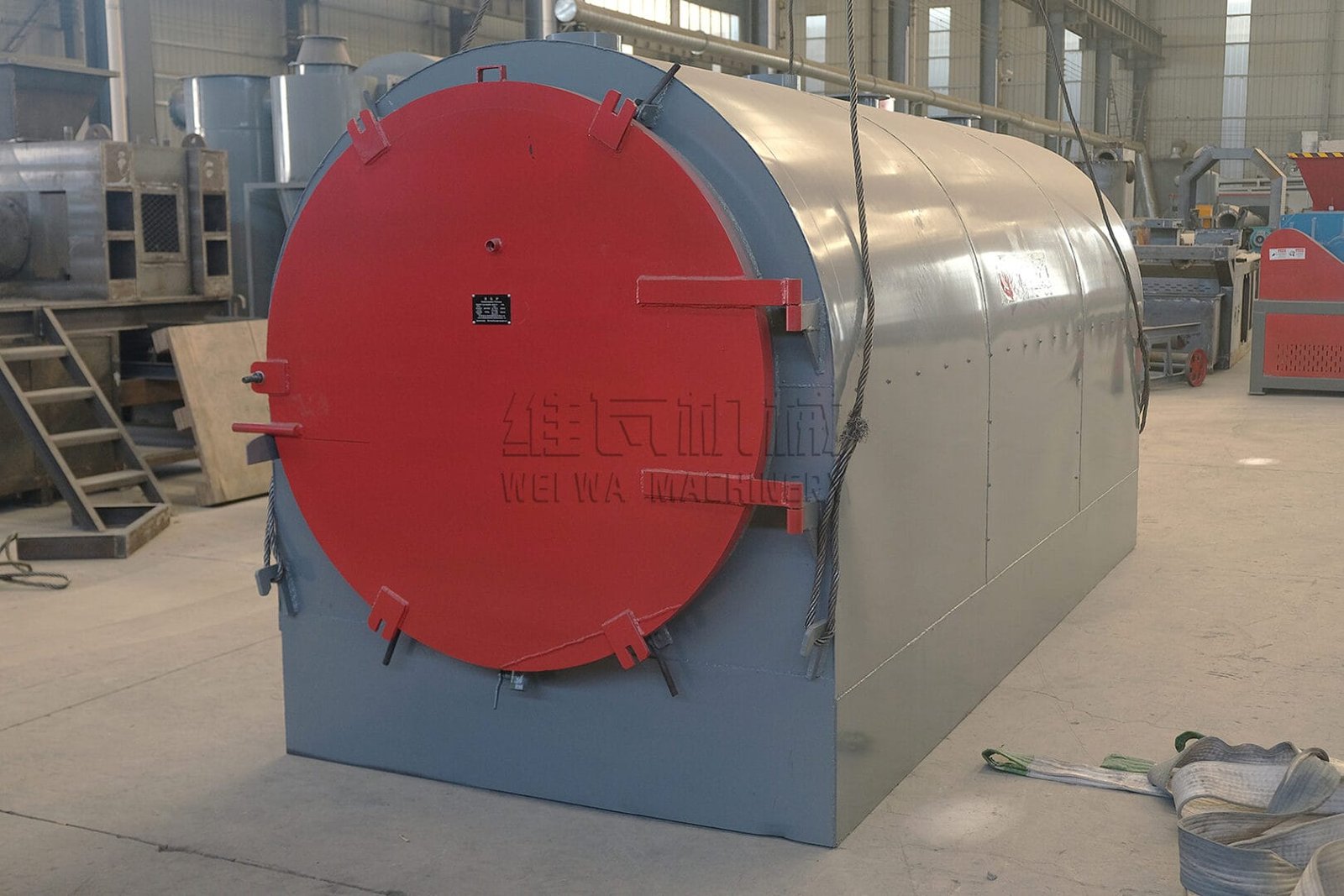
This field report walks through why the Bhutan market is shifting toward industrialized carbonization, how the Weiwa horizontal carbonization furnace is built, what happened during the pre-shipment factory test, and how the machine performed during the first trial run on Bhutanese wood logs and bamboo offcuts. Throughout the article the term horizontal carbonization furnace in Bhutan is used not as a slogan but as a description of a real machine sitting in a real yard outside Thimphu, heating up to 600 degrees Celsius while recycling its own pyrolysis gas.
Bhutan Market Context for Charcoal Making Machine
Bhutan is not a large consumer market in absolute tonnage, but it is one of the most policy-strict biomass markets in Asia. The Royal Government of Bhutan measures development through Gross National Happiness rather than pure industrial output, which means any charcoal making machine entering the country is quietly evaluated on three non-negotiable axes: does it smoke, does it waste wood, and does it create rural jobs without damaging watersheds. Traditional earth-pit charcoal making fails all three. Brick kilns fail the first two. A properly tuned carbonization furnace can pass all three if the gas recovery system actually works.
The client who ordered this Weiwa unit runs a small agro-forestry yard that collects pine offcuts, abandoned bamboo, and sawmill scraps from nearby furniture workshops. Previously the material was either left to rot or burned in piles. Neither action produced income. The buyer initially asked for a vertical kiln because it occupies less floor space, but after a video call with our project engineer he accepted the horizontal model because the horizontal carbonization furnace allows cart-based loading, which matters when labor is scarce and wood logs are heavy.
In Bhutan the distance between a seaport and the final yard is long. The machine traveled by sea to Kolkata, then by truck through Phuentsholing and up the lateral road to the site. That route subjects equipment to humidity, vibration, and altitude changes. A horizontal carbonization furnace in Bhutan therefore needs a rigid frame, ceramic fiber door seals that survive thermal cycling, and electrical components rated for unstable rural voltage. Weiwa addressed these points before packing, not after complaint.
Inside the Weiwa 水平碳化爐
The Weiwa horizontal carbonization furnace shipped to Bhutan uses a barrel-style chamber mounted on rails. Raw material is loaded into a steel cart outside the furnace, pushed into the chamber, and the heavy insulated door is clamped with a ceramic rope seal. Indirect heating is applied: a firebox burns recycled pyrolysis gas and raises the jacket temperature, while the wood inside never touches flame. This dry-distillation method is what separates a modern carbonization furnace from a traditional kiln.
碳化過程中, wood releases volatile compounds: 甲醇, acetic acid, tar vapor, and combustible methane-rich gas. In older designs those compounds escape as smoke. In the Weiwa charcoal making machine they enter a cooling and condensation train, drop their tar and wood vinegar, and return as clean flammable gas to the main burner. The loop is not theoretical. On the Bhutan-bound unit the burner held 580 到 610 degrees Celsius for six consecutive hours with external firewood added only during the first ignition phase.
Heat uniformity comes from the rotating barrel option and from the cart layout. Because the chamber is horizontal, the cart can be packed in a way that leaves lateral gaps for hot gas to travel. The result is lump charcoal with consistent color, 低灰分, and fixed carbon readings our Bhutan client measured at 78 到 83 percent depending on feedstock. Bamboo gave the higher number, pine gave the faster cycle, mixed hardwood gave the best BBQ market price.
Key Structural Elements of the Furnace
The rail and cart system reduces loading time from roughly 90 minutes in a top-fed vertical kiln to under 25 minutes for a 1.2 cubic meter charge. The double-layer steel shell with rock wool insulation keeps the outer surface below 55 degrees Celsius even at peak internal temperature. The door uses a bolt-clamp peripheral seal rather than a single hinge, which distributes pressure evenly and prevents the warping that ruins many cheaper horizontal furnaces after 40 batches. The gas purification tower contains a spray cooler, a tar separator, and a demister, which together determine whether the machine smells like a forest fire or like a gas stove.
For the Bhutan order we specified a 4.8 meter main barrel, 一個 300 mm diameter smoke recovery line, and a 5.5 kW fan system wired for 415V three-phase with a single-phase control panel so local electricians could service it without importing special relays. The charcoal making machine for Bhutan also received an extra moisture probe and a mechanical pressure gauge because the client preferred analog redundancy over full digital dependency at altitude.
Shipment Scene from Weiwa Workshop to Bhutan Client
The shipment began in our painting bay where the furnace received a second coat of heat-resistant silver paint after the load test. Our quality inspector checked the door seal compression, the rail alignment, and the burner ignition sequence. A short no-load run spun the barrel and confirmed the fan curve. Then a 200 kg load of mixed Henan poplar and bamboo was carbonized as a witnessed trial before packing. The resulting charcoal was photographed, bagged, and sent to the buyer as a physical sample alongside the container.
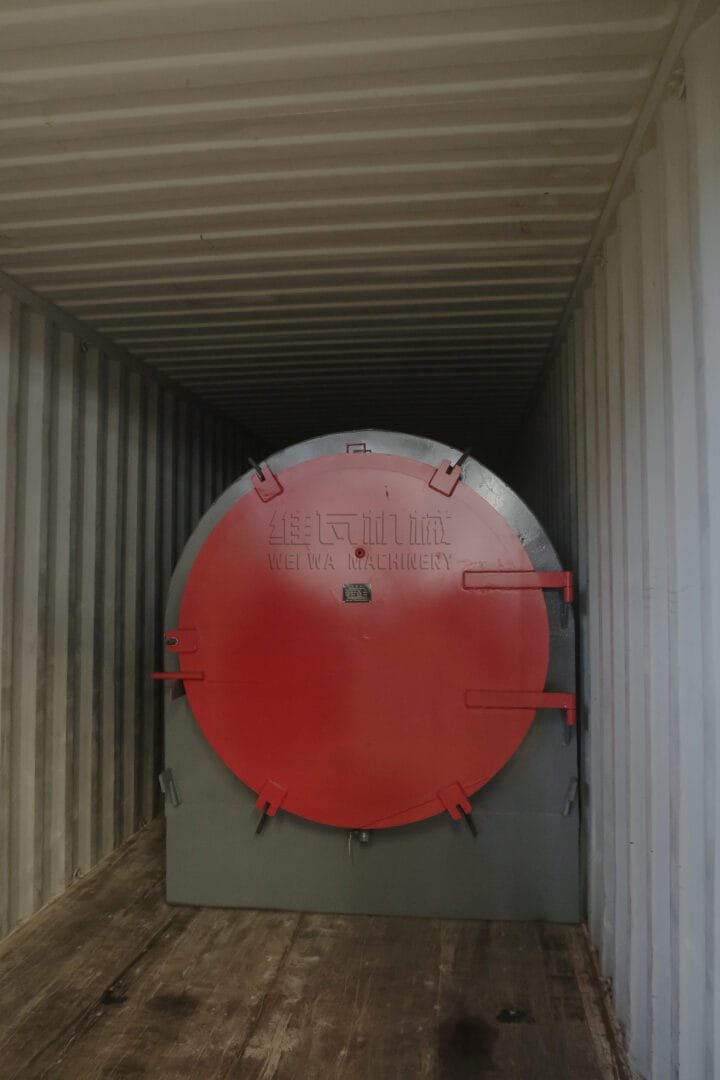
Packing followed our standard export protocol for landlocked destinations. The main barrel was wrapped in PE film, cushioned with EPE foam at the rail contact points, and secured inside a fumigated wooden crate with IPPC stamp. The gas purification tower, 扇子, and control cabinet traveled in a separate crate to keep the center of gravity low. Spare ceramic rope, one spare fan belt, and a full set of hydraulic clamps were placed in a small plywood box labeled with the Bhutan client’s name and WhatsApp number.
Export documents included a commercial invoice describing the goods simply as “batch type horizontal carbonization furnace and accessories,” a packing list with net and gross weights, a CE declaration of conformity, and a multilingual manual in English, Chinese, and Nepali script support notes because many Bhutanese technicians read Nepali. Our project engineer shared a WhatsApp video walkthrough of the uncrating sequence so the local team knew which bolts to loosen first.
The container left Qingdao port and reached Kolkata in 11 天. The overland leg took six days including the Phuentsholing border inspection. When the crates arrived at the client yard the thermometer outside read 9 攝氏度, which is relevant because cold starts require a slightly longer preheat. The buyer sent a photo of the furnace under a tin roof next to a pile of bamboo culms waiting for the first Bhutanese batch.
Trial Run Results of Horizontal Carbonization Furnace in Bhutan
The first trial run on Bhutanese feedstock started three days after arrival. The client loaded 140 kg of air-dried bamboo chunks and 60 kg of pine offcuts into the cart, pushed it in, sealed the door, and lit the startup burner using a small amount of imported LPG. 之內 40 minutes the chamber reached 220 degrees Celsius and yellow smoke from residual moisture appeared at the stack, then disappeared. 在 320 degrees the gas recovery line auto-ignited and the LPG was shut off. From that point the furnace heated itself.
Temperature Curve and Cycle Time
The Bhutan trial recorded the following approximate curve: 0 到 100 degrees in 35 minutes during preheat, 100 到 250 degrees in 55 分鐘, 250 到 480 degrees in 90 分鐘, and stabilization at 590 degrees for 180 分鐘. Total carbonization time from cart push to safe door opening was 8 小時和 20 分鐘, including 2 hours of forced cooling with the door cracked under fan draft. This matched our factory test within 25 分鐘, confirming that altitude did not break the thermal loop.
Yield from the 200 kg charge was 62 kg of finished lump charcoal, a carbonization ratio of 31 percent, which is normal for mixed bamboo and softwood at 9 percent moisture. Fixed carbon tested by a local laboratory came back at 80.4 percent. Ash content was 2.9 percent. Volatile matter was 16.7 percent. The client reported that the charcoal did not crumble when dropped from half a meter, which matters for hookah and BBQ resellers in Thimphu.
Smoke and Fuel Consumption Observation
The most important observation for a Bhutan buyer was smoke. During the first 50 minutes a thin white plume was visible. After gas recovery engaged, the stack emitted only heat shimmer. A neighbor who initially objected to the installation later stood beside the furnace at 500 degrees and confirmed no odor. Fuel savings versus the client’s old pit method were obvious: the pit method used 1 kg of charcoal output per 5 kg of wood and burned continuously for 14 小時; the Weiwa horizontal carbonization furnace in Bhutan used 3.2 kg of LPG startup fuel and then zero purchased fuel for the remaining cycle.
The recycled gas provided roughly 60 到 70 percent of the thermal demand at steady state. The client estimated that if he runs two batches per day, his LPG bill will drop by more than 80 percent compared to a direct-fired kiln, and his charcoal output per cubic meter of wood will rise by about 40 percent because less wood is burned away as smoke.
Why Horizontal Carbonization Furnace in Bhutan Outperforms Traditional Kilns?
A horizontal carbonization furnace is not automatically better than every alternative, but in the Bhutan context it wins on ergonomics, inspection, and batch control. Vertical kilns are taller and harder to load when the only labor available is two people and a hand cart. Earth pits cannot be moved, cannot recover gas, and cannot be certified for export projects. Continuous rotary furnaces are excellent for sawdust briquettes but expensive for a first-time Bhutanese buyer who mostly processes bamboo logs and pine branches.
The horizontal model gives the buyer a middle path: batch flexibility like a kiln, automation like a factory, and footprint like a small workshop. It can sit under a tin roof, run on single-phase controls, and still hit 600 degrees. For a charcoal making machine for Bhutan, that combination is rare. Most imported European units assume 480V stable supply and a forklift. Most Indian kilns assume cheap labor and no emission complaint. Weiwa engineered between those assumptions.
Another advantage is maintenance visibility. When a vertical kiln fails, you often find out only after a ruined batch. The horizontal furnace lets the operator open the door, pull the cart, and see the charge. The rail system means the hot cart can be rolled out to a cooling bay while a second cart is loaded, doubling daily throughput without a second furnace. In the Bhutan trial the client cooled the first cart outside while preheating the chamber for a second bamboo batch, effectively running a pseudo-continuous schedule on batch hardware.
Charcoal Making Machine for Bhutan Buying Considerations
Buyers in Bhutan or neighboring Himalayan states should evaluate a charcoal making machine on five points that brochures rarely stress. 第一的, door seal durability: ask how many thermal cycles the seal survives, not just the steel thickness. Second, gas recovery reliability: request a video of the burner running on recycled gas alone. Third, voltage tolerance: rural Bhutan often sees brownouts, so the control panel must accept ±10 percent fluctuation. Fourth, cart capacity versus crane need: if you need a crane to load it, your operating cost rises. Fifth, spare parts locality: screws and belts should be standard industrial sizes, not proprietary.
The horizontal carbonization furnace also needs to match feedstock shape. If the buyer only processes coconut shells or rice husk, a horizontal barrel is wasteful and a briquette-plus-carbonization line is better. If the buyer processes wood logs, 竹子, 玉米棒, and furniture scrap, the horizontal furnace is ideal. The Bhutan client chose correctly because his yard receives irregular shapes that cannot be screw-extruded without crushing cost.
Logistics cost should be calculated per kilogram of charcoal landed, not per machine price. A cheaper furnace that yields 22 percent charcoal and smokes will lose money against a Weiwa horizontal carbonization furnace that yields 31 percent and sells charcoal at a premium because it is odor-free and uniform. Bhutan’s charcoal retail price is high enough that a 9 percent yield gap pays back the machine difference in under five months.
Weiwa Machinery Factory and Export Support
Weiwa Machinery is a Chinese manufacturer of biomass and charcoal equipment based in Gongyi, 河南. The company produces sawdust briquette machines, biomass extruders, wood crushers, rotary dryers, and several families of carbonization furnace including horizontal, vertical, lifting, and continuous types. More than 2 million end-users have interacted with Weiwa-branded equipment across 130-plus countries, and the export team handles CE documentation, language manuals, and WhatsApp-guided installation.
Every horizontal carbonization furnace leaving the workshop is run under load before packing. The Bhutan order was no exception: the witnessed trial in Henan used local poplar, but the commissioning trial in Bhutan used local bamboo, which is the honest way to prove a machine travels well. Our engineer stayed on call during the first two Bhutan batches, reviewed the temperature log the client sent as a photo, and approved the cooling procedure.
After-sales for a charcoal making machine for Bhutan includes spare cart wheels, spare door clamps, spare fan bearings, and a 12-month structural warranty excluding consumable seals. Critical small parts are kept in stock for models shipped since 2014. For landlocked shipments, Weiwa prepares customs-friendly invoices and groups crates by unpacking sequence so the buyer opens the bolts crate before the barrel crate.
Weiwa does not oversell continuous lines to first-time buyers. The Bhutan client originally worried the horizontal model was “too simple” until he saw the gas recovery hold temperature without firewood. That moment is the best sales pitch: the machine is simple to operate because the engineering is hidden inside the gas loop, not because the process is primitive.
Field Notes on Bhutan Feedstock and Charcoal Grade
Bhutanese bamboo carbonizes faster than expected because the culm wall is thin and the moisture exits quickly. Pine offcuts smell stronger during devolatilization but give a lighter charcoal favored by households. Mixed hardwood from discarded furniture frames gave the highest fixed carbon and the darkest color, which fetches more in the Indian border trade. The client plans to blend 70 percent bamboo and 30 percent hardwood for BBQ buyers, and pure bamboo for hookah clients who want low spark and high burn time.
One surprise in the trial was that bamboo nodes trap steam. The client learned to cut culms into 40 cm pieces and split them once lengthwise, which shortened the drying phase by 20 分鐘. Weiwa’s manual now carries a Bhutan-specific note recommending pre-splitting bamboo above 60 mm diameter. This is the kind of field knowledge that only appears after a horizontal carbonization furnace in Bhutan actually runs, not before.
Closing Perspective on Horizontal Carbonization Furnace in Bhutan
The Bhutan shipment proved that a mid-size horizontal carbonization furnace can travel 4,000 kilometers, survive a mountain road, and reproduce its factory curve on foreign wood. It also proved that a charcoal making machine for Bhutan must respect emission sensitivity, voltage reality, and labor limits. Weiwa did not ship a generic unit with a new sticker. The rail clamps were reinforced, the gas line was winterized, the manual was translated, and the trial run was documented with photos the client now uses to sell charcoal to local hotels.
For other Himalayan and South Asian buyers evaluating a carbonization furnace, the lesson is that the furnace is only half the product. The other half is the gas loop, the seal, the crate, and the engineer who answers WhatsApp at 7 a.m. when the burner hesitates. When those halves meet, a horizontal carbonization furnace in Bhutan stops being an import item and becomes local infrastructure.
If you are planning a charcoal or biochar project in Bhutan, Nepal, Northeast India, or any landlocked biomass market, send your feedstock type, moisture level, and daily wood volume. Weiwa Machinery will propose a horizontal carbonization furnace size, calculate dryer and crusher matching if needed, and quote a container-ready line with spare parts and commissioning support.
Contact Weiwa Machinery
移動的 / WhatsApp: +8613838093177
電子郵件: info@cjlmachinegroup.com
Product reference: https://cjljx.com/products/tanhua/horizontal-carbonization-furnace


 微信
微信

 +8615937143060
