


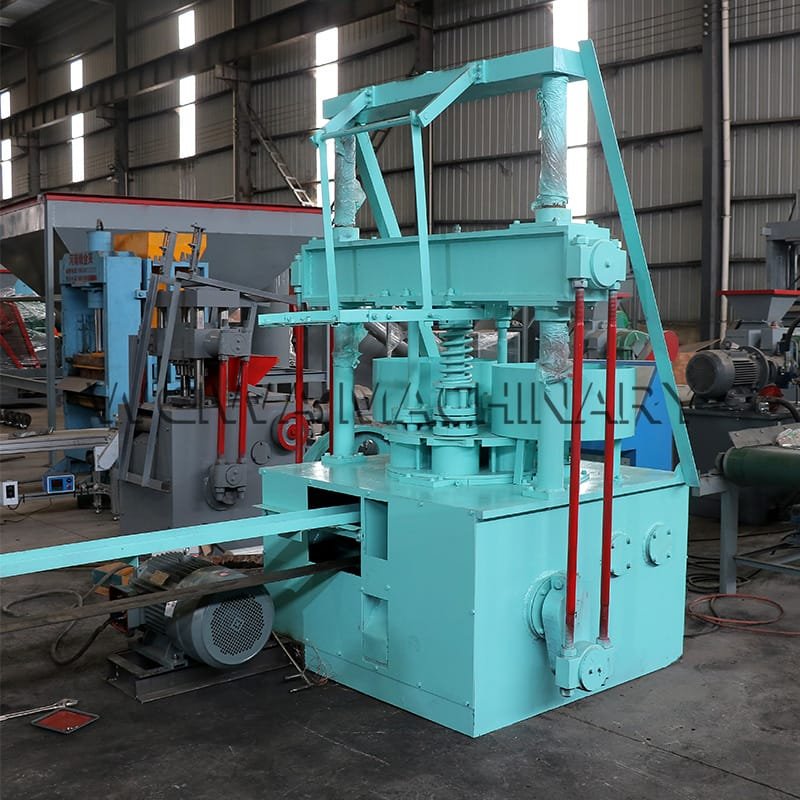
最近在威瓦機械工廠車間, 我們為來自俄羅斯的來訪客戶完成了蜂窩煤壓塊木炭機的全面生產試驗. 這項試驗的目的不僅是驗證機器性能,還生產實體蜂窩木炭煤球樣品,供客戶帶回當地市場評估.
Why Russia Clients Choose 蜂巢式煤成型機 for Solid Fuel Production?
The demand for high density honeycomb charcoal and coal briquettes in Russia and neighboring CIS countries continues to grow due to long heating seasons and the need for cost effective solid fuel alternatives. 一個 Honeycomb briquette charcoal machine in Russia must handle locally available raw materials such as hardwood charcoal powder, anthracite coal dust, and sometimes biomass blend powders. Russian buyers typically require molds producing 120 毫米至 160 mm diameter round honeycomb briquettes with 12 到 21 ventilation holes, which allow fast ignition and complete combustion in traditional Russian heating stoves.
我們的 蜂巢煤木炭機 is engineered with a heavy duty steel frame, an eccentric shaft punching system, and interchangeable high manganese steel molds. This design allows the same 型煤成型機 base to produce different shapes—round beehive, 正方形, or hexagonal—simply by changing the mold. For the Russia client we prepared a standard 140 mm diameter round honeycomb mold with 19 holes and a customizable height range of 60 毫米至 90 毫米.
Working Principle of Honeycomb Charcoal Coal Briquette Forming Machine and Honeycomb Punching Machine
To understand the trial results it helps to know how a 蜂巢式木炭型煤成型機 operates. The machine is divided into five main assemblies: the machine body, transmission system, feeding device, stamping (punching) unit, and discharge conveyor.
Material Preparation Before Feeding
Charcoal powder or coal dust is first crushed to below 3 mm particle size and mixed with a small percentage of binder such as starch or clay if required. The optimal moisture content for feeding into the 型煤成型機 is generally 8 percent to 14 percent. Overly dry material causes loose briquettes while excess moisture leads to cracking during drying.
Feeding and Mold Filling
The mixed powder is loaded into the hopper. An agitator shaft continuously pushes material down into the rotating mold barrel. As the turntable indexes, each mold cavity passes under the feeding port and is filled with a measured amount of material by gravity and minor compression from the feeder shoe.
Stamping by Honeycomb Punching Machine Mechanism
When the filled mold aligns under the punch head, 這 蜂窩沖孔機 cam driven punch descends with high pressure—typically generating a forming pressure equivalent to 20 tons of force on larger models—compressing the loose powder into a dense honeycomb shape. The punch also forms the central holes of the honeycomb pattern through fixed pins in the mold bottom.
Ejection and Conveying
After forming, the turntable rotates the finished briquette to the ejection position where a secondary ejector pin pushes the briquette upward onto the discharge belt conveyor. 這 蜂巢煤木炭機 then repeats the cycle automatically at a rated speed of 35 到 45 pieces per minute depending on model and mold size.
Details of the Russia Client Trial Run at Weiwa Machinery Workshop
For this Russia trial we set up a model WHC 140 蜂巢煤木炭機 equipped with a 7.5 kW motor suitable for 380 V 50 Hz three phase power which matches standard industrial electricity in Russia. The raw material used in the trial was a blend of 70 percent hardwood charcoal powder and 30 percent anthracite coal fines with 2 percent cassava starch binder added during mixing. Moisture content was adjusted to approximately 11 percent after the wheel mixing stage.
Trial Procedure Step by Step
Our technician first ran the empty machine to check transmission stability, lubrication status, and mold alignment. After confirming normal no load operation the hopper was filled with prepared material. 這 型煤成型機 was started and allowed to reach steady state production. We collected briquettes from the first 200 pieces for dimensional verification and then ran a continuous 30 minute production test to evaluate throughput consistency and mold wear.
Briquette Sample Physical Inspection
The honeycomb briquette samples produced measured 140 mm diameter, 75 mm average height, 和 19 evenly spaced ventilation holes of 16 mm diameter. Visual inspection showed smooth surface finish, sharp hole edges, and no visible cracks. Random sampling gave a bulk density of 1.18 g per cubic centimeter which falls within the optimal range for long burn time and structural integrity during transport. The Russia client physically handled the samples and confirmed the hardness met their expectation for retail packaged charcoal briquettes.

Combustion Characteristics of Trial Samples
Although full laboratory calorific testing was not conducted on site, we performed a simple ignition and burn observation. The honeycomb briquettes ignited within 3 到 5 minutes when placed on glowing embers and burned with a steady flame front progressing from top to bottom. Estimated total burn time for a single 140 mm by 75 mm briquette in a controlled stove environment would be 90 到 120 分鐘. Ash residue appeared minimal and light gray in color indicating thorough carbonization of the raw charcoal input.
Machine Performance Data Recorded During Trial
During the 30 minute continuous run the 蜂窩沖孔機 maintained an average output of 38 pieces per minute equaling approximately 2280 honeycomb briquettes per hour. No abnormal vibration or overheating was detected. The high manganese steel mold showed no sign of deformation after more than 1100 punching cycles. The Russia client expressed satisfaction with both the machine stability and the sample quality, noting that the briquette dimensions matched local stove specifications.
Technical Parameters of Recommended Honeycomb Briquette Charcoal Machine Models for Russia Market
Weiwa Machinery offers several models of 蜂巢式木炭型煤成型機 suitable for different production scales. Below are the most commonly exported models for Russia and Eastern European clients.
The WHC 120 model is equipped with a 5.5 kW motor, produces honeycomb briquettes with diameter ranging from 100 毫米至 120 毫米, height adjustable between 60 mm and 80 毫米, and has a rated capacity of 35 到 45 pieces per minute. Machine dimensions are approximately 1280 by 1160 by 1750 mm and net weight is around 1200 公斤.
The WHC 140 model uses a 7.5 kW motor, supports mold diameters from 100 mm up to 140 毫米, maintains the same height adjustment range, and delivers similar piece per minute rates. This model is the most popular choice for medium scale 型煤成型機 operations and was the unit demonstrated in the Russia client trial.
The WHC 160 model accommodates molds up to 160 mm diameter and is also driven by a 7.5 kW motor, suitable for clients who need larger honeycomb blocks for industrial heating applications. The WHC 220 heavy duty model is powered by an 11 kW motor, handles diameters from 180 毫米至 220 毫米, and is built on a reinforced frame weighing approximately 4000 公斤.
All models of our Honeycomb briquette charcoal machine accept customized molds for hole number, hole diameter, overall shape, and can be configured for 220 V / 380 V / 415 V power supply upon request which is essential for Russia bound equipment.
Raw Material Adaptability of Coal Briquettes Making Machine in Different Regions
A major concern for international buyers is whether the 型煤成型機 can process locally sourced raw materials. Our field experience shows the Weiwa 蜂巢煤木炭機 performs well with hardwood charcoal powder, 椰子炮粉, bituminous coal dust, anthracite fines, 可樂粉, and even certain biomass residues such as sawdust charcoal provided the particle size and moisture are controlled.
For Russia clients who may blend coal dust with charcoal powder to reduce cost we recommend pre testing the binder ratio. Starch based binders typically require 1.5 percent to 3 percent by weight. Clay or bentonite may be used for pure coal briquettes but is less common for premium charcoal honeycomb products. 這 蜂窩沖孔機 punching pressure is adjustable on most models to accommodate varying material compressibility.
Honeycomb Punching Machine Maintenance and Mold Care for Long Service Life
To ensure the Honeycomb Punching Machine delivers consistent performance over years of operation we provide every Russia client with a detailed maintenance schedule. Key points include daily greasing of the eccentric shaft bearings, periodic checking of punch head clearance, and immediate replacement of worn mold sleeves. The high manganese steel molds supplied with our Honeycomb briquette charcoal machine normally withstand 500,000 到 800,000 punching cycles before requiring rework or replacement depending on abrasiveness of the raw material.
Operators should also keep the hopper and feeding shoe clear of foreign objects and avoid running the machine empty for prolonged periods when the mold is installed as this accelerates punch tip wear. Following these simple practices significantly extends the service interval of the Coal Briquettes Making Machine and protects your investment.
Sample Display Photos and What to Expect When You Request a Trial
We encourage prospective buyers—especially those planning to import a Honeycomb briquette charcoal machine in Russia—to request a factory trial. Weiwa Machinery can arrange live video demonstration or on site testing using your own material if sent to our Zhengzhou workshop. After each trial we prepare a sample box containing 3 到 5 honeycomb briquettes, a specification sheet listing actual dimensions and density, and a recommended configuration summary for the Honeycomb Charcoal Coal Briquette Forming Machine and Honeycomb Punching Machine best suited to your projected daily output.
The photos from this Russia client trial show the WHC 140 machine in operation, close up of the rotating mold table, the punch head descending, and the final honeycomb charcoal briquettes stacked on the discharge belt. These visual references help confirm to your local partners or investors the professional build quality of Weiwa equipment.
Common Questions from Russia Buyers About Honeycomb Briquette Charcoal Machine
Can one machine produce both charcoal honeycomb and coal honeycomb briquettes?
Yes. The same Coal Briquettes Making Machine base with different molds can form both charcoal based and coal based honeycomb briquettes. Only the raw material preparation—especially binder selection and moisture—needs adjustment.
Is the Honeycomb Punching Machine difficult to operate for new staff?
Our Honeycomb Punching Machine uses a straightforward start stop button panel with optional PLC touchscreen on upgraded models. We supply an English and Russian bilingual operation manual and can guide your technician through video call during first commissioning.
What is the typical lead time for a Honeycomb briquette charcoal machine shipped to Russia?
Standard models are usually in stock or completed within 15 到 25 working days after deposit confirmation. Sea freight to Vladivostok or Saint Petersburg typically takes 30 到 45 days depending on shipping line and customs clearance.
關於 WEIWA機械
Weiwa Machinery is a professional manufacturer based in Zhengzhou, 中國, 結束 15 years of experience in designing and exporting 蜂巢煤木炭機, charcoal briquette production lines, carbonization furnaces, and related biomass processing equipment. We have successfully served clients in Russia, 哈薩克, Uzbekistan, 火雞, 印度尼西亞, 肯亞, 奈及利亞, and Brazil. Our services include customized mold design, voltage configuration for target markets, spare parts supply, installation guidance, and after sales technical support in English and Russian.
If you are interested in our Honeycomb Charcoal Coal Briquette Forming Machine, 型煤成型機, or Honeycomb Punching Machine, or wish to schedule a trial like the one described in this article for your Russia market project, please contact us:
移動的 / WhatsApp: +86 13838093177
電子郵件: info@cjlmachinegroup.com


 微信
微信

 +8615937143060
