


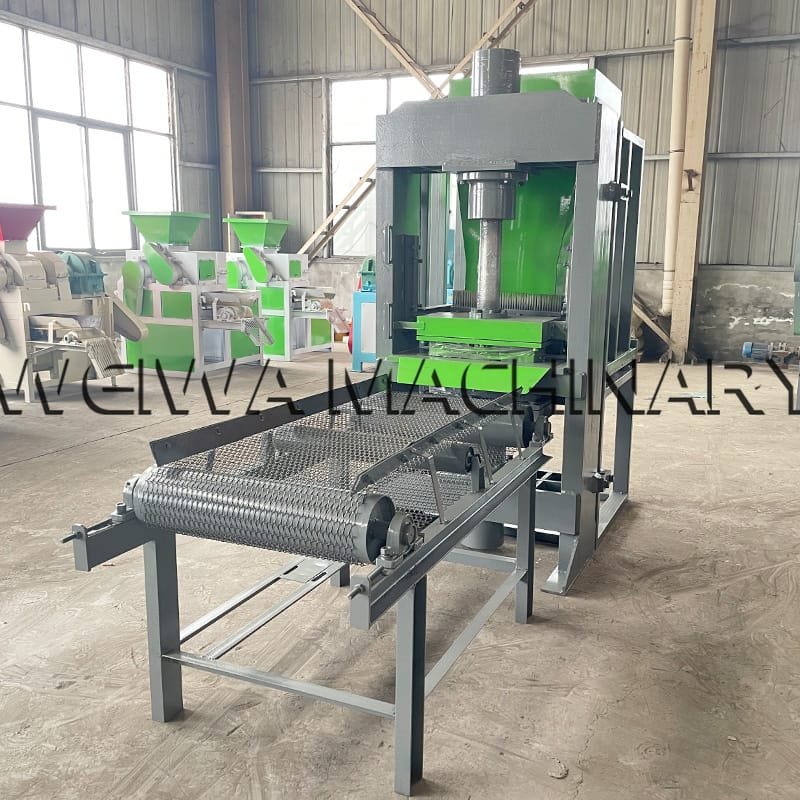
In the heart of Southeast Asia, Laos is emerging as a nation with immense potential for renewable energy adoption, driven by its rich biomass resources and growing focus on sustainable development. 在Weiwa機械, a company with over three decades of expertise in manufacturing industrial equipment, we have long recognized the transformative role hydraulic press briquetting machines can play in this landscape. 最近, our team had the privilege of conducting an on site trial of our hydraulic briquette press for a valued client in Laos, an experience that not only demonstrated the machine’s capabilities but also highlighted the vast opportunities for hydraulic briquette technology in the country.
The Rise of Biomass Energy Needs in Laos
寮國, blessed with abundant agricultural and forestry residues, 面臨雙重挑戰: managing waste from crops like rice, corn, and sugarcane, and meeting rising energy demands in rural and peri urban areas. Traditional disposal methods for biomass often lead to environmental degradation, while reliance on fossil fuels strains both household budgets and national energy security. Against this backdrop, biomass briquetting has gained traction as a circular economy solution—converting low density residues into high density, easy to store fuel briquettes.
Hydraulic briquette machines stand out in this space due to their ability to process diverse raw materials with varying moisture levels, producing briquettes with consistent density and durability. For Laos, where smallholder farmers and local enterprises seek cost effective ways to add value to agricultural waste, such machines offer a pathway to turn liabilities into income generating assets.
為什麼 Hydraulic Briquette Presses Are Ideal for Laos?
When selecting equipment for biomass briquetting, the choice between mechanical and hydraulic systems hinges on factors like material hardness, production scale, and operational reliability. Hydraulic briquette presses excel in several areas that align perfectly with Laos’ context.
Superior Pressure Control for Diverse Raw Materials
Laos’ biomass feedstock ranges from soft rice husks to tougher coconut shells and wood chips. Hydraulic systems generate uniform, adjustable pressure—critical for compressing these varied materials into dense briquettes without compromising structural integrity. Unlike mechanical presses that rely on rotating components, hydraulic presses use fluid power to deliver consistent force, reducing wear and tear even when processing abrasive materials. During our trial in Laos, the client tested a mix of rice straw and sawdust, and the hydraulic briquette machine produced briquettes with a density of 1.2 克/立方厘米, ideal for prolonged combustion in cookstoves and small boilers.
Energy Efficiency and Low Maintenance
For small and medium sized enterprises (SMEs) in Laos, operational costs are a key concern. Hydraulic briquette machines are designed for energy efficiency, with advanced pump systems that minimize power consumption during compression cycles. 此外, their fewer moving parts compared to mechanical alternatives translate to lower maintenance requirements. Our after sales team noted that the client’s operators quickly adapted to the machine’s user friendly controls, and the initial setup required minimal adjustments—a testament to the machine’s adaptability to local skill levels.
Scalability for Growing Businesses
Laos’ biomass sector is nascent but rapidly evolving, with many startups aiming to scale from pilot projects to commercial production. Hydraulic briquette presses come in modular configurations, allowing businesses to start with smaller capacities and expand as demand grows. This scalability was a key selling point for our Laotian client, who plans to initially supply briquettes to local restaurants and households before targeting industrial clients like textile mills and brick kilns.
On Site Trial of Hydraulic Briquette Machine in Laos
The decision to conduct a live trial stemmed from our commitment to ensuring customer success. Rather than relying on specifications alone, we believe hands on testing allows clients to evaluate performance under real world conditions. For our Laotian partner, a cooperative focused on agricultural waste valorization, the trial was a chance to validate the machine’s suitability for their specific feedstock and production goals.
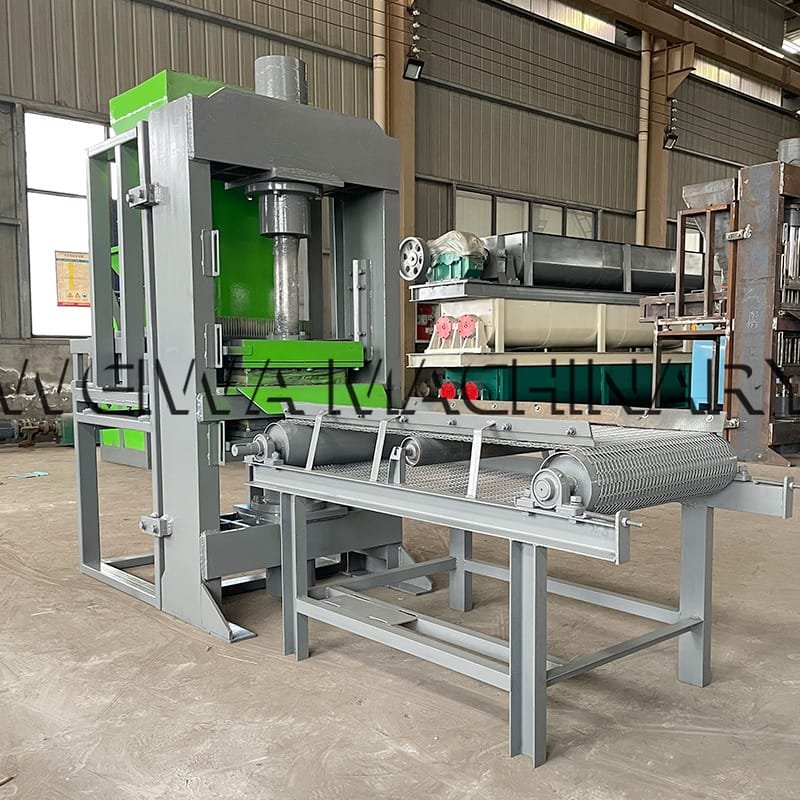
Preparing for the Trial
Leading up to the trial, our engineering team collaborated closely with the client to understand their raw material profile. They collected samples of rice husks, 玉米棒子, and mixed hardwood waste, which were analyzed in our lab to determine optimal moisture content (10–15%) and particle size (below 5mm) for efficient compression. We then customized the hydraulic briquette machine’s die set to match the desired briquette dimensions—50mm in diameter, a popular size for local cookstoves.
On arrival in Laos, our technicians worked alongside the client’s staff to install the machine, ensuring compliance with local safety standards. Training sessions covered operation protocols, routine maintenance checks, and troubleshooting basics—an essential step given the importance of empowering local teams to manage the equipment independently.
Key Outcomes of the Trial
Over three days of testing, the hydraulic briquette press processed 800 kg of raw material daily, producing approximately 600 kg of briquettes. The briquettes exhibited excellent combustion properties, with a calorific value of 18–20 MJ/kg—on par with coal but with lower emissions. Notably, the machine handled wetter rice husks (到 18% 水分) without clogging, thanks to its integrated pre drying chamber (an optional feature tailored to Laos’ humid climate).
The client’s team was particularly impressed by the machine’s quiet operation and minimal dust generation, addressing concerns about workplace safety and environmental impact. “This trial proved that the hydraulic briquette machine can meet our needs for quality and efficiency,” said Mr. Somsavath, the cooperative’s director. “It’s a game changer for turning our farm waste into a reliable fuel source.”
Tapping Into the Potential of Hydraulic Briquette Machines in Laos
The success of our trial underscores the untapped potential of hydraulic briquette technology in Laos. Several factors position the country as a promising market for this equipment.
Government Support for Renewable Energy
Laos’ government has prioritized renewable energy in its National Socio Economic Development Plan, offering incentives for biomass projects that reduce deforestation and promote rural livelihoods. Policies supporting small scale energy producers create a favorable environment for entrepreneurs investing in hydraulic briquette machines, as these devices enable compliance with sustainability targets while generating income.
Rural Electrification and Clean Cooking Goals
隨著超過 60% of Laos’ population living in rural areas, access to clean cooking fuels remains a challenge. Briquettes produced by hydraulic presses offer a viable alternative to firewood and charcoal, reducing indoor air pollution and easing pressure on forests. Our machines can be paired with community based production models, where local groups process biomass into briquettes for sale or household use—aligning with Laos’ goal of achieving universal clean cooking access by 2030.
Export Opportunities for Briquette Products
As global demand for sustainable fuels rises, Laos could emerge as a regional exporter of biomass briquettes. Hydraulic briquette machines, with their ability to produce high quality, standardized briquettes, would be instrumental in meeting international quality standards. 例如, briquettes with low ash content and consistent burning rates are sought after in neighboring countries like Thailand and Vietnam, where industrial users are phasing out coal.
How Weiwa Machinery Ensures Long Term Success in Laos?
在Weiwa機械, we view equipment sales as the start of a partnership, not the end. Our three decades of experience have taught us that success in emerging markets like Laos depends on more than just delivering reliable machinery—it requires comprehensive support tailored to local needs.
Customized Design and Site Planning
Every production facility is unique, especially in regions with diverse terrain and infrastructure. Our team offers customized design services, including layout planning for workshops, storage areas, and raw material handling systems. For the Laotian client, we created a site plan that optimized workflow between the raw material yard, drying area, and the hydraulic briquette press, minimizing transportation time and labor costs.
Professional After Sales Support
Our dedicated after sales team is available 24/7 to address technical queries and coordinate maintenance visits. In Laos, we have partnered with local service providers to ensure quick response times, reducing downtime for critical operations. Post trial, we scheduled follow up sessions to review the machine’s performance data and provide recommendations for optimizing production schedules based on seasonal variations in raw material availability.
Tailored Training Programs
Recognizing that skilled operators are key to maximizing machine efficiency, we offer on site and virtual training programs. These cover not just operation and maintenance but also best practices for raw material preparation and quality control. For our Laotian partners, we developed training materials in Lao language, supplemented with visual guides, to enhance comprehension and retention.
結論
The trial of our hydraulic briquette machine in Laos was more than a demonstration of technical prowess—it was a validation of how innovative equipment can drive sustainable development in emerging economies. By transforming agricultural waste into valuable fuel, hydraulic press briquetting machines empower communities, reduce environmental harm, and create economic opportunities.
For Laos, the path to a greener future lies in embracing solutions like hydraulic briquette presses, and Weiwa Machinery is proud to be at the forefront of this journey. With our expertise in customizing equipment, planning production sites, and providing unparalleled after sales support, we are ready to help Laotian businesses unlock the full potential of biomass energy.
關於 WEIWA機械
Weiwa Machinery brings over 30 years of experience in designing and manufacturing industrial equipment, specializing in hydraulic press briquetting machines and related solutions. Our commitment to innovation and customer success has earned us a reputation as a trusted partner worldwide. Backed by a professional after sales team, we offer customized services, from design drawings to site planning, ensuring seamless integration of our equipment into your operations. Whether you’re exploring hydraulic briquette machines for Laos or other markets, we invite you to contact us for inquiries and let us help you turn your vision into reality.


 微信
微信

 +8615937143060
