


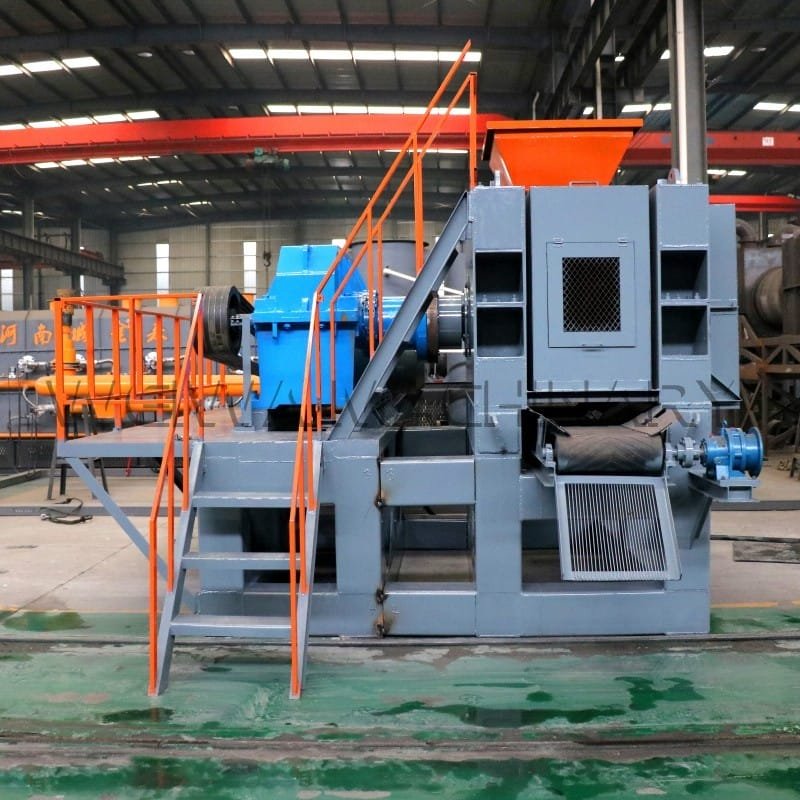
Ball Charcoal Briquettes Machine for Making Charcoal Balls in Nigeria
最近, Weiwa Machinery completed another successful shipment of a ball charcoal briquettes machine to one of our Nigerian clients. This delivery is part of a growing trend we have observed over the past several years—more entrepreneurs in Nigeria are actively investing in a charcoal ball press machine and a complete briquette production line for making charcoal balls in Nigeria. With abundant agricultural residues such as coconut shells, 棕櫚內核殼, 木屑, and readily available charcoal dust, Nigeria presents one of the most promising west African markets for the charcoal briquette machine business.
The Growing Demand for Charcoal Briquettes and Making Charcoal Balls in Nigeria
Nigeria is the most populous country in Africa, with rapidly growing urban centres such as Lagos, Abuja, Kano, and Port Harcourt. Domestic cooking, street food vending, barbecue restaurants, and even certain industrial heating processes still rely heavily on solid fuels. Traditional firewood and loose lump charcoal are associated with deforestation, high smoke emission, and inconsistent calorific value. 相比之下, densified charcoal balls produced by a 木炭壓球機 burn longer, generate less smoke, and can be manufactured locally from waste materials.
For Nigerian entrepreneurs, making charcoal balls in Nigeria is not only an environmentally responsible choice but also a profitable one. The rising cost of imported cooking gas and kerosene has pushed many households and small businesses to look for affordable, stable, and locally sourced alternatives. A ball charcoal briquettes machine allows you to convert low-value charcoal fines, 煤塵, and biomass powder into uniform, high-density fuel briquettes that command better prices in both local and cross-border markets.
Government policies that encourage clean cooking energy and reduce environmental degradation indirectly support the adoption of briquette technology. As more Nigerian investors recognise the return on investment offered by a properly configured charcoal ball press machine line, demand for reliable machinery continues to rise—which is why Weiwa Machinery has prioritised technical adaptation for tropical humidity, variable raw-material moisture content, and local voltage standards in the equipment we ship to West Africa.
什麼是 球木炭煤球機 and How Does the Charcoal Ball Press Machine Work
A ball charcoal briquettes machine, also referred to as a charcoal ball press machine or roller-type briquette press, is designed to compress fine powdered raw materials into high-density, uniformly shaped briquettes without the use of adhesives that would negatively affect combustion—although a small amount of binder may be added depending on material characteristics. The core of the machine consists of two counter-rotating alloy steel rollers, each engraved with precision-machined moulds. When the pre-mixed material is fed between the rollers, extremely high pressure forces the powder into the mould cavities, forming dense balls.
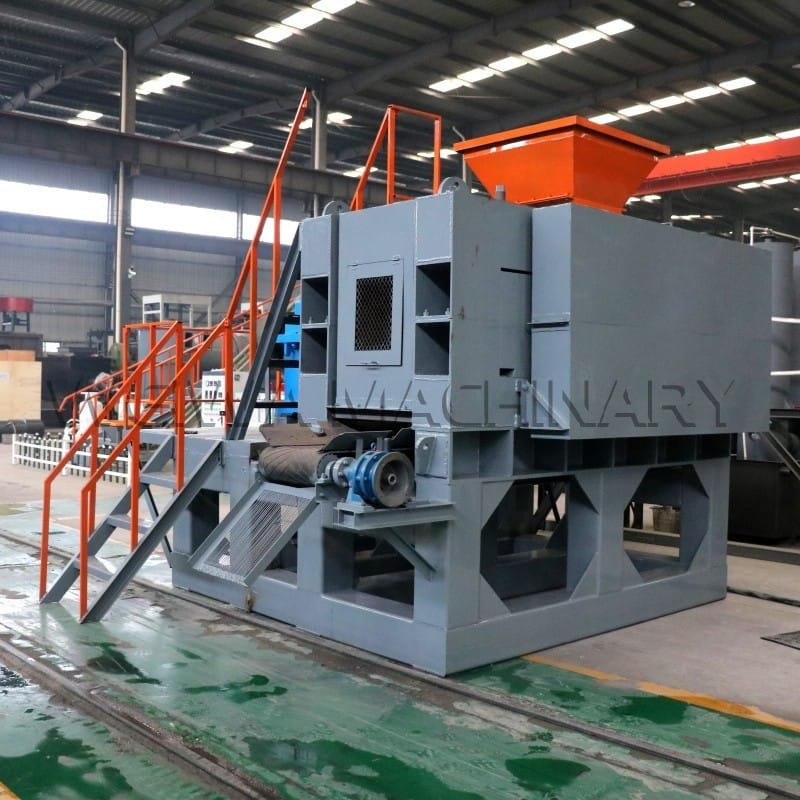
Step-by-Step Working Principle of the Briquette Press
The first stage is crushing. Bulky charcoal chunks, coal lumps, or dried biomass are reduced to a fine powder by a crusher so that particle size is consistent, which is critical for briquette strength. The second stage is mixing. In a twin-shaft mixer, the powder is blended with a calculated amount of water and—where necessary—an organic binder such as starch or molasses. Homogeneous mixing ensures every briquette has similar density and durability.
After mixing, the material enters a storage silo that regulates even feeding into the ball charcoal briquettes machine. Inside the press, the two rollers rotate inward and compress the material in the nip zone. The shaped briquettes—commonly oval, egg-shaped, pillow-shaped, 正方形, or custom geometries—drop out of the discharge chute. The final stage is drying. A mesh belt dryer removes residual moisture, further hardening the charcoal balls so they do not crack during storage or transport. All these units together form a complete production line for making charcoal balls in Nigeria at commercial scale.
Typical Charcoal Briquette Production Line Configuration Supplied
While some very small workshops attempt to making charcoal balls with only a hand-operated press, commercial viability normally requires an integrated line. Weiwa Machinery configures each charcoal briquette machine line according to the customer’s daily capacity requirement—usually ranging from 1 ton/hour
Crusher Unit
The crusher reduces raw charcoal, 煤炭, or biomass blocks into particles generally under 3 毫米. Adjustable screen meshes allow you to control final granularity, which directly influences how well the 木炭壓球機 forms smooth, crack-free balls.
Twin-Shaft Mixer and Binder Dosing
Even distribution of moisture and binder is essential. Our twin-shaft mixer provides thorough blending while avoiding dead corners. For Nigerian clients working with coconut shell charcoal, we often advise on binder type and dosing ratio to suit local humidity.
Storage Silo and Constant Feeder
A silo with variable-speed discharger ensures the ball charcoal briquettes machine receives a steady material flow. Surges or starvation at the inlet cause uneven briquette density, so this component plays a key role in product uniformity.
Ball Press Machine (Core Unit)
This is the 木炭壓球機 itself—the roller-pressing briquettor that shapes the material. Weiwa rollers are made from high-chromium alloy, heat-treated for wear resistance. Mould size and shape are selected based on your target market preference; for BB
Mesh Belt Dryer
Freshly pressed briquettes contain bound moisture from the mixing stage. The mesh belt dryer uses controlled hot air to bring moisture down to an acceptable level—typically below 5%—so the charcoal balls achieve maximum compressive strength and a clean ignition behaviour appreciated by end users in Nigeria’s barbecue and household fuel sectors.
Raw Materials Suitable for Processing with a Charcoal Briquette Machine
One major advantage of the ball charcoal briquettes machine is its versatility. In Nigeria, the most common feedstock for making charcoal balls in Nigeria includes charcoal powder from traditional kilns, 煤粉, coke breeze, sawdust charcoal, 稻殼木炭, and coconut shell charcoal powder. These materials are often treated as waste but can be reborn as premium fuel briquettes.
Beyond carbon-based powders, the same charcoal ball press machine can also be used for certain metal and mineral powders such as iron powder, magnesium oxide powder, copper powder, chromium ore, lead–zinc scrap, bauxite, aluminum powder, toner, gypsum, and desulfurisation gypsum. This flexibility means a Nigerian investor located near a steel plant or a mining area could diversify into mineral powder briquetting during off-seasons in the charcoal market, thereby improving overall equipment utilisation and return on investment.
Why the Nigerian Market Specifically Benefits from a Charcoal Briquette Machine Line?
Abundant biomass residue is the first clear advantage. Nigeria produces large volumes of coconut shells, 棕櫚內核殼, cassava peels, and sawdust annually—much of which is either burnt in open fields or left to rot. Collecting and carbonising these residues, then feeding the resulting char powder into a ball charcoal briquettes machine, transforms waste into a marketable commodity.
Second, urban demand for cleaner-burning barbecue charcoal is rising fast. Lagos alone hosts thousands of suya (grilled meat) vendors and upscale restaurants that prefer odourless, long-burning charcoal—exactly the product a well-tuned charcoal ball press machine line delivers. Third, the export potential to neighbouring countries such as Ghana, Benin, and Cameroon creates an additional revenue channel for Nigerian briquette producers who achieve consistent quality.
最後, the scalability of our lines matches different budget levels. You can start with a 1–2 t/h entry-level charcoal briquette machine setup and later add a second ball press or upgrade the dryer as your market expands. Weiwa Machinery’s engineers can help you plan the layout so future expansion does not require reworking the entire foundation.
Why Choose Weiwa Machinery Ball Charcoal Briquettes Machine for Your Nigeria Project?
Weiwa Machinery has been manufacturing briquetting equipment and mineral processing machinery for more than thirty years. Our ball charcoal briquettes machine and charcoal ball press machine models have been exported to over 130 國家, including repeated shipments to Nigeria, 印度尼西亞, 印度, 馬來西亞, 越南, 火雞, 埃及, 南非, 和許多其他人.
Customised Design and Factory Layout Planning
Before you place an order, our technical team studies your raw material samples, expected moisture, daily output goal, and available workshop space. We then provide customised roller drawings, binder recommendations, and a CAD factory layout plan so you know exactly how to arrange the charcoal briquette machine line in your facility.
Professional After-Sales Team
Installation guidance, commissioning support via video or on-site dispatch, operator training, and spare parts supply are all part of our standard after-sales package. We understand that downtime costs money, especially in a production business, so our response time for technical queries is kept to a minimum.
Proven Packing and Shipping Experience to Nigeria
Small accessories are packed in wooden cases suitable for LCL shipping. Main frames of the ball charcoal briquettes machine are nude packed with steel frame protection for full-container load. We mark each component clearly to simplify unloading and reassembly upon arrival at Nigerian ports such as Apapa or Tin Can Island.
FAQs About Making Charcoal Balls in Nigeria with a Charcoal Ball Press Machine
Is binder always required when using a ball charcoal briquettes machine?
It depends on the raw material fineness and fixed carbon content. Charcoal powder with very fine particle size can sometimes be pressed without binder, while coal powder or low-temperature biochar often benefits from a small percentage of starch or molasses-based binder to improve green strength.
What capacity range is available for the charcoal briquette machine line?
Weiwa Machinery offers single 木炭壓球機 models from approximately 1 ton per hour up to 20 tons per hour when configured with multiple presses, allowing you to match capacity to your market size.
Can the same machine make different shapes?
Yes. By changing the roller moulds on the ball charcoal briquettes machine, you can produce oval, egg, pillow, 正方形, or custom logo-embossed shapes, which is useful for branding your charcoal balls in the Nigerian market.
How long does it take to install the production line after arrival in Nigeria?
For a standard line, trained workers can complete mechanical installation within 7–15 days, with electrical commissioning and trial runs adding another few days under our remote or on-site guidance.
Contact Weiwa Machinery for a Quote on Ball Charcoal Briquettes Machine and Complete Briquette Line
If you are planning to start or expand a business making charcoal balls in Nigeria and need a proven 木炭壓球機 或者 木炭壓球機 生產線, the Weiwa Machinery team is ready to assist. We provide free initial consultation, customised drawings, factory layout suggestions, and transparent pricing.
Weiwa Machinery – 30+ Years Experience in Briquetting & Mineral Processing Equipment
Exported to 130+ Countries | Custom Design | Professional Installation & 售後支援
移動的 / WhatsApp: +86 138 3809 3177
電子郵件: info@cjlmachinegroup.com
Product Page: Ball Charcoal Briquettes Machine – Weiwa Machinery
Feel free to contact us now to get a tailored quotation and technical proposal for your Nigerian charcoal briquette project.


 微信
微信

 +8615937143060
