


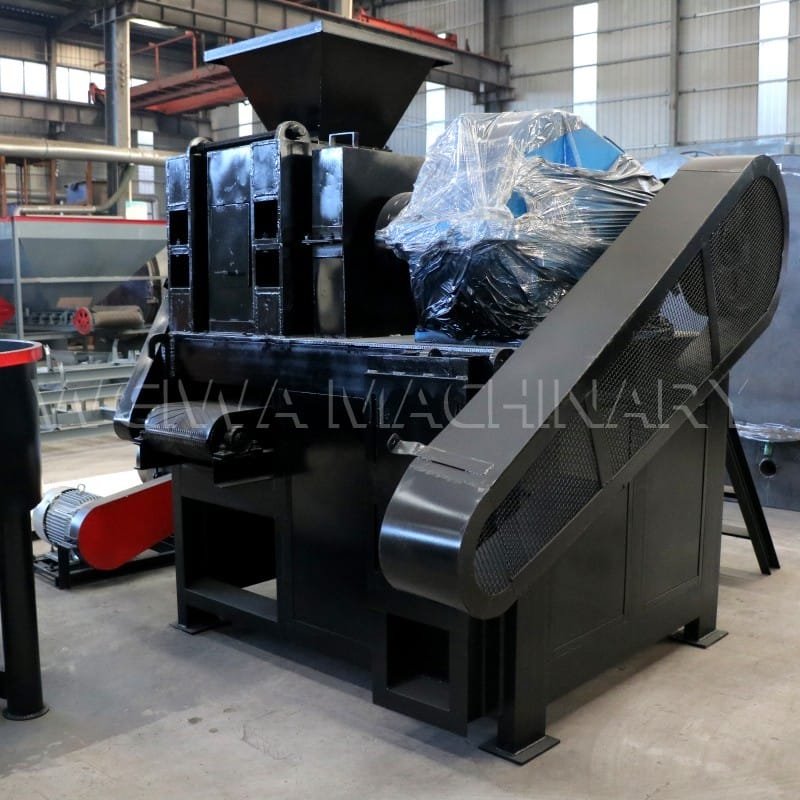
Malaysia Client Background and Custom Requirement
The Malaysian buyer operates in the biomass fuel supply chain and serves BBQ restaurants, shisha lounges, and several palm oil mill boiler agents. Their old manual making charcoal balls process relied on small local presses that delivered around one ton per hour, inconsistent ball density, and frequent roller wear when coconut shell charcoal was used.
They came to Weiwa with a simple brief. They wanted one ball briquette machine that could run continuously eight hours per day, produce uniform 30 к 50 millimeter balls, switch between oval and pillow shape without stopping more than half a day, and connect to existing bucket elevator and screening system. The hidden requirement was local material behavior. Charcoal from coconut shell in Malaysia is harder, more fibrous, and has higher fixed carbon than sawdust charcoal from some other regions. A generic charcoal ball press machine would wear fast.
Weiwa response was to treat the machine as a system. The roller surface received customized hardness treatment. The screw feeder pitch was changed to handle light fluffy powder. The hydraulic unit was upsized. The mixer blade angle was revised for starch and cassava binder commonly used in Southeast Asia. None of these changes are visible in a product photo, but they decide whether making charcoal balls becomes profitable or painful.
Coconut Shell and Charcoal Powder Feedstock in Malaysia
Malaysia generates large volumes of coconut shell, palm kernel shell, опилки, and agricultural residue. После карбонизации, these become charcoal pieces that must be crushed below five millimeters before pressing. If the powder is too coarse, balls crack during drying. If too fine and dry, it flows poorly and creates air pockets. The ball charcoal briquettes machine must accept a fluctuating feedstock size and still deliver stable bulk density.
For this client, we set crusher outlet at three millimeter screen, recommended moisture around twelve percent, and used a twin shaft mixer instead of a simple drum mixer. The twin shaft design gives aggressive turning action, breaks lumps, and exposes powder to binder evenly. That step alone improved green ball survival rate before drying.
БАРБЕКЮ, Shisha and Industrial Boiler Demand
Demand channels in Malaysia are diverse. Weekend BBQ culture consumes oval quick lighting balls. Shisha market prefers low ash pillow shape with longer burn time. Rural boiler users buy square or round balls as substitute for wood chips. A flexible charcoal ball press machine lets one factory serve three segments by changing mold pair and screening size. Weiwa designed the Malaysian unit with quick change roller bearings and alignment marks so the client team could swap shapes without external technicians.
Shipment Site of the Large Charcoal Ball Press Machine
The shipment site is worth describing because it reflects how Weiwa handles export equipment. The main ball briquette machine was painted, hydraulic system pressurized for test, rollers marked, and main motor wired to simulation panel. We ran no-load trial for two hours and load trial with local charcoal powder for one hour. Every bearing temperature was logged.
After QC clearance, the machine entered packing zone. Large frame went nude with steel saddle and moisture barrier. Rollers and hydraulic pump were crated in plywood with desiccant. Electrical cabinet was sealed and shock mounted. Spare roller pair, tools, and manuals traveled in a separate small case so the client could start without waiting for freight forwarder document release.
Photographs from the shipment site show the machine wrapped in woven film, lifted by workshop crane, pushed into 40 foot high cube container, and blocked with wooden braces. This is not decorative content. Buyers in Indonesia, Вьетнам, Таиланд, and the Philippines often judge supplier professionalism by how the equipment leaves the factory. A clean shipment site reduces overseas unpacking damage and builds trust before commissioning.
Weiwa assigned one project engineer to the Malaysian file. That engineer answered layout questions, reviewed foundation drawing, joined WhatsApp video call during container loading, and later guided local electrician on motor direction. The ball charcoal briquettes machine is now installed in Selangor region and running trial batches of pillow shape balls for shisha distributor sampling.
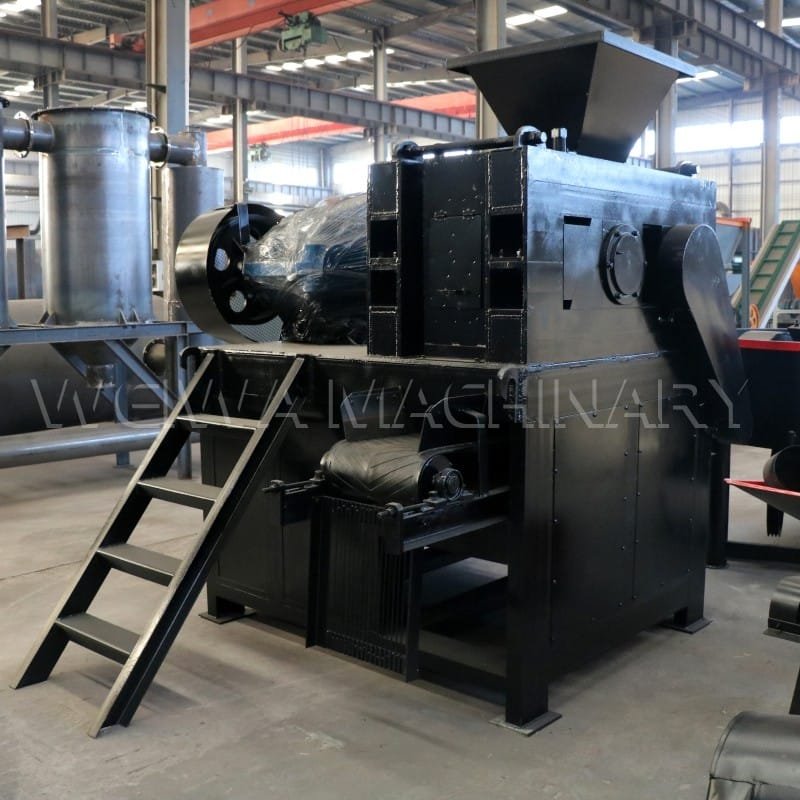
Why Southeast Asia Is a Growing Market for Ball Briquette Machine?
Southeast Asia is moving from open burning and loose charcoal chunks toward shaped solid fuel. Several forces push this shift. Urban BBQ chains want uniform heat. Governments discourage loose dust emission. Coconut and palm biomass is abundant. Labor cost rises, so manual ball making cannot scale. The ball briquette machine sits exactly at the intersection of these forces.
Индонезия, Вьетнам, Таиланд, and the Philippines already import Chinese charcoal shaping lines. Malaysia is catching up because its halal food export, tourism BBQ sector, and biomass boiler policy create steady off take. A factory with one large charcoal ball press machine and a dryer can replace dozens of manual laborers while improving product standardization.
Weiwa sees Southeast Asia not as one market but as a cluster of feedstock differences. Vietnam uses more sawdust and rice husk charcoal. Indonesia mixes coconut shell with wood. Thailand has sugar cane residue and rubber wood. Philippines buyers often ask for shisha grade low smoke balls. The same ball charcoal briquettes machine model needs different roller finish, different binder recipe, and different dryer length per country. That is why customization matters more than catalog price.
Coconut Shell and Charcoal Powder Feedstock in Malaysia
We mentioned coconut shell earlier, but it deserves repeat emphasis in market context. Coconut shell charcoal has high calorific value, low ash, and good mechanical strength after pressing. Однако, it contains silica dust and natural fiber that accelerate roller abrasion. Weiwa solved this for the Malaysian client by selecting alloy roller skin and designing a self cleaning scraper. The client expected roller life of six months from previous supplier. Our estimate under same duty is above fourteen months.
БАРБЕКЮ, Shisha and Industrial Boiler Demand
SEA demand is not only BBQ. Shisha lounges from Kuala Lumpur to Jakarta prefer pillow shape because it sits stable on foil and burns slow. Boiler users in palm oil mills test round balls as part of decarbonization mix. A smart investor buys a charcoal ball press machine that can pivot product mix when season changes. Weiwa modular line lets client add second crusher, upgrade dryer to three layer, or install automatic weighing packing without replacing the main press.
How a Ball Charcoal Briquettes Machine Works?
The principle behind every ball charcoal briquettes machine is roller pressing. Powdered charcoal enters hopper, screw feeder pushes it into the gap between two counter rotating rollers, each roller carries half spherical or half pillow cavities, hydraulic or mechanical pressure forces powder to bond inside mold, and finished balls drop from bottom. Higher pressure gives higher density. Better cavity design gives smoother surface. Stable feeding gives uniform weight.
Many beginners think the press alone makes charcoal balls. In reality, the press is only the heart. If crushing is wrong, powder will not fill cavity. If mixing is poor, balls crumble. If moisture is high, balls stick on roller. If dryer is weak, balls break during transport. Making charcoal balls is a chain, and the ball briquette machine is the most visible link, not the only link.
Crushing and Mixing Stage
Raw charcoal chunks go into hammer crusher or roller crusher and become powder under four millimeter. The powder then moves to twin shaft mixer. Water and binder are sprayed while mixing arms turn the mass. Target moisture depends on charcoal type, usually ten to fifteen percent. Binder can be starch, патока, sodium silicate, or customized blend. The mixer must not over wet corners or let powder escape as dust. Weiwa uses enclosed mixer with access doors and dust hood connection.
Silo Feeding and Roller Press Forming
From mixer, material falls into buffer silo above the charcoal ball press machine. The silo stabilizes feed pressure so the screw feeder below delivers constant flow. Constant flow means constant ball weight. The screw pushes powder into roller nip. Cavities on opposite rollers meet at center line and close like mold. Pressure squeezes air out and compacts particles. Balls eject downward onto conveyor.
This Malaysian unit uses hydraulic assisted pressure in addition to mechanical transmission. The hydraulic system compensates when powder bulk density fluctuates. It also protects rollers from metal scraps or uncrushed hard pieces. When client switches from oval to pillow shape, roller pair is replaced, girth gear alignment checked, and hydraulic pressure reset according to new cavity depth.
Mesh Belt Drying and Finished Ball Quality
Fresh balls contain moisture and have low strength. They enter mesh belt dryer with controlled hot air. Drying temperature, belt speed, and layer number decide final hardness. In tropical Malaysia, ambient humidity can slow sun drying and invite mold, so mechanical dryer is almost mandatory for commercial scale. After drying, balls are screened, cooled, and packed.
Quality indicators for making charcoal balls include diameter tolerance, compression strength, drop resistance, moisture after dry, ash content, и время горения. A good ball charcoal briquettes machine helps with shape and density. The full line decides whether the client passes shisha buyer inspection or BBQ chain audit.
Full Charcoal Ball Production Line Configuration
Weiwa does not only sell one machine. For the Malaysian project, the full scope included feeding hopper, hammer crusher, bucket elevator, twin shaft mixer, buffer silo, машина для прессования древесного угля, outlet conveyor, three layer mesh belt dryer, screening machine, and control cabinet. The client chose to add carbonization furnace in phase two.
Layout length was about eighteen meters. Width allowed forklift passage. We provided foundation drawing with anchor bolt positions, cable tray route, and dryer chimney height according to local factory rule. This engineering package is why overseas buyers choose Weiwa over trading companies. They receive a plant logic, not just equipment list.
In a complete line, capacity is limited by the weakest node. If crusher is too small, press starves. If dryer is too short, balls queue and soften. If mixer is manual, binding is uneven. Weiwa sizes every node around the ball briquette machine central capacity, for example three ton per hour press gets crusher rated five ton per hour, mixer rated four ton per hour, and dryer rated three point five ton per hour input.
Custom Engineering by Weiwa Machinery
Customization starts before payment. We ask for raw material photo, sieve analysis, влага, target ball size, shape drawing, hourly need, factory dimension, local voltage, and budget range. Then we propose roller diameter, cavity number, motor power, hydraulic pressure, dryer length, and control method.
For Malaysia, roller diameter was enlarged to improve single stroke cavity count. Cavity surface got polished to reduce sticking of coconut charcoal. Frame steel thickness increased because client runs two shift. Control cabinet used dual language label and overload relay suitable for unstable voltage. These details separate a real charcoal ball press machine builder from a reseller who pastes different nameplate on same stock unit.
Weiwa also issues workshop drawings, чертежи фундамента, electrical schematic, spare parts list, and operation video. Overseas buyer can show drawing to local contractor and build foundation while machine is on sea. This shortens commissioning from weeks to days.
After Sales Service and Spare Parts Support
Equipment is easy to ship, knowledge is harder to transfer. Weiwa assigns after sales engineer per region. For Southeast Asia, we keep common spares such as roller skin, bearing, hydraulic seal, mixer blade, dryer mesh, and conveyor belt in stock cycle. The Malaysian client received one spare roller pair and wearing sleeve kit inside the container.
Installation support can be remote or on site. Remote covers foundation check, motor wiring, hydraulic startup, and roller alignment by video. On site covers full commissioning, обучение персонала, and trial production with local charcoal. We also schedule follow up after thirty days and ninety days to review ball quality and bearing temperature.
When the client later adds carbonization or packing machine, the same project file is reused. The ball charcoal briquettes machine remains central, but the relationship expands into plant partnership. That is the model Weiwa prefers.
О Weiwa Machinery and Contact
Weiwa Machinery has more than thirty years of working experience in manufacturing briquette machinery, дробилки, сушилки, and complete biomass shaping lines. We serve customers in Malaysia, Индонезия, Индия, Вьетнам, Таиланд, Филиппины, Пакистан, Турция, Польша, Египет, ЮАР, and more than one hundred thirty countries. Our advantage is not only machine price but custom design, factory layout drawing, and professional after sales team.
If you plan to start making charcoal balls, replace manual press, or export shaped charcoal to shisha and BBQ market, we can review your material and propose a ball briquette machine configuration with ROI estimate. We welcome factory visit and third party inspection.
Contact Weiwa Machinery:
Моб: +8613838093177
WhatsApp: +8613838093177
Электронная почта: info@cjlmachinegroup.com
Whether you need a single charcoal ball press machine or a full coconut shell charcoal ball production line for Malaysia and Southeast Asia, Weiwa can deliver tested equipment, clear drawings, and continuous support from first inquiry to spare parts after fifth year.


 WeChat

 +8615937143060
